
Top 8 Things Smart GMs Check Before Booking a Campaign Venue
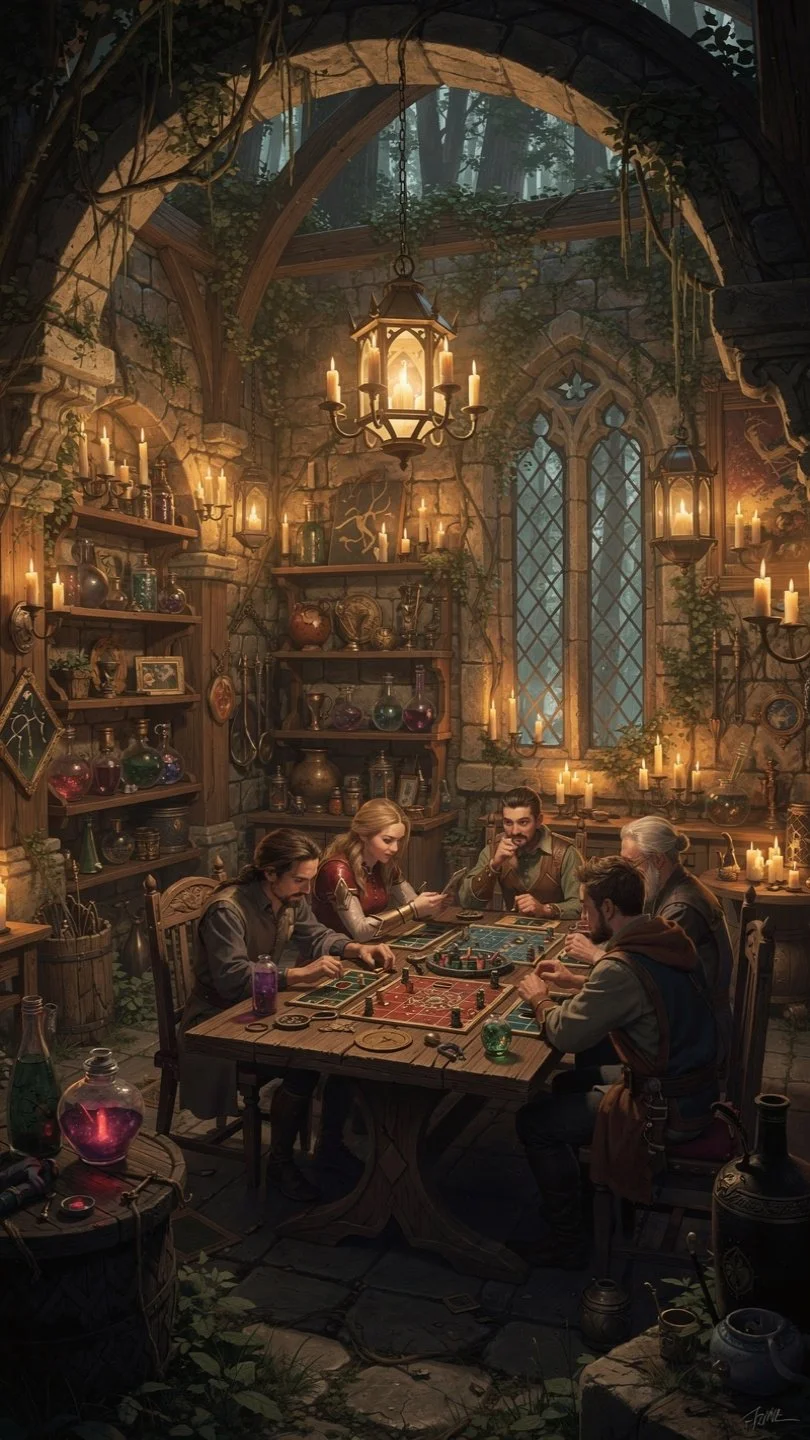
A smart GM does not just prepare the campaign.
A smart GM prepares the room.
The wrong venue can quietly damage a campaign before the first major boss fight ever happens. Players become tired faster, distracted faster, uncomfortable faster, and eventually less excited to return.
That is why experienced GMs scout venues carefully before committing to weekly sessions.
And if nobody in the group knows where to begin, the Tavern Network exists specifically to help adventurers compare tabletop venues based on comfort, atmosphere, community, and campaign fit instead of guessing blindly.
Here are eight things smart GMs usually check before booking a campaign venue.
1. Lighting
Bad lighting slowly drains a table.
Players struggle to read character sheets. Minis become harder to see. Maps lose clarity. Eye strain builds over long sessions.
A smart GM checks whether the table has enough lighting for books, dice, laptops, terrain, and note-taking without the room feeling harsh or uncomfortable.
Tactical combat tables especially need proper visibility. If yer campaign relies heavily on maps and positioning, articles like Why Position, Timing, and Target Choice Matter More Than Weapon Stats pair naturally with this kind of venue planning.
2. Smell and Ventilation
This matters far more than many GMs admit.
A venue with poor ventilation, trapped humidity, lingering animal smells, stale air, or overcrowded conditions becomes exhausting over time. Some local game stores have wonderful community energy but struggle with airflow or dense player traffic.
A smart GM checks the air almost immediately upon entering.
Does the place feel fresh and comfortable after thirty minutes?
Or does it already feel heavy?
Some players are also more sensitive to smells, allergies, pets, smoke residue, or crowded indoor environments than others. The GM should pay attention to that before committing the whole campaign there.
3. Price Sustainability
A venue that feels affordable once may become painful after twelve sessions.
That is why smart GMs do not only check price. They check repeatability.
Can the entire party realistically afford this every week?
Will players quietly start skipping sessions because the venue is too expensive?
Board game cafés are often more comfortable but may cost more over time. Local game stores are often cheaper but rougher around the edges.
Venues like ME Cafe & Games Singapore, Pixels & Pieces Singapore, and Good Game Banbury are useful Tavern Network comparisons when judging comfort versus cost.
4. Seating Comfort
Three hours changes everything.
A chair that feels acceptable for fifteen minutes may become miserable by the second combat encounter.
A smart GM checks the chairs, table height, arm space, and overall comfort level before committing to a long campaign venue. Players should have enough room for dice trays, books, drinks, bags, and character sheets without constantly bumping into each other.
This becomes especially important for older players, larger players, disabled players, or anyone with chronic pain or fatigue issues.
Comfort is not luxury.
Comfort is campaign durability.
5. Spaciousness and Noise Level
Some venues are simply too cramped for certain campaigns.
If the tables are packed tightly together, players may struggle to hear each other, roleplay naturally, or focus during important scenes. Loud venues can work beautifully for chaotic social campaigns, but they can destroy horror, mystery, political intrigue, or emotionally serious games.
A smart GM matches the environment to the campaign tone.
For example:
Loud social campaigns often work well in active community spaces like Great Escape Games Sacramento or It’s Gametime Los Angeles.
Quieter roleplay-focused campaigns may fit better in places like Meeples Games West Seattle or Sliced N Diced Birmingham.
6. Staff Courtesy and Attitude
Some staff welcome tabletop groups.
Others tolerate them.
Others clearly wish the players would leave faster.
A smart GM watches how staff speak to players, explain booking rules, react to noise, and handle mistakes. If staff become visibly irritated by roleplay, long sessions, or large groups, the campaign will eventually feel unwelcome there.
Good staff make players feel comfortable staying.
That matters enormously for long campaigns.
Places like The Attic Fürth and Games Island Hof Germany stand out partly because strong community feeling usually begins with how the venue itself treats people.
7. The Type of Crowd
A smart GM watches the crowd before booking.
Are people respectful?
Too rowdy?
Too loud?
Too aggressive?
Too cliquish?
A venue’s regular crowd changes the feeling of the entire campaign.
Some places feel relaxed and welcoming. Others feel intensely competitive or socially hostile to newcomers. Players may not say anything directly, but they notice these things immediately.
This is especially important if the party includes shy players, female players, autistic players, anxious players, or complete newcomers to tabletop gaming.
If yer table already struggles with social tension, When No One Ever Says What’s Actually Bothering Them and Why Your Party Keeps Falling Apart and How to Stop Being the Reason are worth reading before the campaign starts losing people.
8. What the Players Actually Want
This is the one inexperienced GMs forget.
Do not assume the party wants the same thing you want.
Ask them directly.
Do they prefer cafés or hobby stores?
Quiet rooms or loud halls?
Cheaper tables or nicer environments?
Private rooms or open play?
Some players care deeply about comfort. Others care more about price. Some want strong community energy. Others want calm privacy.
A smart GM does not book based purely on personal preference.
They ask the table first.
Running Your First Game: Reading the Table Without Anyone Saying a Word matters, but direct conversation matters even more.
Final Word from the Tavern
A campaign venue is not just furniture.
It becomes part of the campaign itself.
Lighting affects focus. Smells affect comfort. Price affects attendance. Seating affects endurance. Crowds affect safety. Staff affect atmosphere. Noise affects immersion.
And player preference affects everything.
That is why smart GMs scout carefully before session one instead of regretting the venue by session three.
If yer table is still searching for the right place, start with Mike’s Tavern, browse the Tavern Network, check the Mike’s Tavern FAQ, or reach out through the Contact Page. A good campaign deserves a room worth returning to.
