Good Game Banbury Review: A High Street Board Game Café That Feels Like a Real Community Hub
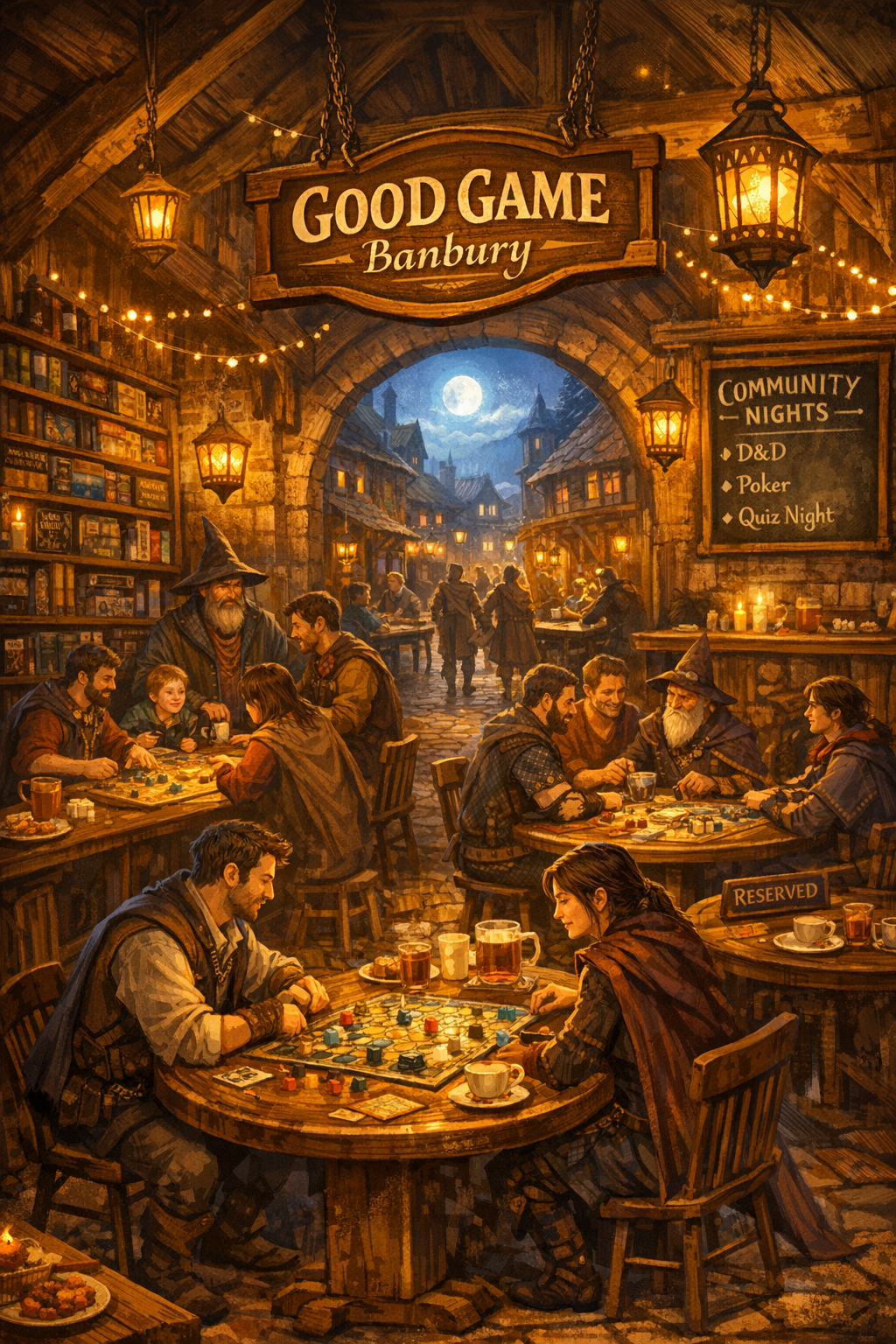
This is the tavern’s interpretation of the venue, do visit their website for a more accurate depiction of the venue
Good Game Banbury sits on High Street in Banbury, and the reviews read like the same story told by different people:
“I walked in for a casual visit… and somehow left feeling like I’d found a place I could actually belong.”
You’ll see couples who’ve “never been to one of these before,” families with primary-school kids, groups of friends settling in for three-hour sessions, and tabletop regulars showing up for recurring events like Dungeons & Dragons nights.
If you want the official details straight from the source, start at Good Game Banbury’s official website.
Now let’s talk about why this place works.
What People Keep Praising (And Why It Matters)
Most cafés get complimented for “nice vibe” and “friendly staff.”
Good Game Banbury’s reviews go a bit deeper than that.
The staff actively remove the biggest friction point in board game cafés: getting started.
Multiple reviewers mention staff taking time to explain games, recommend the right ones, and help people begin quickly. That’s what turns “a wall of games” from overwhelming into exciting.
And it’s the same table-dynamic principle behind The Strongest Character at the Table Is the One Who Listens — the person (or venue) that listens and guides quietly is the one that builds long-term loyalty.
The “Community Night” Layer: D&D, Poker, Regulars
This isn’t only a drop-in games café.
Reviews mention a big Dungeons & Dragons meetup (including a night where the owner was busy because he had a major role in the session), plus other events like poker tournaments. That matters because “events” create rhythm.
A café that only rents tables can survive.
A café that builds recurring community nights becomes part of the town.
That’s one of the core ideas behind The Good Stuff That Keep the Tavern Standing — good systems keep good people coming back.
Family-Friendly Without Feeling Like a Kids’ Place
A few reviews call out something rare:
It’s kid-friendly, but still feels like a place adults would happily visit without children.
Parents mention staff bringing over starter games “pitched perfectly,” getting kids playing quickly, and keeping the atmosphere quiet and easy to talk.
That “quiet competence” is exactly what makes a third space work: you can laugh, learn, and play without feeling like you’re disturbing the entire room.
Coffee, Snacks, Value: The “Stay Longer” Effect
Multiple guests mention:
Great coffee (some even say cheap and delicious)
Drinks and snacks available
Very reasonable totals at the end of the night
When people feel the value is fair, they relax. When they relax, they stay. When they stay, they bond.
That’s how a board game café becomes a habit instead of a one-time novelty.
The Honest Part: The Guild Seating Incident
Now listen, lad — Tavern Network features aren’t blind love letters.
One review from a regular attendee of “The Guild” describes being turned away due to “no room,” despite other players reserving a seat for them. They arrived slightly late, waited to be served, were told they didn’t book online, and later found out additional tables were opened.
We don’t know the behind-the-scenes logistics that night.
But the pattern is useful:
When event-night systems aren’t crystal-clear, even loyal regulars can walk out feeling dismissed.
That’s the same kind of slow trust damage we talk about in Why Your Party Keeps Falling Apart and How to Stop Being the Reason — not because anyone’s evil, but because small procedural friction turns into relational fracture.
If Good Game Banbury tightens clarity around event bookings and late arrivals, they protect their strongest asset: repeat community.
Mike’s Two Cents (Because He’s Always Listening)
By Grabgar’s hammer, a café can have a thousand games and still feel colder than a stone cellar if nobody helps a newcomer get started.
But I’ll tell ya what I respect: staff who teach without makin’ folk feel stupid. That’s craft. That’s patience. That’s how ya turn “we’re not hardcore gamers” into “we’re comin’ back next week.”
Now… on event nights? Tighten yer system. Clear seats. Clear rules. Clear communication.
Don’t let a loyal regular walk out feelin’ like a stray goblin who forgot his own name.
The Lantern-Call Invite: Step Into the Tavern Network
If you want the why behind these features — what we include, what we don’t, and what “Tavern Network standards” even means — start here:
And if you run a venue (or know one) that deserves a proper spotlight, send it in through:
Practical Tips Before You Visit
If you want the best experience based on what real guests described:
Reserve ahead if you’re visiting at peak times or event nights.
If you’re attending a structured D&D session, confirm booking expectations and aim to arrive on time.
Don’t overthink the choice paralysis — ask staff to recommend a game fast.
If you’re new to tabletop spaces and feel awkward about learning, remind yourself: the best venues make learning feel normal. (This mindset piece helps too: How to Roleplay Without Feeling Like an Idiot.)
Final Tavern Network Verdict
Good Game Banbury earns its place in the Tavern Network for one simple reason:
It consistently makes people feel welcome — even people who didn’t think they were “board game café people.”
The staff culture is the standout. The atmosphere is calm. The value feels fair. The community nights are real.
The only pressure point is event-night consistency: when seats and bookings get messy, trust gets dented fast.
But the foundation is strong — and towns thrive when places like this exist.
More From the Tavern Network