When You Leave the Game Feeling Heavier Than When You Arrived
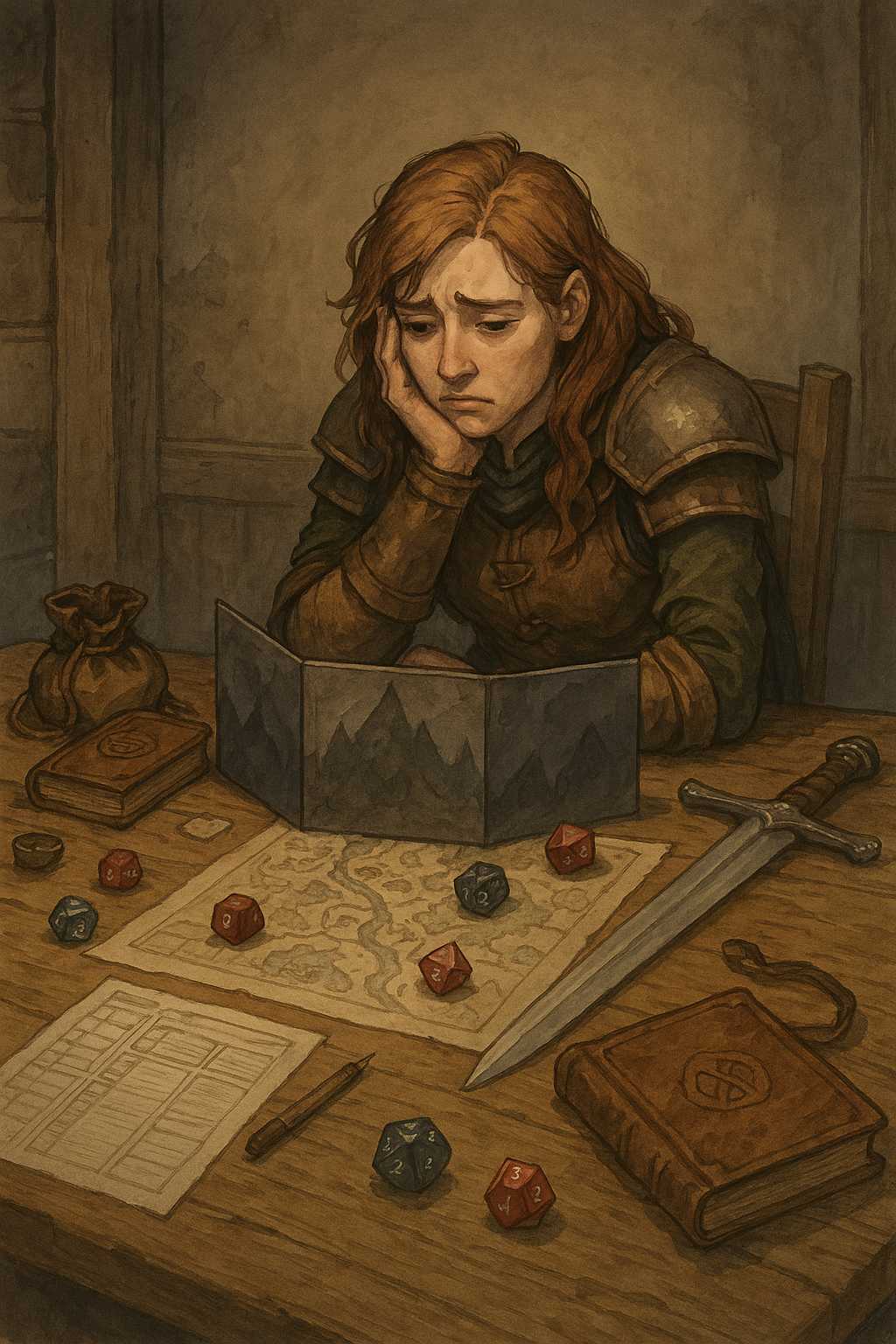
“If the Dice Felt Heavier Than Yer Shield, Lad, That’s Worth Noticing.”
You showed up ready.
You rolled well enough.
You laughed at the right moments.
You did your part.And yet when you walked out, something felt heavier than when you arrived.
Not dramatic.
Not explosive.
Just weighted.This isn’t about losing a character.
It’s about that quiet emotional drag some players carry home.
Let’s untangle it.
The Weight No One Talks About
Sometimes the heaviness comes from things that didn’t explode — they just lingered.
You didn’t speak as much as you wanted.
You got talked over once… then twice.
A joke landed weird.
The tone went darker than expected.
You tried hard to contribute and still felt invisible.
If you’ve ever quietly wondered whether you’re somehow “the problem,” you may recognize yourself in Why Your Party Keeps Falling Apart — And How to Stop Being the Reason.
Not because you are the reason.
But because overthinking convinces you that you might be.
When Silence Turns Into Regret
Some players leave heavy not because something bad happened.
They leave heavy because something didn’t.
They wanted to:
Speak up.
Take a bigger roleplay risk.
Push the scene.
Claim a moment.
And they didn’t.
That quiet self-suppression turns into weight.
If that’s you, read How to Speak Up Without Freezin’ at the Table.
Holding back to keep the peace feels noble.
Until it starts costing you joy.
When the Energy Was Off — Even If the Table Was Loud
Sometimes the heaviness isn’t internal.
It’s atmospheric.
The table laughed.
Combat moved.
Snacks were shared.
But something felt misaligned.
Maybe comparison crept in. Maybe spotlight felt uneven. Maybe the vibe was chaotic instead of cohesive.
That subtle erosion is described in The Quiet Damage of Comparison at the Table.
Not every problem is loud.
Some are cumulative.
Mike Breaks In (And He Ain’t Gentle About It)
Listen here, ya overthinkin’, scroll-clutchin’ milk-drinker.
By Grabgar’s hammer, if yer walkin’ out of a game feelin’ like ye just hauled a wagon uphill, that ain’t “just tired.”
That’s emotional carryover.
I’ve seen warriors leave taverns quiet as stone because they never swung their axe once all night.
I’ve seen mages laugh along while shrinkin’ smaller with every interrupted sentence.
If yer feelin’ heavy, ask:
Did I shrink to keep harmony?
Did I swallow something that needed air?
Did I try so hard to be “easy” that I erased myself?By Margann’s crusty beard, don’t ignore that.
And if you’re afraid you’re dragging the whole group down just by existing, read When You’re Afraid You’re Draggin’ the Party Down.
Most players aren’t burdens.
They’re just cautious.
When Roleplay Hits Closer Than You Expected
Sometimes the story touches something real.
Rejection arcs.
Betrayal.
Loss.
Powerlessness.
The table moves on.
Your chest doesn’t.
That tension between fiction and feeling is explored in Ye Can’t Heal a Heart With Hit Points — The Art of Playing Beside Pain.
Depth is good.
But depth without awareness can weigh heavy.
The “Trying Too Hard” Exhaustion
Here’s another quiet culprit.
You try very hard not to ruin the game.
You monitor yourself.
You second-guess jokes.
You calculate spotlight.
You trim enthusiasm.
That constant self-regulation drains you.
If you’re the type who overcorrects to be “good” at roleplay, revisit Tryhard Roleplay — A Series for the Overachievin’ Fool.
Trying harder isn’t always playing better.
Sometimes it’s just carrying more than you need to.
What To Do With the Weight
Don’t ignore it.
Don’t dramatize it.
Instead:
Identify whether it was internal (self-pressure) or external (table dynamics).
Adjust one small thing next session.
Don’t redesign yourself overnight.
One extra sentence in-character.
One boundary spoken gently.
One honest check-in with the GM.
Small calibrations prevent long-term heaviness.
And if you ever want to understand the philosophy behind this tavern’s approach to table health, you can visit About Mike’s Tavern.
If you’re navigating something specific, the FAQ might clarify it.
And if you’ve got something that needs a more direct ear, the Contact page is always open.
Quick Questions Before You Carry It Alone
Is it normal to feel drained after a session?
Yes — especially if you’re managing self-doubt, social dynamics, or suppressed enthusiasm.
Does this mean the table is unhealthy?
Not automatically. One heavy night isn’t a verdict. It’s information.
Should I quit if I feel this way once?
Look for patterns before making decisions. Weight signals adjustment — not immediate exit.
More from Around the Tavern
Game Craft & Practical Growth