
The Quiet Player vs. The Table Hog - How to Keep Both Happy Without Losing Your Mind
Mike’s Personal Thoughts
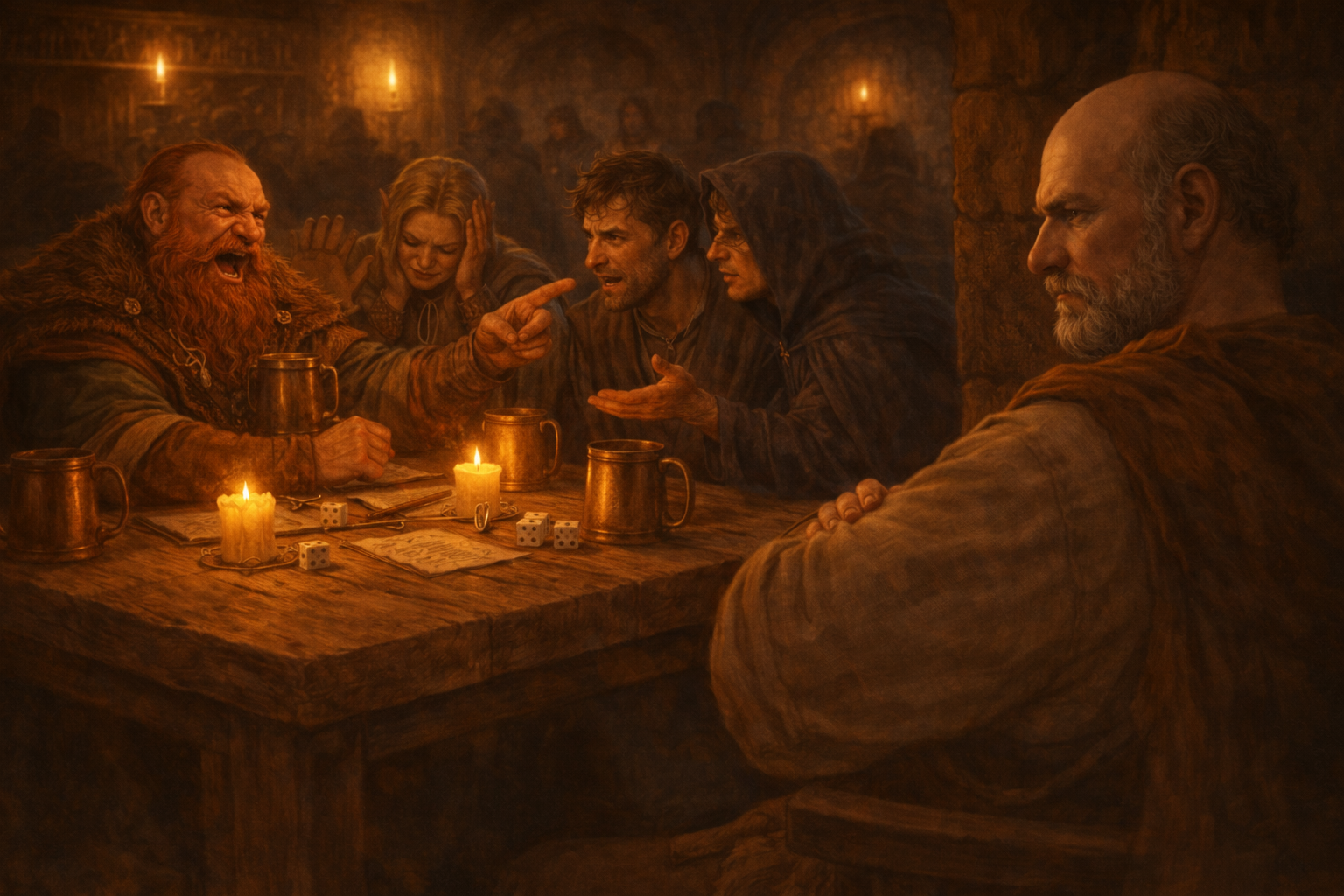
By Bahlin’s bent fork, lad, I have seen more tables wrecked by mismatched loudmouths and soft spoken folk than by curses, ogres, and three day hangovers combined. Every tavern, mine included, has that pair. One player talks like they are trying to shout down a giant. Another barely lets a whisper escape. And if ya do not know which one ya are, there is a good chance you are the loud one.
Reminds me of a fool named Hobbins Redtoe. Loved the spotlight so much he once tried to give a speech over a collapsing dungeon ceiling. Meanwhile, his party’s quiet wizard tried to get a word in but spoke softer than a mimic trying to flirt. Guess who lived? Neither. Ceiling crushed them both because
NO ONE STOPPED TALKIN LONG ENOUGH TO LISTEN.
…Sorry. Lost me temper there.
If you are wrestling with a quiet player and a table hog at the same time, I have been there more times than I have misplaced a tankard. If you want to see how a table built on listening should look, have a look at the way I talk about patient play in this lesson on why the strongest character is the one who listens, or how I deal with spotlight thieves in this warning about players who act like they are the main course.
A good Game Master does not silence the loud one, and does not shove the quiet one into the stage lights by force. A good Game Master reshapes the flow of the table so both can breathe.
A Mug Of Courage In The Middle Of The Session
If your table feels lopsided, with one player always talking and another fading into the floorboards, you do not have to guess your way out of it. In the GM Wisdom hall, I keep a whole shelf of scrolls on table balance, tone, and keeping the game moving without crushing anyone’s nerves. When you want ready made tools to fix a broken mix of personalities, grab a stool, pour a drink, and pick a guide that matches your next session.
What Makes Them Different
The quiet player and the table hog are not opposites. They feed each other. The louder the loud one gets, the more the quiet one folds in. The quieter the quiet one becomes, the more the loud one feels they have to fill every gap.
To keep your brain from tangling like a bad rope bridge, here is a clean comparison. I have laid it out so even your sleep deprived wizard can read it.
Giving The Quiet Player Room To Breathe
You do not fix a quiet player by shoving them into the middle of every scene. You fix it by making it safe for them to step forward.
Give them predictable openings. Phrases like:
"Before we move on, what is your character doing right now?"
"You were studying the runes earlier, what stands out to you?"
Those questions are not pressure, they are permission. The difference is important. You are telling them that the table will wait for their answer.
If you want an example of how a quieter presence can still carry weight, look at how I frame burdened knights and their choices in this tale about a knight who bled for peace and the aftermath written into the ruined ground at Ashtrail Field. Both are built around characters whose voices are careful, but whose actions change everything.
Teaching The Loud Player To Share The Table
Table hogs are rarely villains in disguise. Most of the time they are just excited, anxious, or used to being the one who fills silence. They think they are helping. Your job is to shape that fire, not snuff it out.
You do that with structure.
Try using simple turn order in social scenes. Not a full rules mess, just a pattern:
Ask one player what they do.
Ask the next.
Keep going around the table before returning to the first voice.
When a loud player tries to jump in out of turn, you can calmly say, "Hold that thought, I want to hear what the others are doing first." No drama, no lecture, just a clear border.
If you want more language for dealing with pushy personalities, you can pull ideas from my breakdown of greedy players who treat the game like a loot competition. That same instinct, "I must grab everything first," shows up in conversation just as often as it does in treasure splits.
Turning Them Into A Team Instead Of Opposites
The real trick is not to separate them, but to pair their strengths.
Let the loud one throw wild ideas on the table. Then turn to the quiet one and ask, "What do you think of that plan?" This tells the loud player that their ideas are heard, but not final. It tells the quiet player that their judgement matters.
You can also give each of them different kinds of scenes to shine in. Give the loud one the big speech at the trial. Give the quiet one the quiet clue, the final decision, or the puzzle that only they can solve because they were paying attention.
Over time, your loud player learns that listening wins them better scenes, and your quiet player learns that speaking up actually changes things.
Closing Time For Problem Tables
When a table is full of mixed personalities, it is easy to blame the players and harder to admit the flow itself needs work. That is where an old dwarf like me comes in handy. In the wider GM Wisdom hall you will find more scrolls on pacing, tone, and problem players, all ready for you to swipe and use next session.
And if you want to know who is pouring all this into the mugs and keeping the fires lit, take a moment to read the story behind Mike’s Tavern itself. When you are ready to ask for a custom nudge for your specific table, you can drop a note on the contact board and I will be there on the other side of the bar, polishing a tankard and pretending I am not fond of you lot at all.
FAQ
Q: Should I push a quiet player to roleplay more, even if they seem nervous?
A: Do not shove them, lad. Give them steady chances to speak, let them know the table will wait, and praise their ideas when they land. Pressure shuts them down, patience pulls them forward.
Q: What if the loud player keeps talking over others even after I explain the problem?
A: Then you move from hints to structure. Use clear turn taking, gentle interruptions, and table rules that everyone agrees to. The point is not to shame them, it is to protect the whole table’s fun.
Q: Can I just run a game for only quiet players or only loud ones to avoid the problem?
A: You can, but you would be missing out. Mixed tables feel messy at first, but when you learn to balance them, you get richer stories, better scenes, and players who learn from one another. That is worth a bit of extra effort behind the screen.
