
Why Your Party Keeps Falling Apart (And How to Stop Being the Reason)
Mike’s Banter
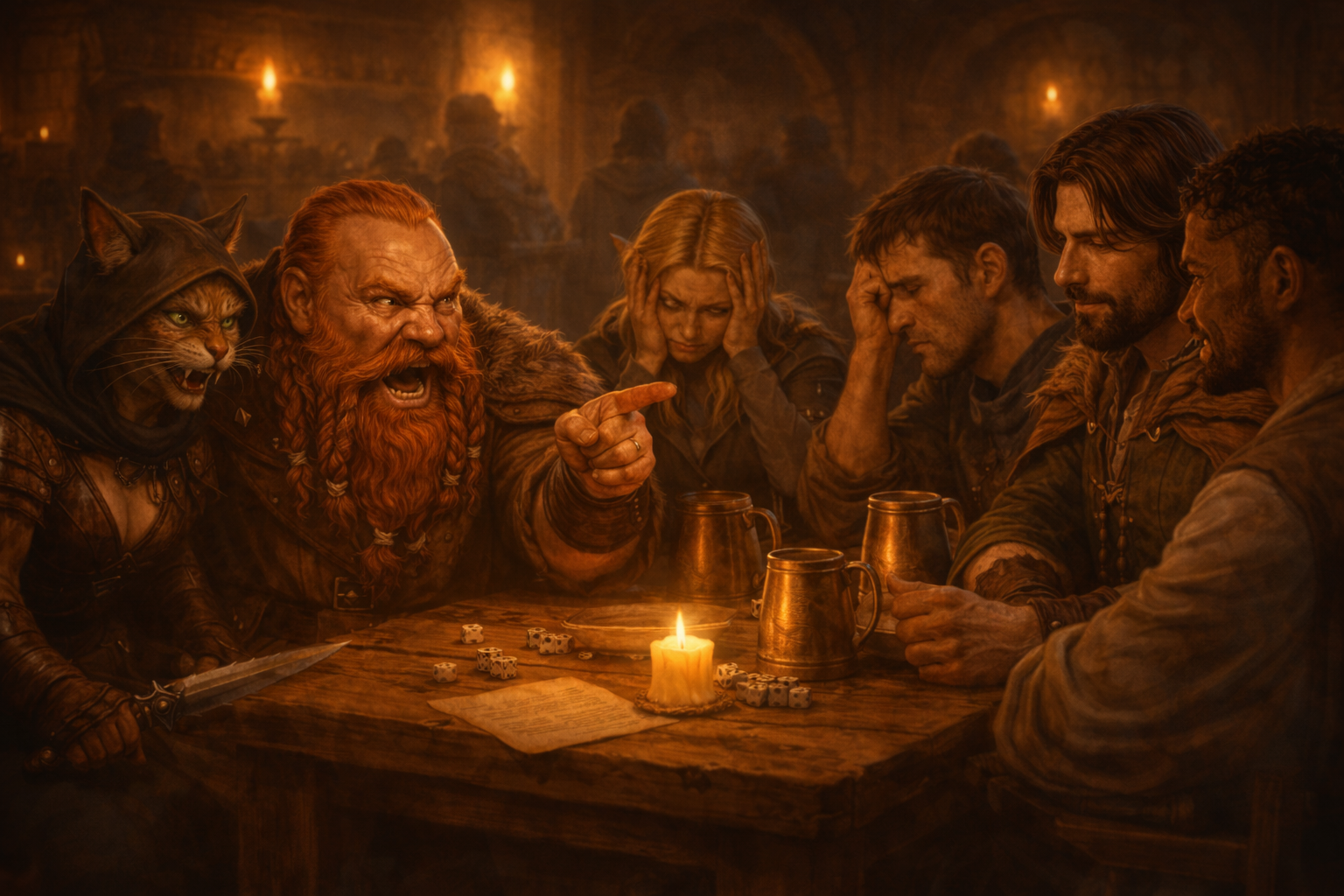
"By Brunlin’s missing eyebrow, if I had a copper for every party that shattered because someone thought they were the main character, I would own three taverns and a vacation mine. Some of you lot walk into a game thinkin you are the hero of a prophecy. Meanwhile the cleric is cryin, the wizard is beggin for help, and you are too busy flirtin with a goblin or runnin off alone to get eaten by wolves. The table is not yer personal destiny scroll. It is a team effort. So sit down, listen, and stop actin like a stonehead about to roll off a cliff."
Why This Happens More Than You Think
Most players have no idea they are causing the group to drift apart. It rarely starts with something loud. It usually begins with small habits that chip away at the table. Talking over others. Not paying attention. Being late. Ignoring character motivations. Leaving the group hanging in a tough decision. These slow fractures eventually turn into reasons for tension, frustration, or the quiet disappearance of players who no longer feel valued.
The hardest truth is that most broken parties are not ruined by one dramatic explosion. They fall apart through tiny pieces of neglect. Any player, even the kind ones, can be the reason without realizing it.
Common Signs That You Might Be Contributing To The Problem

1. You take more spotlight than you give
If you talk twice as much as everyone else, make twice as many decisions, and act before anyone can speak, you are not playing a character. You are wrestling the story away from the table.
2. You disappear into your phone
One moment you are present. The next moment you miss clues, forget names, and ask questions that were answered ten seconds earlier. This drains the GM and frustrates the group.
3. You refuse to compromise
Parties are made of different personalities. Sometimes you bend so the story can move forward. Stubborn players slow the entire session down and make scenes about themselves instead of the group.
4. You try to be funny at the wrong moment
Comedy is great. Interrupting emotional beats or dramatic reveals is not. A single poorly timed joke can ruin the mood and frustrate players who were invested.
5. You hide problems instead of addressing them
If something is bothering you at the table, you owe the group honesty. Silent resentment poisons campaigns faster than any villain.
The Mid Game Fix That Saves Campaigns
👉 A strong party is not built on perfect characters. It is built on players who communicate, compromise, and support each other. If you want to sharpen your instincts and keep your group from fracturing, explore the emotional and social skills discussed across Mike’s Tavern. These articles equip you to handle tension, protect morale, and play with more awareness so you keep the fun alive at your table.
Here are two helpful starting points:
https://www.mikes-tavern.com/tavern-etiquette/the-quiet-damage-of-comparison-at-the-table
https://www.mikes-tavern.com/tavern-etiquette/how-to-celebrate-wins-that-arent-yours
How To Actually Fix The Problem
This is the part most players skip, which is why their tables keep cracking. Here is what changes the game.
1. Listen more than you speak
Some of the best moments at the table come from letting others shine. When you quiet down, the world feels bigger and more alive. Listening shows respect and keeps the party balanced.
2. Support the GM instead of testing them
A GM is juggling rules, story, pacing, combat, and a table full of personalities. You can make their life easier by staying engaged, remembering details, and working with the plot instead of trying to topple it for a joke.
Learn more about supporting your GM here:
3. Step aside when another player has a moment
If the rogue wants a personal arc or the paladin confronts their past, let them. Interrupting someone else’s spotlight is one of the fastest ways to sour a group.
4. Ask questions that help the group
Instead of asking what you can do alone, ask what the party can do together. Collaboration keeps the campaign alive. Independence kills it.
5. Address conflict gently but clearly
If someone’s behavior is affecting you, speak privately and kindly. Most problems get solved with one honest conversation.
Here is a helpful reference:
6. Show up prepared
A little effort goes a long way. Read your abilities. Know your spells. Keep your sheet organized. When you respect the time others give, the table becomes stronger.
When You Want To Keep The Party Alive, Start With Your Own Play
👉 If you are serious about becoming a player who lifts the table instead of weakening it, explore more of the guidance hidden across Mike’s Tavern. These lessons teach you the emotional strength, table awareness, and teamwork instincts that make campaigns last for years.
Useful links for the next step:
