
When Everyone Shows Up but No One Feels Fully There
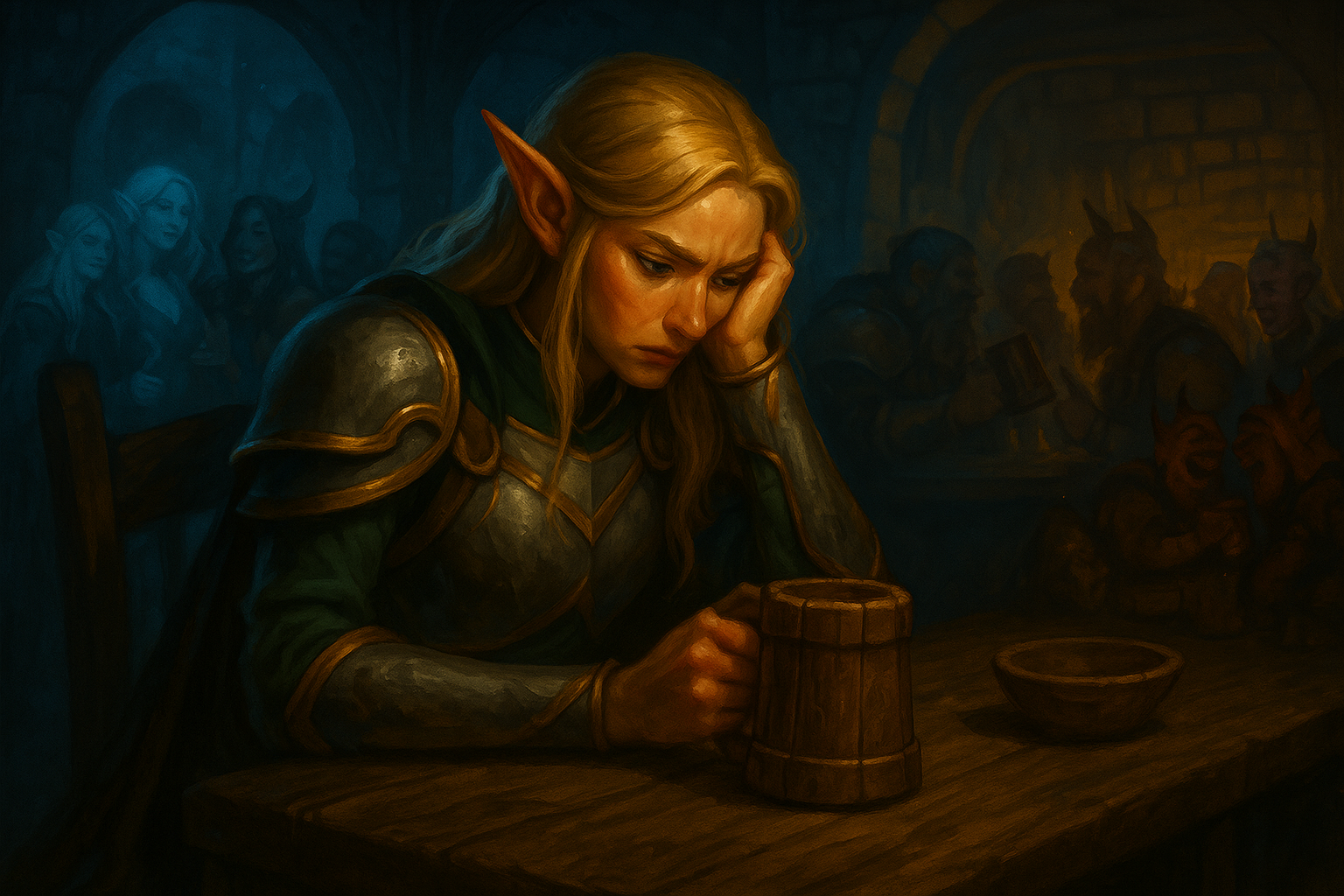
Alright, pull yer chair in close and stop starin’ at the table like it’s about to explain itself. I’ve seen this look more times than I’ve got grey hairs in me beard. Everyone showed up. Dice are out. Snacks are shared. And yet, somethin’s hollow. Like the soul of the game wandered off for a smoke and never came back. No fight, no drama, no disaster… just that quiet, naggin’ sense that the table’s here but nobody’s in it. If that was yer game last week, don’t look so shocked. Happens to good GMs more than they’ll ever admit.
The Session That Looks Fine on Paper but Feels Wrong in the Gut
This is the sort of session that tricks ya.
Combat runs smooth enough. Roleplay doesn’t collapse. No one storms off. From the outside, it looks like a perfectly serviceable game night. But when the last dice stop clatterin’ and folk start packin’ up, nobody’s buzzin’. No one’s lingerin’. There’s no post-game chatter, no “next week we should…” energy.
As a GM, that emptiness hits harder than a bad roll.
Because there’s nothin’ obvious to fix.
You didn’t railroad. You didn’t forget rules. You didn’t blow an encounter. And yet, the table felt… distant. Polite. Like coworkers stuck in the same meeting instead of adventurers bleedin’ together.
If this sounds familiar, you’re not broken. And neither is yer table.
You’re just dealin’ with a disconnected session and that’s a different beast entirely.
Why This Happens Even When You Do Everything “Right”
Here’s the bitter truth most GM advice skips: tables don’t drift because of mechanics. They drift because of people.
Players come in tired. Distracted. Carryin’ a rough week. Or worse, unsure where they fit anymore. Sometimes they don’t even know that’s what’s wrong. They just know they feel quieter than usual, less invested, like they’re watchin’ themselves play.
And when that happens across multiple players? The table goes flat without anyone meaning it to.
You’ll see it in small ways:
Decisions take longer.
Jokes don’t land.
Players default to “safe” actions.
Nobody pushes the story forward. They just respond to it.
This ain’t about bad behavior. It’s about emotional distance.
And if you’ve ever wondered whether you’re burnt out or just tired of holding the room, you’re not alone. There’s a reason pieces like When Yer Heart’s Givin’ Out But Yer Hands Keep Preppin’ hit so hard with veteran GMs. That weight creeps in quiet.
The Mistake GMs Make When the Energy Drops
Most GMs react by adding.
More plot hooks. Bigger fights. Deeper lore. New NPCs with fancy accents. They think intensity will wake the table up.
Sometimes it does.
Most times? It just overwhelms folk who were already driftin’.
Here’s the thing nobody tells ya: fixing the table is not the same as fixing the game. And if you treat it like a content problem, you’ll miss the real issue entirely.
That’s why so many GMs end up askin’ themselves whether they’re “just not good enough,” or comparin’ themselves to voices they were never meant to match. If that doubt’s been gnawin’ at ya, take a breath and read You’re Not Matt Mercer, Lad — And That’s a Bloody Good Thing before it rots in yer chest.
When the Table’s There but the People Ain’t
Here’s the quiet truth, lad: sometimes a table doesn’t need direction, it needs permission.
Permission to slow down.
Permission to be unsure.
Permission to admit they’re not fully present.
Players often won’t say it outright. They don’t want to be a burden. They don’t want to derail things. So they show up anyway, half-there, hopin’ the game will carry them.
And when everyone does that at once? You get that hollow session.
This is where table awareness matters more than encounter balance. If you’ve ever struggled to juggle quiet players and loud ones without losin’ yer mind, that tension feeds directly into this problem. The Quiet Player vs the Table Hog ain’t about fairness, it’s about presence!
Mike Butts In (Unasked, As Usual)
By me beard, I’ve watched tables sit there starin’ at maps like they were waitin’ for divine instruction. No one wrong. No one right. Just six grown folk afraid to take up space. And every time, some poor GM starts thinkin’ it’s their fault. LISTEN HERE, LAD. If everyone showed up, that means they care. They just don’t know how to step back in. That ain’t failure, that’s a pause. And pauses ain’t poison unless ya panic.
You Don’t Fix This Mid-Session, You Notice It
Here’s where restraint matters.
When a session feels off, your job isn’t to solve it on the spot. It’s to observe without judgment. Notice who’s quieter. Notice who’s defaultin’ to efficiency over expression. Notice whether the table’s avoiding risk — emotional or tactical.
And when you do address it, you do it gently. After the game. One-on-one if needed. Or even just by shiftin’ tone next session.
If you’re unsure how to hold that space without turnin’ into a therapist, there’s wisdom in The Right D&D GM Won’t Fix Ya — But He’ll Hold Space While Ya Mend. It’s not about answers. It’s about safety.
A Table That Feels Flat Is Still Alive
This is the part I want ya to hear clear as a struck bell: a disconnected session is not a dying campaign.
It’s a signal.
It means your table’s human. It means life crept in. It means expectations shifted quietly. And most importantly — it means the group trusted each other enough to keep showing up even when they weren’t at their best.
That’s not failure. That’s foundation.
If you’re still unsure whether this is fatigue or somethin’ deeper, When You Can’t Tell If You’re Burnt Out or Just Tired of Them might save you a long night of second-guessin’.
Keep the Tavern Doors Open
If this piece hit close to home, that’s no accident. Mike’s Tavern exists for these quiet moments — the ones folk don’t post about, but carry anyway. If you want to understand how this place came to be, take a wander through About Mike’s Tavern, skim the FAQ if yer wonderin’ how we do things here, or reach out directly if ya need to talk shop without judgment. Doors are open. Always.
In Case Yer Brain’s Tired Too
By Durven’s last tankard, not every quiet session’s a curse. Sometimes it’s just folk showin’ up with heavy packs and nowhere to set ’em down yet. Don’t stuff it with more noise. Don’t blame yerself. Notice. Hold steady. Give the table room to breathe, and you’ll find that presence comes back on its own time. A good GM don’t drag a table forward — he makes it safe enough for ’em to step back in when they’re ready.
