

Mike’s Personal Thoughts From Behind the Bar
I’ve seen it a hundred times, lad. Fight breaks out. Steel flashes. Someone rolls hot early and starts struttin like they carved the victory alone. Two rounds later, the rest of the party’s still clearin their throats while one hero’s already countin bodies.
By me beard, that ain’t victory. That’s just poor table manners wrapped in good math.
Ending a fight early is a fine skill. A respectable one. But if yer the only one feelin clever when the dust settles, then ye didn’t win. Ye rushed the ending and robbed the room of its cheer.
So let’s talk about how to finish fights clean, fast, and fair, without stealin the spotlight or sourin the ale.
What “Ending a Fight Early” Actually Means
This guide is not about raw damage numbers.
Ending a fight early means one of three things.
You remove the enemy’s ability to act meaningfully.
You collapse their position so the fight cannot recover.
You force a decision that ends resistance.
None of those require bein the loudest blade in the room.
And most of them work better when the whole party gets involved.
If yer still thinkin that big damage alone solves everything, spend a moment with
Top 7 Damage Spells to Drop the BBEG Before It Drops You
and then come back when yer ready to think beyond numbers.
Step One: Win the Fight Before the First Swing
The fastest fights are won before initiative matters.
That means position, terrain, and timing.
If yer already standin in the open trade-punchin like a pair of drunk ogres, the fight’s gonna drag. But if ye start the fight with enemies clustered, cornered, slowed, or split, the rest of the table gets to shine instead of scramble.
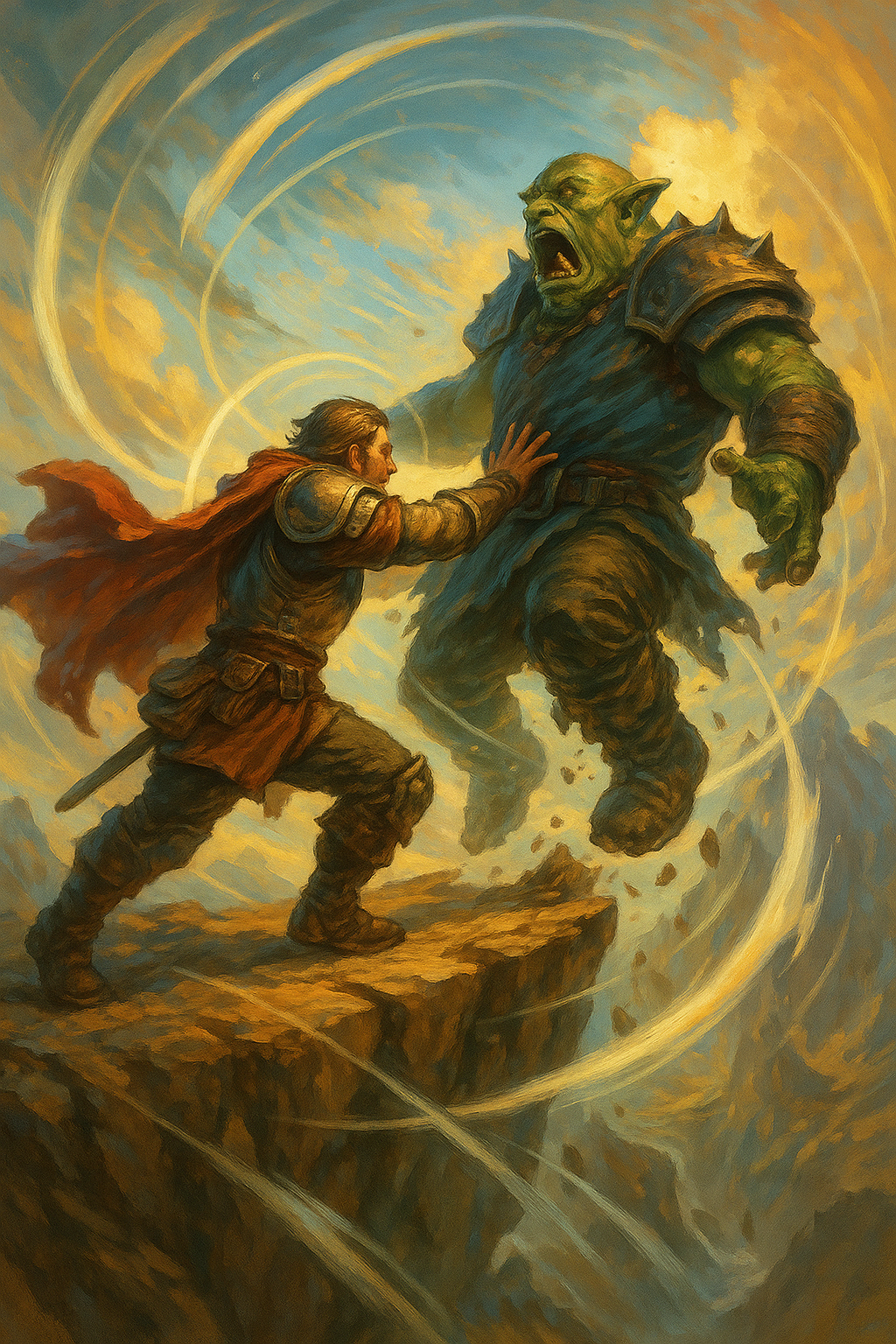
This is where forced movement earns its keep. Shoves, pulls, slides, and clever positioning end fights faster than another handful of dice.
If ye want to see how one good nudge can end an encounter outright, read
The Power of Forced Movement: Shove, Slide, and Toss ’Em Off a Cliff.
The goal is not kills. The goal is advantage that snowballs.
Step Two: Control Turns, Not Hit Points
Hit points lie. Action economy never does.
An enemy with half health who cannot act is already beaten. An enemy at full health who loses their turn again and again is finished whether they know it yet or not.
Ending fights early means reducing enemy turns through control rather than chasing damage.
Prone, restrained, blinded, frightened, slowed.
Forced repositioning.
Broken formations.
Denied access to priority targets.
Notice what’s missing. Damage numbers.
If this feels unfamiliar,
The Action Economy Goldmine: How to Squeeze Three Turns Into One
lays out why denying actions wins more fights than swingin harder ever will.
The cleaner the control, the shorter the fight, and the fairer it feels.
Step Three: Let the Party Finish What You Start
This is where most players stumble.
They set up a perfect moment and then refuse to let go of it.
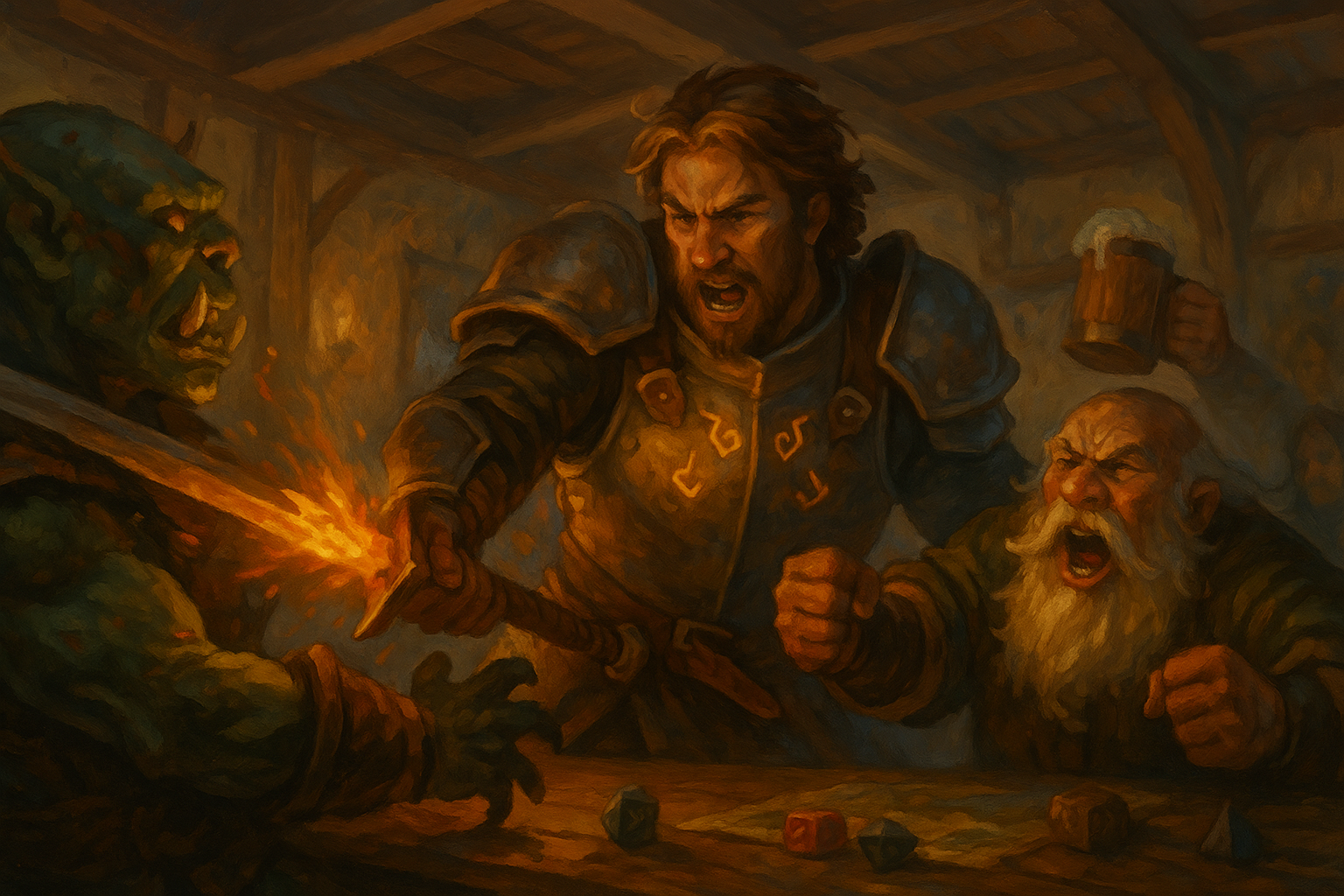
Ending a fight early does not mean ending it alone. It means creating a situation where everyone else gets to land something meaningful.
Good setup looks like this.
You knock enemies prone so the melee hits harder.
You isolate a threat so someone else can finish it.
You block movement so the caster lands their moment.
You hold the line so the rogue gets their strike.
Bad setup looks like hoggin the turn order and cleanin house solo.
If ye struggle to share plans without takin over,
May I Interject? How to Share a Plan Without Stealin the Turn
teaches how to speak up without stealin the show.
A fight that ends early because the party worked together feels earned, not stolen.
Step Four: Use the Environment Like a Weapon Everyone Can Swing
The room is part of the fight.
Doors, ledges, choke points, cover, hazards, elevation, and terrain changes end fights faster than fancy abilities ever will.
Best part? Everyone can use them.
If one player calls out the environment and the rest follow through, the whole table shares the victory. If one player uses the environment to show off, the table resents it.
For practical examples that invite teamwork instead of jealousy, look at
Top 3 Ways to Deal Stupid Damage at Level 1 Just by Usin the Environment.
Environment play is loud, visible, and shared. That’s why it feels good.
Step Five: Know When Not to Push
Sometimes the cleanest ending is not a kill.
Breaking morale, forcing retreat, or locking enemies down until surrender ends fights faster than chasin damage totals.
And sometimes the smartest move is pullin back.
If ye’ve never won a fight by leavin it, ye’re missin half the craft.
The Art of Retreat: Why Running Away Is Sometimes the Most Lethal Move
teaches when stoppin is sharper than swingin.
Ending fights early also means knowin when the fight’s already over.
A Mug Slammed on the Table
👉 If yer tired of fights draggin on or feelin like only one person ever gets to shine, there’s more hard-earned sense waitin in
Player Tips and Tricks,
where the Tavern teaches players to be clever without bein a nuisance.
Common Mistakes That Ruin Early Wins
Ending fights early goes wrong when you chase kills instead of control, take every setup and finish it yourself, solve encounters so fast no one else participates, or flex mechanics without readin the room.
If any of that stings, spend time learnin from
Tavern Etiquette,
where power is taught alongside restraint.
FAQ From the End of the Bar
Q: Is ending fights early unfair to the GM?
A: Not if it’s done clean. Good GMs enjoy smart play. They only hate showboatin and rule abuse.
Q: What if the party wants longer fights?
A: Then ye slow yer hand. Not every table wants speed. Read the mood before sharpenin the blade.
Q: How do I stop myself from hoggin moments?
A: Set up instead of finishin. If someone else lands the blow, the win belongs to all of ye.
Final Word Before Last Call
👉 If this guide saved yer table time or spared yer group an awkward silence, learn more about the Tavern itself on
About Mike’s Tavern
or reach out through the
Contact page
if ye’ve got a question worth answerin.
Win fast. Win fair. And leave room at the table for everyone to raise a mug.
