When a Session Ends and You Can’t Tell If It Was Good or Not

“Sit Down a Moment, Lad. Let’s Talk About That Feeling.”
Alright, listen here, lad — if a session just ended and yer sittin’ there starin’ at yer notes like they owe ya money, unsure whether that was brilliant or barely survivable… take a breath. That strange quiet after the table packs up? That ain’t always failure. Sometimes it’s just the weight of responsibility settlin’ on yer shoulders like damp chainmail.
This one’s for the GMs who walk away unsure. Not devastated. Not triumphant. Just… uncertain.
Let’s untangle that.
The Strange Silence After the Dice Stop Rolling
There’s a particular kind of quiet that happens after a session ends.
Players:
Say “good game”
Pack up their dice
Chat about snacks
Head home
And you?
You replay everything.
Was the pacing off?
Did combat drag?
Did that NPC land?
Was that twist earned or forced?
That ambiguity is more common than most GMs admit.
Sometimes it happens because:
Combat felt procedural instead of tense (you may recognize echoes of that in When Every Battle Feels Like a Board Meeting With Dice).
The table was engaged — but not energized.
You were carrying more of the room than usual.
No one complained… but no one lit up either.
Ambiguity is not the same as failure.
But it feels like it.
Three Reasons This Happens (That Aren’t “You’re Bad at GMing”)
1. You’re Measuring Against a Standard That Doesn’t Exist
If you’re comparing your session to highlight reels or streaming-level performance, remember:
You’re not a production studio.
You’re running a table of humans.
If you need that reminder carved into the wall, read You’re Not Matt Mercer, Lad — And That’s a Bloody Good Thing.
Most home sessions are:
Uneven
Messy
Slightly awkward
Occasionally brilliant
That’s normal.
2. You’re Absorbing Everyone’s Emotional Energy
Some GMs quietly take responsibility for:
Everyone’s fun
Everyone’s mood
Every lull in momentum
And when the night ends, they audit themselves.
If that sounds familiar, you might also relate to When You’re the Only One Who Cares If It All Falls Apart.
The uncertainty isn’t about quality.
It’s about weight.
3. The Session Was Fine — But Not Climactic
Not every session ends with:
A dragon
A revelation
A character death
A cliffhanger
Some sessions are connective tissue.
Setups.
Travel.
Repositioning.
And connective tissue feels quiet.
That doesn’t make it weak.
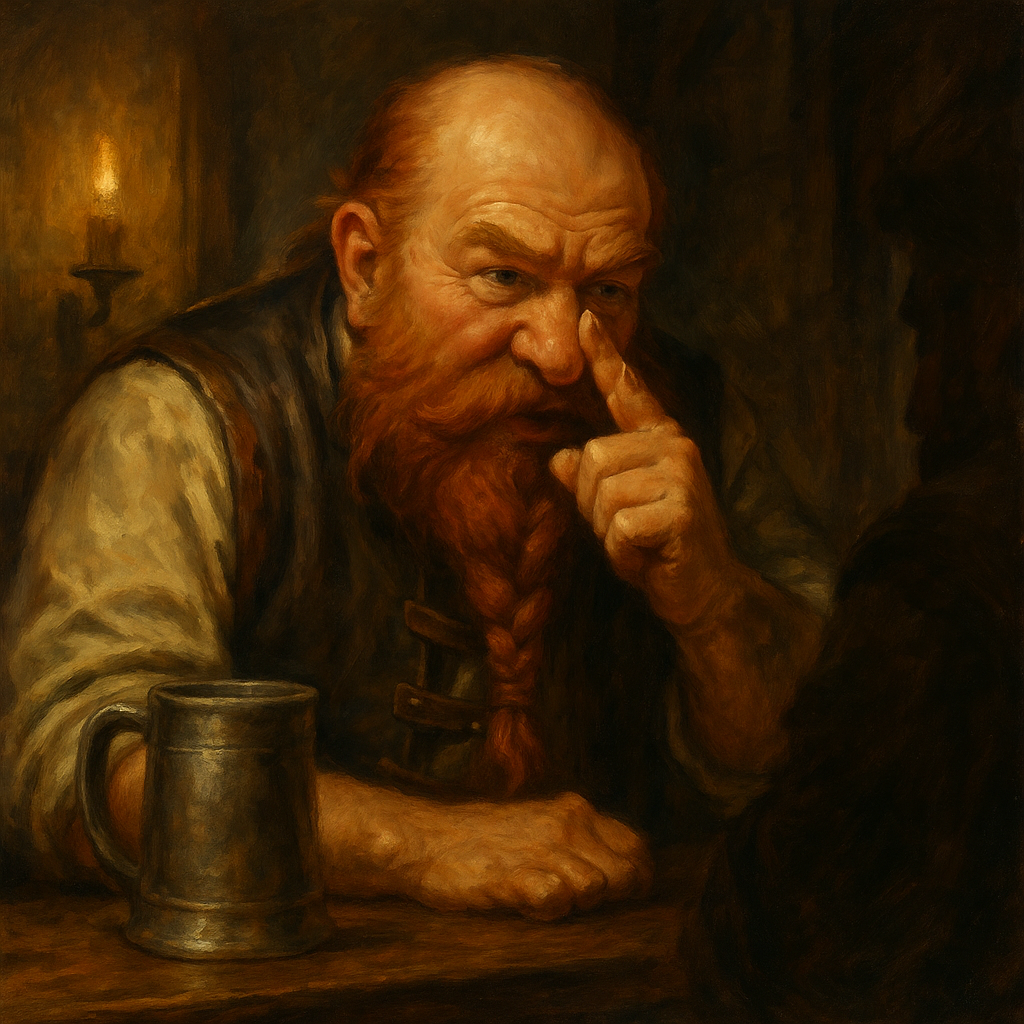
Mike’s Two Copper Pieces (Because I Ain’t Staying Quiet)
Listen here, ya yellow-bellied overthinkin’ scroll-scribbler.
By Grabgar’s hammer, not every session needs fireworks.
I’ve seen campaigns survive fifteen sessions of middlin’ tavern politics because the folk at the table trusted each other. I’ve also seen tables implode after one “perfect” boss fight because no one was actually listening.
If yer walkin’ away unsure, ask yerself this:
Did the table feel safe?
Did folk have space?
Did anyone feel shut down?If the answer’s no to the last one, then by Margann’s crusty beard, you did better than you think.
And if yer combat felt stiff, well — maybe go read When Combat Starts Feeling Like Chores Instead of Choices before ya start doubting yer entire existence.
Not every quiet ending is a warning bell.
Sometimes it’s just the tavern lights dimmin’ for the night.
How to Actually Evaluate a Session (Without Tearing Yourself Apart)
Instead of asking:
“Was it good?”
Ask:
Did players talk about it afterward?
Did anyone message you midweek?
Did someone reference a moment from last session?
Did players show up again?
Engagement isn’t always loud.
Sometimes it’s subtle.
And if you’re unsure whether you’re burnt out or just tired of overthinking, you might want to read When You Can’t Tell If You’re Burnt Out or Just Tired of Them.
There’s a difference.
The Hidden Trap: Needing Immediate Validation
Here’s the quiet truth.
Some GMs don’t need praise.
They need certainty.
And when certainty doesn’t arrive, the brain invents doubt.
But doubt after a session doesn’t automatically signal:
Failure
Player dissatisfaction
Campaign decline
If no one looks drained, no one withdraws, and no one avoids next week’s session?
You’re probably fine.
If, however, you feel like the table energy is uneven between quieter players and louder ones, revisit The Quiet Player vs the Table Hog — How to Keep Both Happy Without Losing Your Mind.
Sometimes ambiguity isn’t about plot.
It’s about balance.
Before You Start Rewriting the Entire Campaign…
Pause.
Don’t redesign the world.
Don’t scrap the arc.
Don’t overcorrect.
One average-feeling session does not require structural demolition.
If you want steadier improvement without blowing everything up, take a look at Top 5 Ways to Up Yer GM Game Without Tearin’ the Whole Thing Down.
Small refinements beat dramatic resets.
Every time.
More Table Tensions & Emotional GM Wisdom
If that post-session uncertainty hits deeper, explore these next:
The Right D&D GM Won’t Fix Ya — But He’ll Hold Space While Ya Mend
Learn more about what this tavern stands for on our About Mike’s Tavern page.
Sometimes the doubt isn’t about the dice.
It’s about the weight of caring.
Practical Fixes, Combat Tweaks & Mechanical Confidence Boosts