
Theatre of the Mind vs Battlemaps: When Visuals Help and When They Get in the Way
Every table eventually runs into the same argument, even if nobody says it out loud. Someone feels combat is dragging. Someone else feels lost. The GM starts over-explaining, players start over-measuring, and suddenly what should’ve been a desperate fight for survival feels like a budget meeting with dice.
This article isn’t about declaring a winner between Theatre of the Mind and battlemaps. It’s about understanding why each one breaks down when used at the wrong moment, and how smart GMs switch tools before the table loses momentum.
If you want a deeper look into who Mike is and why this tavern exists in the first place, start with About Mike’s Tavern. If you’re new here, the FAQ covers how these guides are meant to be used, and if something here hits close to home, you can always reach out through the contact page.
When Battlemaps Clarify Combat
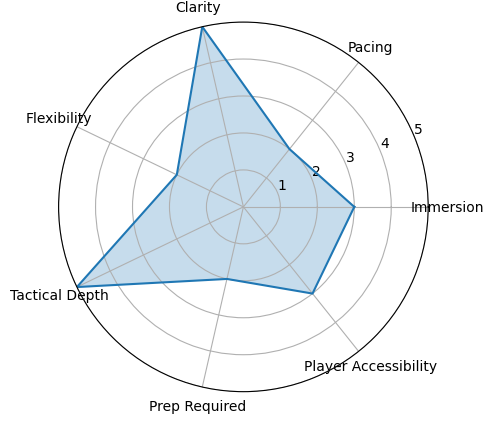
Battlemaps shine when clarity and tactical depth matter more than speed. The charts tell the story plainly: high clarity, high tactical depth, and strong fairness. Everyone sees the same battlefield, no one’s guessing distances, and abilities that rely on positioning finally make sense.
This is why battlemaps work well for set-piece fights, dungeon crawls, and encounters where the environment itself is part of the challenge. When terrain matters, when flanking matters, when movement economy is the game, visuals prevent arguments before they happen.
They’re especially useful at tables where players struggle to picture space in their heads or where quiet players benefit from something concrete to point at. If you’ve ever dealt with spotlight imbalance or dominant voices controlling the table, clarity can help rein that in — something explored further in The Quiet Player vs the Table Hog: How to Keep Both Happy Without Losing Your Mind.
When Battlemaps Start Slowing Everything Down
The same charts also show where battlemaps begin to fail. Pacing drops. Turn length stretches. Analysis paralysis creeps in. Suddenly every movement square is debated, every ruling questioned, and the GM is dragged into constant arbitration.
This is where fights stop feeling dangerous and start feeling procedural. You’ve likely felt this if you’ve ever thought, “Why is this simple skirmish taking an hour?” At that point, the map isn’t helping — it’s getting in the way.
Mike’s seen this kind of collapse plenty of times.
“By me beard, I’ve watched more fights die on a grid than in any dragon’s jaws. Lads standin’ there countin’ squares like they’re weighin’ potatoes, forgettin’ they’re supposed ta be terrified. If yer fight feels like paperwork, PUT THE BLEEDIN’ MAP AWAY.”
If this sounds familiar, When Every Battle Feels Like a Board Meeting With Dice digs even deeper into how over-structured combat kills tension.
When Theatre of the Mind Speeds Things Up
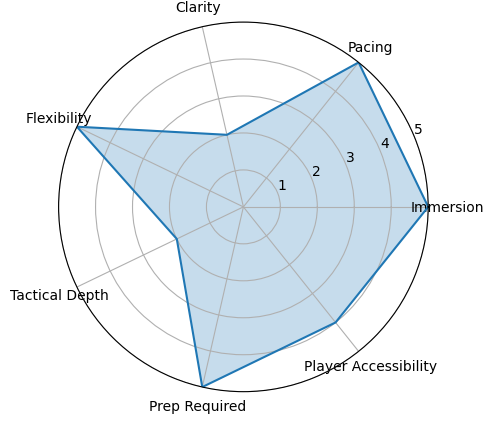
Theatre of the Mind flips the priorities. The charts show high immersion, strong pacing, and extreme flexibility. When players don’t need to ask where they’re standing every turn, they act faster. When the GM isn’t locked into a drawn space, the scene breathes.
This approach excels in emotional moments, chaotic brawls, ambushes, and fights meant to feel overwhelming rather than tactical. It’s also a powerful tool for keeping players engaged without drowning them in mechanics — especially in groups that thrive on roleplay.
If you’re running a table where energy matters more than precision, this style can keep sessions alive even when prep time is limited. That’s something Mike touches on often in Top 5 Ways to Up Yer GM Game Without Tearin’ the Whole Thing Down.
When Theatre of the Mind Turns Into Confusion
But the charts also expose the weak points. Clarity drops. Tactical depth thins out. Players who rely on spatial reasoning may feel lost or unsure. If the GM’s descriptions slip, suddenly everyone is imagining a different fight.
This is where Theatre of the Mind can quietly frustrate players who want fairness and consistency. Without anchors, uncertainty creeps in, and players may disengage or hesitate — a problem closely related to decision paralysis and confidence loss.
Mike’s blunt about this too.
“Listen, laddie. If half the table don’t know where they are, that ain’t mystery — that’s confusion. Don’t mistake chaos for drama, or yer party’ll stop trustin’ ya.”
Player confidence and emotional safety matter more than style points, something discussed further in A Safe D&D Table Ain’t a Soft One — It’s Where Ya Can Fall and Still Be Caught.
The Tool Matters More Than the Debate
This is where most arguments miss the point. The real failure isn’t choosing battlemaps or Theatre of the Mind — it’s refusing to switch when the table needs something else.
This is why tools matter.
If you’re running online games or hybrid tables, the smartest GMs don’t swear loyalty to one platform. They use what fits the moment. That’s why the most important resource in this entire discussion is how different map tools actually behave at the table, not just in theory.
That’s covered in detail in When Maps Collide: Owlbear Rodeo vs Roll20 vs 2-Minute Tabletop — and if you read only one link in this article, make it that one. It breaks down which tools support speed, which encourage overthinking, and which quietly solve problems before they start.
The Moment You Should Switch Tools Mid-Session
If combat is slowing, switch away from grids.
If players are lost, bring visuals back in.
If arguments start, clarity matters.
If energy dips, pacing matters more.
Good GMs aren’t consistent — they’re responsive. If you’ve ever worried that you’re burnt out or just tired of juggling expectations, When Yer Heart’s Givin’ Out But Yer Hands Keep Preppin’ is worth your time.
When Visuals Serve the Story, Not the Other Way Around
At the end of the day, maps are tools, imagination is a tool, and neither deserves blind loyalty. The charts don’t lie: each approach shines under the right conditions and collapses under the wrong ones.
A good table doesn’t argue about style. It listens to the table’s needs and adjusts before frustration sets in.
And if you ever feel like you’re failing because you’re not running games “the right way,” remember what Mike keeps muttering behind the bar.
“Yer not Matt Mercer, lad — and by me beard, that’s a BLOODY GOOD THING.”
If that hit home, You’re Not Matt Mercer, Lad — And That’s a Bloody Good Thing closes this loop nicely.
