
Playing Your First RPG: Forgetting Rules and Why It Happens
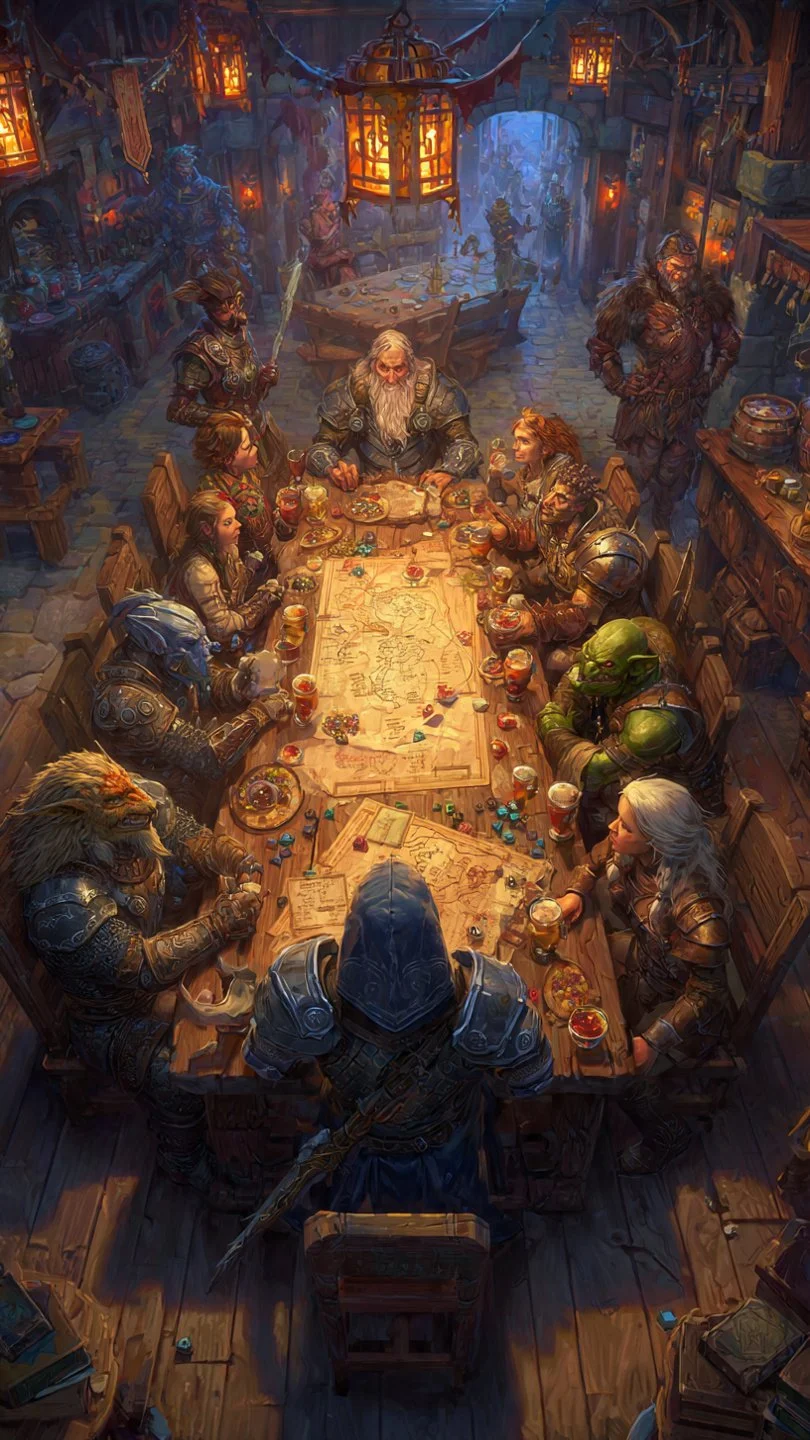
You forget the rules. A wave of embarrassment washes over you, and suddenly you are unsure whether to speak up or stay quiet. You worry that asking a question will make you look unprepared or careless. That hesitation can feel heavy, especially when everyone else appears confident and comfortable.
But here is something important to understand. If you are the least experienced player at the table, you are surrounded by people who have walked this road before you. Many of them have played multiple sessions. Some may have played dozens. They know the rules better than you do not because they are smarter, but because they have repeated those rules many times.
Forgetting rules is not a sign that you do not belong at the table. It is a sign that you are still learning something complex. Tabletop roleplaying games often contain layered mechanics, character abilities, and situational rules that interact in surprising ways. Even experienced players forget details from time to time.
If you are still getting familiar with how tabletop systems function overall, reviewing the Frequently Asked Questions can help you understand how learning curves work across multiple sessions.
Why This Feeling Is Normal
Forgetting rules happens because tabletop games are dense with information. Unlike board games that rely on a small set of repeated mechanics, roleplaying games combine storytelling, math, imagination, and strategy into a single experience. That combination makes learning slower than many people expect.
Memory also behaves differently under pressure. When attention shifts toward you during your turn, your brain becomes more focused on performance than recall. Even rules you understood earlier may feel distant or unclear when the spotlight arrives.
Another reason this happens is that players often learn rules in fragments rather than all at once. You may understand movement but forget how advantage works. You may remember how attacks function but forget when to apply bonuses. This patchwork learning style is natural and expected.
Most experienced players did not memorize every rule immediately. They learned gradually, session after session. Each game reinforced a small portion of knowledge until familiarity replaced confusion.
If you are interested in how communities grow through shared learning and patience, exploring About Mike’s Tavern can provide insight into how beginners become confident contributors over time.
What This Moment Actually Looks Like at the Table
Imagine the moment clearly.
Your turn begins.
You look at your character sheet and feel confident for a second. Then you notice something unfamiliar. Maybe it is a rule about spell range. Maybe it is a condition that affects movement. Suddenly, the confidence fades.
You hesitate.
You think about staying quiet.
You consider guessing instead of asking.
Then you speak.
"Sorry, I forgot how this works."
The GM looks up. Another player leans forward slightly. Someone reaches toward their own rulebook.
One player says, "No problem, here's how it works."
Another adds clarification. The GM confirms the correct rule and explains what happens next.
The moment continues.
No one laughs.
No one sighs in frustration.
The game moves forward with clearer understanding than before.
What feels like embarrassment to you often looks like collaboration to everyone else.
What Most New Players Worry About (And What Actually Happens)
New players often assume forgetting rules creates disruption. In reality, it usually creates opportunities for shared clarification.
Fear: I will look unprepared if I forget a rule.
Reality: Most players forget rules at some point, regardless of experience.
Fear: Asking questions will slow the game.
Reality: Clarifying rules early prevents larger confusion later.
Fear: Everyone else already knows everything.
Reality: Many players remember only the rules they use frequently.
Fear: I should memorize everything before playing.
Reality: Most learning happens during play, not before it.
If you want to understand how rules interact with pacing and decision-making, reading How to Run Combat That Feels Dangerous Without Being Unfair can provide useful insight into how rules support storytelling rather than restrict it.
What You Can Do In That Moment
When you forget a rule, the most effective response is honesty combined with curiosity. Saying, "I forgot how this works, can someone remind me?" opens the door to collaboration rather than confusion. Most players appreciate clarity because it benefits the entire table.
Another helpful strategy is to keep small reference notes. Writing down commonly used actions or bonuses reduces the need to search through pages during tense moments. These notes act as reminders that support memory rather than replace it.
Preparation between sessions also improves confidence. Reviewing your character’s abilities for a few minutes before the next game helps reinforce familiarity. Even brief review sessions strengthen recall significantly.
Technology can also provide assistance. Many modern players rely on structured tools to simplify learning and track character information. Exploring resources in the RPG Tools section can help organize abilities and reduce confusion during active gameplay.
These small habits create steady improvement. Memory strengthens through repetition, not pressure.

The Tavern Toolset
Lets get you started on your first adventure! Take these tools, laddie, these ones are on me!
What Happens If You Avoid This Moment
Avoiding questions about rules can create larger problems over time. If you guess instead of asking, mistakes may accumulate. Those mistakes can lead to confusion, frustration, or unexpected outcomes that disrupt the flow of the game.
Silence also creates uncertainty. When rules remain unclear, decision-making becomes slower and less confident. That hesitation may cause you to feel disconnected from the game, even when you are still participating.
Over time, avoidance can reduce enjoyment. Instead of feeling curious about learning, you may begin to feel anxious about forgetting. That anxiety shifts attention away from storytelling and toward self-doubt.
Asking questions early prevents confusion later. Clarification builds confidence, while avoidance builds uncertainty.
What Experienced Players Know That Beginners Don’t
Experienced players understand that remembering rules is a gradual process. They know that mastery does not appear instantly. It develops through repetition, correction, and observation.
They also understand that rules are tools rather than obstacles. Rules exist to guide the story and create fairness, not to create pressure. Even experienced players occasionally check references or ask for clarification when unusual situations arise.
Another important insight among seasoned players is that collaboration strengthens memory. When multiple people discuss rules together, understanding improves for everyone at the table. Shared learning builds confidence faster than isolated memorization.
If you are curious how communication improves group dynamics during complex situations, reading The Quiet Player vs the Table Hog: How to Keep Both Happy Without Losing Your Mind provides useful perspective on how different learning speeds coexist at the same table.
Your First-Time Player Check-In
Take a moment to reflect on your own experience with forgetting rules.
Have you ever hesitated to ask a question because you feared looking inexperienced?
Have you guessed a rule instead of confirming it?
Have you noticed moments where uncertainty made your turn feel more stressful than it needed to be?
Now consider how you might respond differently during your next session.
Are you willing to ask one question when confusion appears?
Are you willing to treat mistakes as part of learning rather than proof of failure?
Are you willing to rely on the people around you as sources of knowledge rather than silent observers?
These reflections encourage growth through openness rather than pressure.
What To Remember Before Your Next Session
Forgetting rules is not a flaw. It is an expected part of learning complex systems. Even players who appear confident today once struggled with the same uncertainty you feel now. Their familiarity developed through repetition, correction, and patience rather than instant memorization.
You are not expected to remember everything immediately. You are expected to participate, ask questions when needed, and allow knowledge to build gradually over time. With each session, small pieces of understanding connect together, turning confusion into clarity and hesitation into confidence.
