The Campaign Politician: When One Player Turns the Whole Table Into a Debate Hall
At First, He Sounds Reasonable
The Campaign Politician rarely introduces himself as a problem.
Usually, he sounds intelligent.
“Why would the guards place the jail there?”
“Why would the king trust us?”
“Why would my character agree to this?”
At first, these sound like immersion questions. Sometimes they even improve roleplay.
But eventually the table notices something strange.
The questions never end.
And somehow, every question slows the game down right before somebody else’s plan succeeds.
Then Every Plan Becomes a Trial
The rogue wants to sneak in through the back entrance.
Suddenly the interrogation begins.
“How do we know there aren’t guards there?”
“Why would the city leave that entrance exposed?”
“What if someone sees us?”
“Wouldn’t that plan realistically fail?”
Now the group is no longer planning.
They are defending the plan.
The emotional energy shifts completely.
Instead of collaborative excitement, the table enters justification mode.
And after twenty minutes of this, most players stop feeling clever.
They start feeling tired.
Related: When Every Battle Feels Like a Board Meeting With Dice
The Character Becomes His Shield
This is the core trick.
The Campaign Politician does not speak directly.
He uses the character as a puppet.
“It’s what my character would ask.”
“My character wouldn’t trust this plan.”
“My character would challenge that.”
This creates emotional confusion at the table.
Because now criticizing the behavior feels like criticizing roleplay itself.
And suddenly everyone becomes afraid to confront the actual issue.
The player gains protection through ambiguity.
The character becomes armor.
The Table Starts Walking Carefully
A healthy table experiments freely.
An unhealthy table calculates emotional fallout.
Soon, players begin filtering themselves before speaking.
“We’ll probably get questioned if we suggest that.”
“He’s going to start another debate.”
“Let’s just go with his plan.”
That is the moment the campaign starts rotting.
Not because of disagreement.
But because psychological freedom disappears.
Related: The Strongest Character at the Table Is the One Who Listens
The WhatsApp War Begins
The damage spreads outside the table.
Now the group chat becomes a battlefield.
Paragraphs appear.
Long emotional explanations.
Passive-aggressive clarifications.
Tiny details dissected endlessly.
Some players stop responding altogether.
Others mute the chat.
The Campaign Politician usually believes this means he is being excluded unfairly.
But often the group is simply exhausted.
They are no longer discussing the campaign.
They are managing emotional fallout.
He Questions Tiny Details to Take Control
Notice the pattern carefully.
The Campaign Politician rarely attacks plans directly.
Instead, he attacks certainty.
Tiny details become pressure points.
“The jail placement makes no sense.”
“The guards wouldn’t act like that.”
“The NPC response feels unrealistic.”
“The timing doesn’t add up.”
These are not always genuine concerns.
Sometimes they are tools.
If he destabilizes the existing plan long enough, eventually the table loses confidence.
Then he introduces his own solution.
And now control shifts back to him.
When Pushed Back, He Becomes the Victim
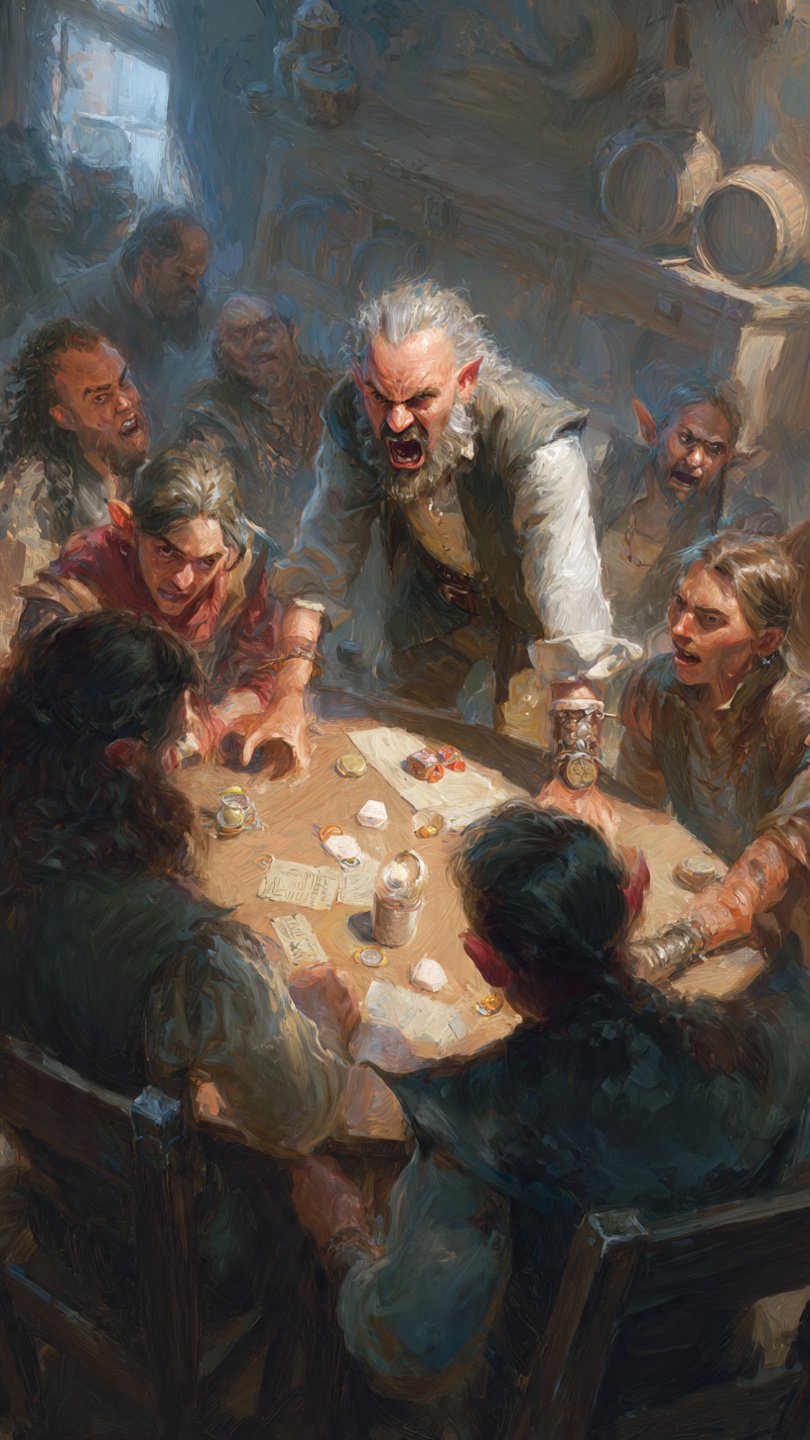
Eventually somebody snaps.
“Dude, you argue with everything.”
And suddenly the atmosphere changes.
Now he looks wounded.
“I feel like everyone’s attacking me.”
“I’m just trying to roleplay properly.”
“Why is everyone pointing fingers at me?”
This is what makes covert narcissistic behavior so exhausting.
Aggression hides behind fragility.
Control hides behind vulnerability.
And the table starts comforting the very person draining it.
Related: When the Table Keeps the Peace Instead of Fixing the Problem
Now Nobody Is Playing Anymore
This is the real tragedy.
Combat still happens.
Dice still roll.
Sessions still technically continue.
But the game is dead emotionally.
Nobody is immersed.
Nobody feels relaxed.
Nobody feels creative.
The table is surviving, not adventuring.
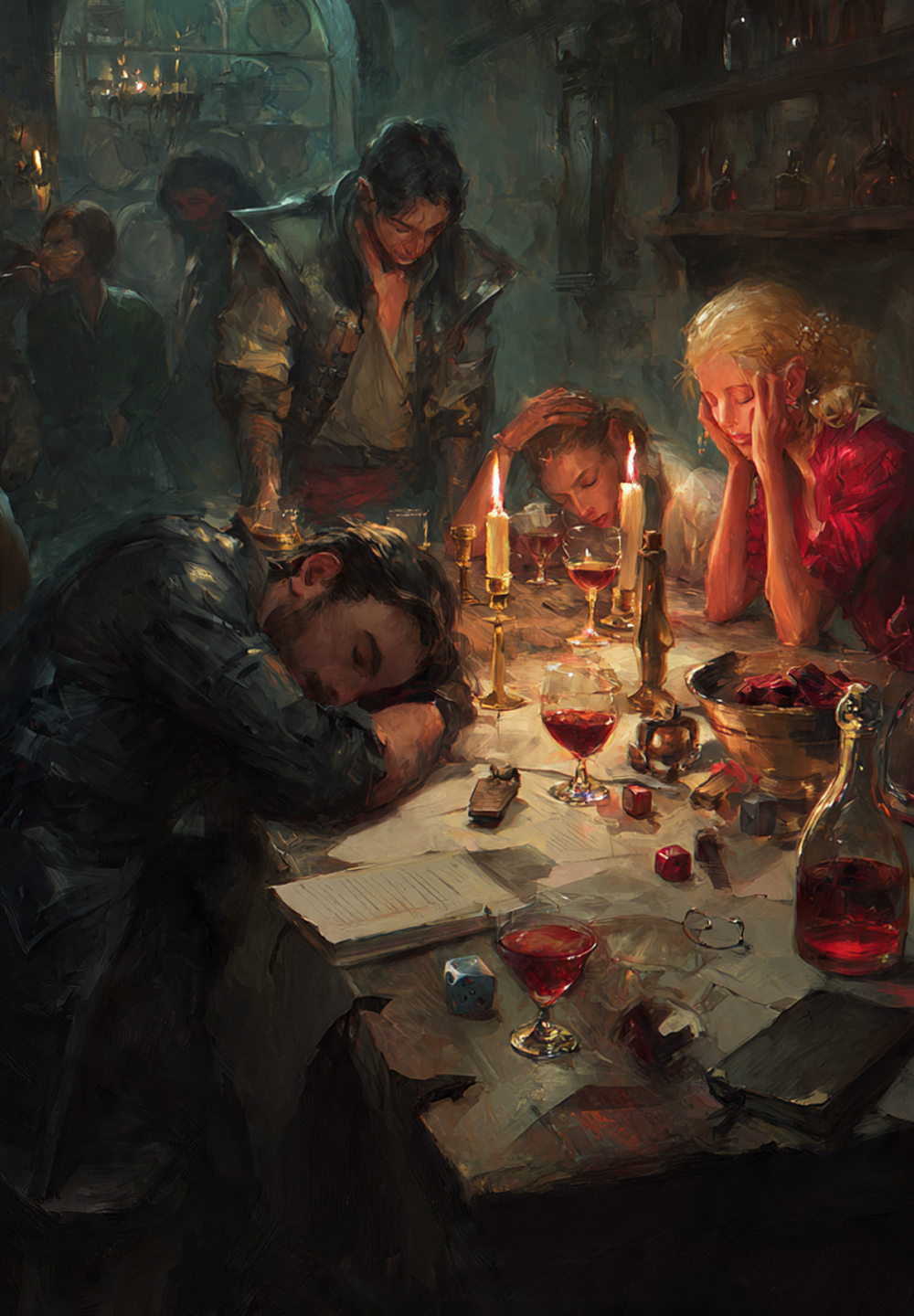
And most players begin counting down until the session ends.

Help Keep The RPG Community Safe From Such People
Got a safe space where people can play RPGs in peace or know of such a place? Share it with the Tavern Network.
The Tavern Wall Reminder
If yer entire campaign starts feelin’ like a courtroom drama where every plan needs three witnesses, a signed confession, and approval from the council chamber, then the problem ain’t realism anymore.
It’s control.
And good campaigns die fast when one player turns every decision into a political negotiation.
If this sort o’ table decay sounds familiar, take a walk through:
Or visit:
The Campaign Dies From Exhaustion
Most campaigns do not explode.
They decay quietly.
Attendance becomes inconsistent.
Energy drops.
People stop joking.
The GM prepares less.
Sessions end earlier.
And eventually someone says:
“Maybe we should take a break for awhile.”
That “break” usually never ends.
The Campaign Politician rarely notices his role in this.
Because in his mind, he was “just asking questions.”
What the GM Must Say
A weak intervention focuses on the details.
A strong intervention focuses on the pattern.
Do not argue about the jail cell.
Do not debate realism.
Address the behavior directly.
“Right now, every group decision is turning into a prolonged challenge session. The table feels pressured and exhausted. We need shorter objections, faster decisions, and more trust between players.”
That changes the conversation entirely.
Now the issue cannot hide behind roleplay.
Related: Running Your First Game - Saying No Without Killing Creativity
What the Table Must Stop Doing
Stop emotionally rescuing him every time accountability appears.
This does not mean cruelty.
It means clarity.
If somebody consistently turns every session into emotional management, the solution is not endless reassurance.
The solution is boundaries.
A table cannot survive if five people continuously sacrifice comfort to stabilize one person’s ego.
Related: Why Your Party Keeps Falling Apart - And How to Stop Being the Reason
The Hard Line
Not every player can be saved by patience.
Some people do not want collaboration.
They want control disguised as collaboration.
And if every correction becomes victimhood, improvement becomes nearly impossible.
At that point, the table must ask a painful question:
“Are we preserving one player at the cost of everybody else?”
Sometimes removing one person saves the campaign.
That is not cruelty.
That is maintenance.
Reflection Questions
Do people feel relaxed speaking freely around you at the table?
When you question plans, are you improving them or destabilizing them?
Do disagreements around you often become emotional instead of practical?
Have players stopped sounding excited during discussions?
Are you collaborating with the table, or competing for control over it?
When criticized, do you reflect first, or immediately feel persecuted?
Has your group slowly become more tired than enthusiastic?
“Listen here, lad. A good adventurer helps the table move forward. A bad one turns every road into a parliament debate with daggers under the table. By Grabgar’s hammer, stories need trust ta survive.”
For more table survival wisdom, visit:
FAQ
More Tavern Goodness For Ya!