
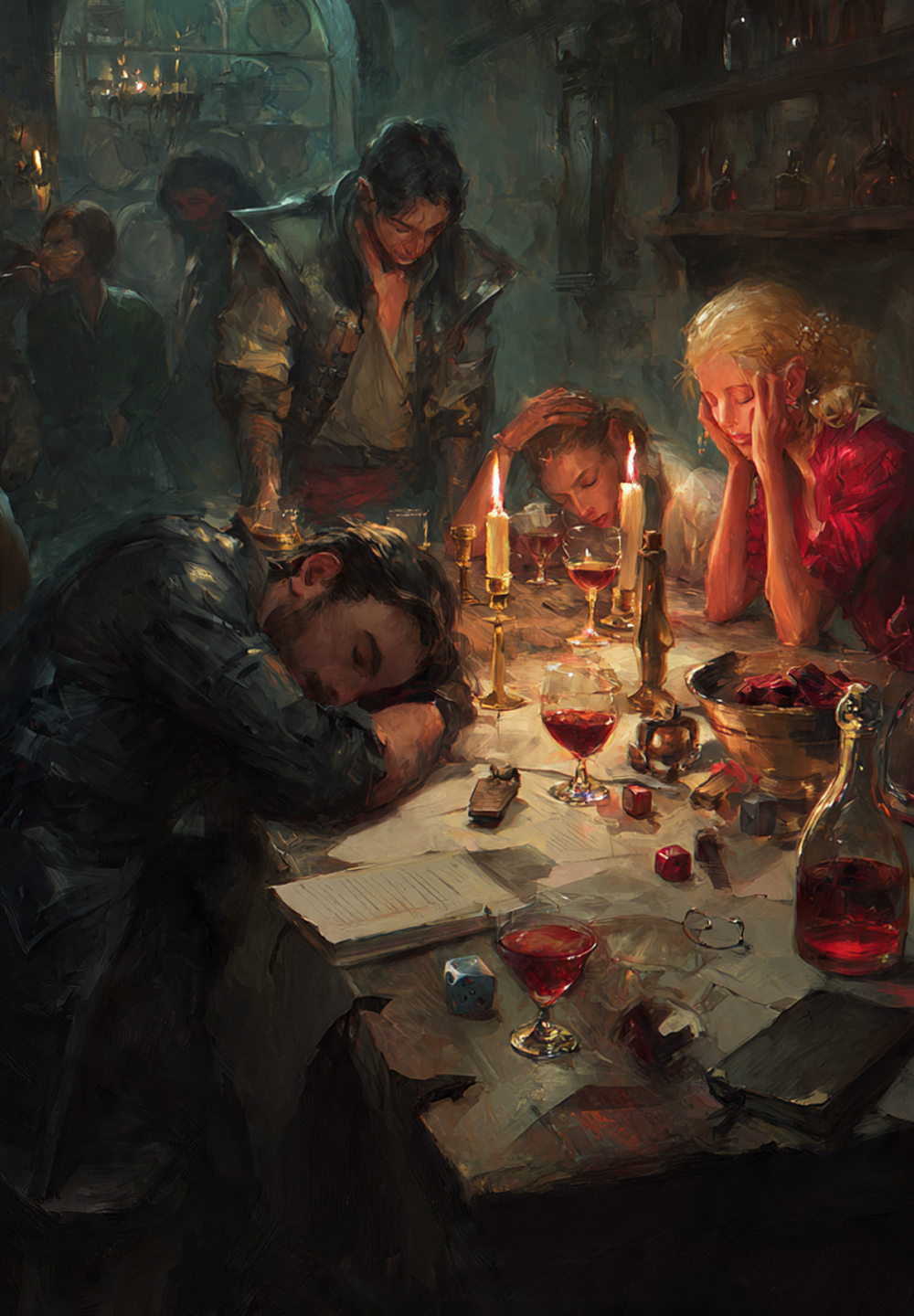
Mike’s Opening Grumble, When Eyes Drift Away From the Battlefield
Listen here, GM.
There’s a moment every Game Master faces sooner or later.
You’re describing something important. Maybe a villain entering the room. Maybe a door creaking open. Maybe a threat about to unfold.
And then you see it.
One player checks their phone. Another starts side chatter. Someone else asks you to repeat what you just said.
That feeling hits hard.
"Am I boring them?"
Now listen carefully.
Most of the time, attention problems are not caused by weak stories. They are caused by weak signals. Players lose focus when they stop feeling involved.
Not entertained.
Involved.
Let’s talk about how to bring their attention back without shouting, forcing, or blaming.
Tip 1 — Give Players Something to React To Immediately
Long explanations lose attention.
Immediate choices hold it.
When players receive too much description without action, their minds drift. Not because they do not care, but because they have nothing to do yet.
Attention grows when players must respond.
Instead of describing a location for several minutes, introduce something that demands reaction:
A suspicious figure watching them.
A strange noise from behind a door.
A question directed at a specific player.
Action pulls attention forward.
If you have ever struggled with keeping momentum alive during quiet moments,
Running Your First Game, Keeping the Game Moving When Players Freeze
offers deeper techniques for maintaining forward motion.
Movement creates attention.
Stillness weakens it.
Tip 2 — Address Players by Name, Not Just Their Characters
This one changes everything.
When you speak only to characters, players feel distant. When you speak to players directly, attention sharpens.
Instead of saying:
"The ranger sees movement."
Say:
"James, you notice movement at the edge of the trees."
Now the player feels seen.
And once one player engages, others follow.
Attention spreads across the table when individuals feel noticed.
If you want to improve your ability to sense who is drifting and who is engaged,
Running Your First Game, Reading the Table Without Anyone Saying a Word
teaches how to track player focus through subtle cues.
Engagement begins with recognition.
Always.
Tip 3 — Rotate Spotlight Time Before Attention Fades
Many GMs stay with one player too long.
That creates imbalance.
When attention rests too heavily on one person, others begin to disconnect. Not intentionally. Just gradually.
Shorter spotlight turns keep attention alive.
Move between players before interest fades.
Ask:
"What are you doing?"
"What do you see?"
"How do you respond?"
Quick rotations keep minds active.
Players who expect their turn soon stay mentally ready.
If your sessions sometimes feel slow or uneven,
Running Your First Game, Learning How to Listen Before You Speak
explains how listening patterns help you manage attention flow.
Attention thrives on participation.
Not observation alone.
Tip 4 — Let Consequences Appear Quickly
Delayed consequences weaken attention.
Immediate consequences sharpen it.
When players see their decisions matter right away, focus returns naturally.
Open the chest recklessly, and something reacts.
Ignore the warning, and danger appears.
Choose a risky path, and tension rises.
This is not punishment.
This is feedback.
Fast feedback tells players their actions matter.
And when actions matter, attention returns.
If you want to build encounters that naturally reinforce engagement,
Designing Enemies That Punish Bad Decisions, Not Bad Dice
offers strong guidance on building responsive threats.
Consequences drive focus.
Not speeches.
Tip 5 — Ask Questions That Require Decisions
Attention fades when players become passive.
Questions create activity.
Instead of narrating long scenes, ask decision-driven questions:
"Do you trust this person?"
"Do you enter now or wait?"
"Who goes first?"
Questions force engagement.
Players shift from listening to thinking.
Thinking leads to participation.
Participation restores attention.
If your table sometimes feels like people are waiting for instructions instead of acting,
Running Your First Game, Saying No Without Killing Creativity
explains how to encourage decision-making without shutting players down.
Questions turn observers into participants.
Every time.
Tip 6 — Fix Attention Problems Early, Not After Frustration Builds
Many GMs ignore drifting attention until frustration appears.
That delay creates tension.
Fix problems early.
If attention drops, shift the pacing. Change tone. Introduce movement. Call on quieter players.
Do not wait until irritation shows.
Attention is easier to restore early than late.
If you have ever wondered whether your encounters collapse because focus fades too soon,
Building Boss Fights That Don't Collapse in Two Rounds
shows how structure keeps players engaged through longer encounters.
Early adjustment prevents late frustration.
Always.
What Happens When Attention Problems Go Unchecked
Drifting attention spreads quietly.
One distracted player becomes two.
Two distracted players become side conversations.
Side conversations become disengagement.
Eventually, storytelling weakens.
Not because the GM lacks skill.
Because attention slipped slowly and went uncorrected.
Left alone long enough, disengagement becomes habit.
And habits shape culture.
The Stabilizing Truth, Attention Is Built Through Involvement
Players rarely lose attention when they feel needed.
Not entertained.
Needed.
Give them decisions. Give them responsibility. Give them consequences.
When players feel involved, focus follows naturally.
You do not force attention.
You earn it through structure.
Reflection Questions, Ask These After Your Next Session
Be honest with yourself:
Did I give players something to react to quickly?
Did I rotate spotlight time before attention faded?
Did players make decisions often enough to stay engaged?
Did consequences appear fast enough to matter?
What is one change I can test next session to strengthen attention?
Choose one.
Test it.
Observe what changes.
Continue Learning Inside the Tavern
If you want to understand the philosophy behind how this place teaches table leadership, begin with
About Mike’s Tavern
If you're facing repeated table problems and want clear direction, explore
Mike’s Tavern FAQ
And if a situation at your table feels confusing or difficult to diagnose, you can always reach out through
Contact Mike’s Tavern
Because attention problems are rarely about laziness.
They are about structure.
