
Players Keep Talking But Nothing Happens, Try These 6 GM Habits That Turn Discussion Into Decisions
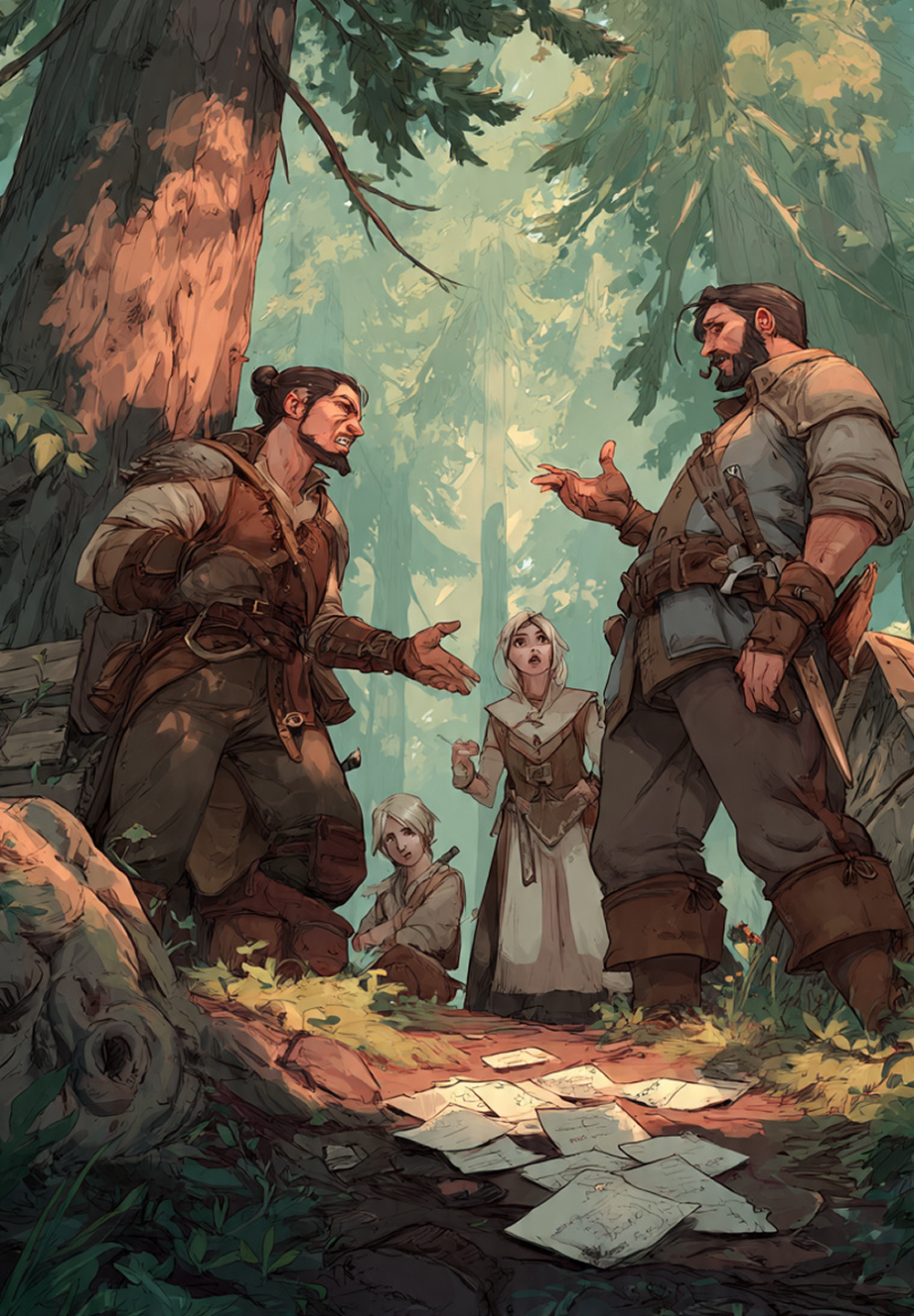
Mike’s Opening Grumble, When Plans Never Become Action
There’s a moment every GM recognizes.
The party starts planning.
At first, it sounds productive. Smart. Strategic.
Then five minutes pass.
Then ten.
Then twenty.
And somehow the group is still discussing the same door, the same hallway, the same problem that has not moved even an inch.
No one acts.
No one commits.
Everyone keeps talking.
And the tension that once felt exciting slowly turns into fatigue.
Planning is not the enemy.
Endless planning is.
Players talk too long when uncertainty feels dangerous, when outcomes feel unclear, or when committing feels risky.
Your job is not to stop planning.
Your job is to make planning lead somewhere.
Tip 1 — Give Planning a Visible Clock
Endless planning happens when time feels unlimited.
If players believe they have forever, they will use forever.
You do not need a literal timer.
You need visible pressure.
Footsteps approaching in the distance.
Torches burning lower.
Rain beginning to flood the passage.
Guards rotating shifts.
Movement in the world creates urgency without forcing decisions.
Players begin acting because delay now carries visible consequences.
If pacing problems happen often during planning scenes,
Running Your First Game, Keeping the Game Moving When Players Freeze
explains how environmental pressure keeps motion alive without removing agency.
Time pressure turns theory into action.
Tip 2 — Let Plans Work, Even Imperfect Ones
Players stall when they believe only perfect plans succeed.
Perfection is slow.
Action is fast.
Allow imperfect plans to function.
Not flawlessly.
But meaningfully.
If every plan collapses instantly, players learn hesitation.
If imperfect plans move the story forward, players learn courage.
Plans should succeed just enough to matter.
And fail just enough to stay interesting.
If your players hesitate because past plans failed too harshly,
Designing Enemies That Punish Bad Decisions, Not Bad Dice
helps reshape outcomes into momentum instead of shutdown.
Progress builds trust.
Trust builds action.
Tip 3 — Turn Overplanning Into World Movement
Long discussions often mean players are waiting for certainty.
But certainty rarely exists in living worlds.
When planning stretches too long, move the world forward.
Not against the players.
Around them.
A guard patrol shifts routes.
A door opens elsewhere.
A distant sound interrupts discussion.
A new clue becomes visible.
These small changes disrupt endless theory and invite action.
Planning remains useful.
But motion becomes necessary.
If players often stall during strategy sessions,
Running Your First Game, Reading the Table Without Anyone Saying a Word
helps identify hesitation patterns before they spread.
Movement invites commitment.
Stillness encourages delay.
Tip 4 — Ask Through the Fiction, Not Over the Table
When players hesitate, avoid putting pressure directly on individuals.
Interrogation shuts people down.
Invitation opens them up.
Instead of:
"What are you doing?"
Try:
"The hallway grows quieter. Your rogue notices the torch flicker. Does she step forward or stay hidden?"
You are not questioning the player.
You are presenting the moment.
Here are reliable ways to guide without spotlight pressure:
Speak to characters instead of players
Offer two gentle directions instead of open-ended demands
Describe what characters perceive before asking what happens next
Allow quiet thinking space without rushing responses
This keeps the focus inside the story.
And keeps players from feeling exposed.
If hesitation often feels tied to pressure or uncertainty,
Running Your First Game, Saying No Without Killing Creativity
shows how structure can guide action without intimidation.
Balance creates safety.
Safety creates movement.
Tip 5 — Make the First Commitment the Easiest One
Long planning cycles often stall at the first commitment.
Nobody wants to be the first to act.
So remove that barrier.
Offer the smallest possible commitment.
"Who opens the door?"
"Who walks first?"
"Who watches the rear?"
Tiny commitments create momentum.
Momentum breaks planning loops.
Once movement begins, discussion shifts from theory to reaction.
If sessions often stall at decision points,
Running Your First Game, Keeping the Game Moving When Players Freeze
offers techniques for turning hesitation into immediate action.
Small decisions unlock large movement.
Tip 6 — Treat Delays as Opportunities, Not Failures
Not every delay is wasted time.
Sometimes discussion reveals fear, uncertainty, or hidden confusion.
Listen carefully during long planning moments.
Players often reveal what worries them most.
And those worries create opportunities.
A strange theory becomes a future twist.
A wild guess becomes a hidden clue later.
A joke becomes a recurring story element.
Even overthinking can become fuel.
Not failure.
Fuel.
If you want to better understand how communication shapes pacing,
Running Your First Game, Learning How to Listen Before You Speak
explains how listening turns hesitation into narrative strength.
Stories grow from what players care about.
Even when they hesitate.
What Happens When Planning Never Ends
Discussion without action drains tension.
Momentum slows.
Energy fades.
Excitement turns into fatigue.
And eventually, even good ideas feel exhausting.
Not because planning is wrong.
Because planning without action feels endless.
And endless rarely feels exciting.
The Stabilizing Truth, Planning Only Matters When It Leads Somewhere
Talking feels safe.
Action feels risky.
But stories are built on action.
Not discussion alone.
Your role is not to stop planning.
Your role is to make planning meaningful.
To give it edges.
To give it movement.
To give it consequences that invite commitment.
Because the best plans are never perfect.
They are simply the ones that move forward.
Reflection Questions, Ask Yourself After the Next Session
After your next session, consider:
Did I introduce visible pressure during long planning?
Did imperfect plans create progress instead of collapse?
Did I move the world forward when discussion stalled?
Did my questions invite action instead of pressure?
What single change would shorten hesitation next time?
Choose one.
Apply it.
Observe what changes.
Because talking is not the problem.
Talking without action is.
