Running Your First Campaign - The First Three Sessions Matter More Than Yer Entire World Map

New Game Masters love world maps.
By Grabgar’s hammer, they adore them.
Massive continents.
Ancient kingdoms.
Mountain ranges.
Trade routes.
Lost ruins.
Fifty cities with names nobody at the table can pronounce yet.
And meanwhile the players are standing in a tavern asking:
“So... what are we actually doing tonight?”
Here is the truth many veteran GMs eventually discover:
The first three sessions matter far more than yer entire world map.
Because the players do not emotionally live inside the whole world yet.
They live inside the immediate experience.
The More Micro Yer Campaign Is, the Easier It Becomes
This is one of the greatest secrets for new GMs.
Keep the scale small first.
Not because small stories are worse.
Because smaller stories are easier to manage properly.
Maybe the campaign takes place inside one district of a city.
Maybe everything happens inside one neighborhood.
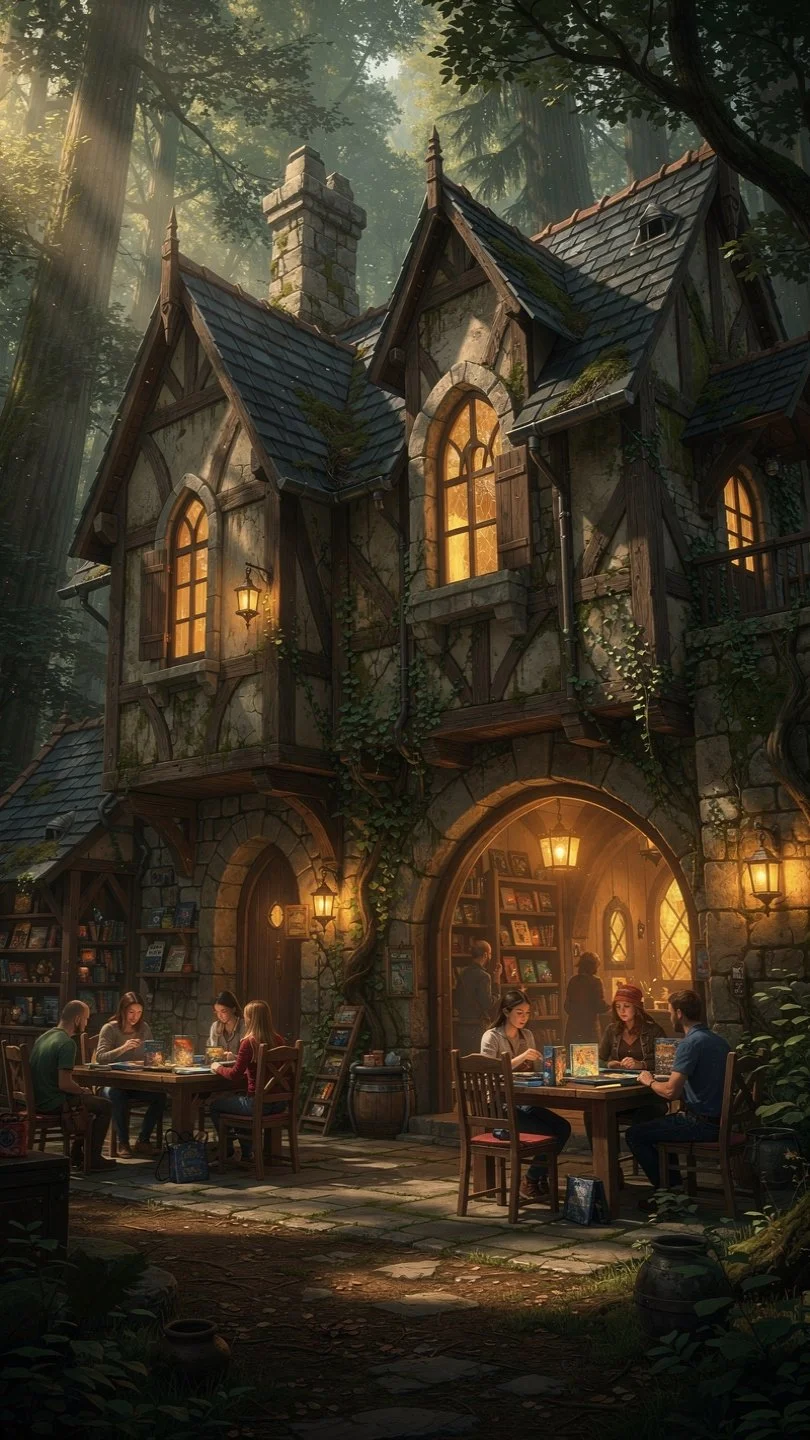
Maybe the first three sessions revolve around a single tavern, a nearby alleyway, and the suspicious old manor across the street.
Wonderful.
Now ya can actually focus.
Smaller scale means:
fewer NPCs to track
fewer locations to remember
fewer plot threads to juggle
fewer continuity disasters
stronger player familiarity
easier emotional attachment
A small world feels alive faster.
Players Remember Places They Revisit
This is another hidden advantage of micro-scale storytelling.
Repetition creates attachment.
That tavern from Session One?
The players remember it now.
That rude bartender?
Memorable.
That alley where the rogue got stabbed?
Memorable.
That weird neighbor who always watches from the balcony?
Memorable.
The players start building emotional familiarity with the setting because they keep interacting with it repeatedly.
Large-scale epic campaigns often struggle with this early on.
Too many places.
Too many names.
Too much movement.
Nothing stays in the players’ minds long enough to matter.
Small Campaigns Create Stronger Continuity
New GMs underestimate how exhausting continuity becomes.
If the campaign spans enormous distances immediately, suddenly ya must remember:
cities visited months ago
NPCs from Session Two
random inns
forgotten side quests
old political details
locations nobody remembers properly
That becomes overwhelming fast.
But if the campaign stays local?
Now continuity becomes natural.
The tavern the players damaged is literally next door.
The angry merchant still recognizes them.
The neighborhood reacts to their choices.
Consequences feel immediate because the world is physically closer.
That closeness creates stronger immersion.
The First Three Sessions Teach the Players What the Campaign Is
This part is critical.
The early sessions silently teach the players:
what kind of game this is
how serious the tone will be
whether choices matter
whether NPCs react realistically
whether roleplay is encouraged
whether the world feels alive
whether the campaign is worth emotionally investing in
And none of that requires a giant world map.
The players do not need to understand the entire continent yet.
They need to understand:
“What kind of experience are we having together?”
That matters far more.
Small Stories Leave Room for Characters
One reason smaller campaigns often feel stronger early on is because the characters have room to breathe.
In giant epic campaigns, the world sometimes becomes the main character.
But in smaller campaigns?
The players naturally become more important.
Their relationships matter more.
Their choices feel larger.
Their reputation spreads faster.
Their victories feel personal.
The campaign stops feeling like “tourists wandering through lore.”
And starts feeling like people actually living somewhere.
Big Worlds Work Better When Built Slowly
Now let’s be clear.
Large worlds are not bad.
Not at all.
A giant city-sized map with dozens of districts can become incredible over time.
But ya do not need to use all of it immediately.
Maybe Campaign One takes place in a single neighborhood.
Then months later, Campaign Two happens on the other side of the city.
Now the players hear rumors about the old district from the previous campaign.
Maybe they visit the old tavern again.
Maybe somebody mentions the disaster the previous party caused.
Players love this sort of thing.
Those little references create continuity across campaigns.
Not because the world is enormous.
But because it feels connected.
Familiarity Creates Emotional Attachment
Human beings naturally become attached to familiar places.
A recurring tavern becomes comforting.
A recurring NPC becomes beloved.
A recurring district starts feeling like home.
That emotional familiarity is powerful.
And it is much easier to create when the campaign scale remains manageable.
Many new GMs accidentally sacrifice emotional depth in exchange for geographic size.
Do not make that mistake.
The Players Care More About the Neighborhood Than the Continent
At least early on.
That is another hard truth.
The players will usually care more about:
the bartender they like
the alley they nearly died in
the local gang causing trouble
the strange old house nearby
the market vendor who owes them money
Than they will about:
distant empires
ancient politics
continental trade disputes
wars happening three kingdoms away
Why?
Because local problems feel immediate.
Immediate problems create engagement.
Engagement creates investment.
Investment keeps campaigns alive.
Smaller Campaigns Also Reduce GM Burnout
This matters enormously.
A smaller-scale campaign:
requires less preparation
allows easier improvisation
creates fewer continuity problems
gives the GM more breathing room
reduces mental overload
That means the GM survives longer too.
And honestly?
A campaign lasting twelve fun sessions is far better than an “epic masterpiece” collapsing after three.
The Environment Matters Too
Smaller, more personal campaigns also work beautifully in comfortable tabletop spaces where players can settle into recurring locations and recurring moods.
That is part of why Mike’s Tavern keeps expanding the Tavern Network, helping players and GMs discover venues that better support long-term storytelling and recurring campaign culture.
If yer building a first campaign, it is worth reading:
how the Tavern Network helps players and GMs find better tables without wasting weeks searching
what the Tavern Network can do before Session One even begins
Because long-term campaigns survive better when the table itself feels stable and familiar too.
Final Word From the Tavern
A giant world map does not automatically create a great campaign.
The first three sessions do.
That is where trust forms.
That is where attachment begins.
That is where players decide whether they care enough to come back.
So keep the scale small at first.
One tavern.
One street.
One district.
One neighborhood.
Let the world expand naturally later.
Because players rarely fall in love with continents first.
They fall in love with places that start feeling like home.
More Tavern Goodness For Ya!