Running Your First Campaign - Why Most Campaigns Collapse Before Session 5
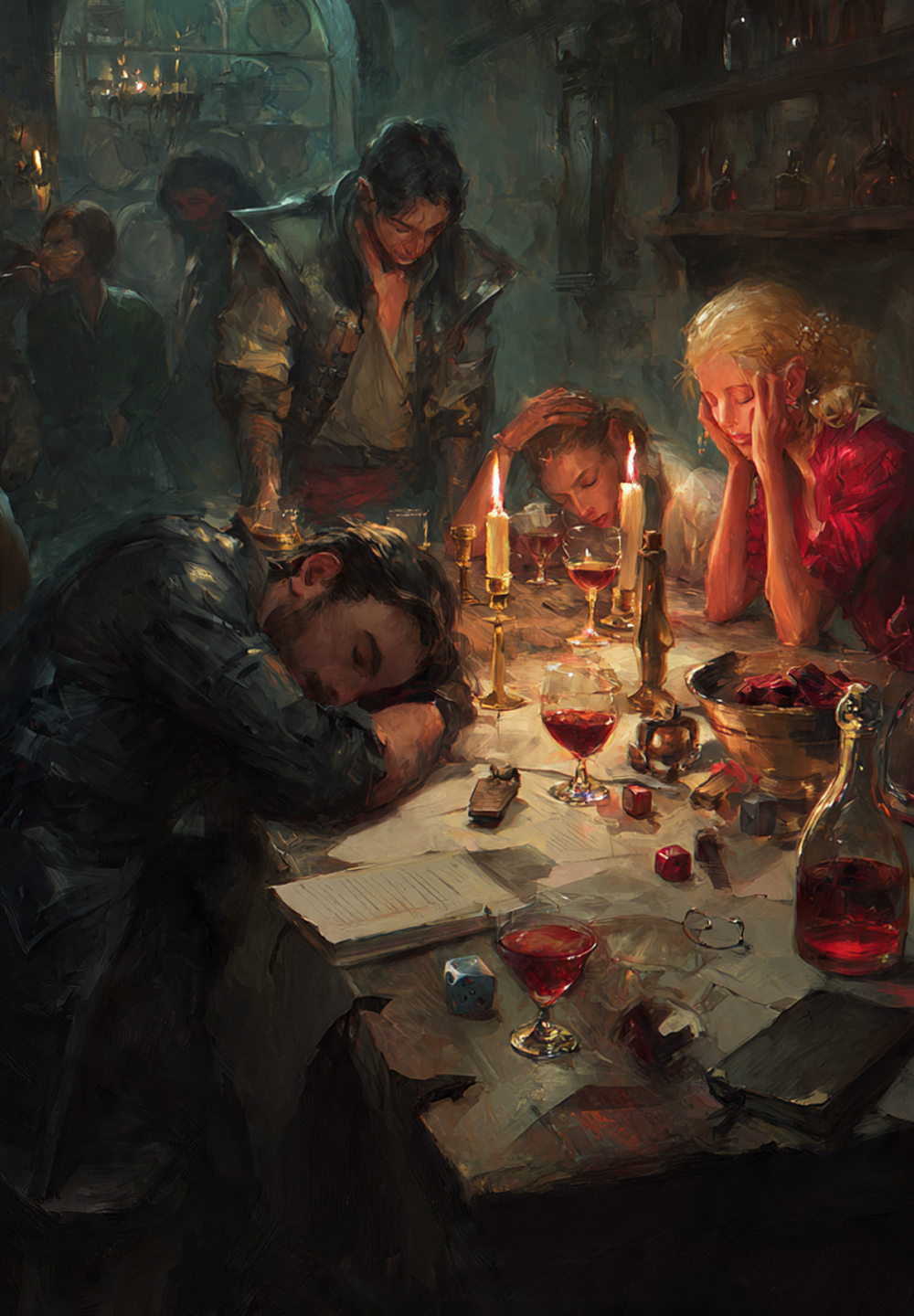
Most tabletop campaigns do not die in glorious final battles.
They die quietly.
A missed session here. A little loss of excitement there. Somebody stops replying in the group chat. Another player suddenly becomes “busy every Friday.” Then one week becomes two.
Then the campaign vanishes into the fog like it never existed at all.
And for new Game Masters, that collapse can feel brutal.
Especially when ya spent hours building maps, writing lore, naming kingdoms, and preparing encounters.
But here’s the hard truth, lad.
Most campaigns collapse before Session 5 because running a long-term tabletop campaign is far harder than most people realize.
And that does not automatically mean ya failed.
The First Killer - Long-Winded Game Masters
This is probably the most common killer of early campaigns.
New GMs often become worldbuilders before they become storytellers.
They spend thirty minutes describing:
the tavern floorboards
the stitching on the barkeep’s apron
the history of the copper coins
the exact way an NPC pours ale
the weather patterns of a kingdom nobody asked about
Meanwhile the players are quietly wondering:
“Can we please get to the actual adventure?”
Most players do not sit down at a table hoping to hear a lecture.
They want movement.
They want decisions.
They want danger.
They want to meet strange fools, swing swords, survive disasters, level up, and feel like something is happening.
That does not mean lore is bad.
Lore is excellent when players discover it naturally.
But if yer campaign feels like sitting through a history lesson while waiting for permission to play, players slowly stop emotionally investing.
Momentum matters more than perfection.
Players Need Progress More Than They Need a Masterpiece
A campaign survives when players feel forward motion.
That does not mean every session needs combat.
But something meaningful should happen regularly.
A clue discovered.
A mystery solved.
A betrayal revealed.
A dangerous fight survived.
A magical item earned.
A terrible decision made.
New GMs often think they need to create a massive epic before Session One even begins.
Truth is, many long-running campaigns survive because they start small and move quickly.
That is part of why simpler campaigns often outlive giant “400 years of lore” campaigns.
Players remember moments.
Not encyclopedias.
If yer interested in building healthier long-term campaign environments, Mike’s Tavern has also covered:
Because environment matters more than many GMs realize.
Life Is Stronger Than Dice
Sometimes a campaign collapses for reasons nobody can control.
And this part hurts the most.
People get busy.
Bills appear.
Jobs become exhausting.
Children need attention.
Relationships become difficult.
Somebody’s mental health worsens.
Sometimes somebody gets seriously ill.
Sometimes life simply wins.
Tabletop campaigns require something very fragile:
consistent human availability.
And adulthood is brutal on consistency.
A campaign collapsing because life happened does not mean the campaign was worthless.
It simply means life is heavier than fantasy sometimes.
Problem Players Can Poison an Entire Table
Sometimes the problem truly is social.
One player constantly interrupts everybody.
Another cannot let go of arguments.
Another manipulates people emotionally.
Another turns every disagreement into a personal war.
Another needs attention every second of the session.
Sometimes narcissism enters the table.
Sometimes low emotional intelligence quietly corrodes group morale.
Sometimes players carry old resentment from previous sessions and never communicate honestly.
These problems rarely explode immediately.
Usually they drip poison slowly into the campaign until nobody feels comfortable anymore.
That is why healthy tables matter more than perfect rules knowledge.
And it is also why choosing the right community matters.
Mike’s Tavern has spoken before about:
Because a single difficult player can exhaust even a good GM.
Sometimes Campaigns Collapse Anyway
Now here is the part many new GMs desperately need to hear.
Sometimes ya genuinely tried yer best.
And the campaign still collapsed.
That happens.
That is normal.
No blame.
No villain.
No dramatic betrayal.
Just human beings struggling to maintain a long-term collaborative hobby while life tears at them from every direction.
Do not turn one failed campaign into proof that ya should stop GMing forever.
Patch yer bruised pride.
Learn what worked.
Learn what failed.
Dust the dirt off yer boots and try again.
Because every experienced GM has abandoned campaigns buried somewhere behind them.
The difference is that veteran GMs kept going anyway.
Good Campaigns Are Built by Survivors
The strongest GMs are rarely the ones who never failed.
They are the ones who learned how to recover after a table collapsed.
And strangely enough, those painful early failures often teach more than successful campaigns ever could.
If yer still trying to build a healthier long-term campaign, Mike’s Tavern also maintains the:
Because sometimes the difference between a dead campaign and a thriving one is simply finding the right people to roll dice with.
More Tavern Goodness For Ya!