
Best Wizard Build 5e: The Creative Battlefield Scholar
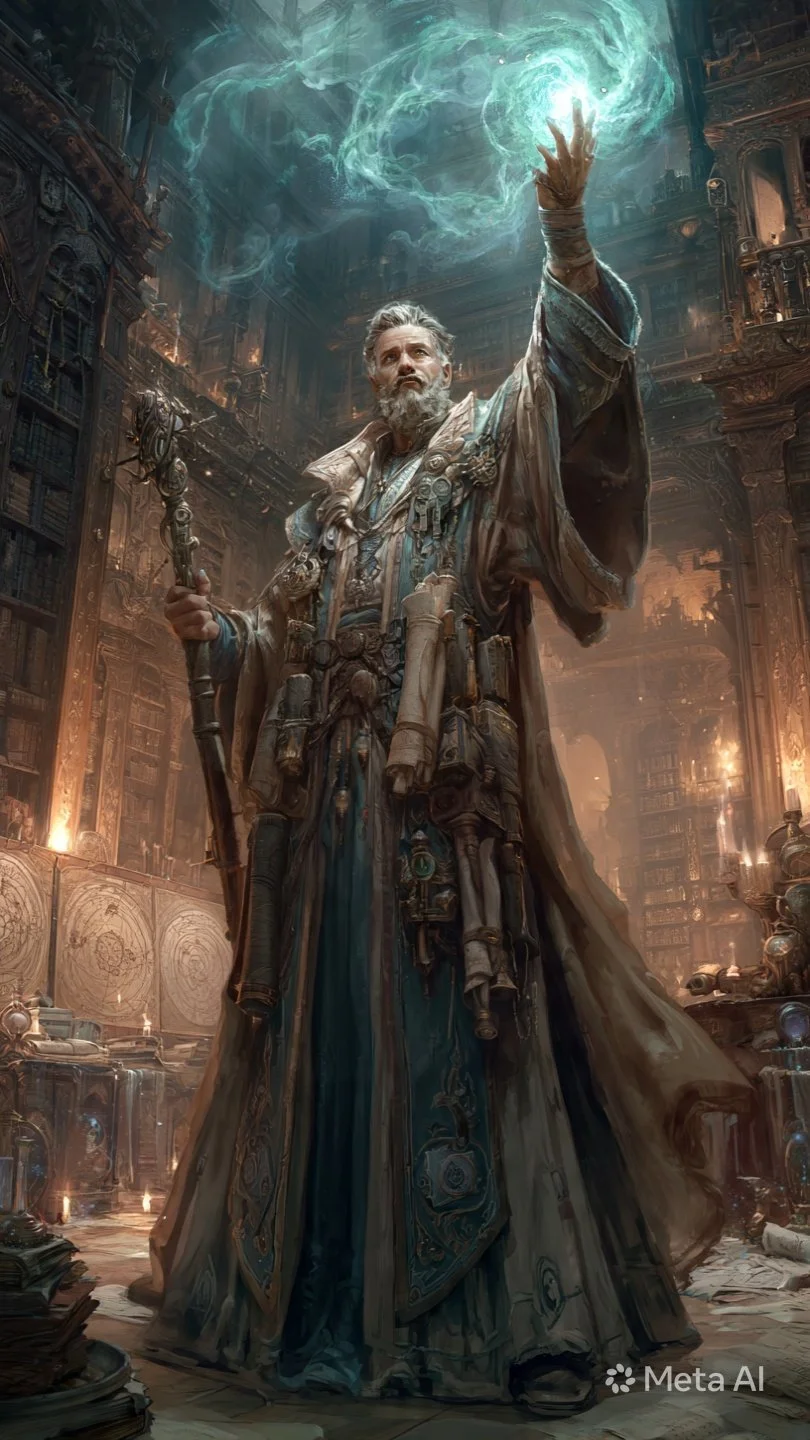



Listen, laddie. A Wizard who only knows how to cast Fireball is not a master of the arcane arts.
He is an arsonist with expensive stationery.
Any spell-slinging milk-drinker can point at the largest enemy and unload the most damaging spell available. A proper Wizard looks at the entire room.
The collapsing bridge.
The locked gate.
The oil beneath the cart.
The frightened guard.
The narrow passage.
The chandelier hanging above six goblins who have made the catastrophic mistake of standing beneath it.
Then the Wizard connects the pieces.
That is the core Wizard fantasy.
You are not merely carrying magical ammunition. You are carrying a library of possible answers—and your strength comes from recognising which answer the situation needs.
What Kind of Player Enjoys a Wizard?
The Wizard suits analytical and creative players.
You may enjoy the class if you naturally ask:
What are all my available options?
Can this spell solve the problem without starting a fight?
How can I control the battlefield?
What detail has everyone else overlooked?
Can two ordinary effects be combined into something unexpected?
Which spell should I prepare before entering this location?
The best Wizard players enjoy connecting dots.
They see a spell designed for movement and realise it can rescue an ally.
They see an illusion spell and realise it can divide an enemy force.
They see a harmless utility spell and use it to reveal a hidden mechanism, distract a guard, or create evidence for a convincing lie.
That is where the Wizard becomes powerful.
Not when the player memorises the largest damage numbers.
When the player understands what each spell makes possible.
Is the Wizard Good for Beginners?
Among full spellcasting classes, the Wizard is one of the easiest to understand conceptually.
Your magical ability comes from Intelligence.
You keep spells in a spellbook.
You prepare the spells you expect to need.
You spend spell slots to cast them.
That basic structure is relatively clear.
However, the Wizard is still considerably more complicated than a straightforward sword-swinging class.
A Fighter can usually move, attack, and use a class feature without searching through fifteen different possibilities.
A Wizard may need to consider:
Spell range
Area of effect
Saving throws
Attack rolls
Concentration
Duration
Components
Spell-slot level
Damage type
Friendly creatures inside the target area
Whether a different spell would solve the problem more efficiently
The class therefore requires study.
You do not need to memorise the entire Wizard spell list. You should understand the spells you prepared before the session begins.
A Wizard who reads every spell for the first time during their turn can slow the entire table.
This class is best for a player who has already experienced at least one tabletop RPG session and understands the ordinary rhythm of turns, actions, movement, and dice rolls.
A completely new player can still play a Wizard, but they must be willing to prepare between sessions.
The Best Wizard Build at a Glance
Our recommended build is the Evoker Battlefield Scholar.
This is a traditional Wizard who combines dependable offensive magic with control, defence, and utility. The Evoker subclass makes destructive spells easier to use around allies, allowing a developing Wizard player to learn battlefield positioning without punishing the party for every imperfectly placed explosion.
Recommended Build
This is not a build designed around one spectacular damage combination.
It is a Wizard who can enter most situations with at least one useful answer.
Why Choose the Evoker?
The Evoker represents the clearest version of the traditional combat Wizard.
You manipulate destructive elemental magic while learning how to direct it precisely.
That makes Evoker an excellent first Wizard subclass.
Area spells can be difficult for newer spellcasters because enemies and allies frequently become mixed together. The Evoker’s features make it easier to use certain offensive spells without harming companions caught in the area.
This gives you room to learn:
Where to position yourself
When an area spell is worthwhile
How enemies group together
Which targets matter most
When damage is less useful than control
How to preserve spell slots across several encounters
Evoker does not mean you should prepare nothing but damaging spells.
It means your offensive magic is dependable enough that the rest of your spellbook can remain creative.
Ability Scores
Using the standard array, begin with:
Apply your background increases to raise Intelligence as high as possible, followed by Constitution or Dexterity.
Your priorities are:
1. Intelligence
Intelligence powers your Wizard spells.
It improves your spell attacks, increases the difficulty of resisting many of your spells, and supports several knowledge-based skills.
A Wizard with weak Intelligence possesses many answers that enemies can more easily resist.
Increase Intelligence first.
2. Constitution
Wizards use a d6 Hit Die and are not naturally durable.
Constitution gives you more hit points and helps you maintain concentration when you take damage.
Many of your strongest control and support spells require concentration. Losing concentration early can waste both a spell slot and an important turn.
3. Dexterity
Dexterity improves your Armour Class and initiative.
Acting early is especially useful for a Wizard. A control spell cast before enemies spread across the battlefield may shape the entire encounter.
Your Wizard’s Spellbook
The spellbook is the heart of the class.
It contains the Wizard spells you have learned and recorded. Your prepared spells are the smaller selection you currently have ready to cast.
Think of the spellbook as a workshop filled with tools.
Preparing spells is deciding which tools you are carrying today.
You may own a climbing kit, fishing rod, saw, hammer, and shovel. That does not mean you bring every one of them into the tavern cellar.
Choose spells based on where the party expects to go and what it expects to face.
Before a dangerous journey, ask the GM:
Are we travelling through wilderness?
Are we investigating a city?
Are we expecting undead?
Will we need to enter a guarded location?
Are we likely to face several fights?
Is the environment unusually cold, dark, flooded, or unstable?
The GM may not reveal surprises, but even limited information can guide sensible preparation.
Players still learning how character mechanics connect to a campaign concept should begin with How to Build a D&D 5e Character Step by Step.
Recommended Wizard Cantrips
Cantrips do not consume spell slots, so they form the Wizard’s dependable foundation.
Fire Bolt
Fire Bolt gives you a simple ranged attack for turns when a larger spell is unnecessary.
Not every goblin deserves a spell slot, lad.
Mage Hand
Mage Hand lets you manipulate objects from a distance.
Its value depends on creativity. It can retrieve an item, test something suspicious, move a small object, or perform a task from somewhere safer.
Minor Illusion
Minor Illusion can create a small sound or image.
Use it to distract guards, create false evidence, conceal something small, imitate a noise, or cause an enemy to look in the wrong direction.
Discuss unusual uses with the GM rather than assuming an illusion automatically deceives everyone.
Prestidigitation
Prestidigitation is mostly a utility and roleplaying spell, but a creative player can find countless small uses for it.
It also makes a Wizard feel like a Wizard even when nobody is fighting.
Recommended Level 1 Spells
A good beginning spellbook should contain offence, defence, control, and utility.
Mage Armor
Mage Armor provides basic protection when you are not wearing armour.
It lasts long enough to cover a substantial period of adventuring, making it one of your most reliable defensive preparations.
Shield
Shield is an emergency reaction that can turn a hit into a miss.
Preserve it for attacks that matter. Do not burn through every spell slot protecting yourself from minor damage when the real danger has not arrived.
Magic Missile
Magic Missile provides dependable damage without requiring an attack roll.
It is useful when an injured enemy must fall, when a target is difficult to hit, or when several small sources of damage are strategically useful.
Sleep
At early levels, Sleep can remove several weaker enemies from a fight without requiring the party to defeat each one individually.
Its effectiveness changes as enemies become stronger, so it may eventually leave your regular preparations.
Thunderwave
Thunderwave can damage nearby enemies and push them away.
It is particularly useful when enemies have surrounded you or when terrain makes forced movement dangerous.
Find Familiar
Find Familiar provides exploration, scouting, roleplaying, and tactical possibilities.
Your familiar can investigate dangerous spaces, observe from a different angle, and help the party gather information.
Do not treat it as disposable equipment. Give it a personality and remember that repeatedly losing a familiar still costs time and resources.
The Four-Spell Preparation Test
Whenever you prepare spells, make sure you can answer four questions:
What will I cast if several enemies group together?
What will I cast if one dangerous enemy reaches me?
What will I cast if combat is not the best solution?
What will I cast if the environment becomes the problem?
If every answer is “Fire Bolt” or “the largest damage spell available,” your spell selection is too narrow.
A useful Wizard should possess:
One dependable attack
One defensive response
One battlefield-control option
One non-combat solution
Everything beyond that expands your flexibility.
How to Play the Build in Combat
The Wizard’s first job is not dealing the largest amount of damage.
It is improving the shape of the fight.
Read the Battlefield Before Casting
Identify:
Where the enemies are standing
Which enemy is most dangerous
Which allies are exposed
Where cover exists
Whether enemies are trapped in a narrow area
Which exits or pathways matter
A single well-placed control spell may accomplish more than several rounds of damage.
Remain Behind the Front Line
You have fewer hit points and weaker passive defences than martial characters.
Do not stand beside the Fighter merely because you want a better view.
Use distance, cover, obstacles, and allies to remain difficult to reach.
Use Ordinary Magic on Ordinary Threats
Cantrips exist so you do not spend limited spell slots on every enemy.
Use larger spells when they significantly change the encounter.
Protect Concentration
When you are concentrating on an important spell, avoiding damage may become more valuable than casting another aggressive spell.
Move behind cover.
Increase your distance.
Use Shield when the concentration effect is worth protecting.
Know Your Spell Before Your Turn
When another player is acting, decide what you are likely to cast.
Read the spell’s range, target, duration, saving throw, and concentration requirement before your turn begins.
Players who repeatedly reach their turn without a plan should use the habits in Not Sure What to Do on Your Turn? Try These 7 Player Habits That Keep the Game Moving.
The Creative Wizard’s Question
Before casting a spell, ask:
“What changes if this works?”
A damage spell may reduce hit points.
A control spell may divide the enemy.
An illusion may prevent the fight.
A movement spell may place the Fighter beside the enemy leader.
A defensive spell may preserve concentration and keep the rest of your plan operating.
This question moves you beyond selecting whatever spell has the largest number.
It turns spellcasting into problem-solving.
What Should You Do at Level 4?
Increase Intelligence.
A higher Intelligence score improves the central functions of your class and makes your spells more dependable.
Feats may offer interesting possibilities, but Intelligence supports nearly everything you do.
Once Intelligence is strong, consider options that improve:
Concentration
Initiative
Durability
Additional magical flexibility
Do not choose a complicated feat because an optimisation guide claims every Wizard needs it immediately.
Master the spells you already possess before adding more systems to manage.
How to Use Spells Creatively Without Slowing the Game
Creativity does not mean arguing that one minor spell should instantly defeat an ancient dragon.
Good creative spellcasting respects the written effect while applying it intelligently.
Use this process:
State what you want to accomplish.
Name the spell you believe could help.
Explain the connection briefly.
Accept the GM’s ruling.
Choose another action quickly if the ruling is no.
For example:
“I want to use Minor Illusion to create footsteps moving down the opposite corridor. I am hoping the guard investigates the sound.”
That is clear.
It explains the intended result without delivering a ten-minute legal argument about illusion magic.
A creative Wizard works with the GM.
A disruptive Wizard tries to trap the GM with wording.
The Wizard’s Role Outside Combat
A Wizard should remain useful when no initiative has been rolled.
Your Intelligence supports knowledge involving:
Arcana
History
Investigation
Nature
Religion
You can help the party interpret magical symbols, identify suspicious patterns, study ancient ruins, examine evidence, and understand supernatural threats.
Ritual spells and utility magic can also solve problems without consuming the same resources required during combat.
Do not sit silently until something needs to be burned.
Ask questions.
Inspect the environment.
Connect clues.
Offer possibilities.
The party should feel that bringing a Wizard changes how it approaches the unknown.
Common Wizard Mistakes
Preparing Only Damage Spells
Damage is useful, but other party members can also reduce hit points.
Few classes can match the Wizard’s range of control and utility options.
Taking Too Long on Every Turn
A large spell list is not permission to halt the game.
Know your most common choices and prepare a default action.
Standing Too Close to Enemies
You are an arcane scholar, not a brightly dressed shield.
Use distance.
Spending Every Spell Slot Early
The first encounter may not be the most dangerous encounter.
Preserve enough power to respond when the campaign surprises you.
Ignoring Concentration
You can usually concentrate on only one concentration spell at a time.
Check before attempting to combine effects.
Trying to Break Every Spell
Creative play is good.
Insisting that every flexible description produces unlimited power is not.
Keeping Plans Secret From the Party
Tell allies what you are trying to accomplish.
A spell becomes far more effective when the rest of the group understands how to exploit it.
For practical advice on coordinated play, read Teamwork Tricks That Make You the Party Member Everyone Trusts.
The Best Wizard Is Not a Walking Cannon
The Evoker Battlefield Scholar is effective because it has dependable offensive magic without surrendering the wider purpose of the class.
You can damage grouped enemies.
You can protect yourself.
You can control space.
You can investigate mysteries.
You can solve problems that cannot be defeated with a sword.
Begin with high Intelligence.
Protect Constitution and Dexterity.
Prepare a mixture of offence, defence, control, and utility.
Read your spells before the game.
Know what you are likely to do before your turn arrives.
Then look for the connection nobody else has noticed.
That is where the Wizard becomes more than a spell list.
Open the Spellbook Before the Adventure
Your Wizard should fit the campaign rather than arrive with a collection of spells chosen in isolation.
A city investigation, wilderness expedition, magical academy, and dungeon campaign reward different preparations. Discuss the campaign’s direction during a proper D&D Session 0 before deciding what kind of scholar your Wizard will become.
The Wizard fantasy is not merely possessing great power.
It is understanding enough to use the right amount of power in the right place.
Anyone can throw fire at a problem.
A Wizard studies the room, recognises the hidden structure, and changes one small thing that causes the entire situation to fall into place.
By Elgrin’s empty scrollcase, lad, THAT is magic.
Learn more about the purpose behind Mike’s Tavern, explore practical answers in the Tavern FAQ, or contact the Tavernkeeper when yer next character needs a wiser selection of tools.
Questions to Ask Before Playing a Wizard
Am I willing to read my spells before the session?
Do I enjoy solving problems rather than only dealing damage?
What does my Wizard study, and why?
Which spell is my dependable default action?
How will I protect myself and maintain concentration?
Have I prepared options for combat and exploration?
Can I explain my intended spell use clearly and briefly?
What connection might my character notice that everyone else overlooks?
