
Best Rogue Build 5e: The Mobile Ambush Thief
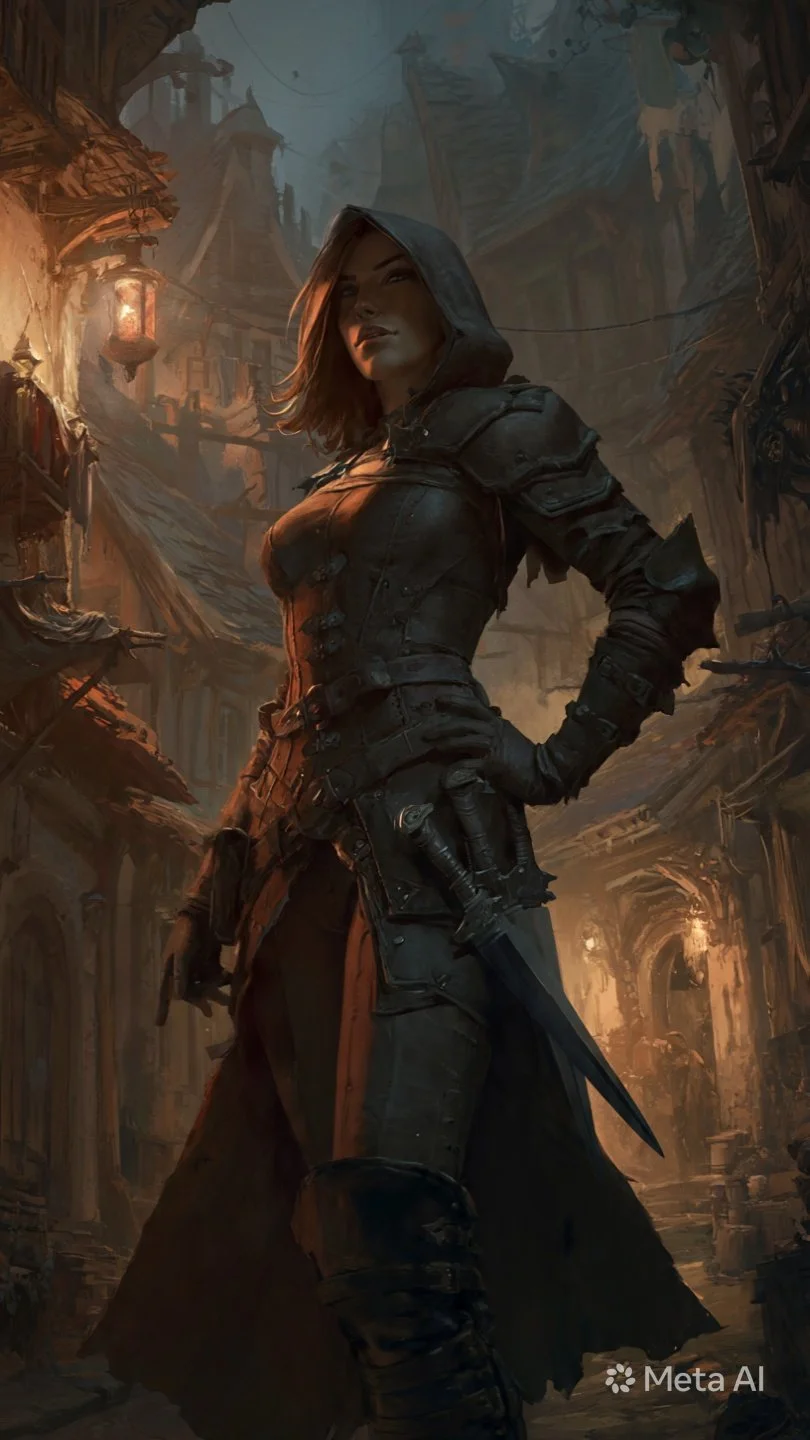

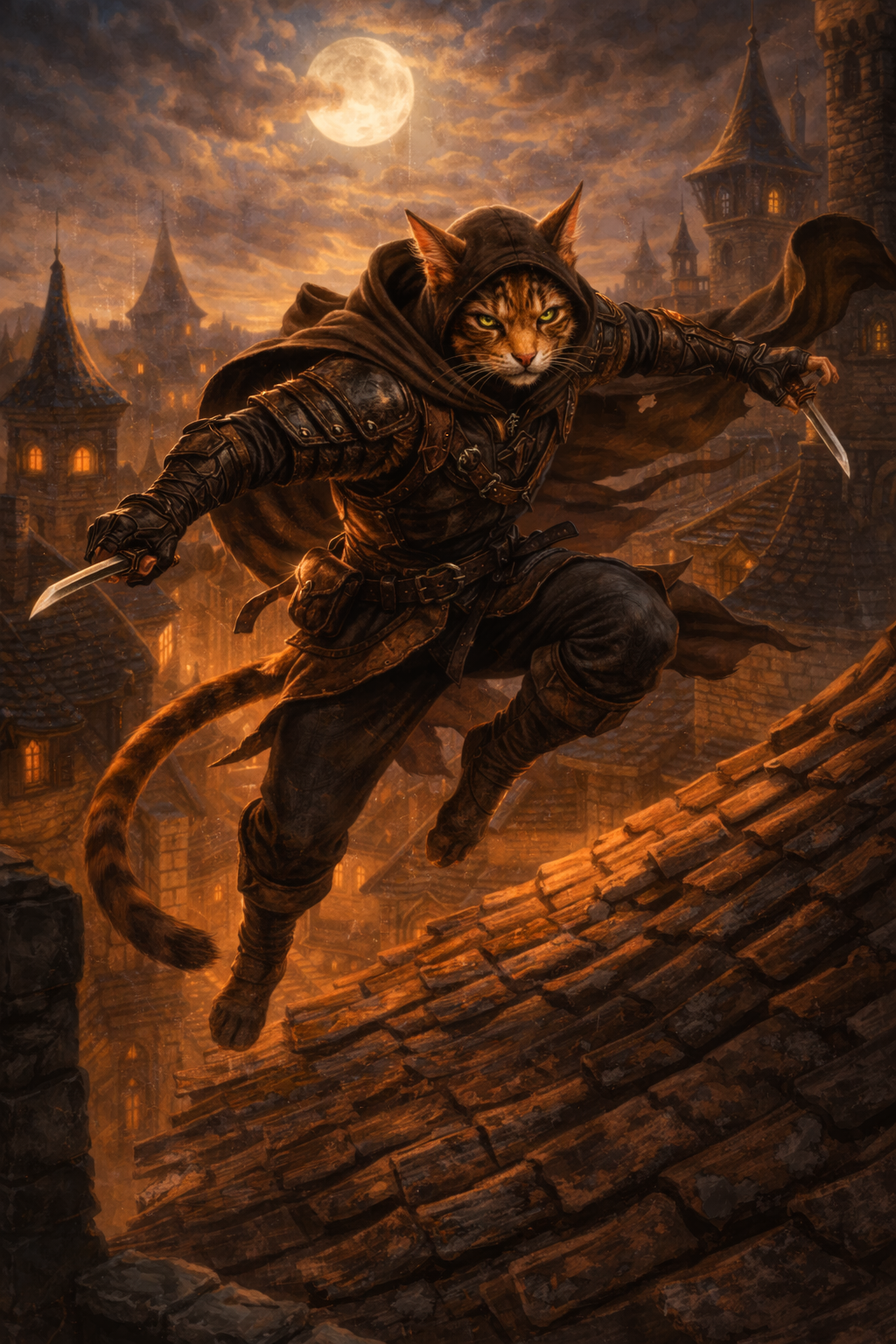

Listen, laddie. A Rogue is not a Fighter holding a smaller sword.
Yet every week, some leather-clad milk-drinker charges into the middle of a battle, pokes an ogre twice with a dagger, and then looks personally betrayed when the ogre flattens him into the floorboards.
What did ya expect?
The Fighter wears heavy armour and survives by controlling the front line.
The Barbarian survives by becoming too angry to fall over.
The Rogue survives by not standing where the enemy can strike back.
That is the Rogue fantasy.
You find an opening. You deliver one precise, devastating attack. Then you move, disappear, and prepare the next one.
You are not the party’s knife-wielding windmill.
You are the threat the enemy keeps losing track of.
What Kind of Player Enjoys a Rogue?
The Rogue suits creative players who enjoy approaching situations from unexpected directions.
You may enjoy the class if you naturally ask:
Is there another way into this room?
Can I reach the enemy without crossing the open ground?
What can I hide behind?
Which opponent is already distracted?
Can I solve this problem without fighting?
What ordinary object could become useful?
How can I turn the environment into an advantage?
A Rogue player should be willing to think beyond the most obvious action.
That does not mean arguing with the Game Master until every impossible plan becomes legal.
It means observing the situation, understanding the available rules, and proposing an action that is unusual but reasonable.
A good Rogue says:
“I want to overturn the table, use it as cover, and hide behind it.”
A bad Rogue says:
“I hide directly in front of the guard because my Stealth bonus is high.”
The first player is using the environment.
The second is hoping a large number will make everyone forget that eyes exist.
Is the Rogue Good for Beginners?
The Rogue is easier than many people assume.
Its basic combat rhythm is straightforward:
Find a valid opportunity for Sneak Attack.
Make one accurate attack.
Move somewhere safer.
Use Cunning Action to Hide, Dash, or Disengage when needed.
Repeat from a new position.
The confusion usually comes from stealth.
New players sometimes believe they must understand an enormous hidden subsystem involving shadows, sound, sight lines, perception, and exact distances.
In practice, begin with one simple question:
“Is there somewhere nearby where the enemy cannot clearly see me?”
That might be:
Behind a wall
Around a corner
Inside thick vegetation
Behind a large crate
Beneath a raised platform
Beyond heavy smoke
Inside deep darkness
Behind an object large enough to conceal you
If the answer is yes, ask the Game Master whether you can attempt to Hide.
The Rogue is therefore an approachable martial class, but it rewards a player who pays attention between turns.
You must watch where enemies move, where allies stand, and which parts of the environment could offer protection.
The Best Rogue Build at a Glance
Our recommended build is the Thief Mobile Ambusher.
This Rogue uses a shortbow or light crossbow when possible, carries a shortsword and daggers for close encounters, and relies on movement, stealth, and environmental interaction rather than standing in melee.
Recommended Build
This build does not attempt to turn the Rogue into a weaker Fighter.
It strengthens what the Rogue already does well:
Delivering precise damage
Moving through dangerous spaces
Reaching useful positions
Hiding and escaping
Handling locks and traps
Exploiting ordinary objects
Solving problems without direct confrontation
Why Choose the Thief?
The Thief expresses the traditional Rogue fantasy clearly.
You are an agile burglar, scout, explorer, treasure hunter, and opportunist.
The subclass encourages you to interact with the physical world around the character rather than treating every turn as another weapon attack.
That makes it an excellent first Rogue subclass.
An Assassin may encourage players to focus too heavily on creating one perfect opening attack.
An Arcane Trickster adds spellcasting and considerably more decision-making.
The Thief keeps the focus on movement, objects, climbing, stealth, and practical ingenuity.
It teaches the player to ask:
“What is in this room that everyone else is ignoring?”
That is one of the most important Rogue questions.
Ability Scores
Using the standard array, begin with:
Apply your background increases to raise Dexterity as high as possible, followed by Constitution or Wisdom.
Your priorities are:
1. Dexterity
Dexterity is the Rogue’s central ability.
It improves:
Attacks with finesse and ranged weapons
Damage with those weapons
Armour Class
Initiative
Dexterity saving throws
Stealth
Sleight of Hand
Acrobatics
Thieves’ tools in many situations
A high Dexterity score makes nearly every traditional Rogue activity more reliable.
Increase it first.
2. Constitution
Constitution gives you more hit points.
The Rogue should avoid unnecessary attacks, but no plan works perfectly. Enemies may reach you, hidden threats may appear, and failed Stealth checks may expose your position.
Constitution gives you enough durability to survive mistakes.
3. Wisdom
Wisdom supports Perception and Insight.
Perception helps you notice traps, hidden enemies, unusual movements, and environmental details.
A Rogue who never notices anything has fewer opportunities to be clever.
Which Skills Should You Choose?
Your most important skill is usually Stealth.
After that, strong choices include:
Perception
Perception helps you notice danger before walking into it.
It is particularly valuable for a scout.
Sleight of Hand
Sleight of Hand supports pickpocketing, concealing objects, and delicate acts of manual deception.
Use it carefully. Stealing from every friendly non-player character is not a personality.
It is a fast route to exhausting the entire table.
Investigation
Investigation helps when examining rooms, mechanisms, evidence, and suspicious objects.
It suits a Rogue who solves practical problems.
Acrobatics
Acrobatics supports balance, agile movement, and escaping certain physical situations.
Deception or Persuasion
A socially capable Rogue can misdirect guards, gather information, or talk the party past a problem.
Choose one if your party lacks a confident social character or if deception fits your concept.
Where Should Expertise Go?
Expertise improves selected skill proficiencies, making the Rogue exceptionally dependable in those areas.
For this build, begin with:
Stealth
and either:
Perception or Thieves’ Tools, depending on how your table handles tool expertise and what the campaign requires.
Choose Perception when scouting and detecting danger matter frequently.
Choose thieves’ tools when the campaign contains locks, traps, secured buildings, and mechanical obstacles.
Do not automatically choose the skills with the highest theoretical value.
Choose the ones you expect to use.
Your Weapon Is Not the Build
Many new Rogue players become overly focused on daggers.
Daggers look appropriate.
They are concealable, throwable, and strongly associated with the Rogue fantasy.
They are not always the best primary weapon.
A shortbow or light crossbow allows you to deal Sneak Attack damage from a safer position.
A shortsword provides stronger close-range damage when an enemy reaches you.
Daggers remain useful as backup weapons, thrown weapons, and concealed tools.
The Rogue’s power does not come from the knife itself.
It comes from Sneak Attack.
Your weapon is merely the delivery system.
How Sneak Attack Actually Works
Sneak Attack allows you to deal additional damage once per turn when you meet its requirements.
Despite the name, you do not always need to be hidden.
You generally need to attack with a finesse or ranged weapon and have the required advantage or tactical opening provided by the rules.
One common way to qualify is attacking an enemy who is already engaged by one of your allies.
Imagine the Fighter is battling an orc.
The orc must divide its attention between defending itself from the Fighter and watching the rest of the battlefield.
That distraction gives the Rogue an opening.
You attack the vulnerable angle and apply Sneak Attack.
The important phrase is:
Once per turn.
The Rogue is designed around making one attack matter.
You are not competing with the Fighter’s repeated swings.
You are delivering concentrated damage through the best available opening.
Hiding Is Not the Only Way to Use Sneak Attack
Hiding is useful because attacking from an unseen position may improve your chance of hitting and help create Sneak Attack opportunities.
It is not the only method.
You may also qualify because:
An ally is threatening the target
Another feature grants you Advantage
The enemy is affected by a condition
Your subclass creates another opening
The battlefield places the target in a vulnerable position
This distinction matters.
A Rogue should not waste every turn attempting to hide behind the same barrel when Sneak Attack is already available because the Barbarian is standing beside the enemy.
Check the battlefield first.
Then decide whether hiding provides an additional advantage.
The Rogue’s Combat Loop
The basic ranged Rogue turn looks like this:
Begin from a protected or concealed position.
Choose a target that qualifies for Sneak Attack.
Make one ranged attack.
Apply Sneak Attack if the attack hits and qualifies.
Move if your current position has become dangerous.
Use Cunning Action to Hide, Dash, or Disengage when appropriate.
A melee Rogue uses a similar rhythm:
Approach a distracted or vulnerable target.
Attack once with a finesse weapon.
Apply Sneak Attack when eligible.
Use movement and Cunning Action to escape before the enemy retaliates.
The Rogue should rarely end the turn standing beside a powerful enemy without a specific reason.
Strike.
Move.
Disappear.
Prepare the next angle.
The Crate-and-Corner Test
At the start of combat, identify three things:
Where can I hide?
Where can I escape?
Which ally can help create Sneak Attack?
Do this before your first turn arrives.
Your hiding place might be a pillar.
Your escape route might be an open doorway.
Your Sneak Attack partner might be the Paladin holding the strongest enemy in place.
Once those three elements are identified, the class becomes considerably easier to manage.
Players who struggle to prepare actions between turns should use these habits for keeping the game moving.
How to Use Cunning Action
Cunning Action gives the Rogue extraordinary mobility by allowing certain actions as a Bonus Action.
Each option solves a different problem.
Hide
Use Hide when you have appropriate concealment and want enemies to lose track of your position.
Do not assume you remain hidden after attacking. Once your location is revealed, you may need to move before hiding again.
Disengage
Use Disengage when you are beside an enemy and need to move away without inviting an Opportunity Attack.
This is one of the Rogue’s most important survival tools.
Dash
Use Dash when you need additional movement.
You may need to reach cover, cross a dangerous room, catch a fleeing enemy, or escape something much stronger than you.
Cunning Action is not an optional side feature.
It is what prevents the Rogue from becoming a fragile Fighter.
How to Play a Melee Rogue Properly
Sometimes ranged attacks are impossible.
The room may be too small.
An enemy may have reached you.
The party may need someone to attack a vulnerable target immediately.
A melee Rogue should fight like an opportunist.
Move beside an enemy already engaged with an ally.
Attack.
Then use Disengage and move away.
Do not remain beside the enemy and repeatedly slash with a knife unless the situation gives you no alternative.
The Fighter is built to exchange attacks.
The Barbarian is built to absorb punishment.
The Rogue is built to leave before the punishment arrives.
How to Think Outside the Box
Creative Rogue play begins with the environment.
Look for:
Doors
Windows
Curtains
Chandeliers
Ropes
Barrels
Tables
Staircases
Balconies
Smoke
Loose stones
Narrow passages
Unattended wagons
Hanging signs
Distracted bystanders
Then ask what those objects make possible.
Could you jam the door?
Cut the rope?
Block the corridor?
Create cover?
Extinguish the light?
Scatter something across the floor?
Drop from the balcony?
Move an object into someone’s path?
The Rogue does not possess a spellbook full of solutions.
The world becomes the Rogue’s spellbook.
How to Convince the Game Master
A Rogue player should not attempt to bully the Game Master into accepting every strange idea.
Use a clear four-part proposal:
Describe the goal.
Identify the environmental feature.
Explain the action.
Accept the ruling.
For example:
“I want to stop the guards from following us. The corridor has a heavy cabinet beside the door. Can I use my action to pull it in front of the doorway?”
That is a reasonable proposal.
Compare it with:
“I roll Acrobatics to collapse the entire building behind me.”
Acrobatics is not architectural demolition, lad.
Your high bonus does not transform every skill into magic.
The best unconventional actions feel surprising after they work, but obvious once they are explained.
What Should You Do at Level 4?
Your safest choice is an Ability Score Improvement that increases Dexterity.
Dexterity improves your attacks, damage, defence, initiative, Stealth, and several other important abilities.
Few classes receive so much value from a single ability score.
Interesting feats can come later, especially once you understand how the Rogue plays at your table.
Do not burden yourself with additional mechanics before mastering:
Sneak Attack
Cunning Action
Movement
Cover
Hiding
Positioning
The fundamentals will affect every session.
The Rogue Outside Combat
A Rogue should never feel useless merely because nobody is fighting.
You can serve as the party’s:
Scout
Investigator
Infiltrator
Lookout
Lock specialist
Trap specialist
Messenger
Social deceiver
Evidence collector
However, do not scout half the dungeon alone while everyone else sits silently.
Solo scouting can become a private game between the Rogue and the GM.
Keep reconnaissance focused.
Gather useful information, return to the party, and help everyone decide what to do.
The Rogue’s job is not to play separately.
It is to give the party options it would not otherwise possess.
For more guidance on supporting the whole group, read Teamwork Tricks That Make You the Party Member Everyone Trusts.
Common Rogue Mistakes
Fighting Like a Fighter
Repeatedly standing beside an enemy and attacking with a dagger ignores the Rogue’s mobility.
Attack once, then reposition.
Hiding Where Everyone Can See You
You need a plausible way to break an enemy’s view.
A high Stealth bonus does not make you invisible.
Forgetting Sneak Attack
Sneak Attack is the centre of your damage.
Before rolling, check whether you qualify.
Insisting You Must Hide Every Turn
An ally beside the enemy may already provide the opening you need.
Do not waste actions solving a problem that does not exist.
Scouting Too Far Ahead
Information is useful.
Starting an encounter alone while the party is six rooms away is less useful.
Stealing From Party Members
Stealing from other player characters rarely makes you clever.
It damages trust and creates conflict the rest of the table did not request.
Treating Creativity as Permission
Unconventional ideas must still respect the rules and the fictional situation.
Offer the idea.
Do not hold the game hostage until the GM agrees.
The Best Rogue Is Never Where the Enemy Expects
The Thief Mobile Ambusher succeeds because it embraces the Rogue’s real strengths.
You are not the most durable warrior.
You do not make the greatest number of attacks.
You do not win by repeatedly stabbing the nearest enemy.
You win by choosing the correct target, finding the correct angle, delivering Sneak Attack, and escaping before the battlefield closes around you.
Raise Dexterity.
Carry a ranged weapon.
Keep a finesse weapon nearby.
Study the environment.
Know where you will hide and where you will escape.
Work beside the party’s frontline characters instead of pretending to be one.
Then use ordinary objects in ways nobody anticipated.
That is the Rogue fantasy.
Not endless knife slashing.
Precision, movement, nerve, and one extremely inconvenient idea delivered at exactly the right moment.
Find the Opening
Before bringing your Rogue into the campaign, speak with the Game Master about stealth, hiding, surprise, and how environmental actions will be handled.
These rules become frustrating when the player and GM imagine them differently. A proper D&D Session 0 gives both sides a chance to establish what the Rogue can reasonably attempt.
Players still developing the full concept can use How to Build a D&D 5e Character Step by Step to connect personality, background, skills, and combat choices.
The Rogue is not difficult because stealth is impossibly complicated.
The Rogue is difficult only when the player stops observing.
Keep watching.
Keep moving.
And when the enemy finally believes it knows where you are, make certain it is already too late.
Learn more about the purpose behind Mike’s Tavern, browse practical answers in the Tavern FAQ, or contact the Tavernkeeper when yer next character needs a more cunning approach.
Questions to Ask Before Playing a Rogue
Where can I hide if the fight begins here?
Which ally can help create my Sneak Attack opportunity?
Am I fighting like a Rogue or pretending to be a Fighter?
Where will I move after making my attack?
Can the environment solve this problem?
Is my unusual action reasonable within the scene?
Am I scouting for the party or playing a separate game?
What will my Rogue contribute when nobody needs a lock opened?
