
Players Won’t Make Decisions, Try These 6 GM Habits That Turn Hesitation Into Action
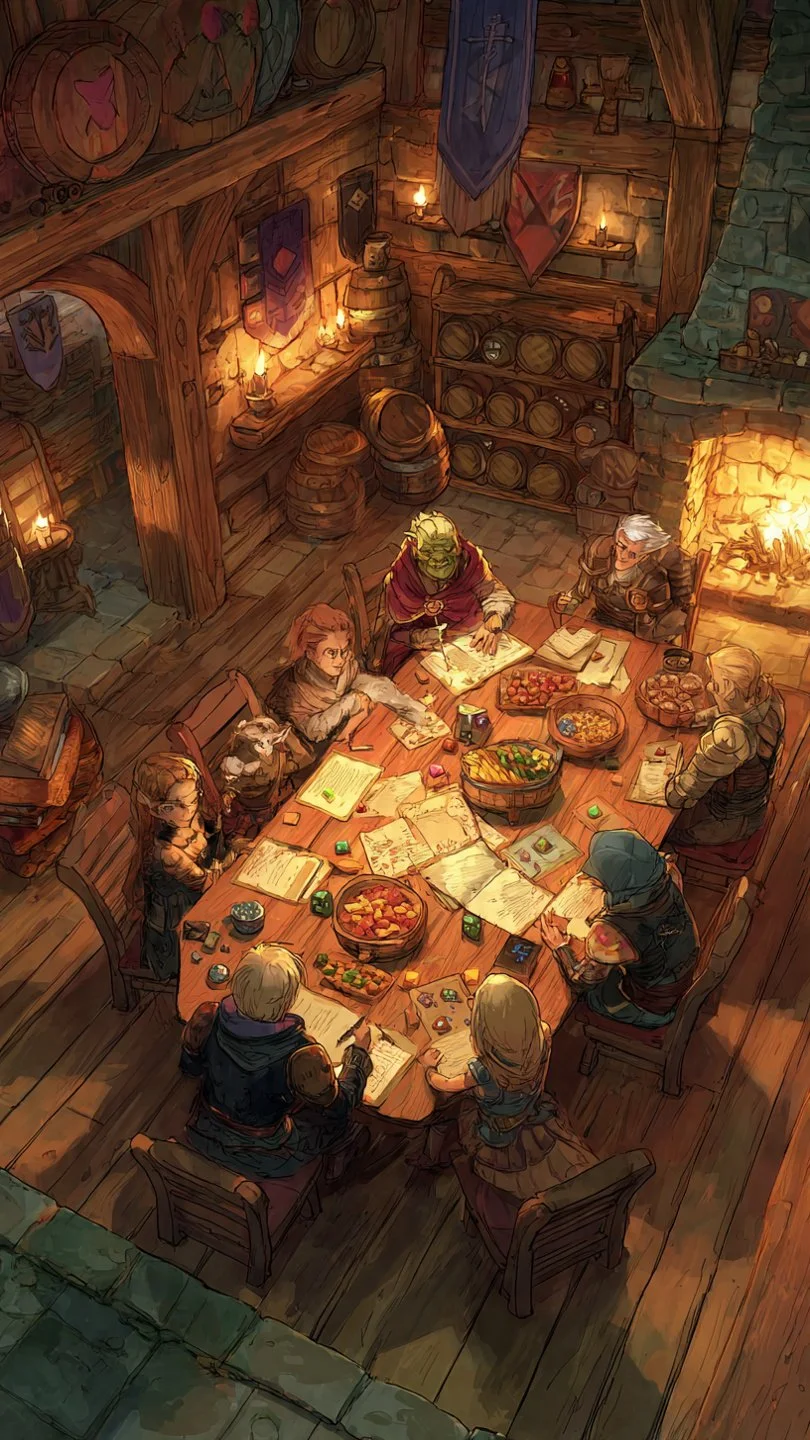
Mike’s Opening Grumble, When the Table Waits for Someone Else to Speak
Alright, GM.
There’s a kind of quiet that feels wrong.
Not the tense kind. Not the dangerous kind. I mean the slow, uncertain quiet where every player looks at someone else and waits.
You ask:
"What do you do?"
And nothing comes back.
Dice roll in fingers. Papers shuffle. Someone mutters, "I don’t know."
Most GMs assume hesitation means laziness.
It usually means uncertainty.
Or fear.
Or too many unknowns stacked on top of each other.
Players freeze when action feels risky, unclear, or overly exposed.
Your job is not to force movement.
Your job is to make movement feel safe enough to try.
Tip 1 — Reduce the Number of Choices When Players Freeze
Too many options feel like standing at a crossroads with no signs.
Players stop because they cannot see the difference between paths.
Instead of saying:
"You can do anything."
Try:
"You could talk to the guard."
"You could examine the door."
"You could leave and return later."
Three paths.
Not thirty.
Limiting choices does not remove freedom. It creates direction.
Once movement begins, players usually discover new options on their own.
If hesitation shows up during open-ended scenes,
https://www.mikes-tavern.com/gm-wisdom/running-your-first-game-keeping-the-game-moving-when-players-freeze
explains how structured prompts create motion without removing agency.
Direction builds confidence.
Confidence builds action.
Tip 2 — Make the First Move Small and Safe
Big decisions feel dangerous.
Small ones feel manageable.
If players hesitate, shrink the question.
Instead of:
"What’s your plan?"
Try:
"Who takes the first step toward the door?"
"Who watches the hallway?"
"Who checks the ground first?"
Small movement creates momentum.
Momentum reduces fear.
Fear fades once action begins.
If players struggle with starting engagement,
https://www.mikes-tavern.com/gm-wisdom/running-your-first-game-saying-no-without-killing-creativity
explores how structured beginnings create smoother flow.
Small starts unlock large stories.
Tip 3 — Treat Mistakes as Story Fuel, Not Failure
This one matters more than most GMs realize.
Players hesitate when they believe mistakes will shut things down.
But in great campaigns, mistakes never end stories.
They create new ones.
A failed lockpick does not mean nothing happens.
It means something unexpected happens.
Maybe the lock jams.
Maybe guards arrive.
Maybe a hidden compartment breaks open.
Maybe a small error plants a future Chekhov’s gun.
Mistakes are not dead ends.
They are turning points.
Comedy often lives inside mistakes.
Drama often grows from accidents.
Legendary moments often begin with failure.
If players believe mistakes create opportunity instead of punishment, hesitation drops dramatically.
Not because risk disappears.
Because risk becomes interesting.
If your table feels cautious or afraid to act,
https://www.mikes-tavern.com/gm-wisdom/designing-enemies-that-punish-bad-decisions-not-bad-dice
helps reshape consequences into momentum rather than shutdown.
The goal is not safety.
The goal is possibility.
Tip 4 — Ask Through Characters, Not At Players
Spotlights matter.
Too bright, and players freeze.
Too dim, and nobody acts.
Direct questioning can feel like interrogation, especially for newer players or those sensitive to pressure.
Instead of:
"John, what do you do?"
Try:
"Arin, your ranger notices movement in the shadows. Does he step forward or hold position?"
Notice the difference.
You are speaking to the character.
Not interrogating the player.
That subtle shift lowers pressure dramatically.
Here are a few ways to question individuals indirectly:
Use character names, not player names
This keeps the focus inside the story world.
Offer gentle forks, not open interrogations
"Does your wizard stay back or move closer?"
Frame actions as observations
"Your cleric hears something behind the door."
Allow pauses without pressure
Silence is thinking time, not failure.
Balance matters.
Too much spotlight feels overwhelming.
Too little spotlight creates paralysis.
The art lies between those extremes.
If you want to better understand reading hesitation signals,
https://www.mikes-tavern.com/gm-wisdom/running-your-first-game-reading-the-table-without-anyone-saying-a-word
explains how subtle observation prevents pressure overload.
Good questioning feels like invitation.
Not interrogation.
Tip 5 — Reward Action With Visible Progress
Players act more when action creates visible change.
If decisions feel meaningless, hesitation grows.
Movement must create reaction.
Doors open.
Enemies react.
Clues appear.
New paths emerge.
Even imperfect actions should move the world forward.
Progress builds trust.
Trust builds courage.
If players feel stuck despite acting,
https://www.mikes-tavern.com/gm-wisdom/running-your-first-game-keeping-the-game-moving-when-players-freeze
offers tools for keeping motion visible and meaningful.
Action must feel worth taking.
Tip 6 — Model Confidence Through NPC Behavior
Players watch more than they listen.
NPC behavior teaches decision-making.
A guard reacts quickly.
A rival moves boldly.
An ally chooses without hesitation.
These moments show what decisive action looks like.
Examples reduce uncertainty.
Players mirror what they see.
If your NPCs hesitate constantly, players will too.
If your NPCs act confidently, players follow.
If you want stronger NPC leadership tools,
https://www.mikes-tavern.com/gm-wisdom/running-your-first-game-learning-how-to-listen-before-you-speak
shows how communication style shapes group behavior.
Leadership spreads through example.
Always.
What Happens When Hesitation Becomes Habit
Indecision spreads quietly.
One uncertain player becomes two.
Two hesitant players become group silence.
Group silence slows pacing.
Slow pacing weakens tension.
Eventually, sessions feel heavy.
Not exciting.
Not dramatic.
Just stuck.
And once that pattern forms, breaking it requires deliberate change.
Not force.
Structure.
The Stabilizing Truth, Confidence Follows Action
Confidence rarely comes first.
Action creates confidence.
Not the other way around.
Your role is not to eliminate risk.
Your role is to make risk feel survivable.
And interesting.
Because the best stories rarely begin with certainty.
They begin with someone willing to try.
Reflection Questions, Ask Yourself After the Next Session
After your next session, consider:
Did I offer structured choices when hesitation appeared?
Did I shrink large decisions into smaller ones?
Did mistakes create new story opportunities?
Did my questions invite action without pressure?
What single adjustment would improve flow next time?
Choose one.
Test it.
Observe what changes.
Because hesitation is rarely laziness.
It is uncertainty waiting for a path forward.
