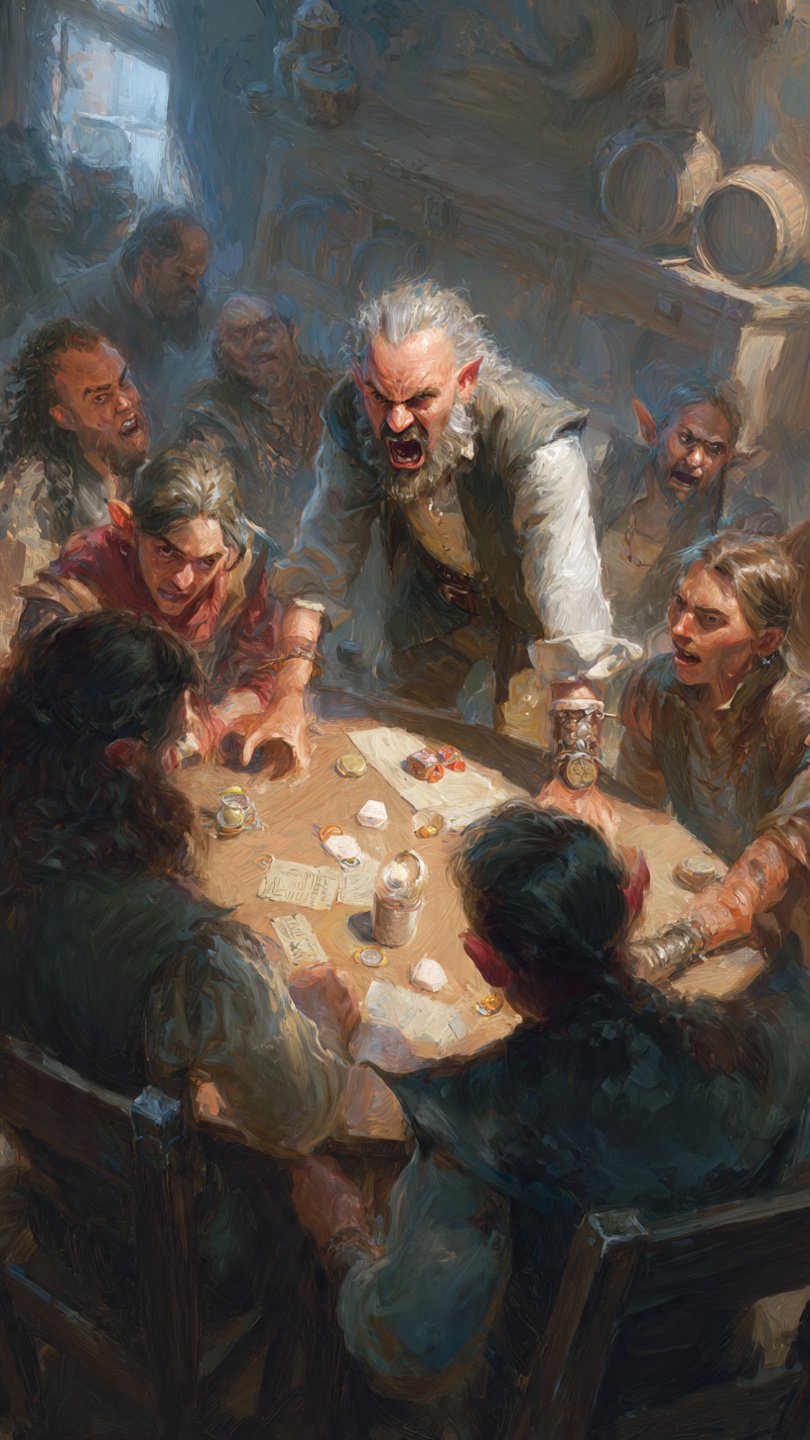
Every veteran Game Master eventually meets this kind of adventurer.
The player who turns every setback into a personal tragedy.
The rogue misses a stealth roll and suddenly the whole night becomes a funeral procession.
The barbarian gets criticized once and spends the next three hours emotionally withdrawing from the table.
The cleric gets left out of a single roleplay scene and begins acting like the campaign has betrayed them personally.
At first, most groups try to be understanding.
That’s normal.
Tabletop games are emotional. People get attached to characters, stories, and outcomes. A little disappointment is healthy. A little frustration is normal.
But eventually some tables discover something dangerous.
One player’s emotional instability slowly begins controlling the campaign itself.
And once that starts happening, the entire table begins unconsciously orbiting around emotional damage control instead of adventure.
The Problem Usually Starts Small
The Crybaby Adventurer rarely looks dangerous during Session One.
Usually they seem passionate.
Very passionate.
They care deeply about their character.
They react strongly to setbacks.
They become emotionally invested very quickly.
At first, this can even look like “good roleplay.”
But over time, the table begins noticing patterns.
Every failed roll becomes a crisis.
Every disagreement becomes emotionally exhausting.
Every correction feels like a personal attack.
And eventually the GM realizes something horrifying:
The campaign is no longer being shaped by the story.
It is being shaped by whichever outcome prevents the next emotional meltdown.
That is where campaigns quietly begin dying.
Good GMs Start Walking on Eggshells
This is where the real damage begins.
The GM starts softening consequences.
Enemies stop targeting the player.
Failures become less meaningful.
Conflict scenes get avoided entirely.
Hard roleplay decisions disappear.
Not because the GM wants weaker storytelling.
But because everybody at the table is tired.
Tired of managing emotional fallout.
Tired of awkward silences.
Tired of one player emotionally collapsing every time the game stops revolving around their comfort.
This creates a hidden corruption inside the campaign.
The table slowly learns:
“We must protect this player’s emotions at all costs.”
And once that happens, the campaign stops feeling like an adventure and starts feeling like emotional babysitting.
Other Players Start Shrinking Themselves
The saddest part?
Healthy players often become quieter to compensate.
The confident roleplayer stops taking spotlight moments.
The tactician stops criticizing bad plans.
The bard stops joking around.
Why?
Because everybody becomes afraid of triggering another emotional spiral.
One unstable player can accidentally suppress the personalities of five healthy players.
Veteran GMs notice this fast.
Especially in public tabletop environments where strangers are still learning trust, boundaries, and social comfort.
That is one reason experienced players often value good community spaces more than flashy terrain or giant miniature collections.
A healthy environment protects campaigns from social exhaustion.
That matters far more than fancy decorations ever will.
Articles like Casual Community Hubs vs Competitive Play Venues and Quiet Tavern or Loud Game Hall? exist for a reason.
Environment shapes behavior far more than new GMs realize.
Emotional Players Are Not Automatically Bad People
This part matters.
Some emotional players are genuinely struggling with anxiety, rejection sensitivity, insecurity, loneliness, or stress outside the game.
Compassion matters.
But compassion without boundaries destroys tables.
A campaign cannot survive if one player’s emotional state becomes everybody else’s responsibility.
Healthy groups learn the difference between:
supporting somebody
andemotionally revolving around somebody.
Those are not the same thing.
And veteran communities usually understand this far better than unstable groups do.
That’s part of why strong gaming communities matter so much in the first place.
Places like Meeples Games Seattle, ME Café & Games Singapore, and Univers Parallèle Toulouse tend to survive because healthy communities slowly teach healthier table behavior over time.
Strong communities regulate themselves long before GMs are forced to explode.
The GM’s Real Job Ain’t Just Running Monsters
Many new Dungeon Masters believe their job is:
worldbuilding
combat balancing
storytelling
NPC voices
Veteran GMs know the real job is social stability.
Protecting the energy of the table matters more than perfect lore.
A campaign with mediocre combat but healthy players can survive for years.
A campaign with incredible storytelling but constant emotional instability usually collapses before Level 5.
That’s one reason articles like How the Tavern Network Helps Players and GMs Find Better Tables Without Wasting Weeks Searching matter so much.
Finding healthy people matters.
Finding healthy environments matters.
Finding emotionally sustainable communities matters.
Sometimes the Kindest Thing Is Boundaries
Many GMs avoid confrontation because they fear hurting somebody’s feelings.
Ironically, that usually makes the problem worse.
The longer unhealthy emotional behavior controls the table, the more resentment quietly builds underneath the campaign.
And resentment kills groups far faster than honest conversations do.
Sometimes the healthiest thing a GM can say is:
“This behavior is exhausting the table.”
Not cruelly.
Not aggressively.
Not publicly.
Just honestly.
Because healthy campaigns require emotional responsibility from everybody involved, not just the GM.
And if that balance disappears, no amount of lore, maps, miniatures, or dramatic storytelling can save the campaign afterward.
More Tavern Goodness For Ya!