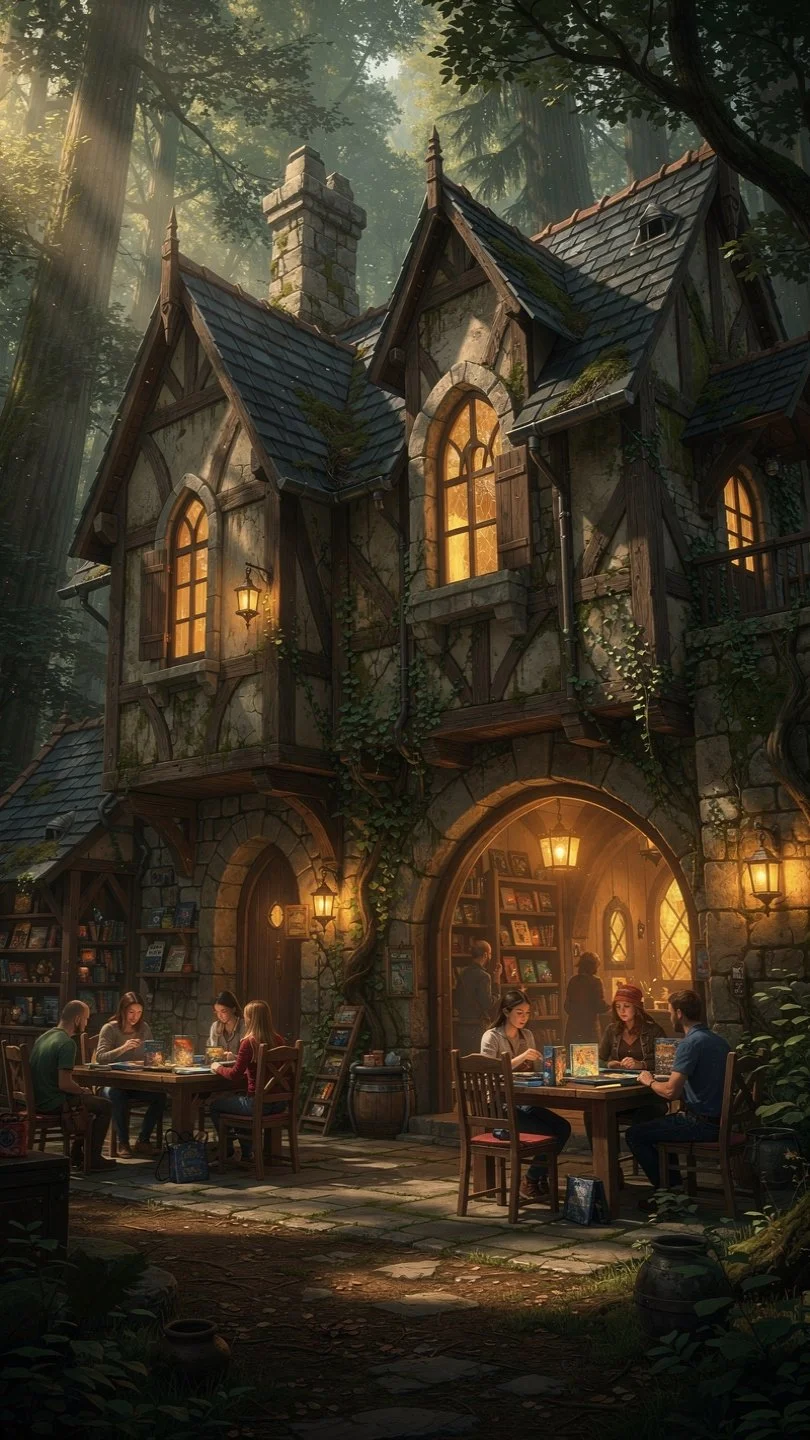
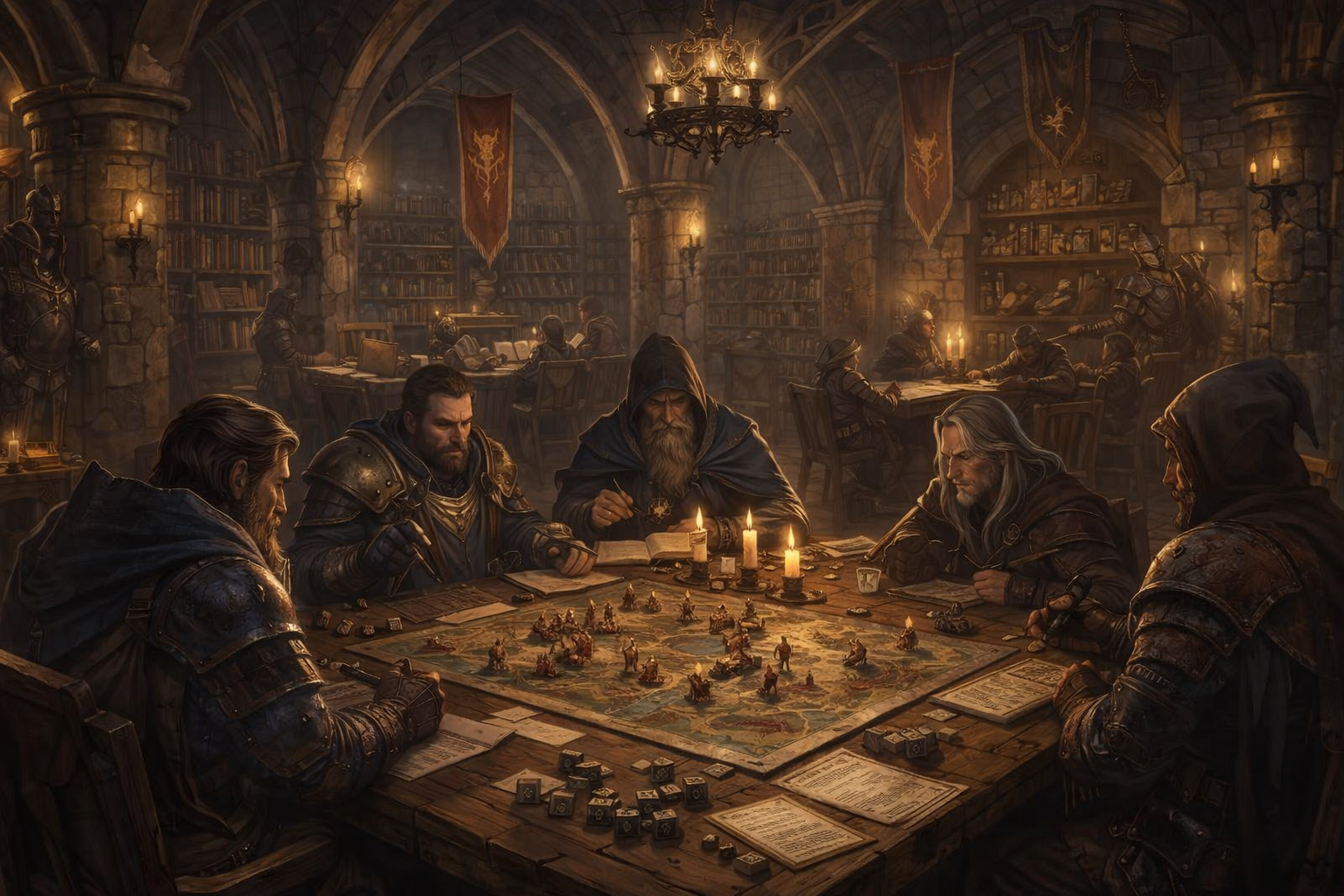
Why Veteran Dungeon Masters Care More About Chairs, Lighting, and Noise Than Fancy Terrain
New Dungeon Masters often believe immersion comes from spectacle.
Huge dragon miniatures.
Custom terrain.
LED spell effects.
Towering castles made from handcrafted foam.
And aye, those things are impressive.
For about fifteen minutes.
Veteran GMs eventually learn something far more important:
A campaign survives or dies based on comfort far more often than visual spectacle.
A cramped chair can ruin four hours faster than bad worldbuilding.
A noisy room can kill roleplay harder than weak storytelling.
And bad lighting can slowly drain the energy out of an entire campaign without anybody realizing why.
Experienced GMs know this because they’ve already watched beautiful campaigns collapse inside terrible environments.
Most Campaign Problems Ain’t Actually Story Problems
New GMs often panic when players seem distracted.
They assume:
the lore isn’t deep enough
the encounters aren’t exciting enough
the roleplay isn’t immersive enough
Sometimes that’s true.
But veteran GMs learn to look at the room first.
Can players hear each other properly?
Are people physically comfortable?
Is the room so loud that roleplay requires shouting?
Are players exhausted before combat even begins?
Bad environments create invisible fatigue.
And invisible fatigue slowly destroys campaigns.
That’s one reason experienced tabletop players often become strangely obsessed with venue atmosphere.
Not because they’re picky.
Because they’ve learned the hard way that environment shapes player behavior more than most rulebooks ever will.
Noise Quietly Destroys Roleplay
Combat can survive noise.
Roleplay usually cannot.
Once players start repeating themselves every thirty seconds, immersion begins leaking out of the room.
Subtle character moments disappear.
Quiet roleplayers stop contributing.
Emotional scenes become awkward.
The campaign slowly shifts toward surface-level interaction because deep engagement becomes exhausting.
Veteran GMs notice this immediately.
That’s why many experienced groups actively search for quieter environments, calmer cafés, or community-focused venues instead of giant chaotic halls.
Articles like Quiet Tavern or Loud Game Hall? and Casual Community Hubs vs Competitive Play Venues matter because they address something many beginners overlook:
Different environments create completely different campaign energies.
Comfortable Players Become Better Players
This sounds obvious.
Yet countless GMs ignore it.
A comfortable player:
roleplays more
stays focused longer
becomes more patient
contributes creatively
tolerates slower pacing better
communicates more openly
Physical comfort affects emotional comfort.
Emotional comfort affects social trust.
Social trust affects campaign longevity.
That chain matters far more than fancy props.
A warm, welcoming space with decent seating and good lighting will usually produce stronger campaigns than a visually impressive venue that leaves players drained after two hours.
That’s one reason venues like ME Café & Games Singapore, Meeples Games Seattle, and Good Game Banbury stand out to veteran players.
They understand that atmosphere is part of the game.
Lighting Changes Table Energy More Than People Realize
Bright sterile lighting creates a very different mood from warm focused lighting.
One feels transactional.
The other feels inviting.
Veteran GMs unconsciously learn how room energy affects storytelling.
Too bright and players feel exposed.
Too dark and players become tired.
Too chaotic and attention starts fragmenting.
A balanced environment helps players settle mentally into the campaign world.
That matters enormously for:
horror campaigns
emotional roleplay
political intrigue
long-form storytelling
quieter character moments
Many public venues accidentally sabotage these experiences without realizing it.
Meanwhile, experienced community spaces slowly evolve around player comfort because they’ve watched what actually keeps groups returning week after week.
Veteran Players Often Prioritize Community Over Visuals
This surprises newer players sometimes.
They expect experienced gamers to chase:
giant tables
massive terrain collections
ultra-expensive setups
But many veterans eventually prioritize:
respectful communities
stable environments
noise control
reliable scheduling
emotionally healthy groups
Because they’ve learned that sustainable campaigns require sustainable environments.
A beautiful battlefield means very little if everybody leaves emotionally exhausted afterward.
That’s why articles like How the Tavern Network Helps Players and GMs Find Better Tables Without Wasting Weeks Searching exist in the first place.
Finding a healthy table environment is often harder than learning the rules themselves.
The Best Venues Understand Human Energy
The strongest tabletop venues are not merely businesses.
They are energy-management spaces.
Good venue owners understand:
crowd flow
noise balancing
comfort pacing
social atmosphere
community behavior
table spacing
The best community spaces quietly protect campaigns without players even noticing.
That’s part of what makes places like Pixels & Pieces Singapore, Univers Parallèle Toulouse, and The Attic Fürth Germany memorable.
The players are not merely renting tables.
They are entering environments designed to help campaigns survive.
Fancy Terrain Can Enhance a Campaign
But comfort keeps it alive.
That’s the difference.
New GMs often focus on visual immersion because it’s easier to see.
Veteran GMs focus on emotional sustainability because they’ve watched too many campaigns slowly die from fatigue, discomfort, noise, and social exhaustion.
A legendary campaign does not survive because the dungeon walls looked realistic.
It survives because players wanted to keep returning to the table week after week.
And most of the time, that begins with something far simpler than miniatures.
A good chair.
A comfortable room.
A welcoming atmosphere.
And enough quiet for adventurers to actually hear each other dream.
More Tavern Goodness For Ya!