When You Feel Quietly Responsible for Everyone’s Fun
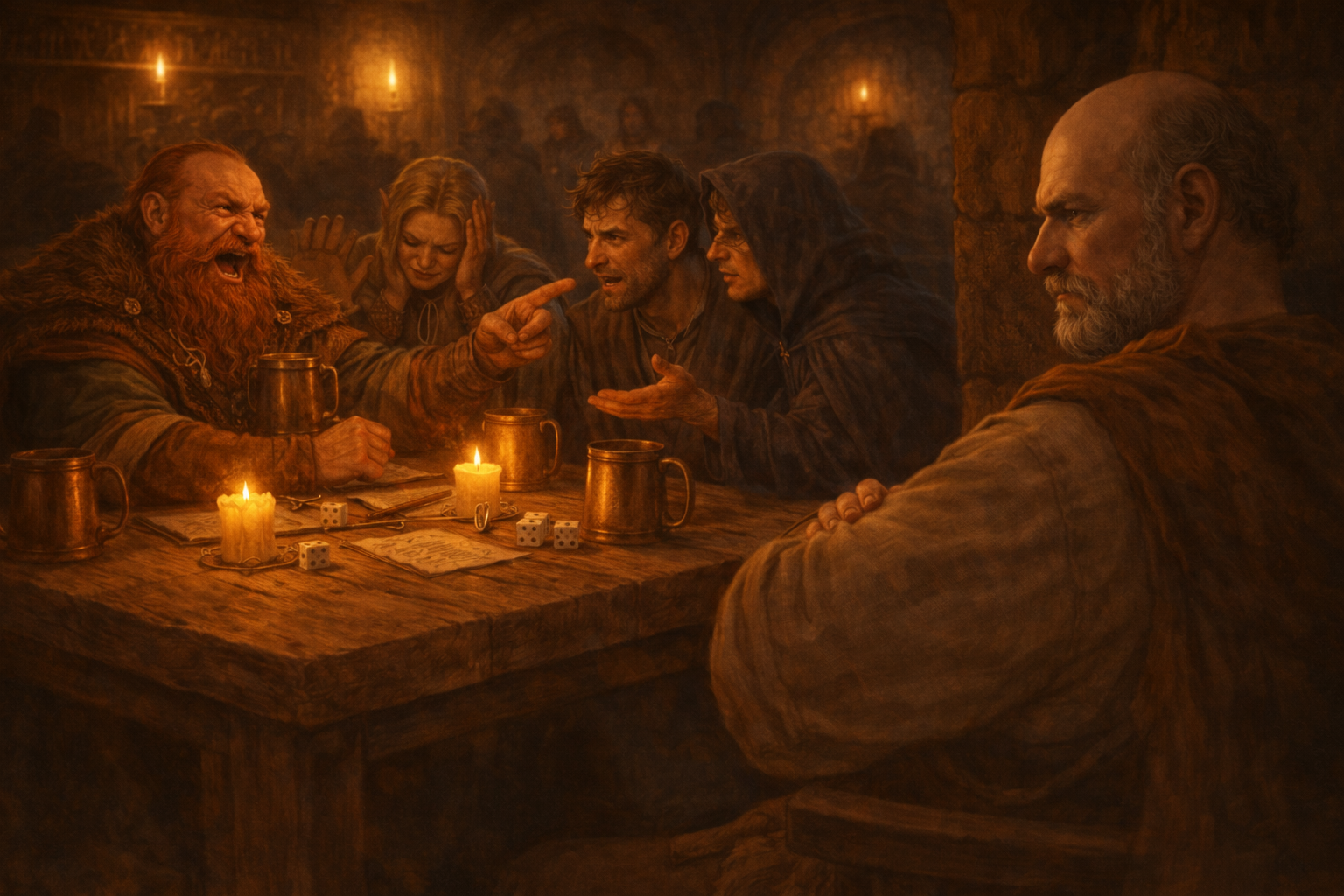
“If Ye Think the Whole Tavern Rests on Yer Shoulders, Lad — We Need a Word.”
You didn’t sign a contract that said:
I am now solely responsible for the bloody emotional satisfaction of five grown milk-drinkers.
And yet.
Somewhere between Session Zero and the third dungeon crawl, that’s exactly how it started to feel.
You watch the room.
You monitor the jokes.
You pace the scenes.
You track who hasn’t spoken.
You carry the silence when it drops.And when the night ends?
You audit yourself.
If this sounds familiar, you’re not alone.
But you might be carrying something that was never meant to be yours alone.
The Hidden Burden of the Caring GM
There’s a certain type of GM who doesn’t just run mechanics.
They run atmosphere.
They think about:
Spotlight balance
Emotional tone
Table chemistry
Social tension
Engagement pacing
And when someone looks bored for five seconds?
It hits like a failed saving throw.
If you’ve ever walked away unsure whether you did enough — even when nothing went wrong — you may relate to When You Can’t Tell If You’re Burnt Out or Just Tired of Them.
Because responsibility fatigue and burnout can look very similar.
Where This Feeling Comes From
That quiet responsibility usually grows from one of three places:
You care deeply about the experience.
You’ve seen tables fall apart before.
You believe “If I don’t manage it, it will collapse.”
That last one is dangerous.
If you’re constantly bracing for structural failure, you might want to revisit When You’re the Only One Who Cares If It All Falls Apart.
Because sometimes the pressure isn’t external.
It’s self-assigned.
Mike Interrupts (And He Ain’t Whisperin’)
Listen here, ya overburdened, scroll-hoardin’ hero.
By Grabgar’s hammer, ye are a GM — not a tavern therapist, mood regulator, and entertainment circus all rolled into one.
If someone’s quiet for a night, that ain’t automatically yer fault.
If someone didn’t laugh at a joke, that ain’t a failure in narrative pacing.
If the table energy dips, that does NOT mean ye must triple yer prep like a frantic wizard scribblin’ runes in the dark.
I’ve seen GMs nearly break their backs tryin’ to carry folk who never asked to be carried.
And I’ve seen tables thrive when responsibility got shared.
If spotlight imbalance is part of what’s making you feel like a social referee, you might revisit The Quiet Player vs the Table Hog — How to Keep Both Happy Without Losing Your Mind.
Because balance is a table effort.
Not a solo burden.
The Difference Between Leadership and Control
Healthy leadership at the table looks like:
Holding space.
Setting tone.
Providing structure.
Unhealthy over-responsibility looks like:
Monitoring everyone’s emotional reactions.
Editing yourself constantly.
Pre-emptively solving problems that haven’t happened.
Absorbing silence as personal failure.
If you’ve ever mistaken quiet for dissatisfaction, or calm for disengagement, it may help to revisit When the Table’s Full but It Feels Empty.
Not every quiet moment is a crack in the foundation.
Sometimes it’s just a breath.
When Responsibility Turns Into Exhaustion
You’ll know the shift has happened when:
Prep starts feeling defensive.
You over-explain scenes.
You rush to fill pauses.
You feel relief instead of satisfaction when sessions end.
If that’s happening, pause before doubling your prep time.
Read Top 5 Ways to Up Yer GM Game Without Tearin’ the Whole Thing Down.
Improvement doesn’t require self-sacrifice.
It requires clarity.

Redistributing the Weight
Here’s the uncomfortable truth:
Players are responsible for their own engagement.
You are responsible for:
Providing opportunity.
Maintaining structure.
Encouraging participation.
You are NOT responsible for:
Forcing excitement.
Manufacturing enthusiasm.
Solving private insecurities.
Making everyone equally expressive.
If listening feels uneven at your table, revisit The Strongest Character at the Table Is the One Who Listens.
Healthy tables regulate themselves over time.
They don’t depend entirely on one person.
Quick Questions Before You Shoulder It Alone
Is it normal for GMs to feel responsible for everyone’s fun?
Yes. Especially conscientious ones. But normal doesn’t mean sustainable.
If someone looks bored, is that automatically my failure?
No. People have off nights. Energy fluctuates.
How do I reduce the burden without lowering standards?
Invite player ownership. Ask what they’re pursuing next. Share narrative control in small ways.
And if you ever need to remember what this tavern is actually about, revisit About Mike’s Tavern.
If you’re unsure how these pieces connect, check the FAQ.
And if something heavier’s brewing behind the screen, the Contact page is always open.
More from Around the Tavern
Tools, Tactics & Mechanical Growth