When No One Ever Says What’s Actually Bothering Them
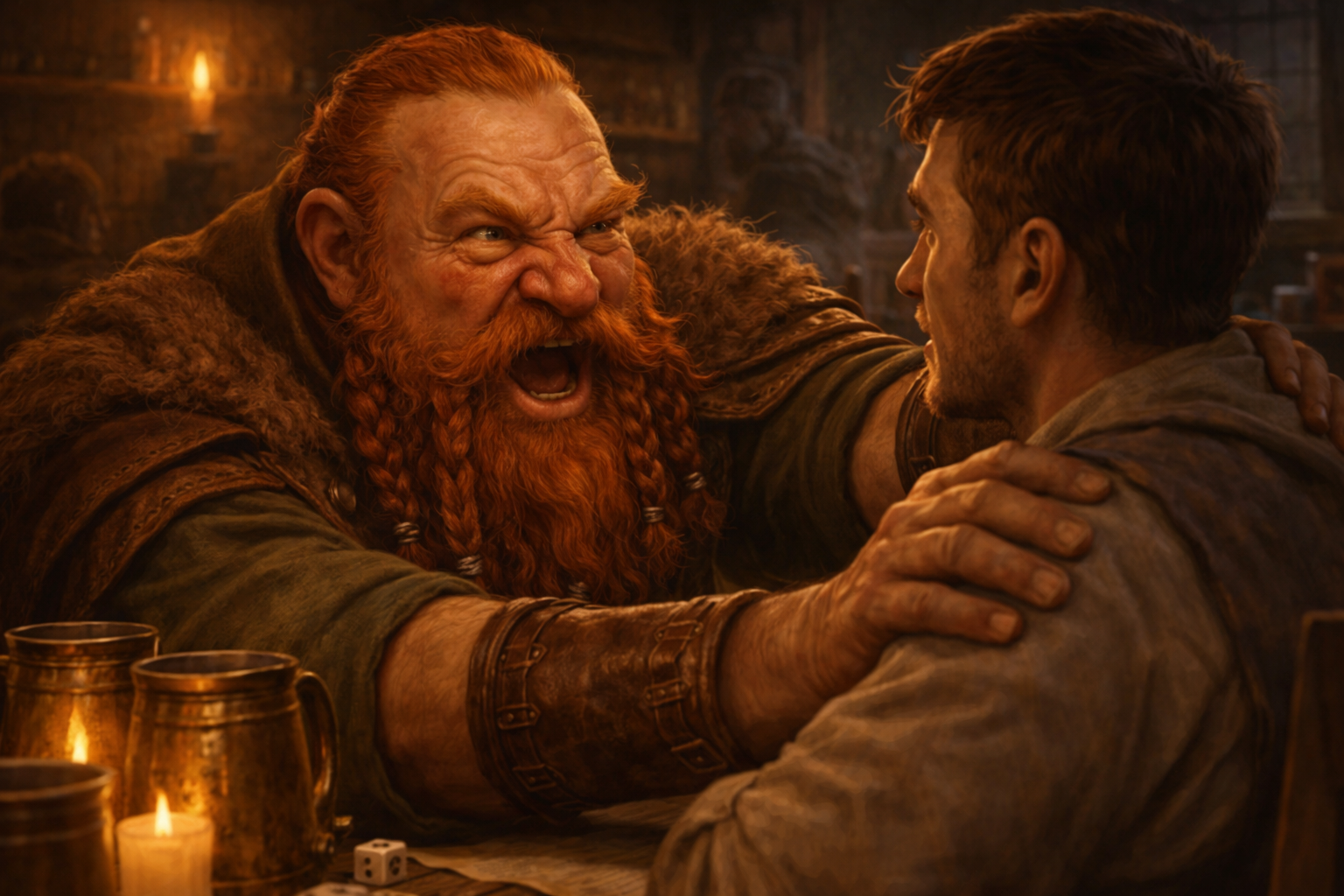
“Alright, listen here, ye quiet broodin’ lot. I’ve seen more parties fall apart over UNSAID words than over dragon fire. A blade in the gut? Clear problem. A curse from a lich? Obvious. But that tight little silence after someone cracks a joke? That’s the real rot. Folk sittin’ there, smilin’ like polite nobles while their insides are boilin’ like stew left too long on the flame. By Grabgar’s hammer, if somethin’s botherin’ ya, don’t let it fester like moldy bread in me cellar. This tavern runs on truth, not timid noddin’.”
Sometimes the hardest thing at a D&D table isn’t combat, rules, or scheduling.
It’s the silence.
Not the comfortable kind. Not the focused kind.
The kind where everyone feels something is off — but no one says what it is.
That’s where campaigns quietly crack.
The Problem With “It’s Fine”
When no one speaks up about what’s actually bothering them, the table starts operating on assumptions instead of trust.
Maybe someone feels talked over.
Maybe someone feels ignored.
Maybe someone’s tired of the tone drifting darker than expected.
Maybe the GM feels unappreciated.
But instead of naming it, everyone says, “It’s fine.”
And “fine” becomes the most dangerous word in the tavern.
Because unspoken tension doesn’t disappear. It shifts into:
Passive jokes.
Shorter patience.
Less enthusiasm.
Quiet disengagement.
You start seeing symptoms like the ones described in Why Your Party Keeps Falling Apart (And How to Stop Being the Reason) — not because anyone is malicious, but because no one is honest.
Silence protects comfort in the moment.
But it erodes trust in the long run.
Why People Don’t Say What’s Wrong
Let’s be fair.
Most players don’t stay quiet because they’re cowards.
They stay quiet because they’re afraid of becoming:
“That player.”
Too sensitive.
Disruptive.
Dramatic.
A burden.
Sometimes they’ve read articles like How to Speak Up Without Freezin’ at the Table and still struggle in the moment.
Sometimes they think, “It’s not that big a deal.”
Sometimes they don’t even fully understand why they’re bothered — they just feel it.
And here’s the thing:
Unspoken discomfort doesn’t require a villain.
It only requires avoidance.
The Damage of Polite Avoidance
When no one names the issue, the group begins adapting around it instead of resolving it.
The loud player gets louder.
The quiet player gets quieter.
The GM pushes harder.
The tension gets buried.
It becomes the exact dynamic described in The Strongest Character at the Table Is the One Who Listens — except no one is actually listening anymore. They’re just waiting.
Waiting for someone else to go first.
Waiting for the campaign to “fix itself.”
Waiting for someone to leave.
And when someone finally does? It feels sudden.
But it never was.
The Tavern Table Pact: Speak Before It Sours
If you’ve felt that tension at your table — that quiet strain no one wants to touch — don’t wait for it to explode.
Have the small conversation early.
Not in the middle of combat.
Not in the heat of frustration.
But calmly. Privately. Kindly.
Say things like:
“Hey, I’ve been feeling a little off lately.”
“I don’t think anyone’s doing anything wrong, but I wanted to check something.”
“Can we talk about how that scene felt?”
You’d be surprised how often the other person says:
“I didn’t even realize.”
Campaigns don’t collapse because someone speaks up.
They collapse because no one does.
If your table has been feeling “full but empty,” you might also want to reflect on themes discussed in When the Table’s Full but It Feels Empty — sometimes silence is the signal.
And if you’re unsure whether you’re overreacting or not, take a breath and remember:
Naming discomfort is not an attack.
It’s maintenance.
How to Bring It Up Without Burning the Tavern Down
There’s a difference between confrontation and communication.
Confrontation blames.
Communication clarifies.
Instead of:
“You always interrupt me.”
Try:
“I’ve been having trouble getting space to speak.”
Instead of:
“This campaign is boring.”
Try:
“I’m struggling to stay engaged lately. Can we adjust something?”
Tone matters.
Timing matters.
And intention matters.
This isn’t about winning.
It’s about preserving the table.
If you need perspective on how small behaviors quietly add up, revisit The Small Behaviors That Quietly Push a Party Toward Collapse. Most table breakdowns are gradual, not explosive.
When You’re the One Holding It All In
Now let’s be honest.
Sometimes the person staying quiet… is you.
You tell yourself:
“It’s not worth it.”
“They’ll think I’m dramatic.”
“It’ll pass.”
But your energy changes.
Your excitement dips.
Your presence shrinks.
And eventually, you start wondering whether you belong there at all.
That’s when resentment begins.
And resentment is far harder to heal than awkward honesty.
Keep the Fire Warm, Not Smoldering
A healthy table doesn’t avoid discomfort.
It addresses it gently and early.
If you value your campaign, your players, and the hours you’ve invested together, treat communication like shared treasure — distribute it before it turns into a hoard of unsaid grievances.
If something’s bothering you, speak before it becomes a story in someone else’s memory about “that campaign that slowly died.”
And if you’re ever unsure where you stand, remember:
This tavern exists to help you think through it.
You can always read more about the philosophy behind this place over at the About Mike’s Tavern page, explore common concerns in the FAQ, or reach out directly through the Contact Page if something’s weighing on you.
No campaign thrives on silence.
And no table grows stronger by pretending nothing’s wrong.
Quick FAQ
Q: What if I’m not sure whether my concern is “big enough” to mention?
If it lingers after the session, it’s worth a conversation. Small discomforts become large resentments when ignored.
Q: What if I’m afraid of ruining the vibe?
Calm, respectful communication protects the vibe. Avoidance damages it slowly.
Q: What if no one else seems bothered?
You’re still allowed to speak. A table isn’t a democracy of discomfort — your experience matters too.
Q: What if someone reacts badly when I bring it up?
That reaction reveals more than your silence ever could. Healthy tables can handle gentle honesty.
More Table Tips Stories to Explore