Good Tables, Bad Tables (Part 2): Red Flags Players Often Ignore
Most players don’t leave bad tables because of one dramatic explosion.
They leave because of a hundred small paper cuts.
And here’s the uncomfortable truth:
Red flags at a D&D table are rarely obvious villains.
They’re patterns.
Subtle dismissals.
Repeated jokes.
Energy shifts that make you smaller over time.
Part 1 mapped what a healthy table feels like. If you missed it, read Good Tables, Bad Tables (Part 1): Signs You’re at a Healthy D&D Table first.
Today we go deeper.
We name what players ignore.
“If Ya Keep Explainin’ Why It Ain’t That Bad… It’s Probably Bad.”
I’ve seen it too many times.
“Yeah, he talks over me, but he’s just excited.”
“She makes those jokes, but she doesn’t mean it.”
“The GM’s intense, but that’s just his style.”
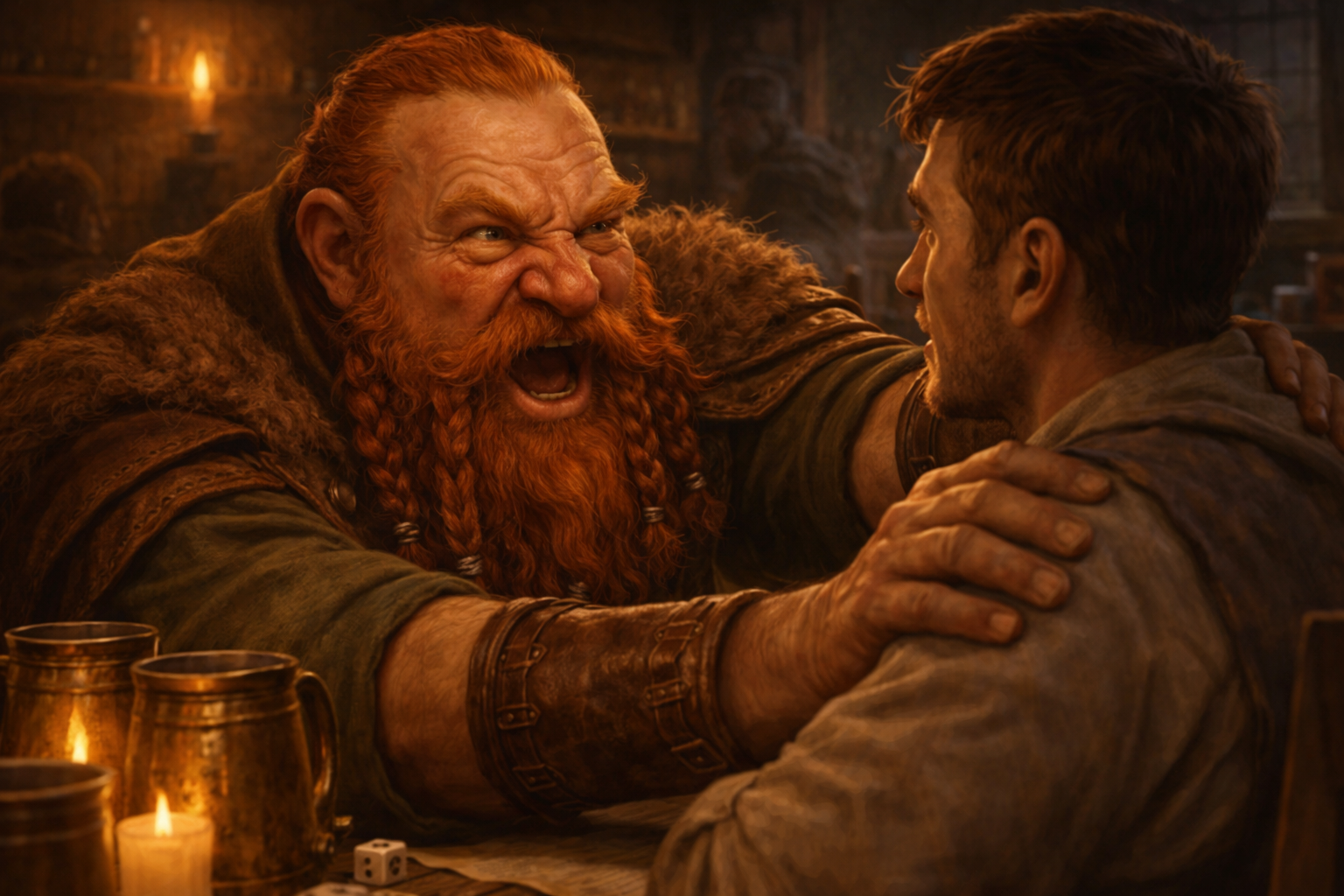
By Durven’s last tankard, why are ya explainin’ someone else’s behavior more than they are?!
Healthy tables don’t require constant interpretation. They require mutual effort.
If yer new at the tavern, why don’t ya mosey on over and see what this place is about on About Mike’s Tavern, and if yer tryin’ to understand how this tavern approaches table problems without turning into a bloody drama factory, just skim the FAQ why don’t ya.
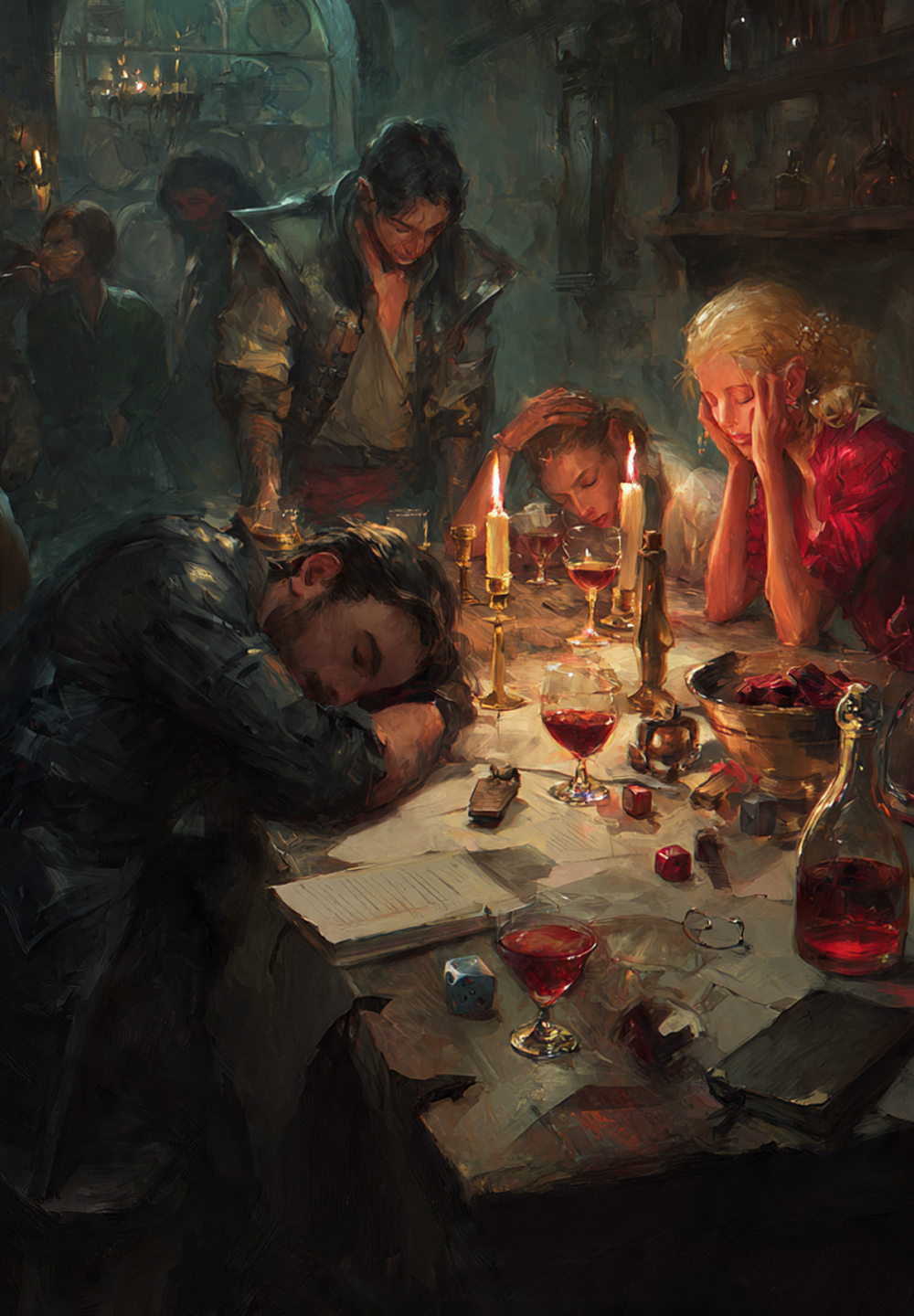
Micro-Scene: The Laugh That Wasn’t Harmless
Catherine tries to roleplay.
She speaks softly, describing how her rogue studies the guard’s posture.
Before she finishes, someone says:
“Whoa, edgy much?”
Laughter.
She smiles. Shrugs. Says nothing.
Next session? She roleplays less.
Third session? She stops entirely.
No one remembers the moment.
But her engagement declines.
That’s a red flag.
If you’ve read The Quiet Damage of Comparison at the Table, you already know how subtle status jokes corrode confidence over time.
This is how decay starts.
Pattern Diagnosis: The Four Red Flags Players Normalize
1. “It’s Just a Joke”
If humor consistently lands on the same person — that’s not humor.
That’s hierarchy.
Healthy tables spread the laughter.
Unhealthy tables assign it.
Especially for women at the table, “teasing” often hides dismissal. For quieter men, it hides sidelining.
If you’re constantly the punchline, that is not random.
2. Interruptions That Never Get Corrected
Everyone interrupts sometimes.
The red flag isn’t interruption.
It’s repetition without repair.
If no one ever says, “Sorry, go ahead,”
if the GM never loops you back in,
if airtime is always claimed, never shared—
That’s structural.
If you want practical tools for the moment it happens, read How to Handle Being Talked Over at the Table.
But if the culture never adjusts?
You’re compensating for a system that doesn’t protect you.
3. Pressure Disguised as Passion
“You should lean into it more.”
“Come on, don’t be shy.”
“It’ll be more fun if you commit.”
Sometimes that’s encouragement.
Sometimes it’s coercion.
If someone sets a boundary and gets pushback? That’s not hype.
That’s pressure.
And if that boundary is about romance, sexual themes, or humiliation scenes?
That red flag burns brighter.
Healthy tables respect immediate no’s.
Without debate.
If you need a cultural benchmark for what real listening looks like, revisit The Strongest Character at the Table Is the One Who Listens.
4. The “You’re Too Sensitive” Trap
This one cuts deepest.
You express discomfort.
You’re told:
“It’s not that serious.”
“You’re reading into it.”
“You always take things personally.”
Now the problem isn’t behavior.
It’s you.
That’s inversion.
And inversion is dangerous.
Because once you doubt your own perception, the table has already shifted power away from you.
Long-Term Decay Mapping: What Happens If You Ignore These
Session 1: You brush it off.
Session 3: You speak less.
Session 6: You stop bringing character ideas.
Session 10: You’re emotionally absent.
Session 14: You “just got busy.”
No explosion.
Just erosion.
Meanwhile the GM wonders why enthusiasm fades.
If you’ve seen a group fall apart and couldn’t name why, read Why Your Party Keeps Falling Apart (And How to Stop Being the Reason).
Most collapses start quietly.
“Don’t Romanticize Sufferin’ For The Sake Of The Campaign.”
By Grabgar’s hammer, I’ve stayed in bad mercenary companies longer than I should’ve in me youth.
Thought loyalty meant tolerating nonsense.
It don’t.
If yer bracing before every session, rehearse replies in the shower, if yer stomach knots before game night …
That ain’t fellowship. That’s stress bleedin’ out yer sorry behind.
And no campaign is worth that, trust me. This old dwarf knows.
Tactical Intervention: One Small Test
Next session, try this.
When interrupted, calmly say:
“Hey, I wasn’t finished.”
Don’t joke it. Don’t soften it.
Just say it.
Watch what happens.
Healthy table?
Immediate correction.
Borderline table?
Awkward adjustment, but repair.
Unhealthy table?
Eye rolls. Defensive energy. Dismissal.
The reaction tells you more than the interruption did.
If you need confidence training for these moments, read How to Speak Up Without Freezin’ at the Table so you can practice the sentence before you need it.
Escalation Warning: Red Flags Compound
One red flag can be addressed.
Multiple ignored red flags create culture.
And culture is harder to repair than behavior.
If the GM is burned out, they may miss it. If you are the only one who sees it, that can feel isolating.
That’s why awareness matters early.
And if you're unsure whether something is fixable or foundational, you can always reach out through the Contact page. The tavern listens.
“If The Table Only Works When You Stay Small, It Ain’t Workin’.”
Listen, me lads and lasses.
You are not “too sensitive” for wanting basic respect, not always anyway ...
You’re just askin’ for some bloody culture at the table.
And culture determines whether a campaign thrives… or rots slow.
Reflection Questions
Do I regularly excuse behavior that makes me uncomfortable?
Have I reduced my participation to avoid becoming a target?
When I speak up, do I feel supported — or managed?
If a new player joined tomorrow, would they feel safe here?
Am I afraid to bring this topic up at my table?
Next part, we go deeper.
We’ll talk about the phrase that hides a thousand problems:
“That’s just how they play.”
And we’ll tear it apart properly.
More Tavern Goodness

More For The Game Master