
Smart Players Don’t Rush In. Here’s What They Do Instead
Mike’s Banter
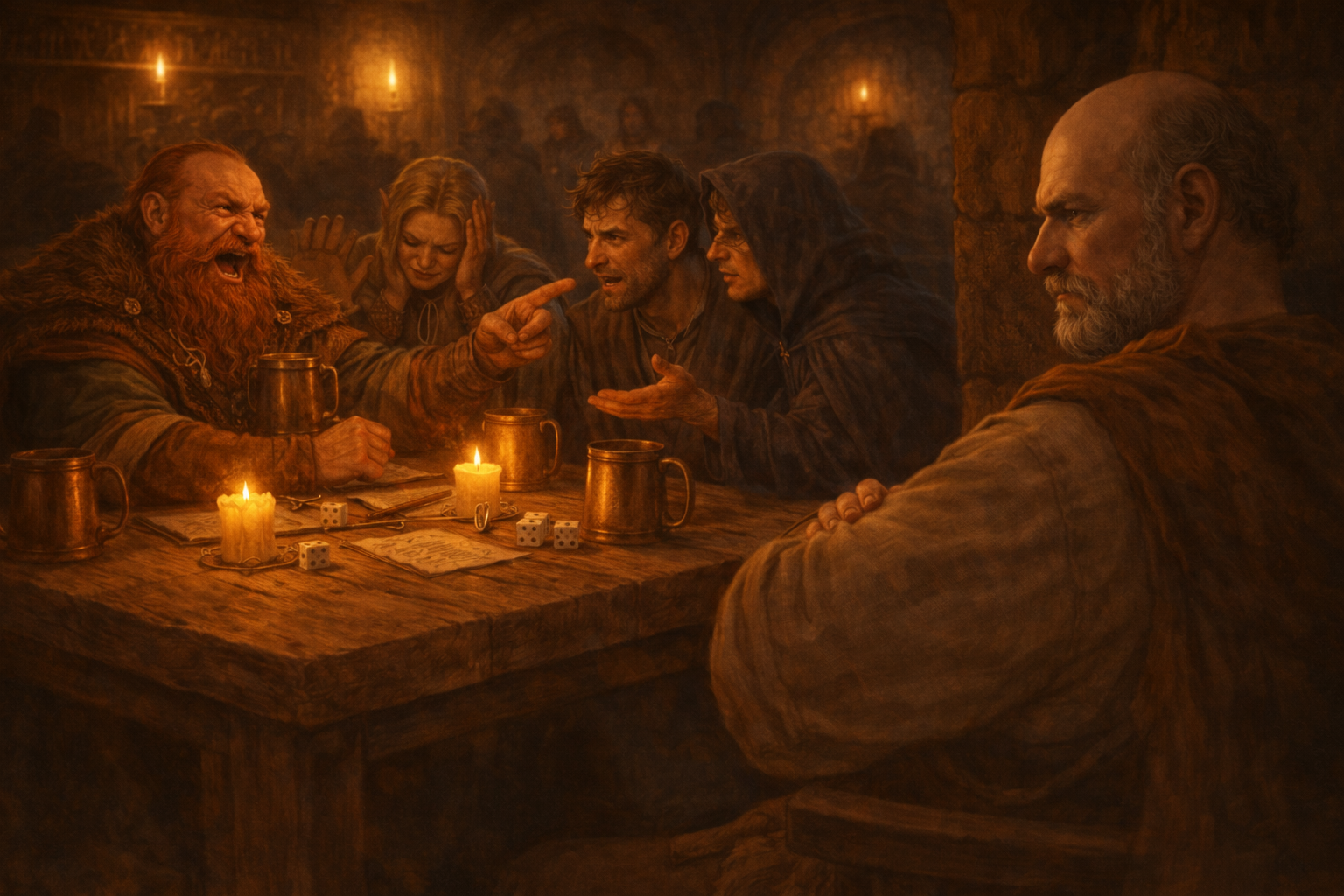
"By Margann’s crusty beard, some of you charge into battle faster than a drunken badger rollin downhill. You hear the word initiative and suddenly every thought leaves your skull like smoke from a cheap torch. Then you wonder why yer face is in the dirt, the cleric is cryin, and the wizard is already on death saves. Smart players do not rush in. They think. They observe. They plan. They notice things. And they save their own hides without makin their healer hate them."
Why Rushing In Breaks More Campaigns Than It Solves
Rushing in feels heroic. It feels decisive. It feels bold.
But at the table, bold often translates to blind. Acting before the party is ready can derail the GM’s plans, steal other players’ turns, and leave your party scrambling to survive your mistake.
The smartest players know that acting early is not the same as acting well.
They understand that preparation always beats impulse.
Lesson One. Read the Room Before You Leap
A smart player watches the table before making a move.
Are your teammates ready?
Is the GM about to reveal something?
Is the enemy suspiciously calm?
Pay attention to these signals. They tell you everything you need to know.
If you struggle with comparing your pace to other players, The Quiet Damage of Comparison at the Table is a strong reminder to stay focused on awareness instead of performance.
Lesson Two. Make the Party Stronger Before You Make Yourself Look Cool
Smart players wait long enough to let the group align. They allow the rogue to get into position, the wizard to prepare, and the cleric to set up support.
When you rush, you scatter the plan.
When you wait, you empower the plan.
Cooperation is a strength explored in How to Celebrate Wins That Aren’t Yours, which teaches why shared success always beats individual heroics.
Lesson Three. Learn From Characters Who Master Patience
Some characters look brilliant not because of power but because of timing.
Two perfect examples are The Rogue Who Hates Stealing and The Paladin Who Worships No One.
Both appear wise because they act with deliberation.
They wait for the right moment.
They strike only when it matters.
Study them and you will understand why patience always looks like intelligence.
Lesson Four. Ask Questions Before You Commit
Good players ask simple questions before acting.
"What do I see?"
"Does the enemy notice us?"
"Is anyone setting up something important?"
Smart questions avoid dumb mistakes.
This habit alone transforms you from a chaotic liability into someone the party trusts.

A Mid Table Trick That Makes You Instantly Wiser
👉 Smart players know that a single moment of hesitation can prevent a disaster. If you want to build that kind of discipline, look to characters like The Rogue Who Hates Stealing for subtle judgment and The Paladin Who Worships No One for steady resolve. You can also learn the spirit behind these lessons by stopping at the About Mike’s Tavern page.
If you want direct help or guidance, the barkeep is always reachable through the Contact page.
Lesson Five. Watch the Wizard Before You Act
Wizards are the canaries in the dungeon.
If the wizard backs away, you should too.
If the wizard holds their turn, something is coming.
If the wizard starts flipping pages quickly, you should start praying.
Rushing in before the wizard is ready often leads to unnecessary casualties.
Let them signal the rhythm.
They know more than you think.
Lesson Six. Wait for Information
The GM is constantly giving clues.
Enemy behavior.
Environmental hints.
NPC reactions.
Combat pacing.
Smart players look for this information before charging ahead.
It saves lives and resources.
If you want general guidance or answers to common adventuring questions, the FAQ page is a good starting point.
The Last Truth About Smart Play
👉 Intelligence at the table is not about knowing everything. It is about choosing the right moment. Whether you are a bold fighter or a shy bard, patience turns you into someone the party trusts. And when you act with purpose instead of panic, the whole group benefits from your presence.
Whenever you want more help becoming the player your GM hopes for, Mike’s Tavern has shelves full of tales and lessons waiting for you.
