
Playing Your First RPG: Why Speaking In Character Feels Awkward
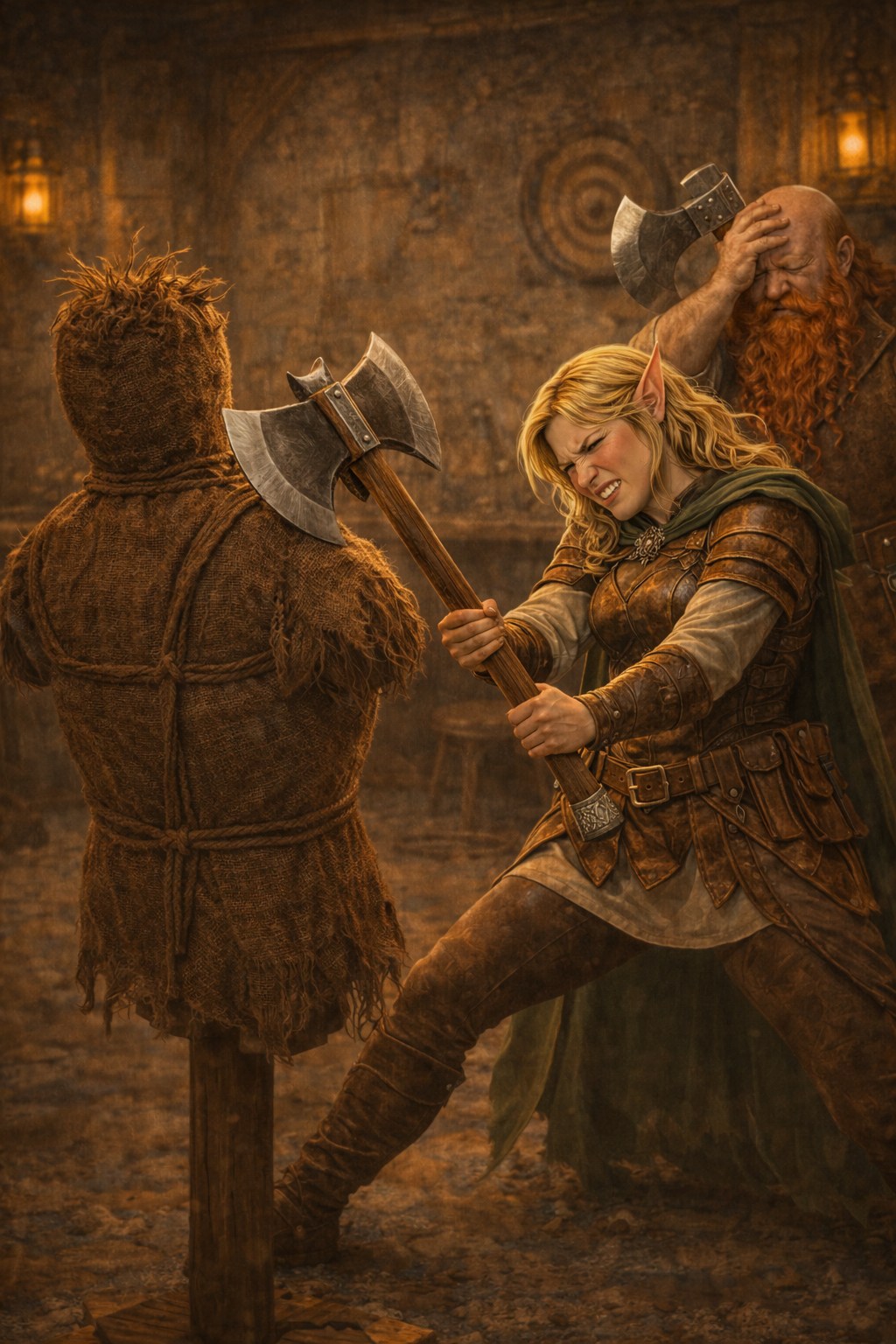
Everything is awkward the first time. Think back to moments earlier in your life when you tried something new. The first time you played basketball, you probably fumbled the ball while someone tried to steal it from you. The first time you cooked, you may have cut your finger while learning how to handle a knife. The first time you held a video game controller, the buttons felt unfamiliar and confusing, and even simple movements required effort.
Now think about how those same activities feel today. What once felt clumsy slowly became natural through repetition. The awkwardness did not disappear overnight, but it faded as your hands and mind learned what to expect.
Speaking in character during a tabletop roleplaying game follows that same pattern. The first time you try to speak as your character, your voice may feel strange to your own ears. Your words may come out slowly. You may hesitate or feel unsure whether you sound convincing. That discomfort feels very noticeable to you, but it rarely looks as dramatic to others as it feels inside your own mind.
If you are still learning how roleplaying fits into the larger structure of the game, reading the Frequently Asked Questions can help clarify how speaking in character naturally develops over time rather than appearing instantly.
Why This Feeling Is Normal
Speaking in character feels awkward because it combines imagination with performance. You are not just describing actions. You are expressing personality, tone, and emotion in front of other people. That combination is unfamiliar to most beginners, especially those who have never acted, improvised, or performed in public.
When you speak as your character, your brain becomes aware of your voice in a new way. You may notice how loud you sound, how your tone changes, or how your words feel when spoken aloud. That heightened awareness creates discomfort, not because you are doing something wrong, but because you are doing something unfamiliar.
It is also important to understand that awkwardness feels louder internally than it appears externally. You may feel self-conscious about how you sound, but others at the table usually focus on the meaning of what you say rather than the style of delivery.
Many experienced players remember their own first attempts at speaking in character. Those memories are rarely embarrassing to them now. Instead, they are often remembered with humor or nostalgia. That shared memory creates patience at the table, even if you cannot see it.
If you are curious how gaming communities grow through shared learning and gradual confidence, exploring About Mike’s Tavern can provide context for how new players slowly become comfortable contributors.
What This Moment Actually Looks Like at the Table
Imagine your character entering a tavern for the first time.
The GM looks at you and says, "The bartender asks what you want."
The table turns slightly toward you. Nobody is staring intensely, but the attention shifts enough for you to notice.
You clear your throat.
You try to speak.
Instead of saying something confidently, your voice comes out softer than expected. Maybe you hesitate halfway through the sentence. Maybe you laugh nervously after speaking.
You might say something simple like, "Uh… my character asks for water."
Someone at the table nods. The GM responds naturally. The conversation continues.
Nothing dramatic happens.
Nobody criticizes your delivery. Nobody interrupts you. Nobody corrects how you sounded.
From your perspective, the moment feels uncomfortable and exposed. From everyone else's perspective, it looks like participation.
That difference in perception is important. Most awkward moments feel larger to the person experiencing them than to anyone observing them.
What Most New Players Worry About (And What Actually Happens)
Many beginners assume speaking in character requires performance-level confidence. That belief creates unnecessary pressure.
Fear: I sound silly when I speak in character.
Reality: Many players sound unsure at first, and uncertainty is widely accepted during early sessions.
Fear: Everyone notices my hesitation.
Reality: Most players focus on understanding your intent rather than analyzing how you speak.
Fear: I need to sound dramatic or impressive.
Reality: Simple, clear speech is far more common than theatrical delivery.
Fear: If I stumble over words, it will ruin the scene.
Reality: Small stumbles rarely disrupt the flow of play and are usually forgotten quickly.
If you are interested in how communication styles vary across players, reading The Quiet Player vs the Table Hog: How to Keep Both Happy Without Losing Your Mind shows how different speaking habits naturally coexist at the table.
What You Can Do In That Moment
Reducing awkwardness begins with lowering expectations. You do not need to perform theatrically to participate meaningfully. Speaking in character can begin with very simple adjustments rather than dramatic voice changes.
One effective technique is to start with short descriptive phrases instead of full dialogue. Saying something like "My character politely asks for help" allows you to participate without needing to invent elaborate speech. Over time, those descriptions can gradually evolve into spoken lines.
Another helpful method is to use your natural voice while changing only small details. You might adjust your tone slightly or add a simple mannerism, such as speaking more slowly or choosing formal language. These small shifts create character identity without overwhelming your confidence.
Preparation also helps reduce hesitation. Before your turn arrives, think about one sentence your character might say. Knowing even a single phrase in advance can reduce uncertainty and make the moment feel manageable.
Some players also benefit from practicing outside the game. Reading a line of dialogue aloud when alone allows you to become familiar with the sound of your voice in character without the pressure of an audience.
If you want additional support while learning how to express your character’s actions and choices, exploring resources in the RPG Tools section can provide structured guidance that makes early sessions feel less overwhelming.

The Tavern Toolset
Lets get you started on your first adventure! Take these tools, laddie, these ones are on me!
What Happens If You Avoid This Moment
Avoiding character speech entirely can create distance between you and the story. If you consistently speak only through minimal actions or remain silent when dialogue is expected, your connection to the narrative may weaken.
That distance can slowly reduce enjoyment. You may feel less involved in conversations between characters. You may feel less invested in decisions that shape the story. Over time, the game may feel more like observation than participation.
Avoidance does not create comfort. It creates separation. Separation reduces engagement, and reduced engagement makes the experience feel less rewarding.
Participation, even when awkward, keeps you connected to the story. Connection strengthens familiarity. Familiarity reduces discomfort.
What Experienced Players Know That Beginners Don’t
Experienced players understand that character speech improves naturally through repetition. They know that awkwardness fades through exposure rather than talent.
Many seasoned players began with minimal dialogue and gradually expanded their comfort level. Some started by describing actions instead of speaking lines. Others spoke quietly at first before finding a more confident tone. None of these paths were perfect, but all of them led to improvement.
Another important realization among experienced players is that character expression does not require performance skill. Some players use dramatic accents, while others speak plainly. Both styles are valid, and both contribute to the story in meaningful ways.
Confidence in character speech is rarely immediate. It develops through patience and repetition, often without the player noticing when the change occurred.
If you are curious how different personalities contribute to storytelling dynamics, reading When Running the Game Starts Feeling Like Carrying the Room provides insight into how communication shapes the shared experience.
Your First-Time Player Check-In
Take a moment to reflect on your own experience with speaking in character.
Have you felt hesitant to speak because you worried about how you might sound?
Have you noticed moments where you wanted to say something but held back?
Have you compared your voice to another player's and assumed theirs was better?
Now consider how you might approach your next session differently.
Are you willing to try speaking one sentence in character, even if it feels uncertain?
Are you willing to allow awkwardness to exist without treating it as failure?
Are you willing to treat early discomfort as part of learning rather than a signal to stop?
These questions are not meant to pressure you. They are meant to encourage patience with yourself as you learn.
What To Remember Before Your Next Session
Awkwardness is a temporary stage that appears whenever you try something unfamiliar. Speaking in character feels strange at first because your mind and voice are learning a new form of expression. With repetition, what once felt uncomfortable becomes familiar, and what once felt unfamiliar becomes routine.
Most players who appear confident today began exactly where you are now. They hesitated, spoke softly, and wondered whether they sounded strange. Over time, those concerns faded, replaced by comfort and familiarity.
Speaking in character is not about performance. It is about participation. When you allow yourself to try, even imperfectly, the awkwardness begins to fade, and the story begins to feel more personal.
