When Running the Game Starts Feeling Like Carrying the Room
“If Ye Feel Like the Only One Pushin’ the Wagon, Lad — That’s Not Sustainable.”
There’s a shift that happens quietly.
At first, you’re facilitating.
Then you’re guiding.
Then you’re energizing.
And eventually… you’re carrying.
You start filling silences before they settle.
You over-explain scenes to keep momentum alive.
You push decisions forward when players stall.
And when the session ends, you’re not satisfied.
You’re tired.
If running the game feels less like collaboration and more like hauling a cart uphill alone, this isn’t about weakness.
It’s about weight distribution.
The Subtle Slide from Leader to Engine
Healthy GMing feels like:
Setting tone.
Offering structure.
Reacting dynamically.
Encouraging initiative.
Carrying the room feels like:
Manufacturing energy.
Driving every decision.
Over-prepping to compensate.
Filling every pause.
If you’re unsure when that shift happened, you may relate to When You Feel Quietly Responsible for Everyone’s Fun.
Because carrying the room often begins with caring too much.
Silence Isn’t Always Failure
One of the biggest reasons GMs start carrying is discomfort with silence.
A pause happens.
No one speaks immediately.
And your brain says:
“Momentum is dying.”
So you jump in.
But sometimes players are thinking.
Sometimes they’re deciding.
Sometimes they just need space.
If you’ve ever misread quiet as disengagement, revisit When the Table’s Full but It Feels Empty.
There’s a difference between stillness and stagnation.
And if you collapse that difference, you’ll exhaust yourself.
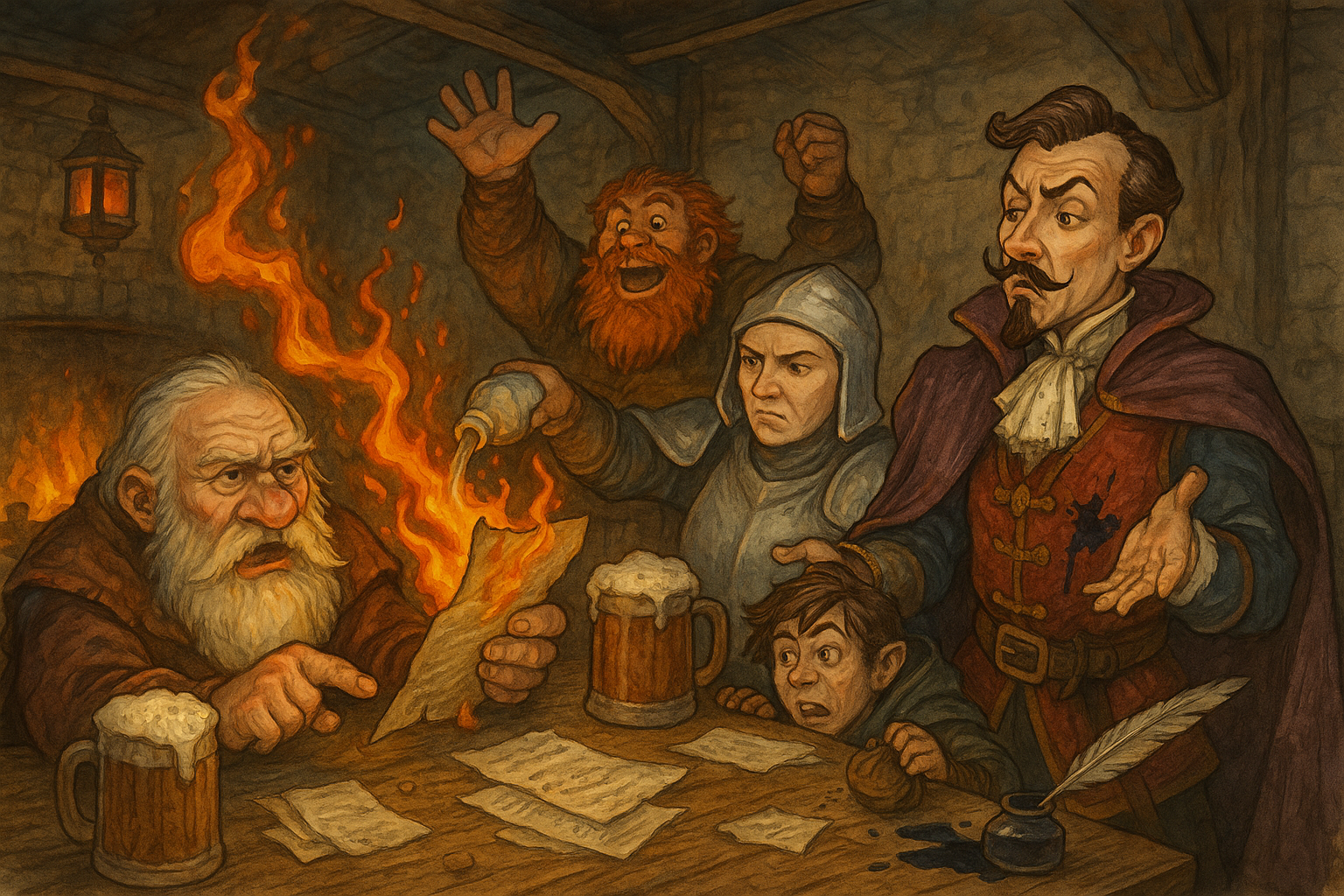
Mike Cracks His Knuckles
Listen here, ya overworkin’, scene-haulin’ dwarf of a different mountain.
By Bahlin’s bent fork, ye are not a one-dwarf orchestra.
If the room goes quiet and ye leap in like it’s a tavern on fire, ye’ll train the table to wait for you every time.
I’ve seen GMs panic at a three-second pause and bulldoze a decision that players were about to make.
Then they wonder why no one initiates.
If ye carry every scene, don’t be surprised when no one else lifts a finger.
Put the weight down once in a while.
Let ‘em feel it.
THE TAVERN TOOLSET
If yer reading this … yer tired, I know, me lad. Sit a while and listen. When the going gets tough ya need help, and take these tools. Some of these are on me.
When Engagement Has Turned Passive
You’ll know you’re carrying when:
Players wait for prompts.
Decisions only happen when you nudge them.
Energy spikes only when you escalate.
Speculation dies without your input.
At that point, the problem isn’t pacing.
It’s participation.
If spotlight imbalance is feeding that passivity, revisit The Quiet Player vs the Table Hog — How to Keep Both Happy Without Losing Your Mind.
Sometimes the loudest voices drown initiative before it forms.
The Prep Escalation Trap
When carrying the room gets exhausting, many GMs respond by increasing prep.
“If I make it tighter, they’ll engage more.”
But more prep doesn’t fix passivity.
It just increases your burden.
If this cycle sounds familiar, revisit When You’re Putting in More Prep and Getting Less Energy Back.
You can’t out-prep a participation gap.
Rebalancing Without Confrontation
You don’t need a dramatic speech.
You need subtle redistribution.
Try:
Asking players what they intend to pursue next session.
Letting silence stretch five seconds longer.
Redirecting questions back to the group.
Naming choices and waiting for ownership.
Instead of:
“What do you do?”
Try:
“Who’s taking the lead on this?”
Tiny shifts. Big impact.
And before you redesign the entire campaign, revisit Top 5 Ways to Up Yer GM Game Without Tearin’ the Whole Thing Down.
Refinement beats self-sacrifice.
The Emotional Reality
Here’s the deeper truth:
Carrying the room feels noble at first.
Then it feels necessary.
Then it feels isolating.
And isolation drains creativity faster than difficulty ever could.
If you’ve walked away from sessions unsure whether they were good — just tired — revisit When a Session Ends and You Can’t Tell If It Was Good or Not.
Because sometimes the uncertainty isn’t about quality.
It’s about overexertion.
Quick Questions Before You Shoulder It Again
Is it normal for GMs to carry the energy sometimes?
Yes. But if it becomes constant, it’s unsustainable.
What if players just aren’t very proactive?
That’s fine — but structure should invite initiative, not replace it.
Will the room collapse if I stop pushing?
If it does, that’s information. And it’s better discovered early than hidden behind your effort.
If you ever need to remember what this tavern is built on, revisit About Mike’s Tavern.
If you’re navigating the philosophy behind these posts, the FAQ may clarify it.
And if the weight behind the screen feels heavier than an article can hold, the Contact page is open.
More from Around the Tavern
Tools, Combat & Table Craft