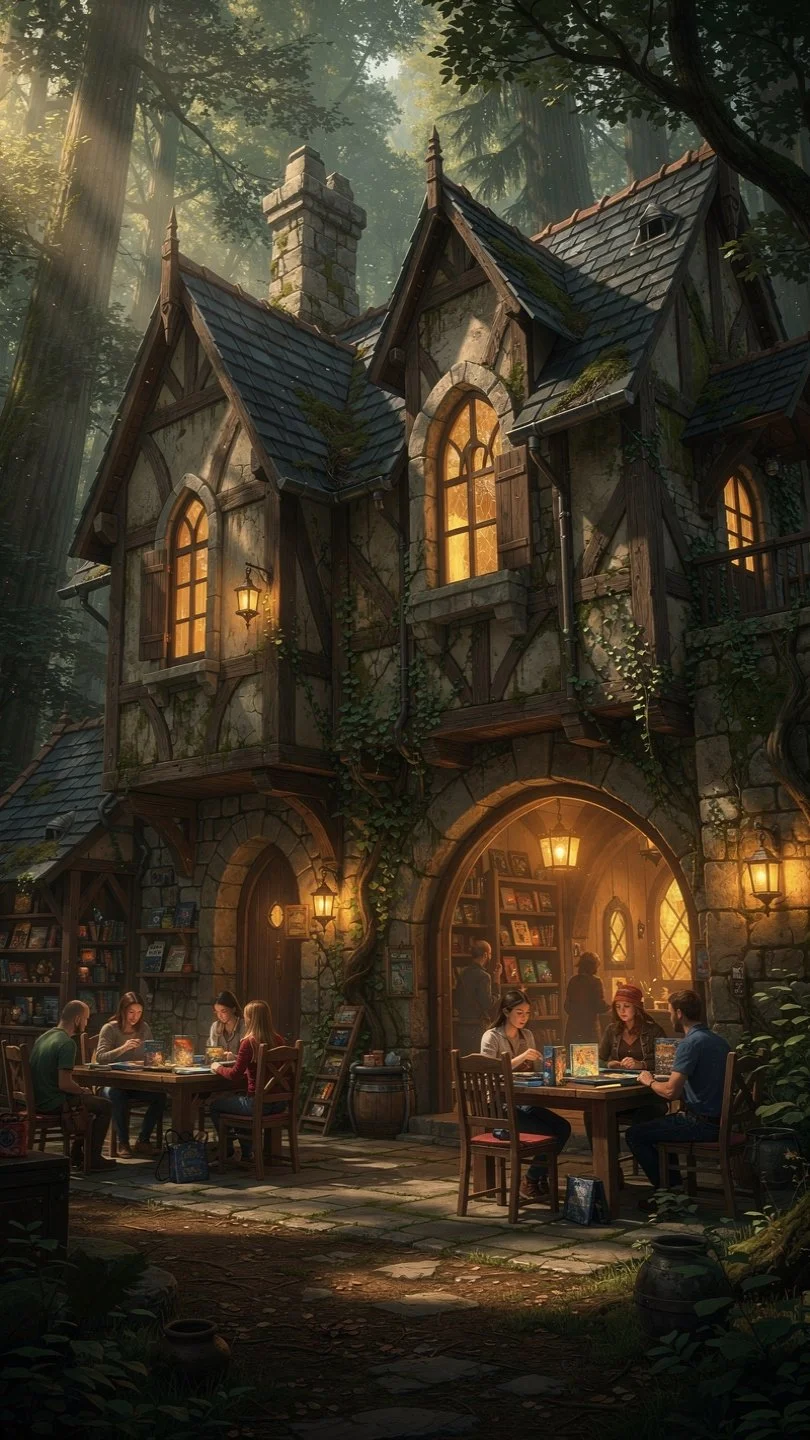
Small Cozy Taverns vs Massive Gaming Halls: Which Atmosphere Creates Better Roleplay?
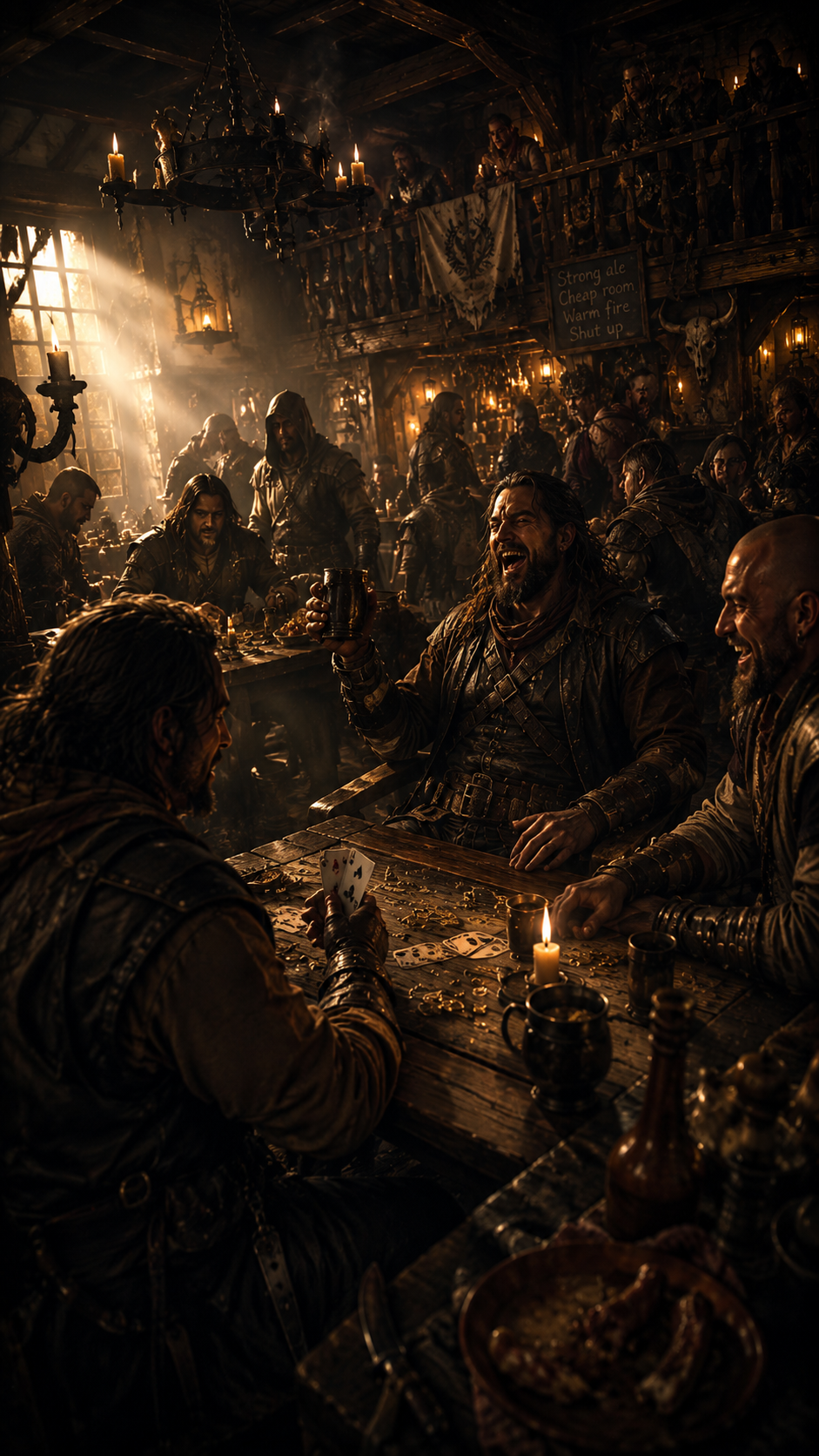
Roleplay does not happen in a vacuum.
The room matters.
The lighting matters. The noise matters. The crowd matters. The table spacing matters. Even the smell of the place can change how willing players are to speak in character, take emotional risks, or sink into the story.
That is why the Tavern Network is not just about finding any tabletop venue. Different environments create completely different roleplay experiences.
And when it comes to roleplay, the biggest divide is usually this:
Small cozy tavern, or massive gaming hall?
Neither is automatically better.
But they create very different kinds of campaigns.
Small Cozy Taverns Usually Create Better Deep Roleplay
If yer campaign depends on immersion, emotional scenes, mystery, tension, or character interaction, smaller tavern-style spaces usually perform better.
Players can hear each other clearly.
The GM can lower their voice instead of shouting.
Awkward first-time roleplayers feel less exposed.
Quiet emotional scenes actually land.
The table starts feeling less like a public activity and more like a shared little world.
That matters enormously for long campaigns.
Places like Meeples Games West Seattle, ME Cafe & Games Singapore, and Sliced N Diced Birmingham represent the kind of calmer tabletop atmosphere where roleplay-heavy groups often thrive.
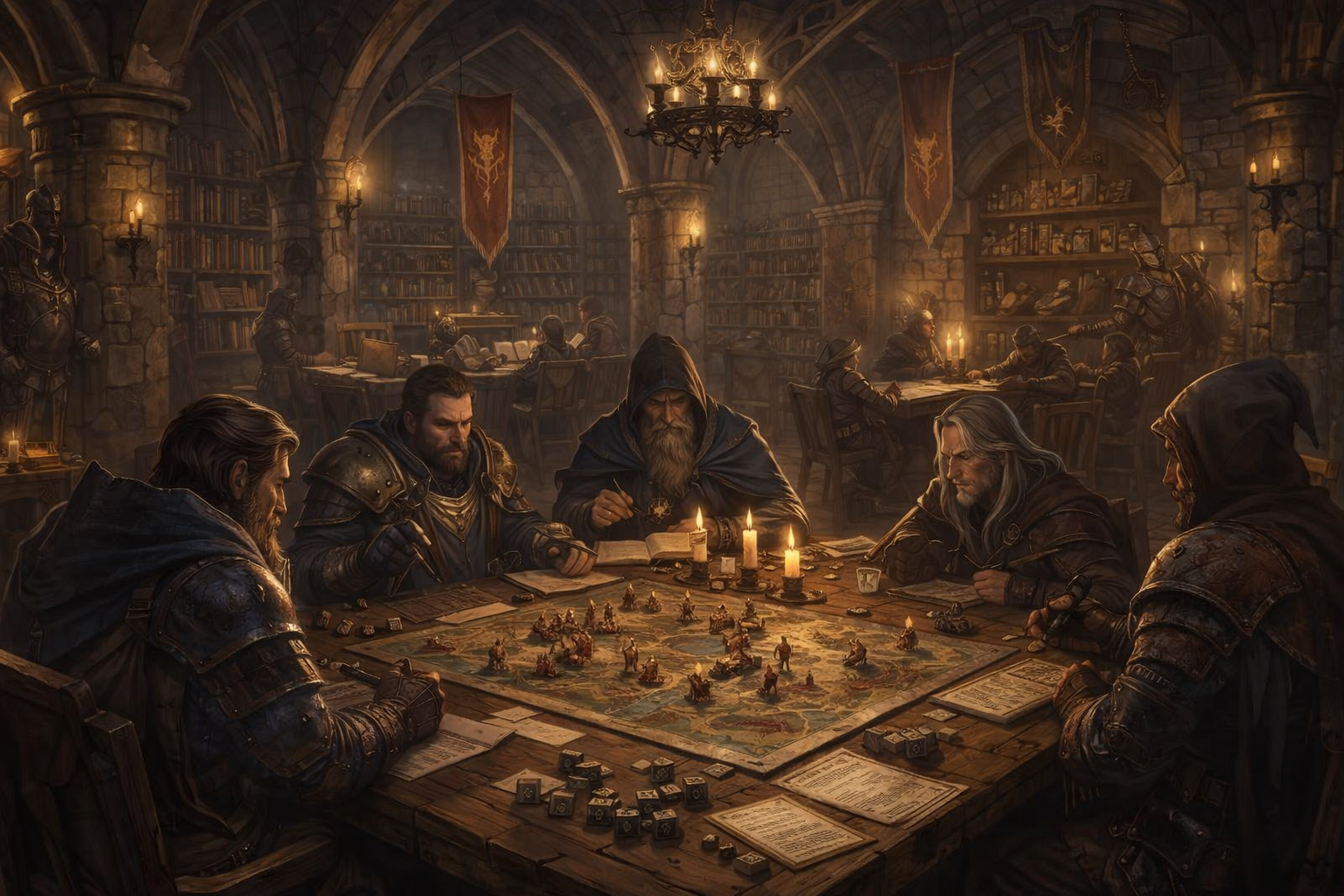
Massive Gaming Halls Create Bigger Energy
A massive gaming hall feels different immediately.
Dice are rolling everywhere. People are laughing. Someone is cheering at another table. Minis are moving. Card players are arguing over rulings. A tournament may be happening in the corner.
The atmosphere feels alive.
For some groups, that energy is exciting.
Massive gaming halls can make players feel connected to the larger hobby community instead of isolated at a single table. Social players often love this feeling.
Venues like Great Escape Games Sacramento, It’s Gametime Los Angeles, and Games Island in Hof, Germany show how powerful large-scale community energy can feel.
But bigger energy is not always better for roleplay.
Cozy Taverns Help Players Feel Safe Enough to Be Vulnerable
Good roleplay requires vulnerability.
Players need to make strange voices. Reveal character fears. Speak emotionally. Embarrass themselves a little. Commit to scenes that might feel silly if strangers are watching too closely.
Small cozy venues naturally help with this.
The lower noise, tighter atmosphere, and calmer environment reduce social pressure. Players often stop worrying about how they look and start focusing on the story instead.
This is especially important for:
New roleplayers
Shy players
Female players
Autistic players
Emotionally heavy campaigns
Horror campaigns
Mystery campaigns
Romance-heavy campaigns
Character-driven stories
For groups still learning to relax into roleplay, When Roleplay Feels Vulnerable and Why That’s Okay and Running Your First Game: Making Players Feel Safe Enough to Act fit naturally beside this kind of venue choice.
Massive Gaming Halls Can Accidentally Flatten Immersion
Noise changes roleplay.
In a large gaming hall, subtle scenes become harder. Players may avoid quieter character moments because they cannot hear each other properly. Emotional scenes sometimes feel awkward when strangers are walking past constantly.
The GM may unconsciously simplify descriptions because projecting constantly becomes tiring.
Players may default toward louder jokes, faster combat, or more surface-level interactions because deep scenes are harder to sustain in noisy public spaces.
That does not mean gaming halls are bad.
It means they encourage a different style of play.
Massive Gaming Halls Are Better for High-Energy Campaigns
Not every campaign wants intimacy.
Some groups love chaos.
A loud dungeon crawl, tactical combat campaign, beer-and-pretzels game, monster-hunting adventure, or highly social comedy campaign can thrive in a massive gaming hall.
The crowd energy becomes part of the experience.
Cheering loudly after a critical hit feels natural there. Big table reactions feel welcome. Meeting nearby players during breaks becomes part of the hobby.
For extroverted players, this can make the campaign feel more alive rather than less immersive.
Cozy Taverns Usually Create Better Table Cohesion
Small spaces naturally force the table inward.
Players pay more attention to each other. Side conversations reduce. The GM controls pacing more easily. Quieter players get more room to speak.
Over time, this often creates stronger party cohesion.
The campaign starts feeling like a small fellowship rather than a public event.
This matters enormously for long campaigns because campaign survival usually depends more on emotional connection than mechanical quality.
That is why articles like The Strongest Character at the Table Is the One Who Listens and Why Your Party Keeps Falling Apart and How to Stop Being the Reason connect naturally with venue atmosphere.
Massive Gaming Halls Are Better for Recruitment and Discovery
A cozy tavern strengthens the current group.
A massive hall helps groups grow.
Open gaming spaces make it easier to recruit players, discover new systems, meet GMs, browse games, and feel connected to the wider tabletop community.
If yer campaign is open-table, beginner-focused, community-driven, or actively looking for new players, a gaming hall may actually support the campaign better.
This is especially true for organized play, rotating groups, or social-heavy campaigns.
The Right Atmosphere Depends on What the Campaign Needs
This is the important part.
Different campaigns need different rooms.
A horror campaign may collapse in a loud gaming hall.
A tactical miniatures campaign may feel strangely lifeless in a tiny quiet café.
A heavy roleplay campaign usually benefits from intimacy.
A social combat-heavy campaign may benefit from energy.
A smart GM matches the room to the story.
Not to prestige.
Not to price.
Not to aesthetics.
To the actual emotional needs of the campaign.
Final Word from the Tavern
Small cozy taverns usually create stronger immersion, deeper roleplay, better emotional scenes, and tighter party cohesion.
Massive gaming halls usually create stronger community energy, easier player discovery, louder excitement, and a bigger feeling of shared hobby culture.
Neither is objectively superior.
But if yer asking purely about deep roleplay, smaller cozy spaces usually win.
Players roleplay best when they feel safe, heard, relaxed, and emotionally present.
The right room helps that happen.
Start with Mike’s Tavern, browse the Tavern Network, check the Mike’s Tavern FAQ, or reach out through the Contact Page when yer campaign needs a better atmosphere to grow in.
More Tavern Network Goodness