
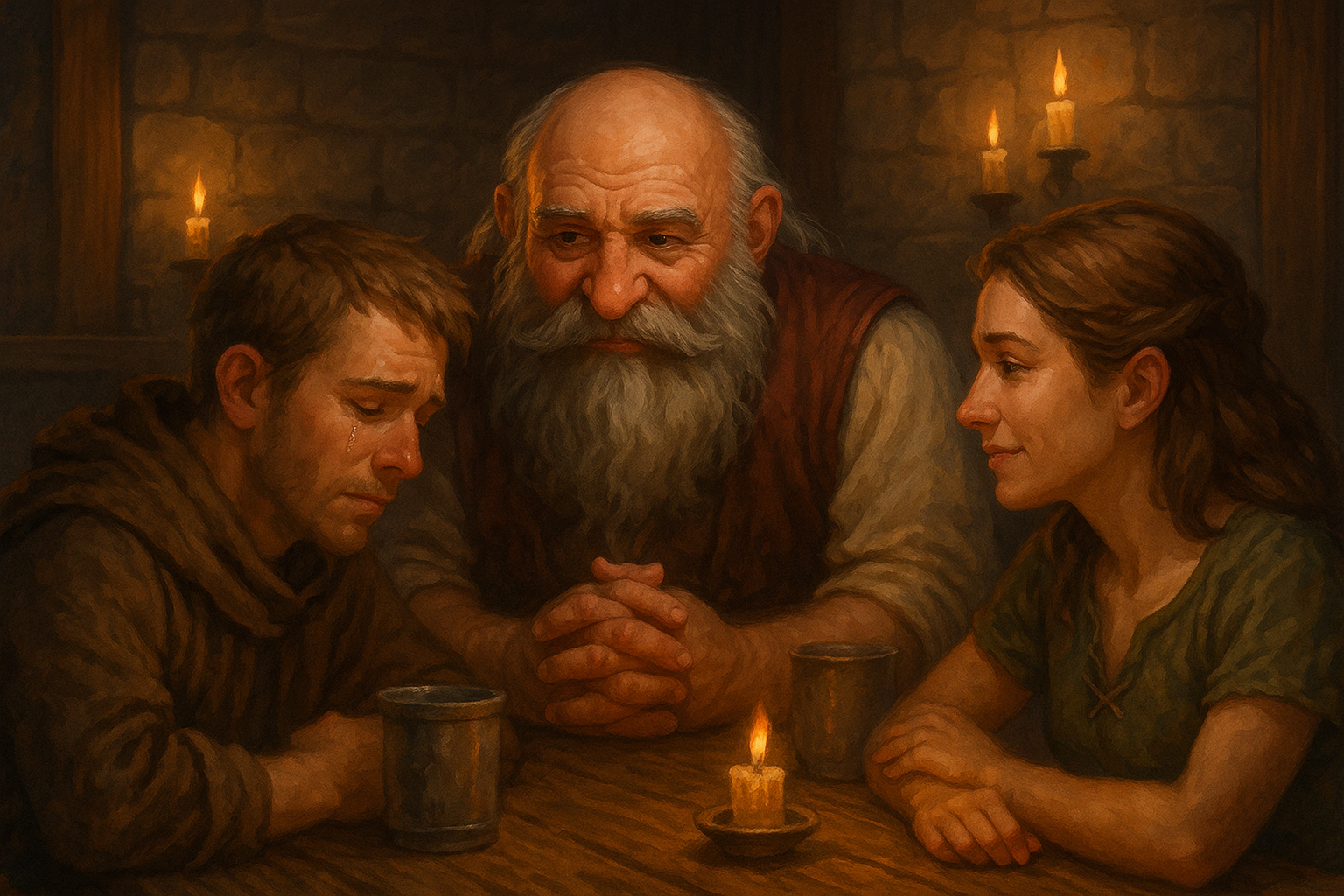
There’s a particular kind of table pain that’s hard to name.
Nobody’s yelling.
Nobody’s griefing.
Nobody’s trying to ruin the game.
And yet, session after session, the table feels heavier. Conversations stall. Combat drags. Jokes don’t quite land. People show up on time, but they don’t show up present.
If this sounds familiar, you’re not alone — and more importantly, you’re not imagining it.
Sometimes a party doesn’t fall apart because someone is doing something wrong.
Sometimes it falls apart because everyone is quietly exhausted in different ways.
When effort isn’t the problem, but alignment is
Most tables assume that if everyone is “doing their best,” things should work out. But tabletop games don’t run on effort alone. They run on shared expectations, emotional bandwidth, and unspoken agreements that often go unchecked.
You can have:
A GM who preps diligently
Players who care deeply about their characters
A group that genuinely likes each other
…and still end up with a game that feels like work instead of play.
That disconnect is usually not about malice. It’s about misalignment.
The quiet exhaustion no one talks about
Here’s what often happens before a party starts to fray:
One player feels responsible for keeping energy up.
Another feels pressured to perform.
Someone else is afraid to speak because they don’t want to derail things.
The GM feels like they’re carrying the whole table on their back.
No one says anything because no one wants to be that person.
So the strain stays invisible — until it isn’t.
If this is starting to sound uncomfortably close to home, you might also recognise the emotional spiral described in When you can’t tell if you’re burnt out or just tired of them, where the line between fatigue and frustration gets dangerously thin. The party doesn’t explode. It just… thins out.
Mike butts in (and he’s already annoyed)
“By Margann’s crusty beard, I’ve seen this rot start a hundred times, and it never begins with shouting. It begins with folk sittin’ straighter than they ought to, smilin’ too hard, noddin’ too much. That’s not camaraderie, lad — that’s folk afraid ta be honest. A party that can’t grumble together won’t survive a single real scrap.”
Why misery spreads even when no one is “the problem”
Here’s the uncomfortable truth: good intentions don’t cancel friction.
If a table never checks in, small misalignments stack up:
Combat pace feels off, but no one wants to complain
One player dominates airtime without meaning to
Another withdraws, hoping someone notices
The GM keeps tightening structure to maintain control
Eventually, every encounter starts to feel procedural — like ticking boxes in a meeting rather than telling a shared story. If you’ve felt that drag, When every battle feels like a board meeting with dice digs into why that feeling kills engagement faster than any bad roll.
The danger of blaming “the group vibe”
One of the most damaging phrases at a struggling table is:
“I guess the vibe is just off.”
That sentence sounds neutral, but it quietly removes responsibility from everyone. If the problem is “the vibe,” then no one knows what to change — so nothing does.
That’s why it’s important to distinguish between:
A bad actor (rare, but real), and
Good people stuck in unhealthy patterns (far more common)
The second group doesn’t need confrontation.
They need awareness.
And that’s where things can actually improve.
How this connects to why parties really fall apart
If you’re starting to wonder whether you might be contributing — unintentionally — to the strain, that’s not an accusation. It’s a sign of care.
There’s a deeper breakdown of personal patterns, habits, and blind spots in
Why Your Party Keeps Falling Apart (and How to Stop Being the Reason)
This article isn’t about blame. It’s about recognising how small, human behaviours can push a fragile table over the edge — even when everyone means well.
Think of this piece as the environmental scan.
That one is the mirror.
Pull up a stool — this part matters
If your table feels miserable despite everyone’s effort, don’t rush to fix it with rules, schedules, or new systems.
Start by asking:
Who feels responsible for keeping things “fun”?
Who feels unheard but doesn’t want to complain?
Who is silently carrying more weight than they admit?
Games don’t collapse because people stop caring.
They collapse because people care without room to breathe.
If you’ve ever felt that pressure, The right D&D GM won’t fix ya, but he’ll hold space while ya mend explores what healthy support actually looks like at the table — and why forcing solutions often makes things worse.
Mike interrupts again (louder this time)
“Listen, lad. A party ain’t a parade where everyone marches the same. It’s a rope bridge. If one fool tugs too hard and another freezes in fear, the whole thing snaps. TALK. Grumble. Laugh about the strain. A table that can’t admit it’s tired won’t last past the next bend.”
What to do before things quietly die
If you’re sensing that creeping misery, don’t wait for a dramatic blow-up. Most parties don’t end in fire — they end in polite cancellations and unanswered messages.
Before that happens:
Notice who speaks less over time
Notice when sessions feel longer than they are
Notice when prep becomes obligation, not excitement
These are signals, not failures.
Articles like Why your party keeps falling apart exist because so many players realise this too late. Awareness now gives you options later.
The tavern door is still open
Mike’s Tavern exists for these moments — the quiet ones, not just the flashy builds and clever tactics.
If you’ve found yourself nodding along, you might want to explore:
Why your party keeps falling apart and how to stop being the reason for a deeper personal check
When every battle feels like a board meeting with dice if play itself has gone stale
Or just learn how this old dwarf runs the place over at the About Mike’s Tavern page
Got questions, stories, or a table you’re worried about? You can always reach out through the Contact page or see how the tavern works over in the FAQ.
A good table isn’t perfect.
It’s honest enough to stay standing.
And by Grabgar’s hammer, that’s worth protecting.
