When Everyone Adapts to Issues Instead of Addressing Them
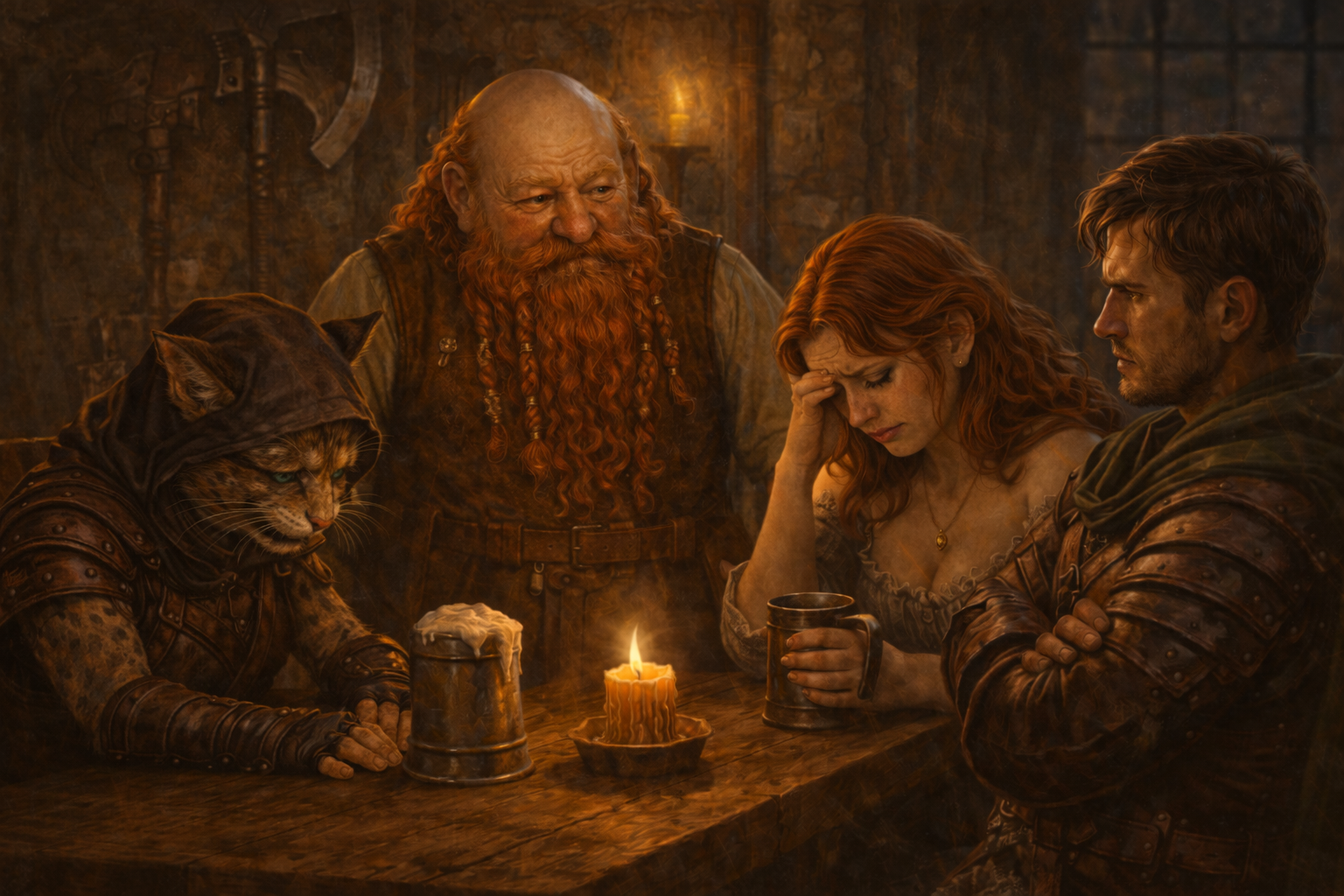
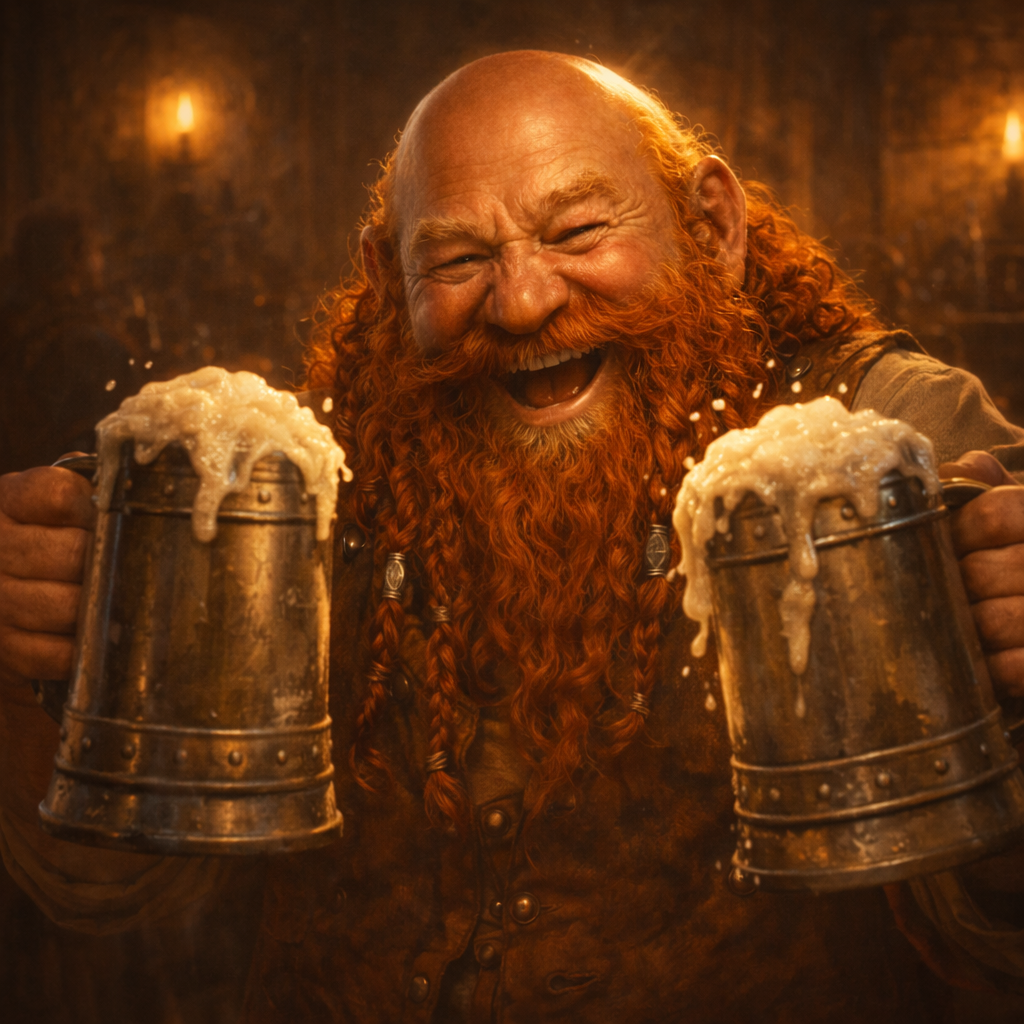
“Ya ever see a shield with a crack down the middle, but no one says a word about it? … No? Well, they just shift their grip. Hold it a little differently. Pretend it’ll last one more fight. By Durven’s last tankard, I’ve seen whole companies fall because they kept adjustin’ to the bloody weakness instead of mendin’ it. Listen, lad, adaptation is fine in battle. But in a fellowship? If everyone’s compensatin’, no one’s fixin’. And that’s how rot sets in.”
There’s a quiet pattern that shows up in long-running campaigns.
No one’s angry.
No one’s shouting.
No one’s quitting.
But everyone is… adjusting.
The loud player dominates? The quiet ones talk less.
The GM rushes scenes? Players stop investing deeply.
One person forgets rules constantly? Others overcompensate.
The table keeps moving.
But it’s moving crooked.
Adaptation Isn’t Always Health
Adaptation is a survival skill.
It keeps friendships intact.
It avoids awkward conversations.
It maintains momentum.
But there’s a difference between adapting to circumstances and adapting to dysfunction.
When the table consistently bends around the same issue, something subtle happens: people stop expecting change.
Instead of addressing the behavior, they build strategies around it.
You’ll see it in the same quiet patterns described in The Small Behaviors That Quietly Push a Party Toward Collapse. Nothing dramatic. Just tiny compromises stacking up.
And over time, compromise turns into fatigue.
The Hidden Cost of “I’ll Just Adjust”
On the surface, adjusting feels mature.
You tell yourself:
“It’s fine. I can work around it.”
“I don’t want to cause tension.”
“It’s not that serious.”
But constant adjustment has a cost.
You speak less.
You care less.
You prepare less.
Eventually, you start feeling like you’re playing a version of the game that isn’t fully yours anymore.
That emotional thinning often shows up in ways similar to what’s described in When the Table’s Full but It Feels Empty. The campaign continues — but the energy shifts.
Adaptation without resolution slowly drains investment.
Why No One Brings It Up
Most tables don’t avoid problems because they’re unaware.
They avoid them because they value stability.
They think:
“It’s not worth rocking the boat.”
“I don’t want to seem dramatic.”
“They probably don’t mean it.”
And sometimes, players fear they’ll become the very thing they’re trying to avoid — “that player.” The one who makes everything heavy.
That fear is real.
It’s the same hesitation addressed in How to Speak Up Without Freezin’ at the Table.
But silence doesn’t remove discomfort.
It just redistributes it.
The Maintenance Moment Most Tables Skip
Healthy tables don’t just adapt.
They maintain.
If something keeps requiring adjustment, it deserves examination.
Instead of bending around the issue, try gently naming it:
“Hey, can we tweak how we handle that?”
“I’ve been adjusting to this, but I think it’s affecting my enjoyment.”
“Can we talk about this pattern for a minute?”
You don’t need confrontation.
You need clarity.
And if you’re worried about the tone of that conversation, reflect on the principles in The Strongest Character at the Table Is the One Who Listens. Listening creates space for adjustment to become improvement instead of suppression.
When Adapting Becomes Enabling
There’s another layer here that’s uncomfortable.
When everyone adapts to a repeated issue, the person causing it may never realize it’s a problem.
Not because they’re malicious.
But because no one told them.
The table cushions the impact.
The friction gets absorbed.
The pattern continues.
Over time, this can resemble the dynamic described in Why Your Party Keeps Falling Apart (And How to Stop Being the Reason) — not because someone is deliberately destructive, but because patterns were never addressed early.
Silence protects feelings in the short term.
Honesty protects the campaign in the long term.
The Difference Between Flexibility and Avoidance
Flexibility is adjusting to different play styles.
Avoidance is repeatedly compensating for unresolved issues.
Flexibility feels collaborative.
Avoidance feels draining.
If you notice yourself repeatedly changing how you play to prevent friction, ask:
Is this adaptation temporary… or permanent?
If it’s permanent, it deserves a conversation.
Fix the Shield Before the Next Battle
Campaign longevity isn’t built on everyone silently adjusting.
It’s built on shared responsibility.
If you value your table, don’t just adapt to keep it afloat.
Maintain it.
Repair it.
Strengthen it.
If you ever want to understand the spirit behind this tavern’s advice, you can read the About Mike’s Tavern page, check the FAQ for common concerns, or reach out directly through the Contact Page if something’s been sitting heavy.
Strong tables aren’t the ones that avoid cracks.
They’re the ones that notice them early.
Quick FAQ
Q: Isn’t adapting part of teamwork?
Yes — when it’s mutual and temporary. When one pattern forces ongoing adjustment, it’s worth examining.
Q: What if I’m the only one adapting?
That’s usually a signal. Healthy dynamics distribute effort more evenly.
Q: How do I know if it’s a real issue or just my preference?
If the adjustment consistently reduces your enjoyment, it’s real enough to discuss.
Q: What if addressing it creates tension?
Short-term tension is often healthier than long-term resentment.
More from the Tavern