Good Tables, Bad Tables (Part 3): When “That’s Just How They Play” Isn’t Good Enough
There is one sentence that quietly protects more bad behavior at D&D tables than any other:
“That’s just how they play.”
It sounds harmless.
It sounds tolerant.
It sounds mature.
But most of the time?
It’s avoidance dressed as acceptance.
This article is about the moment you realize “that’s just how they play” might actually mean:
“That’s how they get away with it.”
If you’re new here, understand the cultural lens first on the About Mike’s Tavern page, and if you’re trying to understand how we differentiate personality from harm, skim the FAQ.
Now let’s break this properly.
“Style Ain’t A Shield For Bad Behavior.”
By Grabgar’s hammer, I’ve seen barbarians with less rage than some so-called “roleplay purists.”
“That’s just how he plays. He’s intense.”
“That’s just her humor. She’s blunt.”
“That’s just their character. They’re chaotic.”
Listen, laddie.
A playstyle explains preference. It does not excuse damage.
If someone’s “style” consistently shrinks others, overrides boundaries, or dominates spotlight, that ain’t flavor.
That’s imbalance.
Micro-Scene: The Chaotic Rogue Defense
Kipper’s player constantly steals from the party.
In-character, sure.
Out-of-character, the table laughs nervously.
Lyra’s player finally says, “Hey, I’m not enjoying being robbed every session.”
Response?
“That’s just how he plays chaotic. Don’t take it personally.”
Now the issue isn’t behavior.
It’s Lyra’s reaction.
That’s the pivot.
And once that pivot happens, culture shifts away from accountability.
If you’ve read If No One Trusts Ya, That’s Not a Roleplay Choice — That’s a Problem, you already know: trust erosion masquerades as character commitment far too often.
Pattern Diagnosis: When “Playstyle” Becomes Power
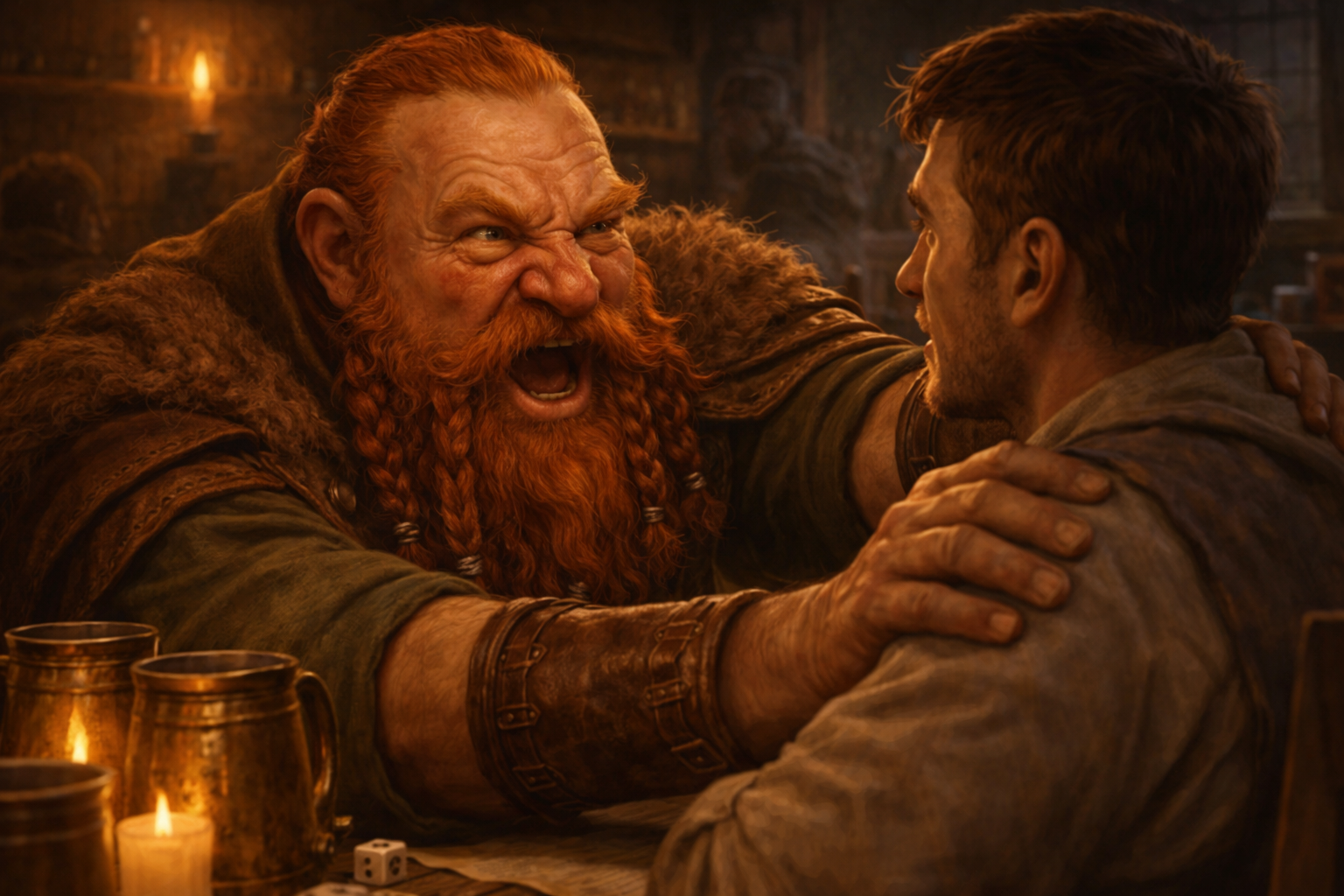
There are three ways this phrase protects bad tables.
1. It Redefines Harm as Personality
“That’s just how they are.”
Now harm becomes identity.
If you challenge it, you’re not challenging behavior.
You’re attacking a person.
That’s socially dangerous territory, so most players back off.
Especially women, who are often socialized to maintain harmony.
Especially quieter men, who don’t want to look dramatic.
So the pattern continues.
2. It Shifts Responsibility Onto the Affected Player
“You just need thicker skin.”
“You need to roleplay harder.”
“You’re too sensitive.”
Notice the shift?
The disruptive player becomes stable.
The affected player becomes the problem.
If you want to see how subtle blame shifts corrode confidence long-term, revisit The Quiet Damage of Comparison at the Table.
Once perception gets undermined, silence follows.
3. It Confuses Character Conflict With Player Consent
Conflict in-character can be powerful.
But only when players consent to it.
If one player thrives on intra-party tension and another player feels drained by it, “that’s just how they play” is not a compromise.
It’s a power imbalance.
Healthy tables separate:
Character friction
from
Player comfort
If you haven’t read it yet, The Strongest Character at the Table Is the One Who Listens lays out the difference clearly.
“If Only One Person Gets To Be ‘Authentic,’ It Ain’t Authentic.”
By Margann’s crusty beard, authenticity ain’t permission to bulldoze.
If one player’s “authentic chaos” overrides everyone else’s experience, that ain’t authenticity.
It’s dominance.
A healthy table adjusts playstyles to fit each other.
An unhealthy table forces adaptation downward.
If someone always has to compromise, and it’s not the loudest person, that’s not balance.
That’s hierarchy.
Long-Term Decay Mapping: What Happens When This Goes Unchecked
Session 1: Minor tension.
Session 4: Side comments increase.
Session 7: One player disengages emotionally.
Session 11: The GM feels like a mediator instead of a storyteller.
Session 15: Someone leaves quietly.
The table blames scheduling.
But it wasn’t scheduling.
It was erosion.
If you’ve seen groups dissolve slowly without a clear explosion, read Why Your Party Keeps Falling Apart (And How to Stop Being the Reason).
Most collapses are cultural, not mechanical.
The Compatibility Check: A Simple Question That Changes Everything
Next session, try asking this:
“Is everyone actually enjoying this dynamic?”
Not sarcastic. Not aggressive.
Curious.
Watch who answers first.
Watch who looks uncomfortable.
Healthy table?
Discussion.
Salvageable table?
Awkward but honest talk.
Unhealthy table?
Deflection. Humor. Dismissal.
If you struggle to initiate these conversations, How to Speak Up Without Freezin’ at the Table can help you structure the sentence calmly.
And if you’re unsure whether this is a style clash or a deeper pattern, you can always reach out through the Contact page.
Tactical Intervention: Reframing the Phrase
Instead of accepting:
“That’s just how they play.”
Try this:
“Okay. But is that working for everyone?”
Notice the shift.
You’re not attacking personality.
You’re evaluating impact.
Impact matters more than intent.
That sentence alone exposes whether the table values shared enjoyment… or individual dominance.
“The Campaign Ain’t A Solo Performance.”
Listen close. A table is a covenant. Not a stage.
If someone’s fun requires someone else’s discomfort, the math don’t work.
And if the table protects that math in the name of “playstyle,” it ain’t neutral.
It’s choosing a side.
And that side might not be you.
Escalation Warning: When Tolerance Becomes Self-Abandonment
Here’s the psychological layer most players miss:
The longer you tolerate misaligned playstyles that hurt you, the more you normalize shrinking.
Eventually you don’t even notice you’re doing it.
You call it maturity.
You call it compromise.
You call it being easygoing.
But what you’re actually doing is abandoning your own experience.
And that becomes habit.
Not just at this table.
At the next one too.
The Standard You’re Allowed To Hold
You are allowed to expect:
Playstyles that adjust mutually.
Conflict that is consented to.
Humor that doesn’t target repeatedly.
Energy that expands you, not contracts you.
If “that’s just how they play” is the only defense someone has, that defense is weak.
Next part, we go into something even harder:
How to leave a table without burning bridges.
Reflection Questions
Have I excused behavior under the label of “playstyle”?
Who benefits most from “that’s just how they play”?
If I raised discomfort, would I be heard or minimized?
Am I adapting equally, or more than everyone else?
Is this dynamic expanding me or shrinking me?
Let’s Keep Getting Better