When You’re Afraid of Being “That Player” No Matter What You Do

“By Grabgar’s Hammer, Not Every Loud Voice Is a Villain And Not Every Quiet One Is a Saint.”
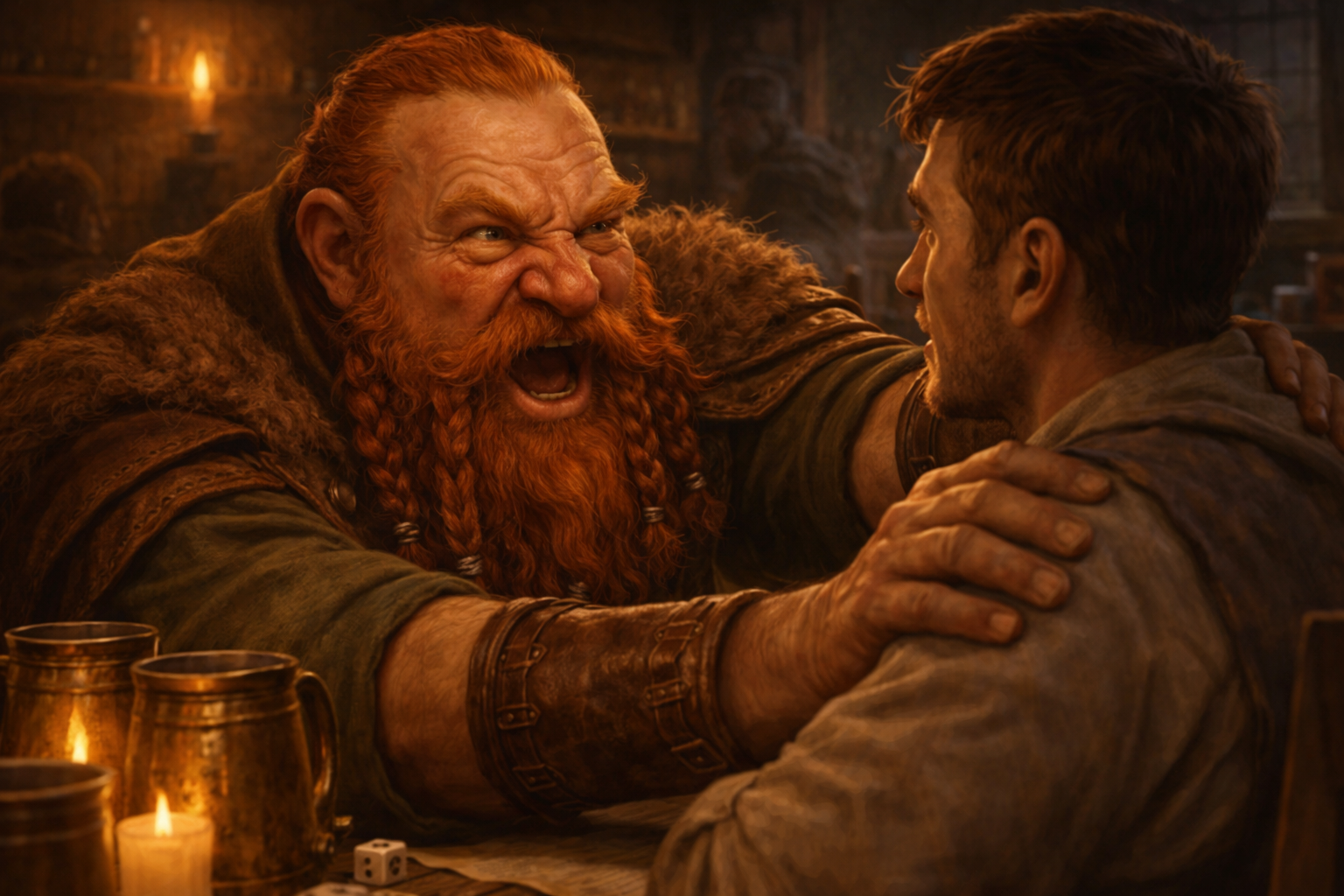
Alright, lad, pull up a chair and listen close. I’ve seen tables where one poor soul sits stiff as a statue, terrified that every word outta their mouth might tip the whole tavern over. They don’t want to hog the spotlight. They don’t want to derail the plot. They don’t want to be the one everyone sighs about after the dice stop rolling. So they shrink. And shrink. And shrink again. And by Durven’s last tankard, they end up carryin’ more fear than any dragon ever put on the board. If that’s you, just bloody breathe me laddie! You’re not the villain of this story just because you care how you show up.
Yer ready, laddie? Let’s untangle that fear …
The Myth of “That Player”
Every table has a horror story.
The spotlight hog.
The rules lawyer.
The chaotic derail-er.
The attention magnet.
Those stories circulate so often that careful players internalize them.
You start pre-emptively correcting yourself:
“Am I talking too much?”
“Did I just step on someone’s moment?”
“Was that idea selfish?”
“Should I have stayed quiet?”
The fear of becoming “that player” can quietly turn you into no player at all.
If you’ve ever frozen because you were worried about taking up space, revisit How to Speak Up Without Freezin’ at the Table.
Overcorrection is still imbalance.
When Self-Monitoring Becomes Self-Erasing
There’s a healthy version of awareness.
You:
Notice pacing.
Respect spotlight.
Support group decisions.
That’s table maturity.
But when awareness becomes constant self-surveillance, it turns into exhaustion.
You start editing yourself mid-sentence.
You soften your ideas before presenting them.
You pre-apologize for enthusiasm.
If you recognize that pattern, you may also relate to Tryhard Roleplay — A Series for the Overachievin’ Fool.
Trying hard to be “good” can ironically make you anxious.
The Fear Behind the Fear
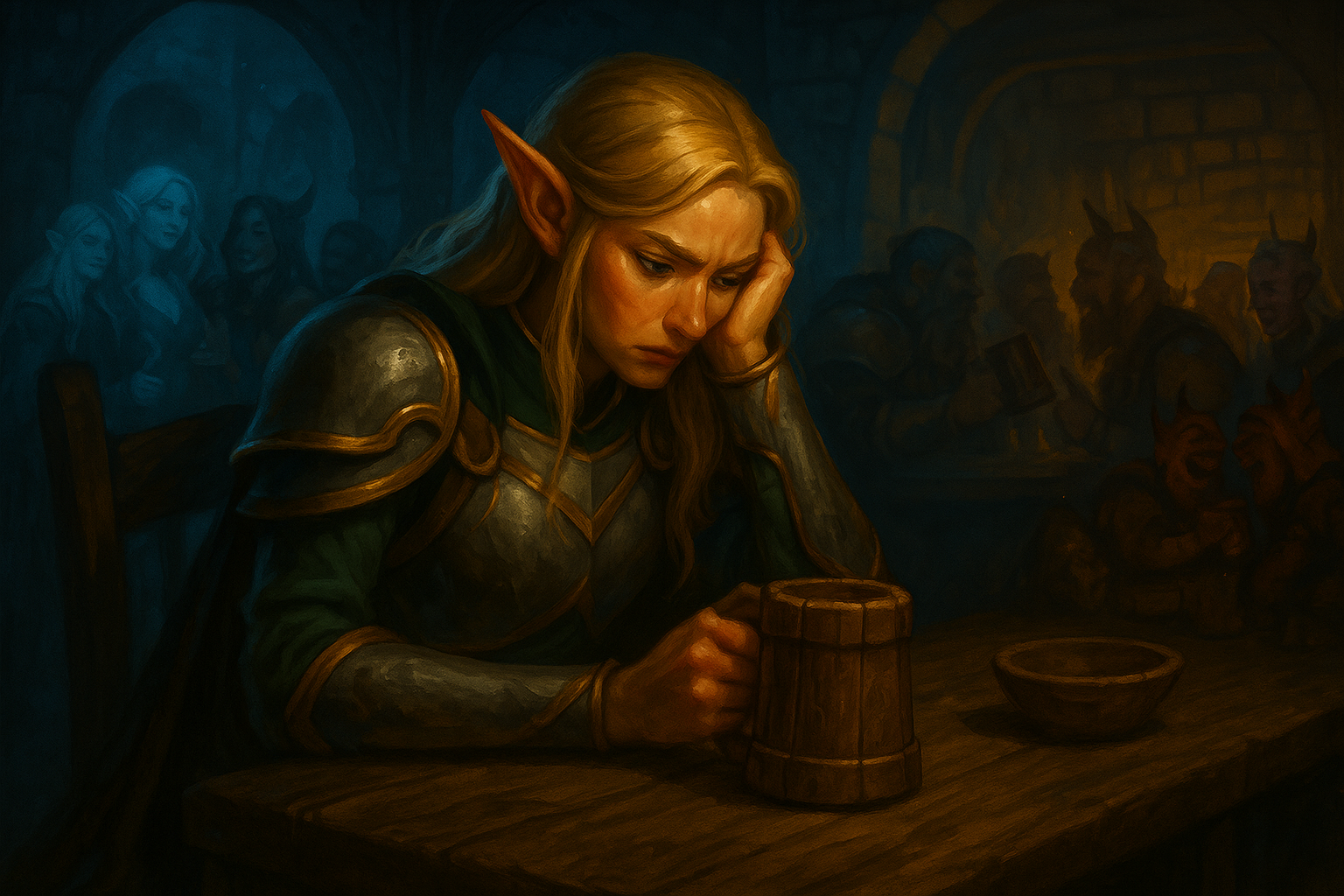
Most players who worry about being “that player” aren’t selfish.
They’re empathetic.
They don’t want to:
Drain energy.
Dominate scenes.
Derail tone.
Cause friction.
But here’s the twist:
The players who truly are disruptive rarely fear being disruptive.
The anxiety itself is evidence that you care.
If you’ve ever left a session wondering whether you accidentally dragged the energy down, read When You’re Afraid You’re Draggin’ the Party Down.
Often, the fear is louder than the reality.
The Comparison Trap
Part of the fear comes from watching others.
Maybe someone else:
Speaks faster.
Commands attention easily.
Makes jokes effortlessly.
Drives plot decisions confidently.
So you compare.
And comparison quietly shifts into self-doubt.
That erosion is explored more deeply in The Quiet Damage of Comparison at the Table.
You don’t have to match someone else’s energy to belong at the table.
Presence isn’t a competition.
What Actually Makes “That Player”
It’s worth clarifying what truly creates table friction.
It’s not:
Speaking up.
Having strong ideas.
Taking initiative.
Being enthusiastic.
It’s:
Ignoring others’ cues.
Repeatedly overriding decisions.
Treating the table like an audience instead of collaborators.
If you’re unsure where the line between contribution and domination lies, the dynamics in The Quiet Player vs the Table Hog — How to Keep Both Happy Without Losing Your Mind offer helpful perspective.
The goal isn’t silence.
It’s balance.
Why This Fear Feels So Heavy
When you’re afraid of being “that player,” every session becomes a test.
You leave thinking:
“Did I overdo it?”
“Was I too much?”
“Should I have pulled back?”
That mental replay drains joy.
If you’ve ever walked away from game night feeling heavier than you arrived, you may want to revisit When You Leave the Game Feeling Heavier Than When You Arrived.
Fear compounds quietly over time.
Reframing Your Role at the Table
Instead of asking:
“Am I being too much?”
Try asking:
“Did I listen?”
“Did I build on someone else’s idea?”
“Did I give space when it mattered?”
If the answer to those is yes, you’re not the problem.
You’re participating.
And participation requires presence.
Not perfection.
A Healthier Way to Measure Yourself
Here’s a steadier metric:
Are people responding to you?
Are they building on your ideas?
Are you invited into scenes?
Do sessions continue without visible tension?
If yes, then your presence isn’t disruptive.
It’s integrated.
And if you ever want to understand the philosophy behind how this tavern approaches balance, safety, and agency at the table, you can always visit About Mike’s Tavern.
For broader table concerns, the FAQ may answer questions you didn’t know you had.
And if something feels more specific or personal, the Contact page is open.
Quick Questions Before You Shrink Again
How do I know if I’m actually being disruptive?
Look for patterns of others withdrawing or correcting you — not isolated moments of enthusiasm.
What if someone once told me I was “too much”?
Context matters. One table’s imbalance may be another table’s ideal energy.
Is it possible to overcorrect into silence?
Yes. Fear of friction can create its own imbalance.
More From Around the Tavern


Practical Table Dynamics & Game Craft