
Mimic Fight Club: A Powerful Encounter Builder That Bites Back (Until You Learn It)
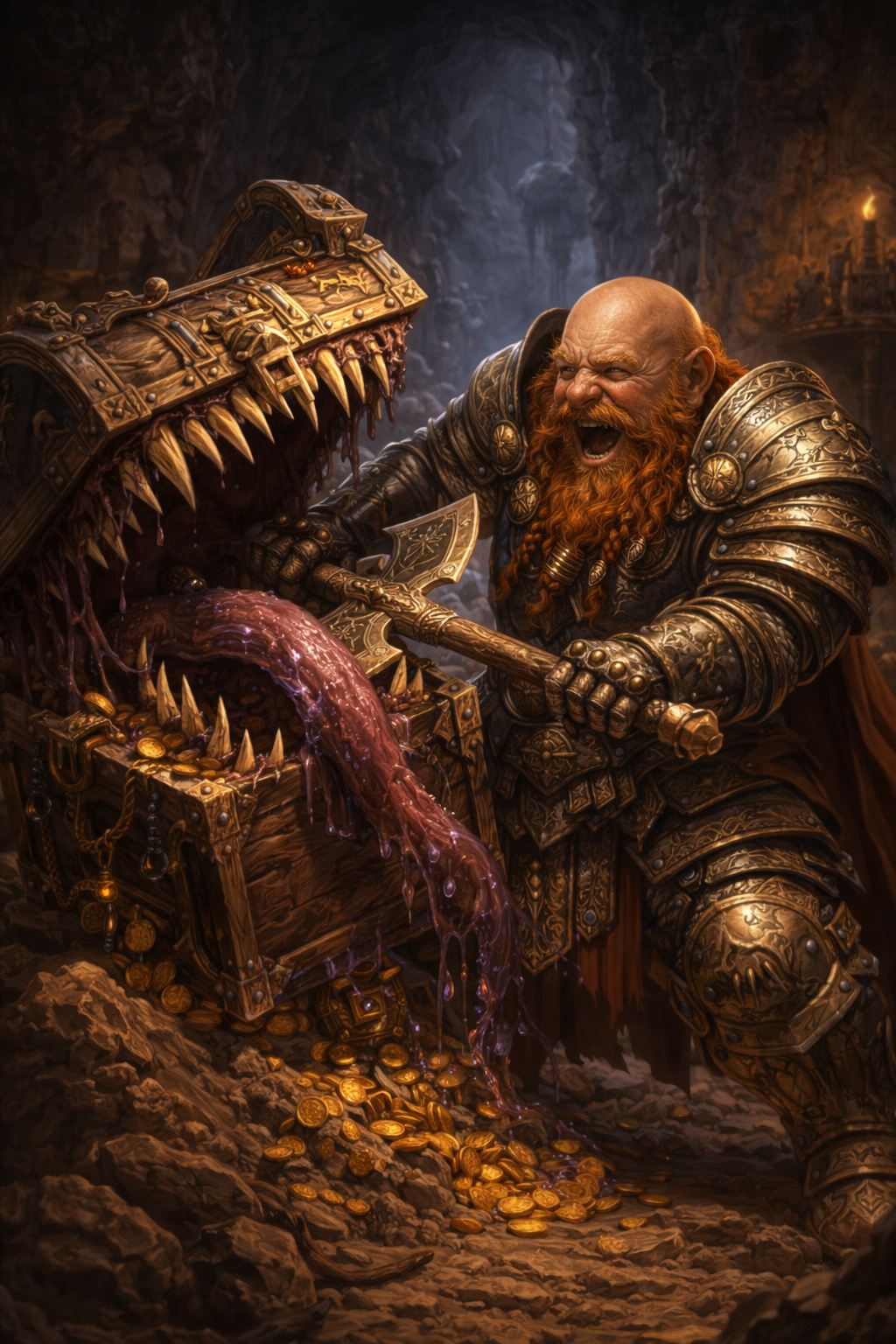
There’s a moment every Game Master experiences.
Yer sittin’ there, trying to build an encounter. The party’s level 5. One wizard, two fighters, a rogue, and a cleric who insists on healing a squirrel every session.
So you start calculating.
Challenge ratings. Action economy. Encounter difficulty. Experience values.
And suddenly the prep feels less like storytelling and more like accounting.
That’s exactly why encounter builders exist.
One of the most powerful ones out there is Mimic Fight Club — a tool that helps GMs calculate encounter difficulty and assemble monsters quickly.
Now listen carefully, lad.
This one’s powerful… but it’s not exactly friendly at first.
The First Time You Open Mimic Fight Club
The first time most GMs open Mimic Fight Club, the reaction is usually the same.
“By Bahlin’s bent fork, what am I looking at?”
The interface throws a lot at you immediately:
Monster lists
Difficulty calculations
Party configuration
Encounter XP math
Filters and adjustments
Compared to simpler tools, it can feel intimidating.
But here’s the truth.
Once you understand how it works, Mimic Fight Club becomes shockingly efficient.
You can quickly:
Add monsters to an encounter
Adjust party size and level
See difficulty ratings instantly
Balance fights without guessing
For experienced GMs running complex combat scenarios, it’s incredibly useful.
Why Encounter Math Matters More Than Most GMs Think
Let me paint you a scene.
The party walks into a ruined temple.
Three cultists stand guard.
Behind them?
A demon.
The GM thought it would be dramatic.
Instead, the demon wipes the party in two rounds.
Sound familiar?
Encounter math exists because action economy matters. A fight can collapse if the numbers are wrong.
When difficulty calculations are off, combat becomes either:
A trivial steamroll
A sudden party wipe
Both kill the tension of the story.
If you’ve ever wondered why some fights feel flat, that problem is explored deeper in When Every Battle Feels Like a Board Meeting with Dice on the Tavern.
Good tools help prevent that.
Mike’s Opinion
Alright, listen here, lad.
I’ll say it straight.
Mimic Fight Club is an incredible tool.
But it’s not the easiest beast to tame.
I’ve watched new GMs open it, stare at the screen, scratch their head, and mutter something about cursed goblin engineering.
But once you learn it?
By Durven’s last tankard, it works beautifully.
You can build encounters fast and understand the difficulty before the dice ever hit the table.
Still, some GMs want something simpler.
Not every tavern keeper needs a war machine. Sometimes ya just need a quick hammer.
When Speed Matters: Mike’s Tavern Encounter Tools
THE MIKE’S TAVERN TOOLSET
Spending too much time on prepping, me lad? Or perhaps yer just tired. Why not mosey on and try some of the tavern’s tools!
Not every Game Master wants a deep system with dozens of knobs and dials.
Sometimes you just want to answer one question:
“Is this fight going to obliterate my party?”
That’s why the Mike’s Tavern RPG Tools exist.
Inside the Mike’s Tavern toolset, you’ll find utilities designed for speed over complexity.
The encounter calculator in Mike’s Tavern RPG Tools works a little differently from Mimic Fight Club.
It’s:
Faster to use
Simpler to understand
Less flexible
You won’t get the same level of granular control.
But you will get answers quickly — which is often exactly what a busy GM needs.
If you want to explore the toolset, take a look at Mike’s Tavern RPG Tools.
And if you’re looking for other useful resources across the tabletop world, the Tavern Network acts like a map of creators, tools, and communities worth knowing.
Different GMs prefer different toolkits.
And that’s perfectly fine.
When Mimic Fight Club Truly Shines
Where Mimic Fight Club really becomes impressive is in multi-monster encounter planning.
For example:
A GM wants to build a fight with:
1 ogre
3 goblins
2 wolves
The tool quickly calculates:
Total encounter XP
Difficulty rating
Adjusted XP based on monster count
This lets you experiment rapidly.
You can swap monsters, tweak the encounter, and instantly see the result.
For GMs running tactical combat-heavy campaigns, this level of control is extremely useful.
And if you combine tools like Mimic Fight Club with reference sites like 5e.tools or Aidedd, you suddenly have a full digital GM toolkit.
The Hidden Lesson Behind GM Tools
Here’s something most new Game Masters don’t realize.
Tools don’t just make prep faster.
They change how you think about encounters.
When GMs understand difficulty calculations, they start designing fights intentionally:
Weak enemies that swarm
Elite monsters that dominate
Boss fights with phases
That’s when combat stops being a dice exercise and starts becoming a story.
And when combat becomes story?
Players lean forward.
Dice roll louder.
The room gets quiet.
That’s when the magic happens.
The Best Approach: Use the Tool That Fits Your Table
So which encounter builder is better?
Honestly?
Both have their place.
Use Mimic Fight Club if you want:
Deep encounter control
Advanced calculations
Complex encounter building
Use Mike’s Tavern’s encounter calculator if you want:
Fast answers
Simple difficulty checks
Quick prep between sessions
Different tools for different kinds of GMs.
And if you’re exploring the wider Tavern, you can learn more About Mike’s Tavern, browse the FAQ, or send a message through the Contact page if there’s a tool you’d like to see built next.
Because the Tavern exists for one reason.
Helping Game Masters run better games.
Now quit starin’ at calculators and go plan something dangerous.
The party’s waiting, lad.
