
The Veteran Mercenary Who Knows Every Dirty Trick
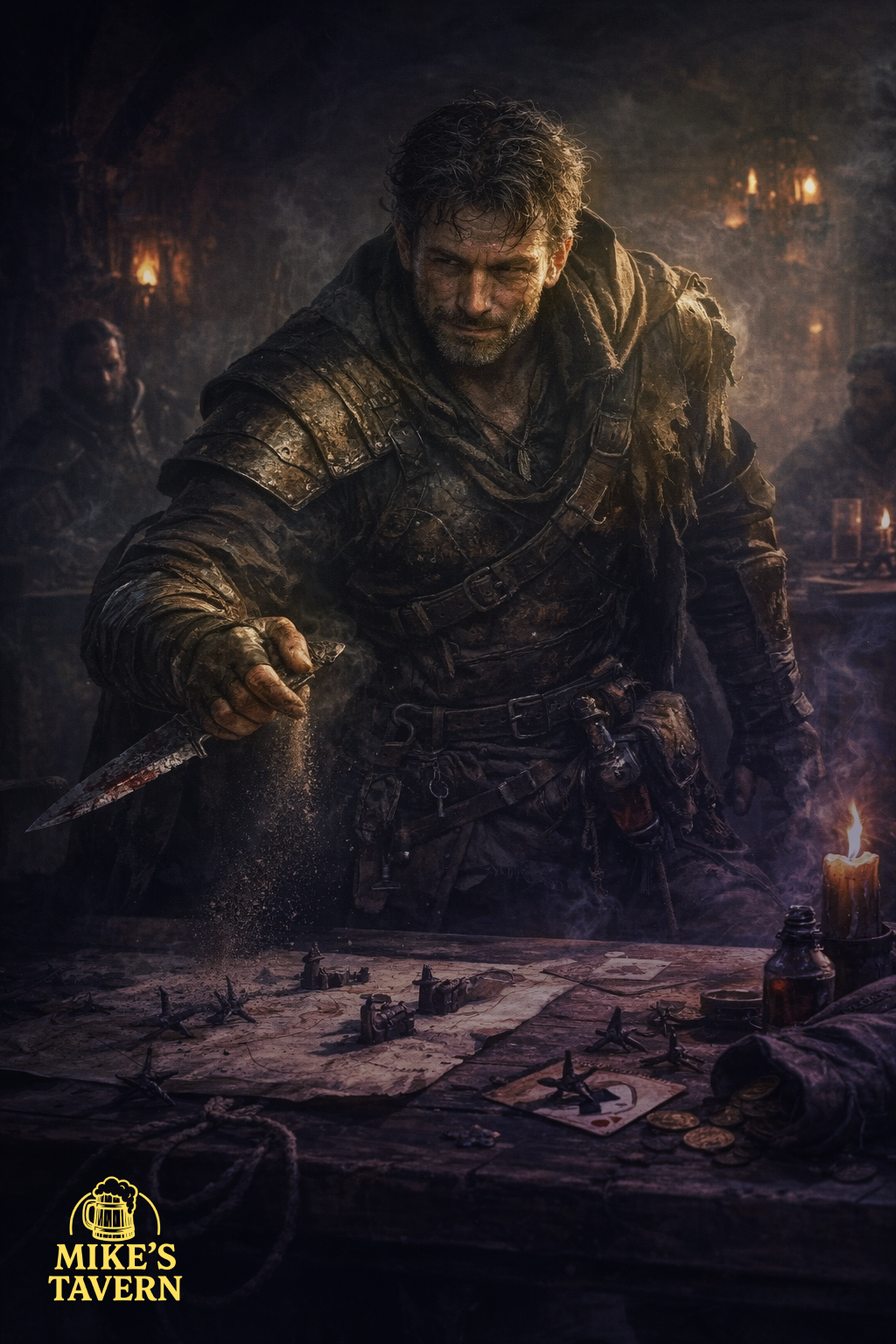
A GM NPC for 5e-style games who survives because he cheats smarter than everyone else
What This NPC Is (and Why You Want Them)
This is not a hero.
This is not a villain.
This is the person who walks away alive while heroes argue over honor.
The Veteran Mercenary is an NPC built to remind players that experience matters more than stats. He doesn’t fight fair, doesn’t posture, and doesn’t care about glory. He cares about getting paid, staying breathing, and not dying for someone else’s war.
Use this NPC when you want:
A grounded threat without escalating to boss monsters
An enemy who feels intelligent instead of overpowered
A reminder that the world exists outside the party’s moral framework
If you’re new to how Mike’s Tavern frames NPCs as tools instead of lore dumps, get your footing here first:
About Mike’s Tavern
And if you ever need to sanity-check rulings mid-session, the
FAQ
exists for a reason.
When to Introduce the Veteran Mercenary
This NPC works best when introduced:
Between levels 3 to 8 as a recurring presence
At levels 5 to 7 as a serious but survivable threat
At any level as a non-combatant ally, guide, or obstacle
They shine in:
Border wars
Caravan protection arcs
Political conflicts with hired muscle
“Someone paid professionals to stop you” moments
They do not belong in:
Cartoonishly heroic campaigns
Monster-only dungeon crawls
Tables that expect every fight to end in a corpse
If every combat at your table turns into a kill-or-be-killed spiral, you’ll want this perspective:
When every battle feels like a board meeting with dice
Core Personality and Mindset
The Veteran Mercenary:
Has seen people die screaming for causes that vanished a year later
Knows which wounds kill fast and which scare people into retreat
Does not underestimate spellcasters
Leaves when the fight stops being profitable
They are calm under pressure, pragmatic in speech, and allergic to speeches.
If combat starts going poorly, they do not “fight to the death.”
They change the situation or leave.
That alone will rattle players more than another sack of hit points.
Combat Role: Tactical Skirmisher, Not a Brawler
This NPC is not designed to win fair fights.
They are designed to:
Control space
Punish mistakes
Retreat before being overwhelmed
Force players to adapt
They prefer:
Narrow terrain
Partial cover
Allies who screen for them
Pre-planned escape routes
If your players assume every humanoid enemy fights like a videogame mob, this NPC will break that assumption cleanly.
For help running NPCs like people instead of math problems, this pairs well:
Why your party keeps falling apart and how to stop being the reason
Suggested Stat Block Philosophy (Not Raw Numbers)
Instead of a full stat block, run them with intent-based stats.
Recommended baseline:
Armor Class slightly higher than average for their tier
Hit points on the low end of elite enemies
Strong saving throws in Dexterity and Constitution
Average or below-average raw damage
What makes them dangerous is not numbers.
It’s choices.
They disengage intelligently, shove people into bad positions, and exploit terrain ruthlessly.
If you want to keep prep light, give them:
One reaction that repositions
One bonus action trick
One limited-use dirty move
That’s it.
Signature Dirty Tricks (Pick 2–3)
Use these sparingly. The goal is tension, not cruelty.
Examples:
Throwing sand, ash, or debris to impose disadvantage for one round
Targeting mounts, familiars, or summoned creatures to force decisions
Cutting straps, ropes, or supports instead of attacking directly
Feigning retreat to draw pursuit into a bad position
These are not “gotcha” moves.
Telegraph them through description.
If your table struggles with fairness perception, this article helps frame it right:
Let the quiet player speak before I cast silence on ya
Equipment That Tells a Story
The Veteran Mercenary carries gear that reflects survival, not heroism.
Typical loadout:
Practical weapon they know inside out
Backup blade within arm’s reach
Smoke pellets, caltrops, or simple traps
Healing supplies, not potions of legend
Weathered armor that’s been repaired more than upgraded
Nothing flashy. Everything intentional.
If players loot them, they shouldn’t get rich.
They should get ideas.
If players think gear choices don’t matter, this tends to rewire that assumption:
When you’re afraid you’re draggin the party down
How the Mercenary Acts Under Pressure
This NPC:
Tests the party early
Withdraws if spells come out fast
Targets whoever looks least protected
Switches targets mid-fight if conditions change
If reduced to roughly half effectiveness:
They disengage
They signal retreat
They use terrain to break line of sight
They do not make dramatic last stands unless cornered.
Using the Mercenary Outside Combat
This NPC is excellent as:
A hired rival
A temporary ally with a price
A warning sign that stakes are rising
Someone who recognizes the party and remembers past encounters
They remember faces.
They remember tactics.
They remember who hesitated.
If your players start attaching emotions to NPCs like this, you’re doing it right. This article explains why that happens:
Every party has that one player who brings snacks and trauma
Mike Butts In (Because This One’s Personal)
I’ve shared a fire with mercs like this. Quiet types. Count coin twice. Watch the door even when laughin. They don’t hate heroes. They just don’t believe in ‘em. And when the blades come out, they ain’t lookin to prove nothin. They’re lookin for exits. If yer players chase ‘em blind, that’s not bad design, lad. That’s a lesson.
Scaling the Veteran Mercenary
To scale this NPC:
Increase allies, not stats
Improve terrain, not damage
Add information, not hit points
A higher-level mercenary is smarter, not tougher.
If you want to turn defensive play into meaningful threat, this is a strong follow-up read:
The shield that bites back: how to turn defense into punishment
When to Let Them Die
Do not protect this NPC with plot armor.
If the party:
Plans well
Corners them
Cuts off retreat
Takes real risks
Let the mercenary fall.
But make it feel earned.
Their death should teach the party something about preparation, not luck.
Last Call for GMs
The Veteran Mercenary exists to make your world feel experienced, not inflated.
They don’t shout.
They don’t monologue.
They don’t die loudly.
They survive until they can’t.
And when your players start asking, “Wait… is this the same merc from before?”
That’s when you know the NPC worked.
If you want to keep building GM-ready NPCs like this, or you want one tailored to a specific campaign tone, faction, or party makeup, you know where to find me: Contact
