
Kipper the Nut Applewood: The Squirrel Who Thinks Fire Is a Healing Spell
There are characters who bring balance to a party.
There are characters who bring chaos.
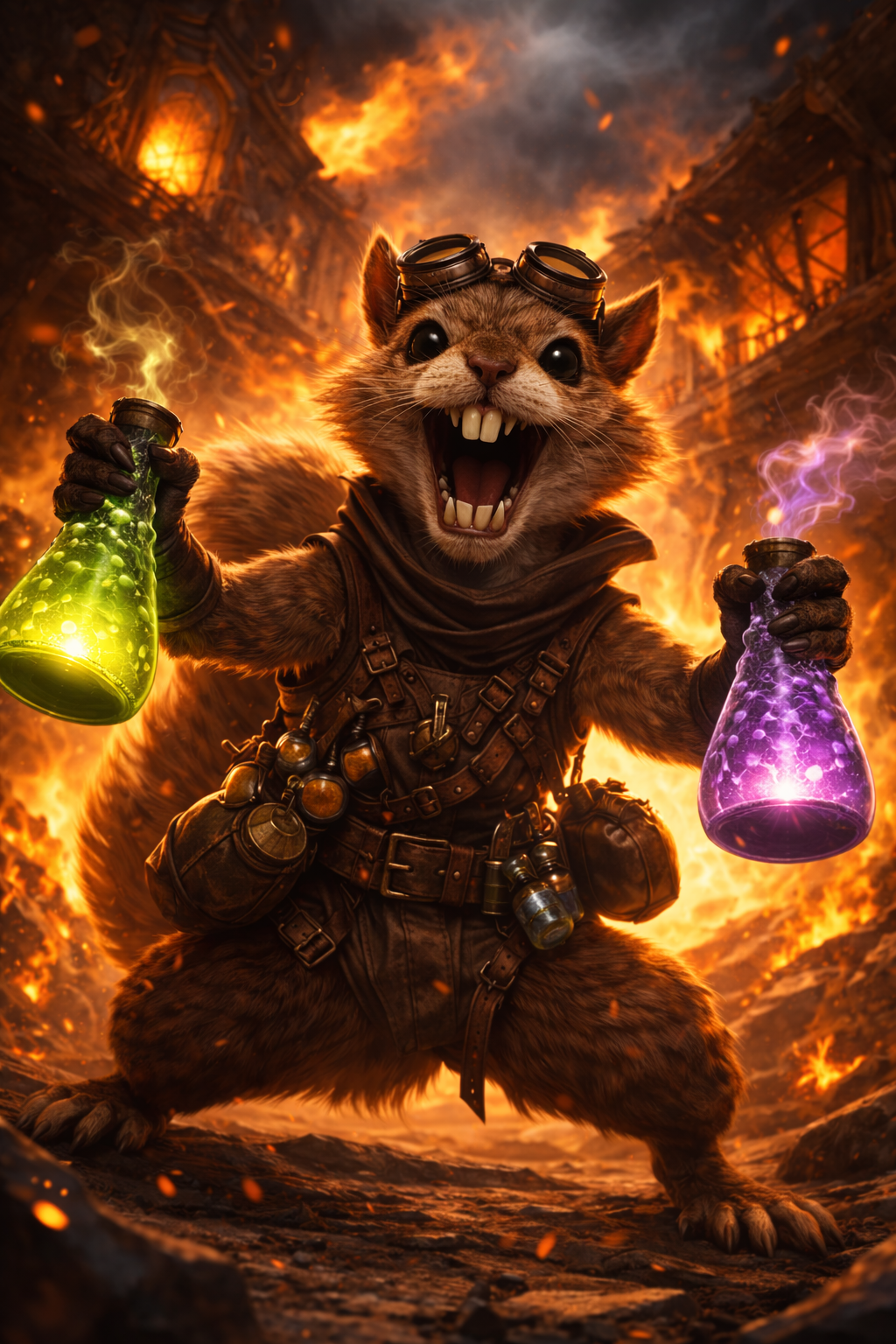
And then there’s Kipper the Nut Applewood — the gnome-sized squirrel alchemist who believes, with absolute conviction, that fire is both the ultimate destroyer and the ultimate healer.
If ya’ve never seen a squirrel in goggles laugh maniacally while lighting a battlefield like a harvest festival, lad… pull up a chair.
We’re talkin’ about area denial, psychological warfare, controlled chaos, and the strange genius of a creature that enemies fear by laugh alone — even if they’ve never laid eyes on him.
If this is yer first time wanderin’ into the madness, start with About Mike’s Tavern so ya understand what kind of establishment this is. This ain’t some thin listicle barn. We build characters that leave scorch marks.
Fire Is Both Medicine and Warning: Understanding Kipper’s Philosophy
Kipper doesn’t throw bombs because he’s reckless.
He throws them because he believes fire clarifies truth.
In his mind, flame does three things:
It reveals hidden enemies.
It forces movement.
It cauterizes weakness.
He genuinely believes that if he sets his allies lightly ablaze, he is strengthening them.
Not because he’s stupid.
Because he sees fire as transformation.
From a gameplay perspective, this creates a very specific combat identity:
Constant damage over time
Area denial
Forced positioning
Low burst, high pressure
He doesn’t dominate the battlefield in one explosive turn.
He slowly reshapes it.
This is exactly the kind of dynamic that prevents combat from turning into the mechanical slog we talked about in When Every Battle Feels Like a Board Meeting With Dice.
Kipper keeps things moving.
Literally.
Micro-Scene: The Laugh Before the Flames
Picture it.
The party has taken cover behind fallen stone pillars. Enemies advance cautiously.
There’s tension.
Silence.
Then from somewhere in the rubble—
High-pitched, unhinged squirrel laughter.
The enemies freeze.
They’ve heard that laugh before.
They don’t know what he looks like.
They don’t know where he is.
They just know the laugh means fire is coming.
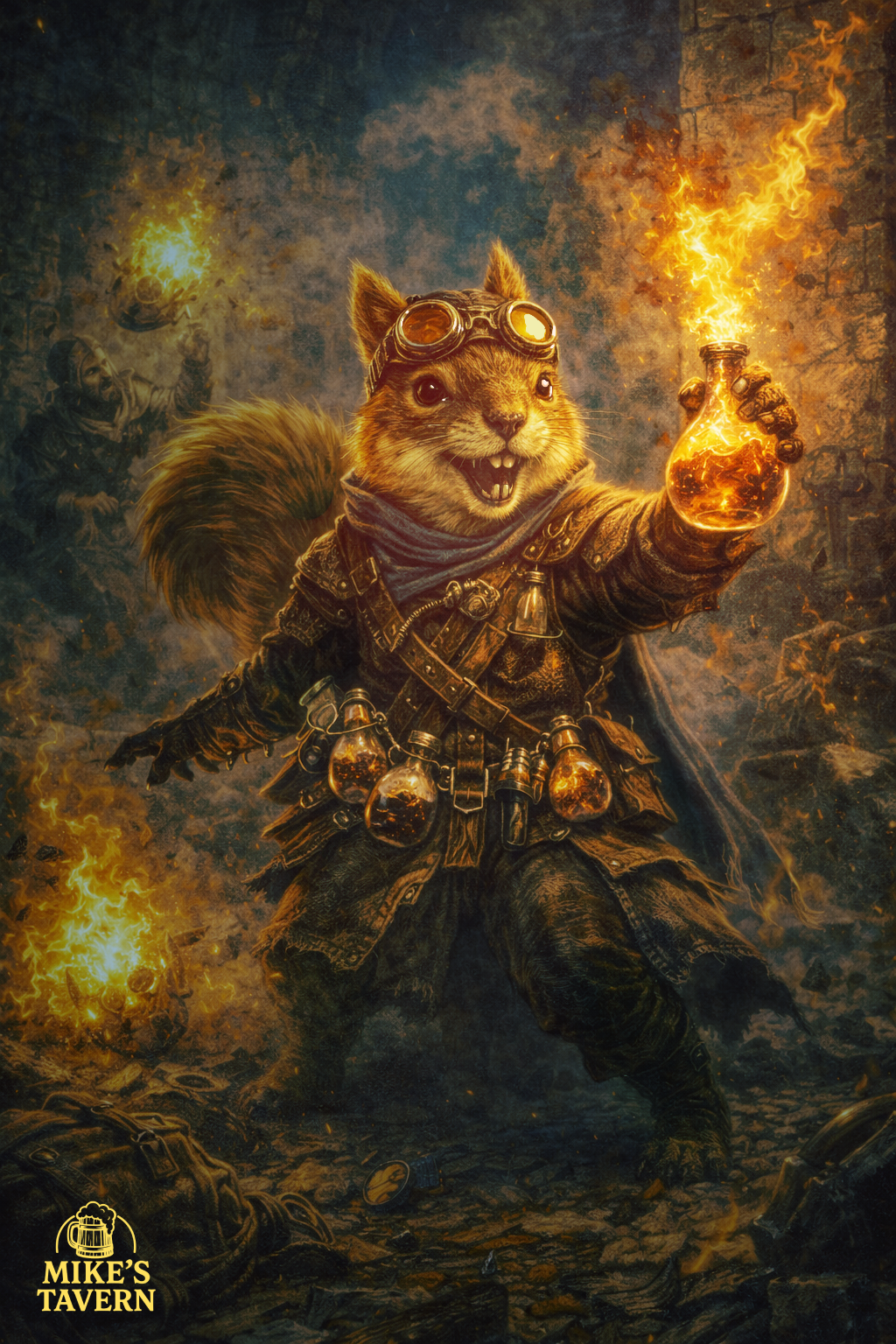
A bottle arcs overhead.
It shatters.
Flames lick across the ground.
Nobody dies instantly.
But nobody stands still either.
That’s Kipper.
He creates psychological pressure before mechanical pressure.
And that’s why he works.
MIKE BUTTIN’ IN
“YA EVER SEEN A SQUIRREL LIGHT A MAN’S BOOTS ON FIRE AND CALL IT ‘SUPPORTIVE PLAY’?!
By Koldron’s flaming apron, I have.
The little nutcase once tossed a flask at Rodryn’s feet and shouted ‘MOTIVATIONAL WARMTH!’ while the ranger was takin’ aim.
And here’s the worst part — IT WORKED.
Enemies panicked. Formation broke. Lyra pushed forward. Leora sealed the gap.
Listen here, lad. Kipper ain’t about damage charts. He’s about pressure. And pressure breaks yellow-bellied, gem-droppin’ milk-drinkers faster than any greataxe.”
Pattern Diagnosis: Precision Chaos
Kipper embodies a very specific player archetype.
He is not random chaos.
He is precision chaos.
Random chaos hurts allies without intention.
Precision chaos:
Disrupts enemy patterns
Forces action
Creates movement
Keeps tension alive
If yer epic fights keep fizzling instead of escalating, read Why Yer Epic Fights Keep Falling Flat after this. It’ll sting a bit. But it’ll help.
Bring Fire to Yer Table
If you’re running long campaigns and feel the rhythm slowing down…
If your players are settling into comfort instead of tension…
You might not need more damage.
You might need controlled disruption.
Study how characters like Kipper create movement without stealing spotlight.
Then sharpen your table instincts with:
Fire without awareness burns allies.
Fire with discipline builds legends.
Long-Term Decay: When Chaos Turns Toxic
Now listen carefully.
Kipper works because he understands timing.
If he starts lighting allies without communication…
If he begins throwing potions just to feel clever…
If the laugh becomes ego instead of tactic…
That’s when tables decay.
One player thinks, “It’s what my character would do.”
Another player starts adjusting around them.
Then resentment brews.
If you don’t manage that dynamic, you end up exactly where we warned about in The Right D&D GM Won’t Fix Ya, But He’ll Hold Space While Ya Mend.
Kipper is powerful because he chooses control.
Not because he lacks it.
Tactical Implementation: Running a Kipper-Type Character Well
If you’re playin’ a fire-happy alchemist squirrel (or any controlled chaos archetype), try this next session:
Announce intent before disruption.
Target terrain, not allies.
Use laughter as signal, not noise.
Create openings for teammates.
The goal is never spotlight theft.
The goal is pressure.
And if yer unsure whether yer chaos is helpin’ or harmnin’, consult the Tavern FAQ or send word through the Contact Page. We answer real table problems here.
Kipper the Nut Applewood Build Guide (Level 1 & Level 5): The Precision Chaos Arsonist
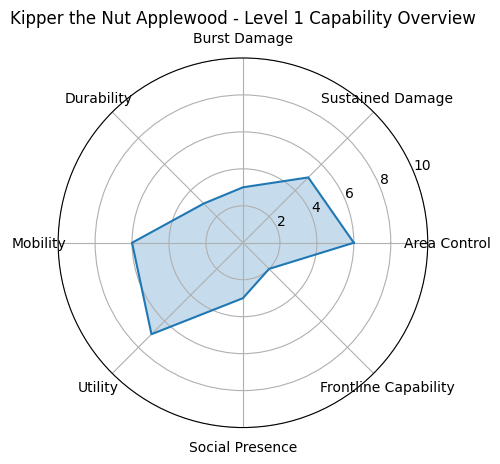
Kipper the Nut Applewood is not a burst-damage nuker.
He is battlefield pressure.
He is area denial.
He is psychological warfare wrapped in fur and goggles.
If you want raw numbers and spreadsheet dominance, go read Top 5 D&D 5e Builds That Dominate Without a Single Magic Item.
This guide is different.
This is how you build a chaos engine that reshapes the battlefield without stealing the spotlight.
And if you're new to the Tavern’s philosophy on character design, read About Mike’s Tavern first — we build identities, not just stat blocks.
Kipper’s Core Identity (Before We Touch Stats)
Role: Area Control Alchemist
Function: Force Movement, Apply Burn Pressure, Create Tactical Disruption
Weakness: Low direct burst damage
Strength: Board manipulation
Kipper should never be the highest damage dealer.
If he is?
You’re playing him wrong.
His value is in:
Forcing enemies out of cover
Breaking formations
Creating hazard zones
Softening targets for allies
That’s what prevents combat from devolving into the “everyone stands still and trades blows” problem we discussed in When Every Battle Feels Like a Board Meeting With Dice.
Level 1 Kipper Build – The Spark That Starts the Fire
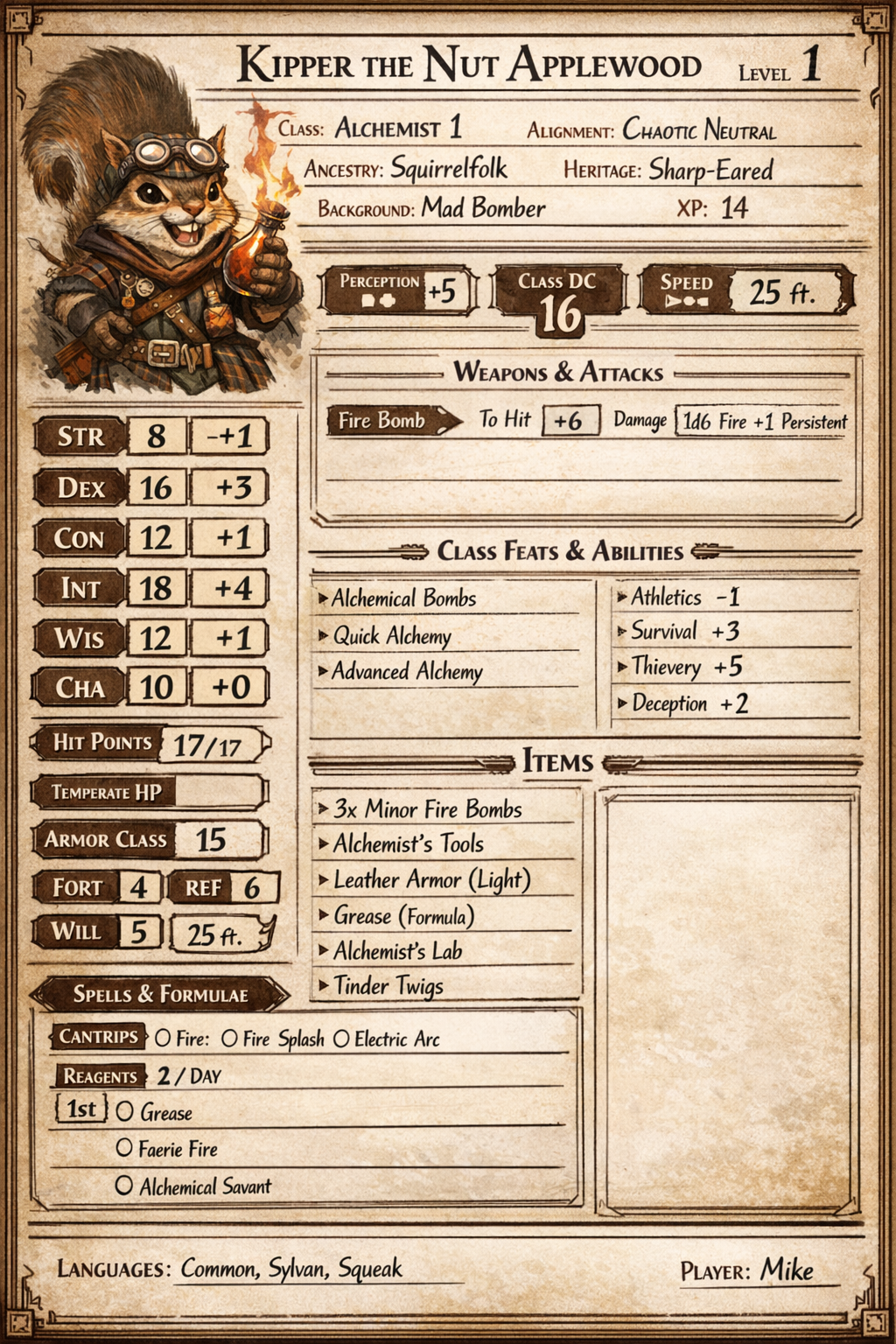
At Level 1, Kipper is fragile.
And that’s important.
Suggested Class: Artificer (Alchemist)
If your table allows reflavoring, he’s mechanically an Artificer — but narratively, he’s a potion-hurling squirrel.
Ability Priorities
Intelligence (Primary)
Dexterity (Positioning)
Constitution (He needs it)
Wisdom
Charisma
Strength (He’s a squirrel.)
Key Features at Level 1
Magical Tinkering (reflavored as unstable alchemical residue)
Spellcasting (focus on fire or battlefield control spells)
Recommended Early Spells
Fire Bolt (primary ranged poke)
Grease (area denial masterpiece)
Faerie Fire (visibility control)
Grease + Fire Bolt is classic Kipper behavior.
Create hazard.
Force movement.
Light the exit path.
Micro-Scene (Level 1)
The party is pinned.
Bandits behind crates.
Kipper cackles.
Throws Grease under the crates.
Bandits shift position.
Fire Bolt follows.
Now the battlefield is no longer static.
That’s Level 1 Kipper.
He doesn’t win fights.
He destabilizes them.
MIKE BUTTIN’ IN
“LISTEN HERE, YA GOBLIN-LOVIN’ MILK DRINKER.
If yer Level 1 squirrel is tryin’ to out-damage the barbarian, YA’VE MISSED THE POINT.
Kipper ain’t there to compete.
He’s there to create openings.
And if he sets Lyra’s boots on fire again without warnin’, I’LL MOUNT HIM ON THE WALL NEXT TO ME OLD WAR HAMMER.”
The Controlled Chaos Checkpoint
Before you level him up, ask yourself:
Are you creating pressure…
Or just throwing fire because it’s funny?
If you’re unsure whether your disruption is helping or harming the party dynamic, read Why Your Party Keeps Falling Apart and How to Stop Being the Reason.
Chaos without discipline destroys tables.
Chaos with discipline builds legends.
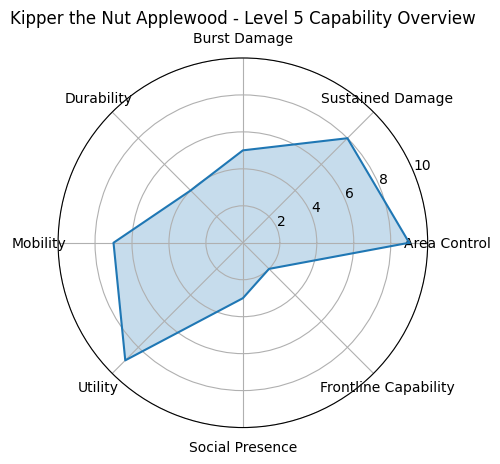
Level 5 Kipper Build – The Battlefield Architect
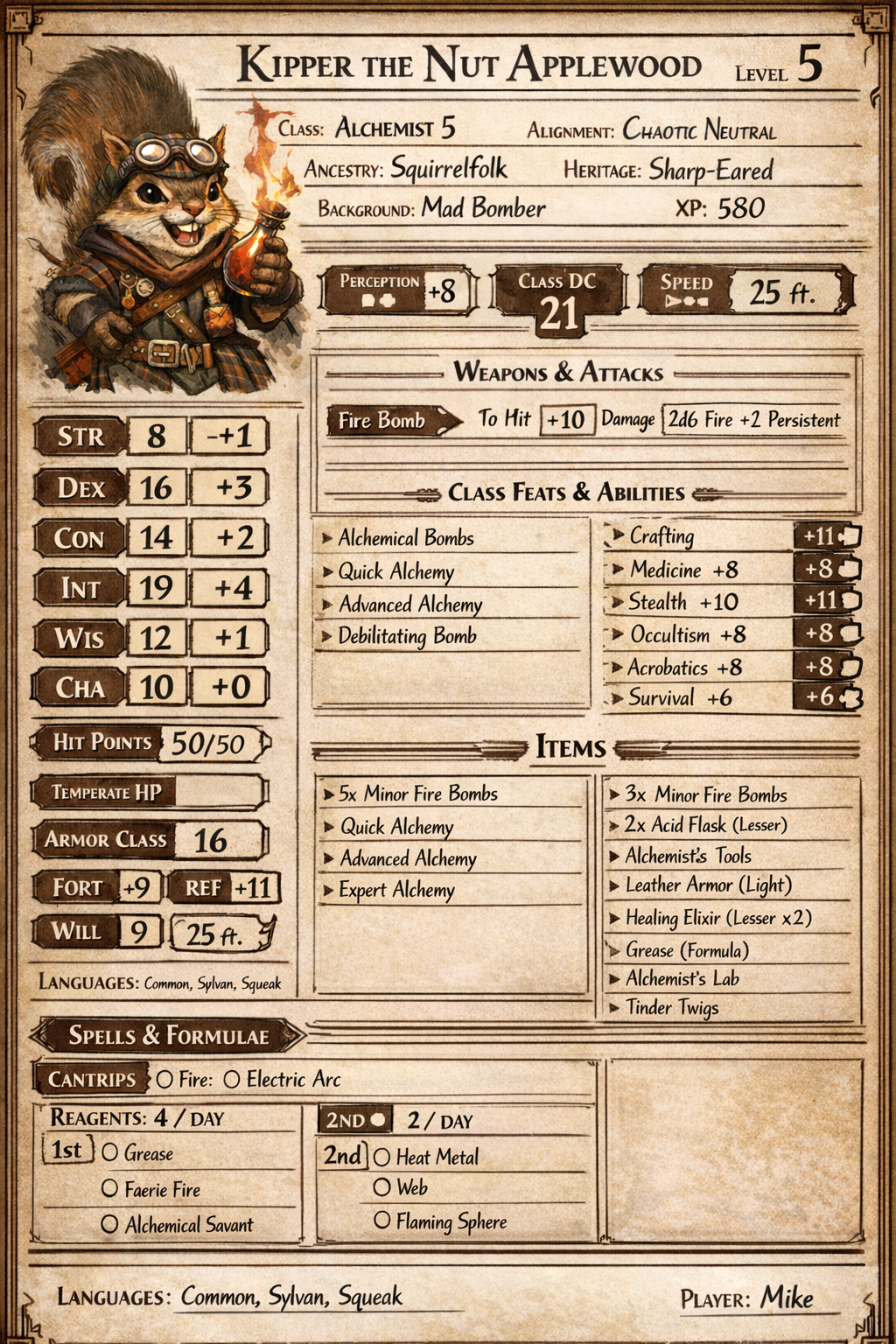
Level 5 is where Kipper becomes terrifying.
Not because of damage.
Because of inevitability.
What Changes at Level 5?
2nd-level spells
More spell slots
Better positioning
Improved consistency
Essential Level 5 Spells
Flaming Sphere (mobile area denial)
Web (control masterpiece)
Heat Metal (psychological devastation)
Scorching Ray (controlled burst)
Now Kipper can:
Block corridors
Force enemies into kill zones
Punish armored opponents
Maintain persistent burn zones
The Level 5 Pressure Pattern
Turn 1: Web choke point.
Turn 2: Flaming Sphere enters.
Turn 3: Heat Metal on armored captain.
Nobody stands still.
Nobody feels safe.
Enemies stop thinking clearly.
This is exactly the kind of combat escalation that prevents epic fights from falling flat — as we warned in Why Yer Epic Fights Keep Falling Flat.
Kipper becomes inevitability.
Long-Term Decay Warning
At Level 5, Kipper can accidentally dominate spotlight.
If every fight revolves around his terrain control…
If allies begin waiting for him to “set it up”…
If enemies feel trivial because of hazard stacking…
You must adjust.
Controlled chaos requires humility.
Otherwise you drift into the territory explored in The Strongest Character at the Table Is the One Who Listens.
And listening matters more than damage.
Advanced Tactics (Level 5 and Beyond)
Always announce disruption intent.
Coordinate with frontline before hazard placement.
Leave one safe path for allies.
Never surprise allies with fire.
The goal is pressure.
Not resentment.
If your table ever needs to recalibrate after too much chaos, that’s what the Tavern FAQ and Contact Page are for.
We solve real table decay here.
