
Playing Your First RPG: What It Feels Like When You Don’t Know What to Do

So imagine that welling up feeling in your chest. I'm supposed to perform this. Everyone's looking at me. Everyone's waiting for me. And you have that stuck feeling in your throat as you start sweating cold sweat, and you start getting nervous. And eventually, the GM tells you, "It's okay. We'll move past your turn. I will play for your character when you are ready."
That sinking feeling accompanied with relief is something that nearly every first-time player experiences. The cold sweats. The awkwardness. The fear that you've somehow ruined something before you even understood what was happening.
But here's the truth that most new players don't realize:
Everyone at that table remembers their first time.
Everyone has had that moment where their mind went blank.
And while it feels like the sky is falling for you, to them it looks like something familiar — the beginning of someone new learning how to play.
If you're completely new and still trying to understand what tabletop roleplaying actually looks like, reading through the Frequently Asked Questions can give you a clearer picture of how most sessions unfold.
Why This Feeling Is Normal
New players almost always assume they're the only ones struggling.
They assume everyone else walked into their first game confident, clever, and ready.
That assumption is wrong — but it's a very common one.
What you're feeling happens because tabletop roleplaying games ask you to do something unusual. You're asked to make decisions aloud, sometimes creatively, sometimes strategically, while sitting in a room with other people watching and listening.
Even confident people feel pressure under those conditions.
Your brain isn't failing you — it's protecting you. It's trying to avoid embarrassment. It's scanning for danger, even when the danger is only social discomfort.
That nervous feeling isn't a warning sign that you're bad at roleplaying.
It's a sign that you're doing something new.
And every experienced player has done this exact same thing before.
If you're wondering how groups grow into comfortable, trusting tables over time, exploring the story behind About Mike’s Tavern can help you understand how these shared beginnings slowly turn into strong gaming communities.
What This Moment Actually Looks Like at the Table
Let's slow the moment down.
Not dramatically.
Just honestly.
The GM looks up from their notes.
"Alright… what does your character do?"
You hear your name.
Or your character's name.
You weren't ready.
Your hands feel heavier than usual. You glance at your character sheet, but suddenly it feels unfamiliar — like you're reading something you forgot how to understand.
Someone at the table shifts in their chair.
Someone else takes a sip of water.
Nobody is staring angrily.
Nobody is frustrated.
They're just waiting.
You start thinking too hard.
Should I attack?
Should I talk?
Should I move somewhere?
Should I ask something?
Your thoughts get louder.
Your choices feel smaller.
Then the GM says:
"Take your time."
Or maybe:
"If you're not sure, we can come back to you."
That moment feels enormous to you.
But to everyone else?
It's normal.
It's familiar.
It's the exact moment they experienced when they first played.
And most of them are silently hoping you'll find your footing — because they remember how good it felt when they finally did.
What Most New Players Worry About (And What Actually Happens)
Most new players carry fears that feel very real — but rarely match reality.
Fear:
"I'll slow everyone down."
Reality:
Most tables expect pauses from new players. Thinking takes time, and nobody expects speed from someone learning.
Fear:
"I'll do something wrong."
Reality:
There is rarely a "wrong" action — only choices that lead to different outcomes.
Fear:
"Everyone will judge me."
Reality:
Most players are focused on their own turns, their own ideas, and their own character decisions.
Fear:
"If I freeze, I'll ruin the game."
Reality:
Freezing happens often, especially early on. Tables adapt easily, and games continue without breaking.
Fear:
"I need to be creative right away."
Reality:
Creativity grows slowly. Most players begin by doing simple actions before learning how to do more interesting ones.
If you're worried about slowing down the flow of the game, it may help to read how pacing works from the GM side in How to Run Combat That Feels Dangerous Without Being Unfair — it reveals how flexible most tables actually are.
What You Can Do In That Moment
When your mind freezes, the solution isn't brilliance.
It's simplicity.
You don't need a clever speech. You don't need a perfect strategy. You only need one clear action.
Here are simple things you can do when you're unsure:
Ask one clarifying question.
"What do I see around me?"
This gives your brain information to work with.
State one simple action.
"I move closer to the door."
"I attack the nearest enemy."
"I try to talk to them."
Even the simplest action moves the story forward.
Tell the GM you're thinking.
"Give me a moment — I'm deciding."
This removes pressure and gives you space.
Choose something safe.
When unsure, doing something basic is always acceptable.
Many players also benefit from using beginner-friendly tools like those found in the RPG Tools section, where simple resources can help you understand actions, pacing, and character options without overwhelming you.
The truth is this:
You don't need to impress anyone.
You only need to participate.
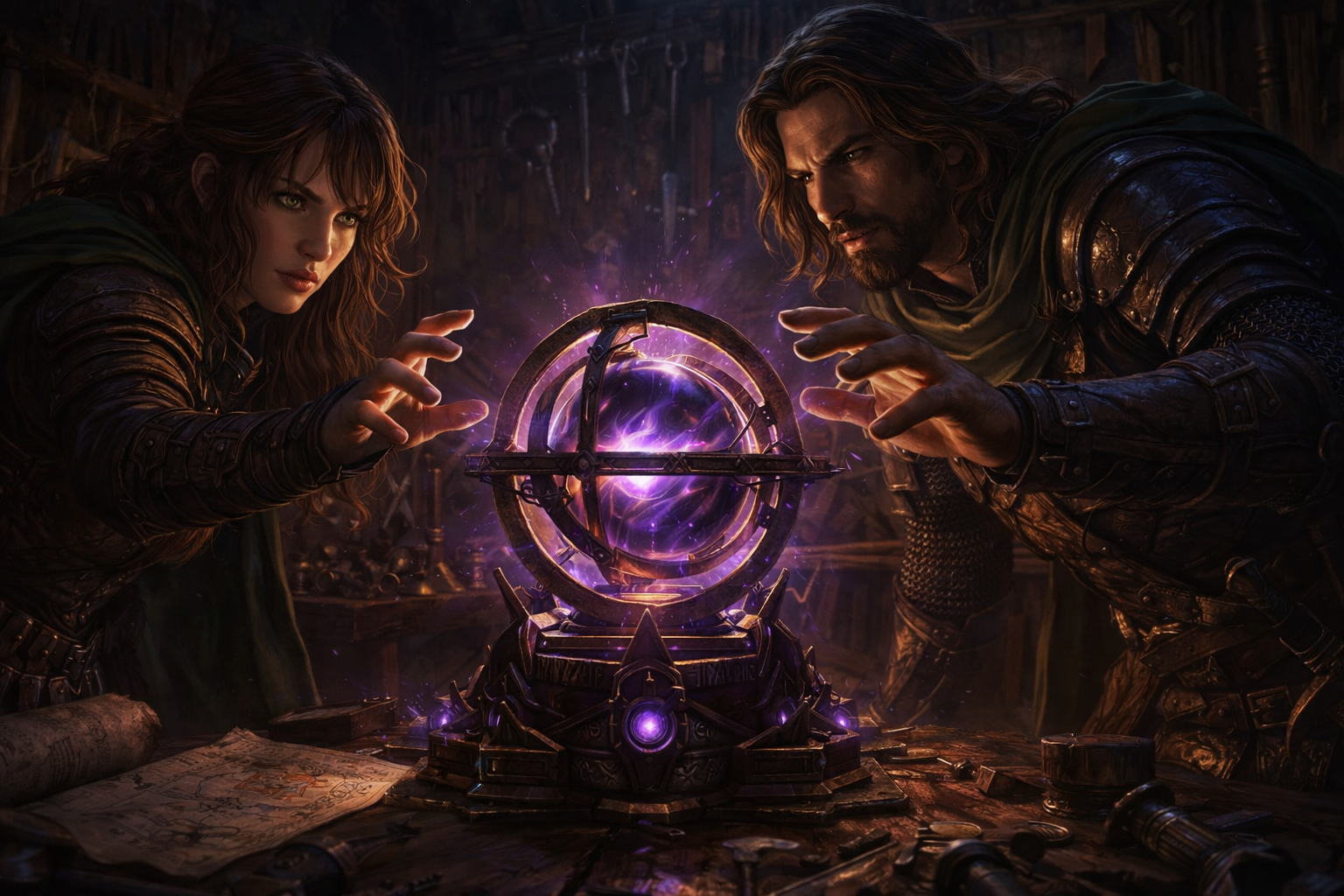
The Tavern Toolset
Lets get you started on your first adventure! Take these tools, laddie, these ones are on me!
What Happens If You Avoid This Moment
Avoidance feels safe at first.
But over time, it creates distance.
If you stay silent too often, something subtle begins to happen.
You hesitate.
You skip turns.
You speak less.
You engage less.
Eventually, the story moves forward without you.
Not because anyone wants to exclude you — but because silence creates empty space where your character should be.
That leads to feeling disconnected.
Disconnected players feel invisible.
Invisible players feel discouraged.
Discouraged players often stop playing entirely — not because they disliked the game, but because they never felt fully part of it.
And that loss happens slowly, quietly, without anyone noticing until it's already happened.
What Experienced Players Know That Beginners Don’t
Experienced players aren't fearless.
They just remember something beginners haven't learned yet.
Everyone freezes sometimes.
Everyone forgets rules.
Everyone makes awkward decisions.
Everyone misunderstands situations.
Everyone makes mistakes that feel embarrassing in the moment.
And here's something important:
Mistakes don't ruin games.
Silence doesn't ruin games.
Confusion doesn't ruin games.
Participation builds games.
Most experienced players also know that early discomfort fades quickly — often after just one or two sessions. Once your brain recognizes the rhythm of play, the fear fades faster than you expect.
If you're still wondering how players and GMs learn to support each other during uncertain moments, reading The Quiet Player vs the Table Hog: How to Keep Both Happy Without Losing Your Mind shows how tables naturally balance different personalities.
Your First-Time Player Check-In
Take a moment to reflect honestly.
Have you ever felt your mind go blank when attention turned toward you?
Have you ever worried that you didn't belong at the table?
Have you ever hesitated to act because you didn't want to make a mistake?
Now ask yourself something more important:
Would you still try again, even if it felt uncomfortable the first time?
Could you take one small action next session — even a simple one?
Could you speak one sentence when your turn comes?
Not perfectly.
Just clearly.
Growth in tabletop games doesn't happen through brilliance.
It happens through repetition.
What To Remember Before Your Next Session
You don't need to be clever.
You don't need to be fast.
You don't need to be impressive.
You only need to participate.
Feeling stuck happens to nearly everyone once or twice — and then it fades.
The moment that feels overwhelming today becomes the moment you barely remember later.
And one day, without noticing when it happened, you'll hear a new player freeze at the table — and you'll recognize that moment instantly.
Because you'll remember when it was yours.
