
Mike’s Tavern Definitive Longsword Guide for D&D 5e and Pathfinder 2e - Part 3
This article is part of the Mike’s Tavern Definitive Longsword Guide for D&D 5e and Pathfinder 2e. You can explore the rest of the series here:
Part Three: Fighting With Allies, Flanking, and Coordinated Pressure
Pull yer chair in close, lad, because this is where most sword folk get it wrong.
If you think a fight is you against the enemy, you’re already half dead. A longsword ain’t a solo instrument. It’s part of an orchestra, and if everyone’s playin’ their own tune, all you get is noise and bodies on the floor.
I’ve seen more battles lost to selfish turns than bad dice. Folk swing when they should stand. Chase kills when they should hold ground. And then they wonder why the wizard’s bleeding and the rogue’s trapped in a corner.
This part ain’t about hittin’ harder. It’s about fightin’ together, or not fightin’ long.
Fighting With Allies, Your Party Is Your Weapon
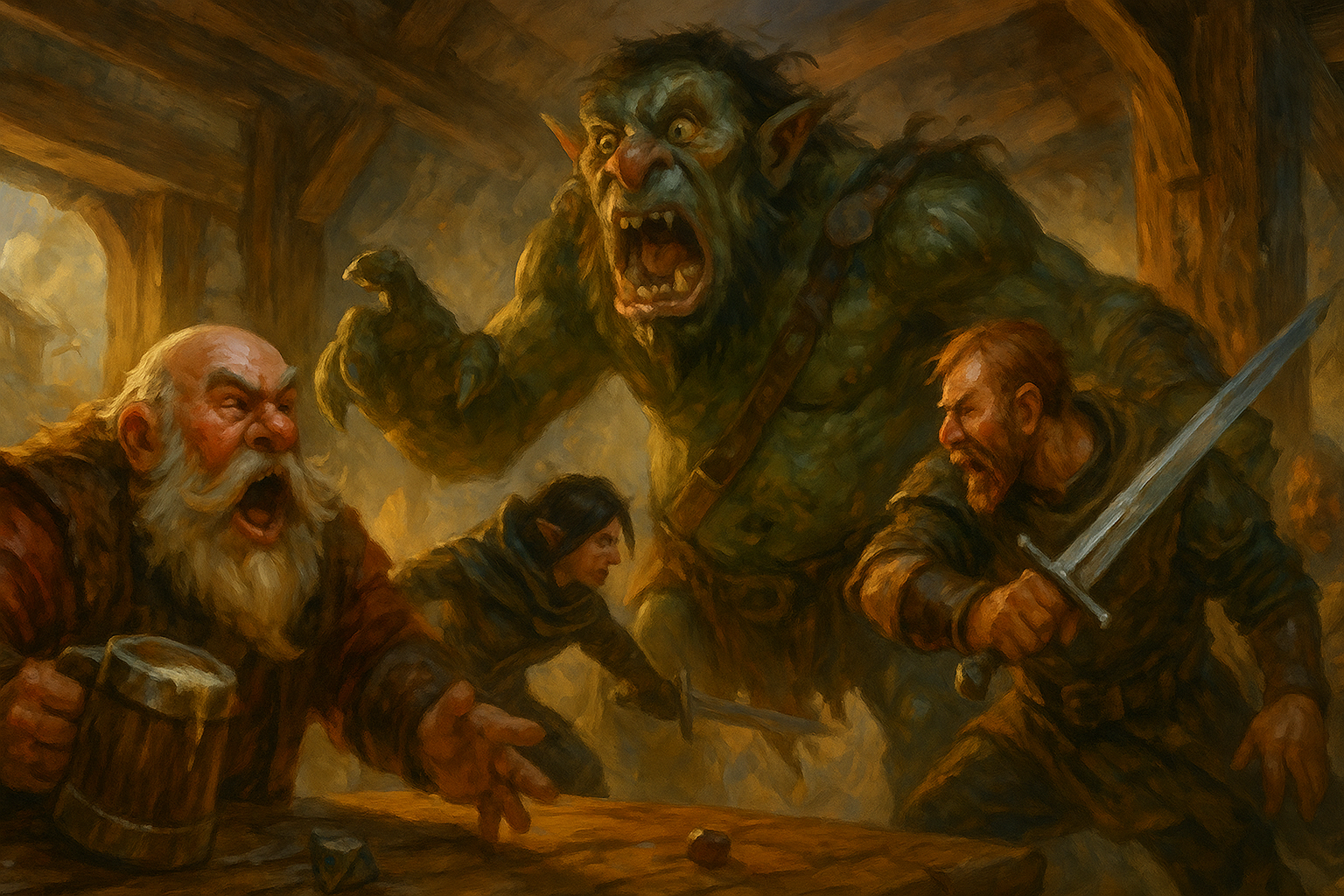
If you are still thinking of combat as your turn versus their turn, you are missing half the fight.
A longsword is not meant to work alone. It is meant to work with people. And in D&D 5e and Pathfinder 2e, most fights are not clean duels. They are crowded, chaotic, and full of moving parts. Allies reposition. Enemies shift. Someone always overextends. The longsword excels here because it thrives on cooperation instead of isolation.
Your party members extend your reach. Your positioning protects them. Their positioning gives you options. When you stand in the right place, you improve the whole fight without giving a speech.
This is where a longsword user stops acting like a damage machine and starts acting like an anchor. You block lanes so the rogue can move. You hold pressure so the caster can cast safely. You step into the space that keeps the softer party members from getting folded in half.
A lot of parties fail for one reason. Everyone plays like they are alone. If your table keeps unraveling, Why Your Party Keeps Falling Apart and How to Stop Being the Reason is a blunt mirror, and most folk need it.
If you are new to the tavern’s style, the core philosophy lives on About Mike’s Tavern.
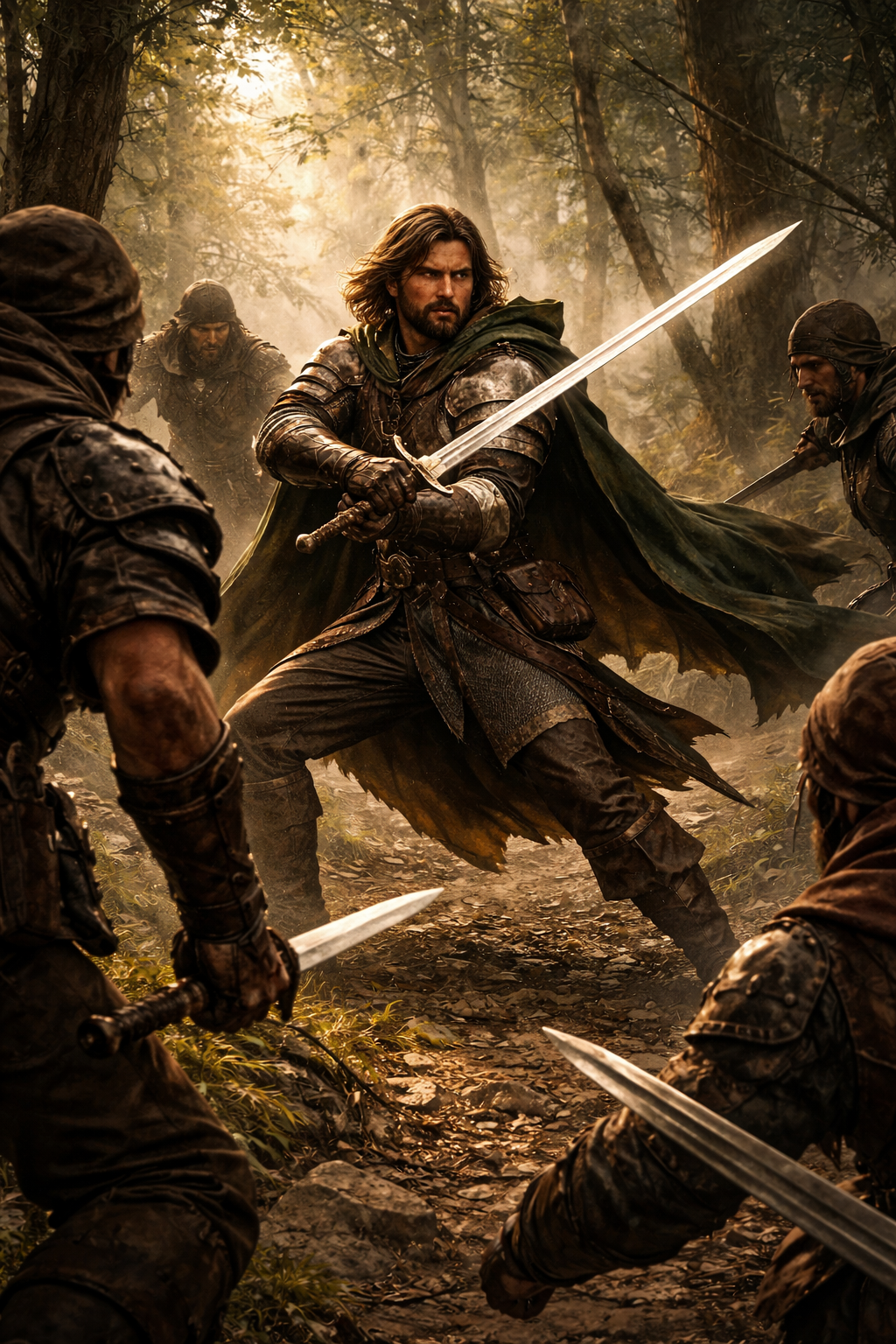
Flanking Is About Options, Not Bonuses
Flanking gets treated like a little side bonus, like a coupon you redeem for damage. That is the shallow version, and it makes fights uglier than they need to be.
Flanking works because it removes choices.
When an enemy is pressured from two sides, everything they do costs more. Turning to face one threat exposes them to another. Standing still invites punishment. Moving often means eating a reaction or giving up position.
A longsword user shines here because you can hold space without panicking. You do not need to sprint around like a headless goblin. You plant yourself where you matter and force the enemy to spend actions dealing with you.
In Pathfinder 2e, that pressure stacks naturally with how the system rewards smart positioning. In 5e, even without optional flanking rules, the narrative pressure is real. The enemy is surrounded, threatened, and forced to act.
The real trick is not “getting the flank.” The real trick is making the enemy feel trapped.
If your party struggles to coordinate without stepping on each other’s toes, it often helps to protect quieter players so they can actually act. Let the Quiet Player Speak Before I Cast Silence on Ya is more relevant to combat than most tables realize, because chaos and spotlight hogging are cousins.
Setting Up Allies Without Stealing Their Turn
Some players avoid teamwork because they fear stealing spotlight. Others do the opposite and try to run everyone else’s character. Both habits poison a table.
A longsword user should aim for a third path. Set the table. Let someone else eat.
In D&D 5e, shoving and grappling replace attacks. In Pathfinder 2e, Athletics maneuvers are full actions with real weight. Either way, you can spend a turn creating an opening that lets someone else shine.
That is what skilled martial play looks like. Not bigger numbers. Better outcomes.
If you want to see how defensive play can become punishment instead of passivity, The Shield That Bites Back, How to Turn Defense Into Punishment fits the longsword mindset perfectly, even if you are not carrying a shield every fight.
Coordinated Pressure Ends Fights Early
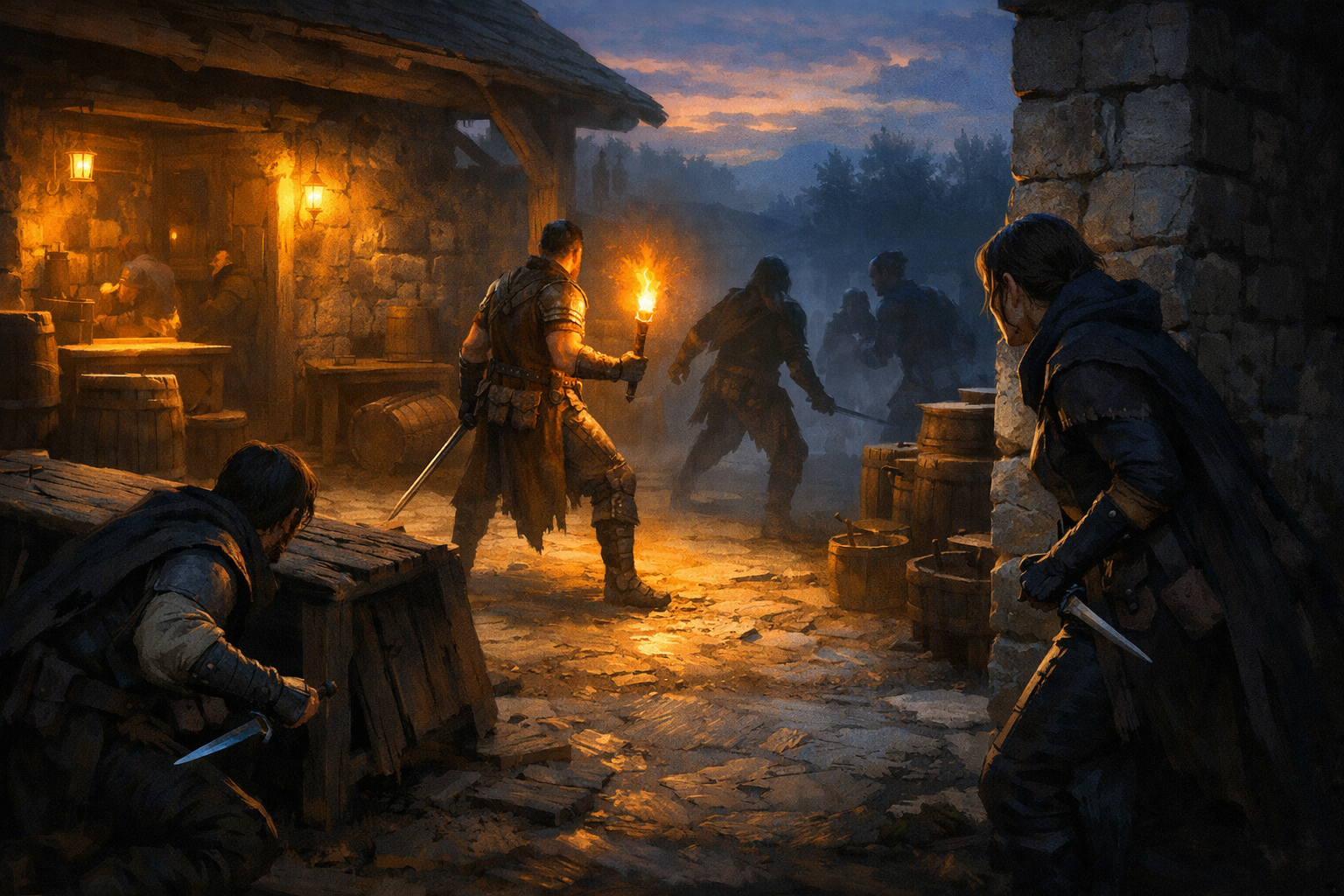
Fights do not end because one hero hits hardest. They end because the enemy runs out of good options.
Coordinated pressure is how you make that happen.
Pressure is not damage alone. Pressure is denying movement. Pressure is forcing bad decisions. Pressure is being in the right place so the enemy cannot do what they want.
A longsword fighter is excellent at this because you can threaten without overextending. You can hold ground. You can punish movement. You can support a push without being the one who always has to finish it.
If you want the cleanest version of this lesson, How to End a Fight Early Without Stealing Anyone’s Spotlight is the tavern’s core reference.
If you want to push this even further into ruthless efficiency, read The Power of Forced Movement, Shove, Slide, and Toss Em Off a Cliff. It teaches the same truth with sharper teeth.
Reading the Battlefield as a Group
Once your party learns to apply pressure together, the battlefield becomes smaller. Cleaner. Easier to predict.
The longsword user often becomes the anchor point, not because you are the star, but because you are reliable. You stand where the fight needs a spine.
A lot of tables burn out because everyone chases action and nobody respects tempo. If your fights feel exhausting instead of exciting, When Too Much of a Good Thing Kills the Game explains why.
And if you have questions about how these parts are meant to be used or shared, the FAQ covers the common ones.
Closing Part Three
By now, the longsword should feel different in your hands.
It is no longer just something you swing. It is a tool for coordination, control, and shared success.
You are not fighting alone.
You are not chasing numbers.
You are shaping the fight so others can shine.
Part Four is where everything goes wrong at once. Multiple enemies, chaos, and survival under pressure.
If you need to reach the tavern directly for anything site related, use the Contact page.
Finish your drink.
We will see you again in Part Four on the 23rd.
