
Mike’s Tavern Definitive Longsword Guide for D&D 5e and Pathfinder 2e - Part 4
This article is part of the Mike’s Tavern Definitive Longsword Guide for D&D 5e and Pathfinder 2e. You can explore the rest of the series here:
Part Four: Multiple Enemies, Chaos, and Staying Alive When the Fight Goes Bad
Listen close, lad, because this is where pretty theory gets folk killed.
Most players train for fair fights. One enemy. Clear space. Everyone standing where they planned to stand. Turns taken neat and polite.
That is not how fights end campaigns.
Real fights go bad early and stay bad. Someone pulls too many. Someone trips a trigger. Someone thinks they can finish it quick and leaves the line open. Suddenly there are bodies everywhere and no one remembers whose plan this was.
This part is not about winning clean. It is about staying alive long enough to make the fight make sense again.
A longsword earns its keep here. Not by cutting faster, but by holding shape when the battlefield tries to tear itself apart. When there are too many enemies and not enough room, discipline matters more than heroics.
If you panic, you get surrounded.
If you chase, you get isolated.
If you stay calm, the fight starts bending back in your favor.
This is where the blade stops being a weapon and starts being an anchor.
When the Fight Stops Being Fair
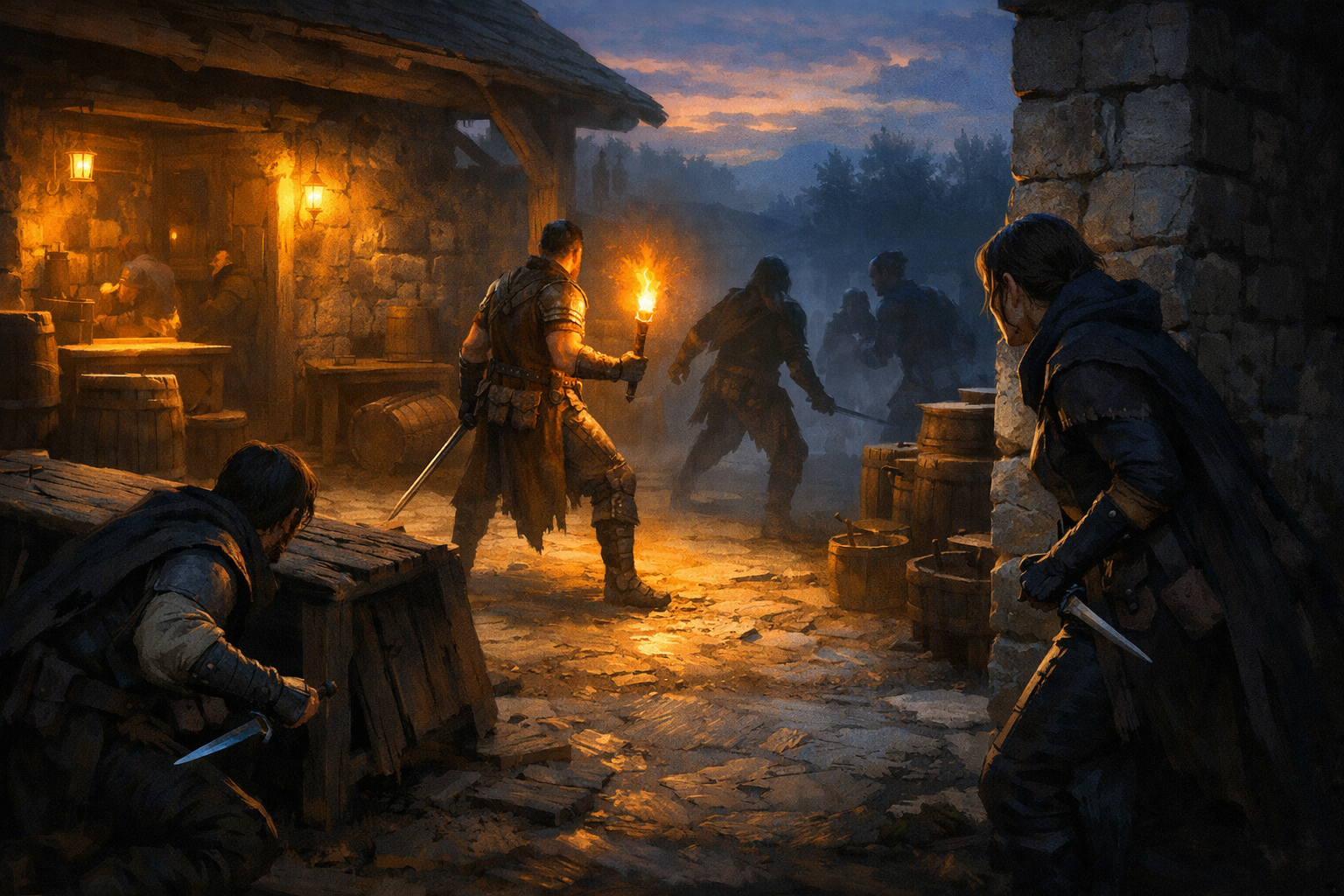
Most training assumes a clean fight. One enemy. Clear space. Predictable turns.
That is not how fights usually go.
Most encounters in D&D 5e and Pathfinder 2e involve too many bodies, too little room, and at least one mistake already in motion. Someone stepped too far. Someone chased the wrong target. Someone triggered something they should have left alone.
This is where longsword users either prove their worth or get overwhelmed.
When there are multiple enemies, the goal is no longer winning cleanly. The goal is surviving long enough to regain control.
You do not solve these fights by hitting harder. You solve them by staying upright while the enemy runs out of good options.
Movement Is Defense When Surrounded
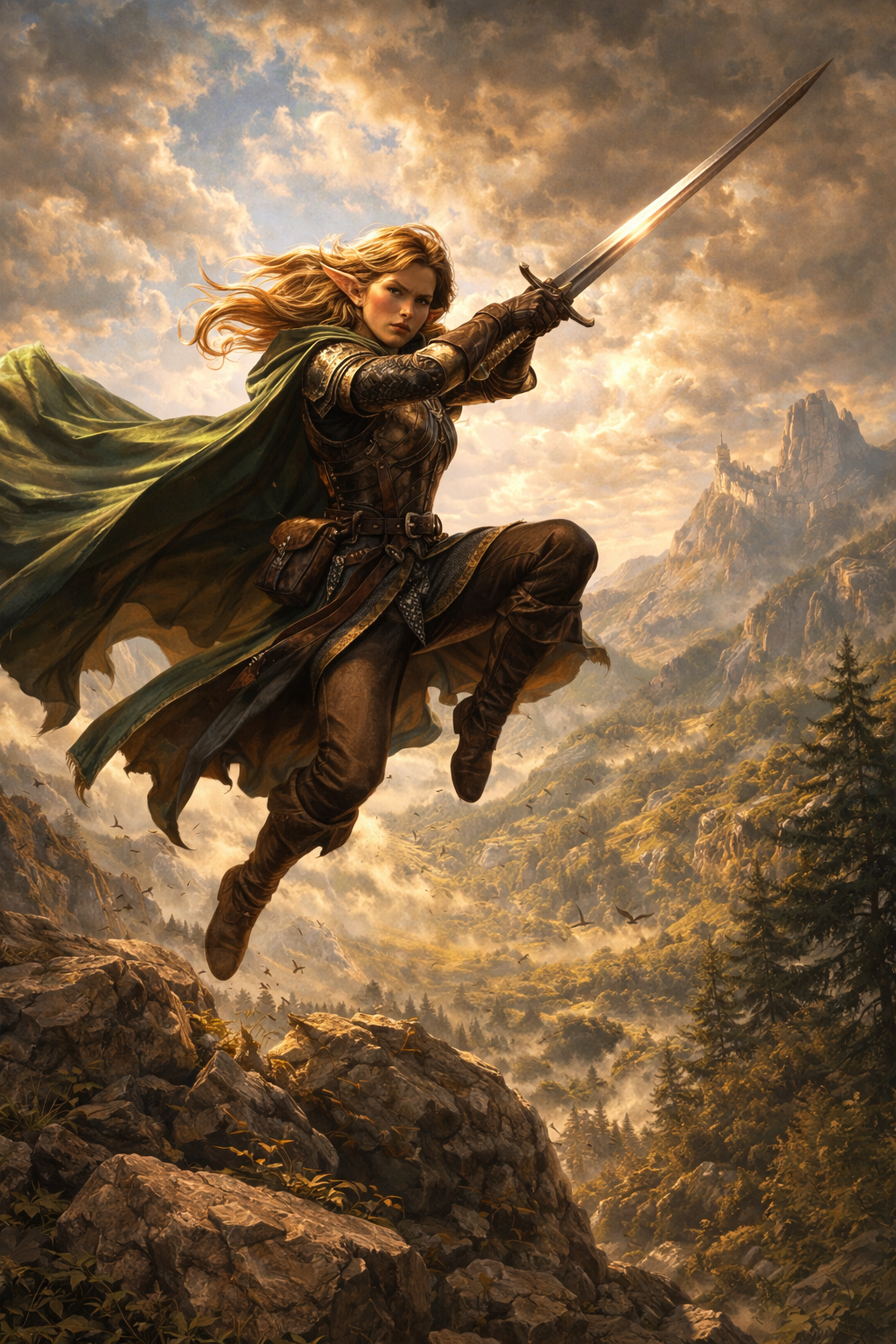
Standing still is a luxury that disappears the moment you face more than one opponent.
When you are outnumbered, every square matters. If you plant yourself without purpose, enemies spread out, cut off exits, and force you into reactions instead of decisions.
Movement is not retreat. Movement is survival.
In both systems, repositioning often costs less than recovering from being surrounded. In Pathfinder 2e, choosing Step instead of Stride at the right moment preserves reactions and denies easy triggers. In 5e, moving to break enemy clustering prevents multiple threats from acting freely.
A longsword user should think of movement as pressure management. You move to collapse the fight back into a shape you can control.
If you want a clear breakdown of why positioning wins fights before damage ever does, read
The High Ground Isn’t Just for Archers: How Position Wins Fights.
Do Not Chase. Make Them Come to You.
One of the fastest ways to die in a crowded fight is chasing a single enemy.
That enemy wants you to move. They want you separated from allies. They want you out of position so someone else can hit you from the side.
A longsword user survives by being boring in the right place.
Hold ground that matters. Doorways. Narrow passages. Corners. Anywhere enemies cannot all act at once. Force them to approach on your terms.
This is not passivity. This is control.
If letting an enemy walk away feels wrong to you,
The Art of Retreat: Why Running Away Is Sometimes the Most Lethal Move exists to break that habit before it breaks your character.
Target Priority Is About Options, Not Threat
When chaos hits, players ask the wrong question.
They ask who hits the hardest.
The better question is who gives the enemy the most options.
That might be the fast mover enabling flanks. It might be the grappler locking down your caster. It might be the one enemy holding a path open.
A longsword user excels here because you are not locked into one solution. You can threaten space, shove enemies out of position, trip someone at the wrong moment, or grapple the piece that holds everything together.
This is where combat maneuvers prove their value under pressure.
If you want to see how denying movement shuts fights down entirely,
Lockdown Tactics: How to Keep Enemies From Ever Reaching You shows how control beats damage.
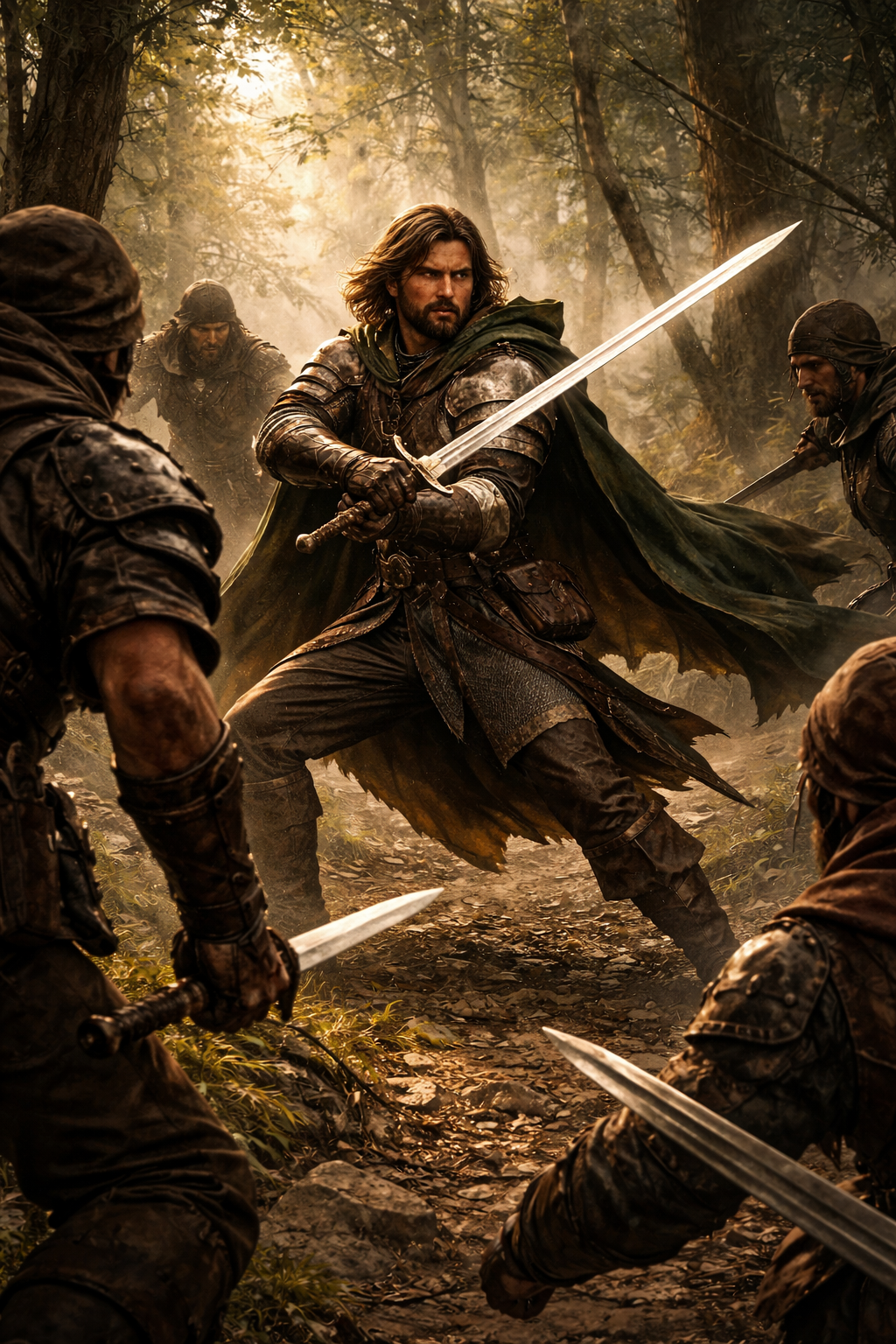
Chaos Punishes Greed and Rewards Discipline
Multiple enemy fights punish players who try to do too much.
Three attacks when you should have repositioned. Sprinting past allies for a hit that does not matter. Burning reactions early because it feels productive.
Discipline keeps you alive.
A longsword user should often become the calm center of a messy fight. You do not need to win every exchange. You need to prevent the encounter from spiraling.
If your table keeps turning encounters into exhausting brawls,
When Too Much of a Good Thing Kills the Game explains why restraint shortens fights instead of dragging them out.
Protecting Allies When Everything Goes Sideways
When chaos erupts, softer party members suffer first.
Casters lose space. Ranged fighters lose angles. Someone freezes.
This is where the longsword becomes a shield even without carrying one.
Step into lanes that threaten your allies. Stand between danger and the people who cannot afford to take a hit.
If your table struggles with chaos and people talking over each other under pressure,
Let the Quiet Player Speak Before I Cast Silence on Ya matters in combat more than most groups realize.
When to Break Contact Instead of Holding It
Sometimes control means letting go.
There are moments when holding ground turns into slow suicide. When enemies outnumber you. When conditions stack. When staying means dying instead of resetting the fight.
Knowing when to disengage is a skill, not a failure.
If this idea feels uncomfortable, go back to
The Art of Retreat and read it again with this chapter in mind.
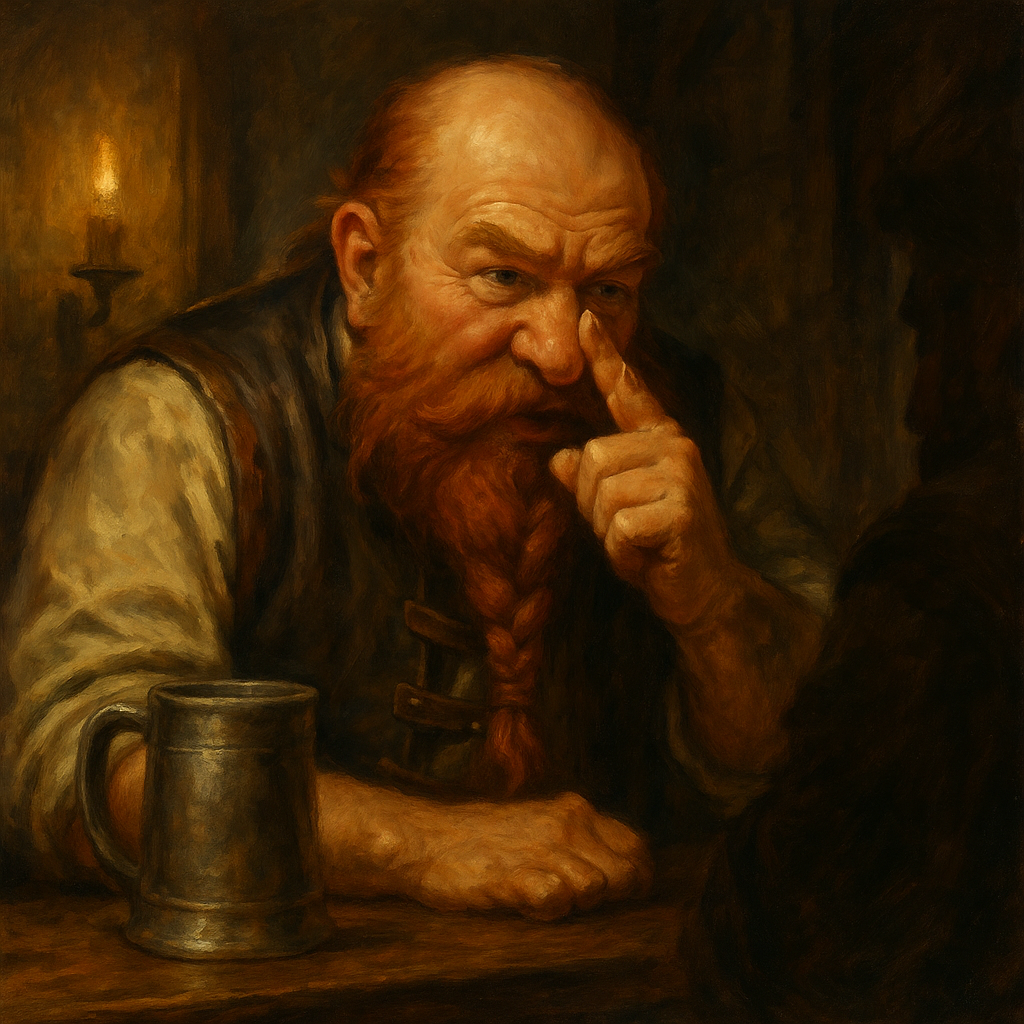
Reading the Battlefield Under Pressure
Chaos feels overwhelming until you learn what to ignore.
Stop tracking everything. Start watching patterns.
Where enemies cluster. Who moves freely. Where pressure is building.
A longsword user often becomes the stabilizing point because they see the fight clearly.
If you want to sharpen that instinct further,
The Power of Forced Movement: Shove, Slide, and Toss ’Em Off a Cliff reinforces how small positional changes restore control.
Closing Part Four
By now, the longsword should feel like more than a damage tool.
It is a stabilizer.
It is a pressure valve.
It is how a party survives when everything goes wrong at once.
If you want a quick reference for how this entire guide is structured, the
FAQ explains how each part fits together.
If anything on the site needs attention, the
Contact page is always open.
Finish your drink.
We will see you again in Part Five.
