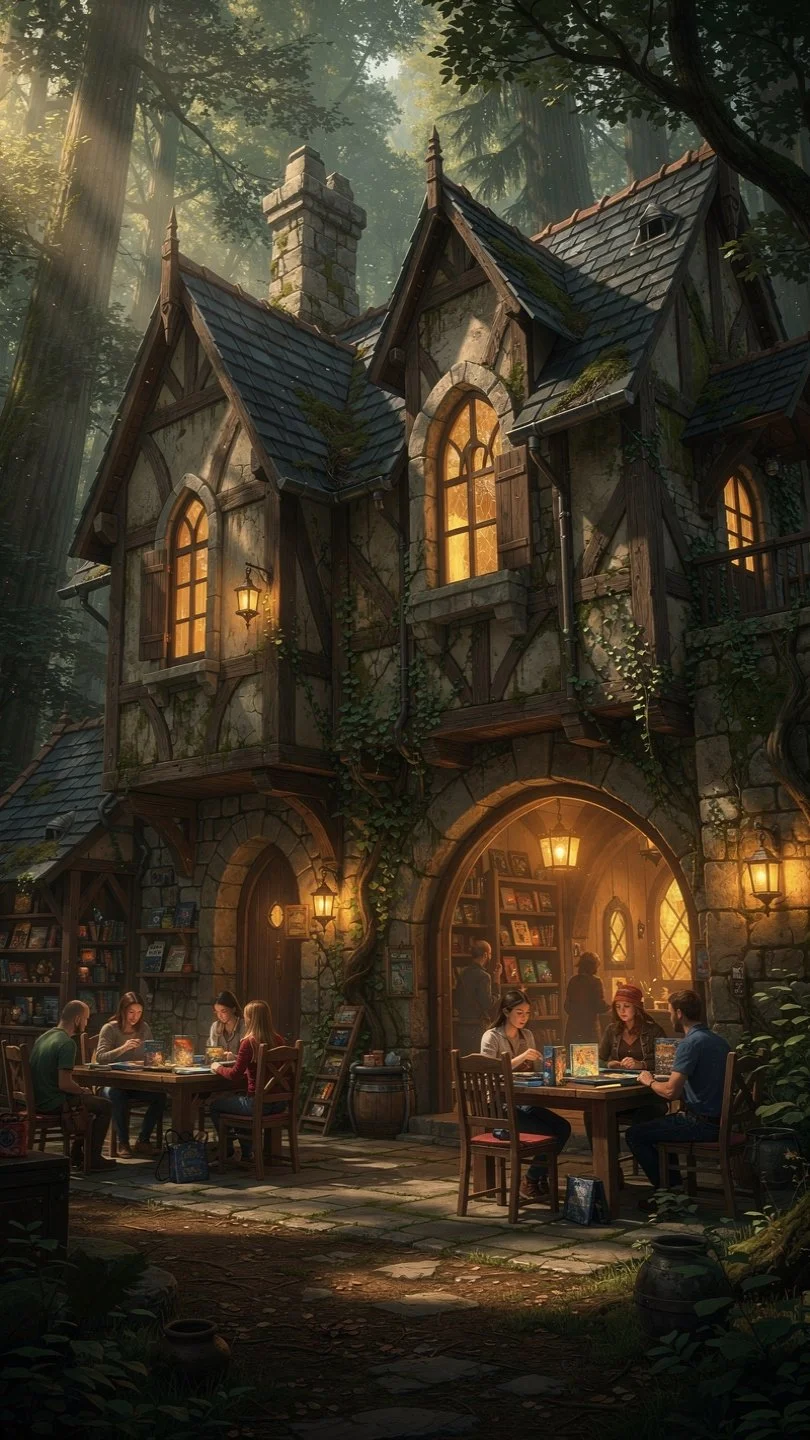
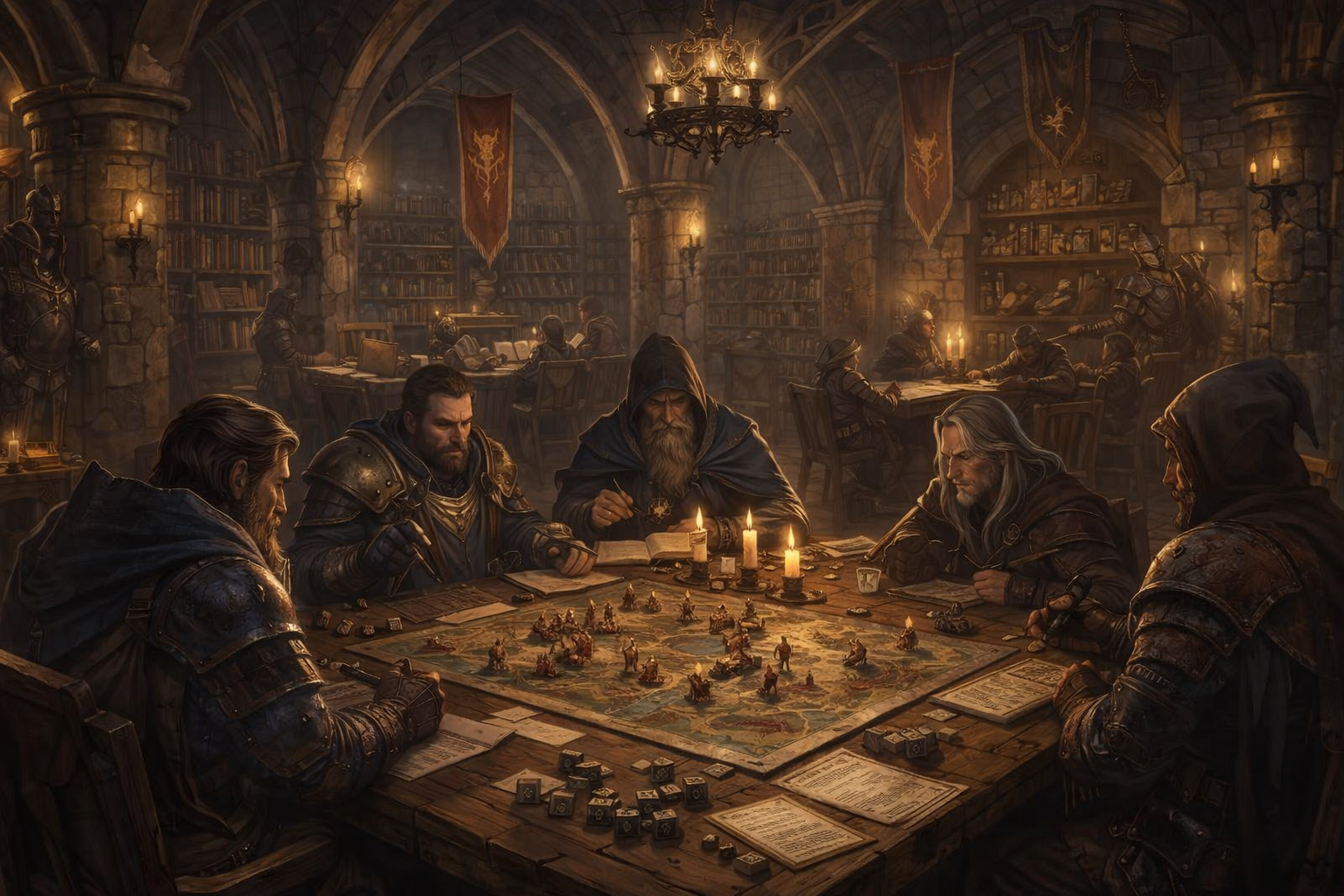
Board Game Café vs Local Game Store: Which One Fits Yer Party Better?

A board game café and a local game store can both host a great campaign.
But they do not feel the same.
One usually offers comfort, food, cleaner presentation, nicer seating, and a more polished environment. The other often gives ya community, hobby culture, cheaper table access, and the feeling that everyone in the room genuinely loves the game.
Neither is automatically better.
The real question is simple: what kind of party are ya bringing to the table?
That is why the Tavern Network exists. It helps adventurers compare venues by atmosphere, comfort, cost, community, and campaign fit instead of blindly choosing the nearest place with chairs.
Board Game Cafés Are Better for Comfort
A board game café is usually the safer pick when yer party values comfort.
The lighting is often better. The seating is usually nicer. Food and drinks are nearby. The room tends to look more polished, smell better, and feel more welcoming to casual players or first-timers.
This matters when the party includes newer players, date-night players, coworkers, mixed groups, or people who do not normally spend time in hobby stores.
A board game café can make tabletop gaming feel more approachable.
Venues like ME Cafe & Games Singapore, Meeples Games in West Seattle, and Sliced N Diced Birmingham are good examples of café-style spaces where comfort is part of the appeal.
Local Game Stores Are Better for Raw Community
A local game store is often rougher.
The lighting may not be perfect. The tables may be crowded. The ventilation may not be great. Some stores keep pets, old stock, packed shelves, or dense play areas, so the smell and comfort level can vary a lot.
But when a local game store is good, it has something cafés often cannot imitate.
Belonging.
A proper local game store feels like a clubhouse for people who genuinely love the hobby. Players know each other. Staff remember regulars. Someone nearby is always talking about decks, dice, minis, terrain, rules, releases, campaigns, or the last ridiculous thing that happened at their table.
That sense of love for the game is powerful.
Venues like The Attic Fürth, Games Island in Hof, Germany, and Phoenix Comics & Games Seattle show why local game stores remain so important. They are not always the prettiest spaces, but they often carry the strongest hobby heart.
Cafés Are Better for Players Who Want a Nicer Night Out
Some players want the session to feel like an outing.
They want good drinks, decent food, comfortable chairs, clean toilets, pleasant lighting, and a space they would happily invite friends to.
For those players, a board game café usually wins.
This is especially true if the group includes players who are less interested in hobby culture and more interested in the social experience. They may not care about shelves of miniatures or tournament posters. They care about whether they feel relaxed.
If yer table includes anxious or first-time players, Playing Your First RPG: Why Everyone Seems More Experienced Than You fits naturally here. A nicer, calmer environment can make the whole hobby feel less intimidating.
Local Game Stores Are Better When Budget Matters
Local game stores are often cheaper.
Not always, but often.
Some charge little or nothing for table use if players support the shop by buying drinks, snacks, dice, minis, books, sleeves, or other hobby goods. Others have lower table fees than polished cafés.
That makes a big difference for weekly campaigns.
The trade-off is that food may not be available, or the group may need to leave the store to eat. That can break momentum. It can also turn a simple game night into a longer logistical problem.
So the GM should ask the party directly:
Do we want cheaper tables and stronger hobby culture?
Or do we want food, comfort, and fewer interruptions?
There is no shame in either answer.
Cafés Can Be More Limiting for Loud Campaigns
Board game cafés are comfortable, but they are often more socially delicate.
Not everyone there is playing a loud RPG. Some café guests may be there for quieter board games, dates, family outings, casual drinks, or low-volume social time.
If yer D&D campaign involves shouting, roaring laughter, dramatic speeches, monster voices, arguments in character, and big reactions to dice rolls, a café may become awkward.
The party might disturb other guests. Staff may need to ask the group to lower the volume. The GM may feel pressured to keep the table quieter than the game naturally wants to be.
So cafés are often better for calmer campaigns, roleplay-heavy games, new player sessions, or groups that can manage their volume.
For louder, rougher, high-energy parties, an open local game store may be more forgiving.
Local Game Stores Can Be Harder on Comfort and Accessibility
The rough charm of a local game store is not for everyone.
Some players may struggle with noise, crowding, strong smells, poor ventilation, harsh lighting, cluttered walkways, or uncomfortable chairs. If anyone in the party has sensory needs, mobility concerns, anxiety, asthma, allergies, or strong discomfort around animals, the GM should be careful.
A local game store can feel like home to one player and overwhelming to another.
That is why the GM should not choose based only on personal preference. Ask the players what they can handle.
Running Your First Game: Reading the Table Without Anyone Saying a Word is useful, but observation is not enough. For venue comfort, ask plainly.
Cafés Are Better for Polished Sessions
If yer campaign needs presentation, a board game café usually helps.
Maybe it is session one. Maybe it is a special finale. Maybe the GM has invited new players. Maybe the group wants photos, food, drinks, or a more elegant atmosphere.
A café makes the whole thing feel more intentional.
That can improve player buy-in. When the venue feels good, the campaign feels more important.
Local Game Stores Are Better for Hobby-First Players
Some players do not want polished.
They want shelves of sourcebooks, dice boxes, minis, card binders, old posters, crowded tables, loud regulars, and staff who know the game.
They want to feel surrounded by the hobby.
For these players, a café may feel too clean, too casual, or too detached from the deeper tabletop scene. A local game store gives them roots.
It is where they meet other players, hear about events, find new tables, and feel like they belong to something larger.
If yer group is trying to find better people as much as better places, Good Tables, Bad Tables Part 5: How to Find Better Tables Without Settling is a strong companion read.
Final Word from the Tavern
Choose a board game café when yer party values comfort, food, cleanliness, atmosphere, and a more polished night out.
Choose a local game store when yer party values community, affordability, hobby culture, and the rougher charm of a place built by people who truly love the game.
A café is usually more comfortable, but more limiting.
A local game store is often cheaper and more community-rich, but less polished.
Neither choice is wrong.
The right choice is the one yer party actually wants to return to.
Start with Mike’s Tavern, browse the Tavern Network, check the Mike’s Tavern FAQ, or reach out through the Contact Page when yer table needs help finding its next home.
More Tavern Network Goodness