
The Marshmallow Flail of Gooey Bonks
Tavern Armory
What Ye Need to Know
The weapon: Marshmallow Flail of Gooey Bonks
Weapon type: Magic flail
Rarity: Rare
Attunement: Required
Best users: Fighters, Paladins, martial Clerics, and Strength-based Rangers
Combat role: Reliable damage and soft Dexterity control
The Marshmallow Flail of Gooey Bonks is a +1 flail that deals an extra 1d4 fire damage whenever it hits. Once per turn, a creature struck by it is coated in enchanted marshmallow and has its Dexterity score reduced by 2, to a minimum of 1, until someone spends an action cleaning it away. The reduction never stacks with itself. Use it to soften agile enemies, weaken Dexterity saving throws, and force an awkward choice between fighting while sticky or wasting an action getting clean.
Most flails announce themselves with iron spikes, blackened chains, and the promise of a difficult conversation with the local surgeon. This one arrives smelling of vanilla.
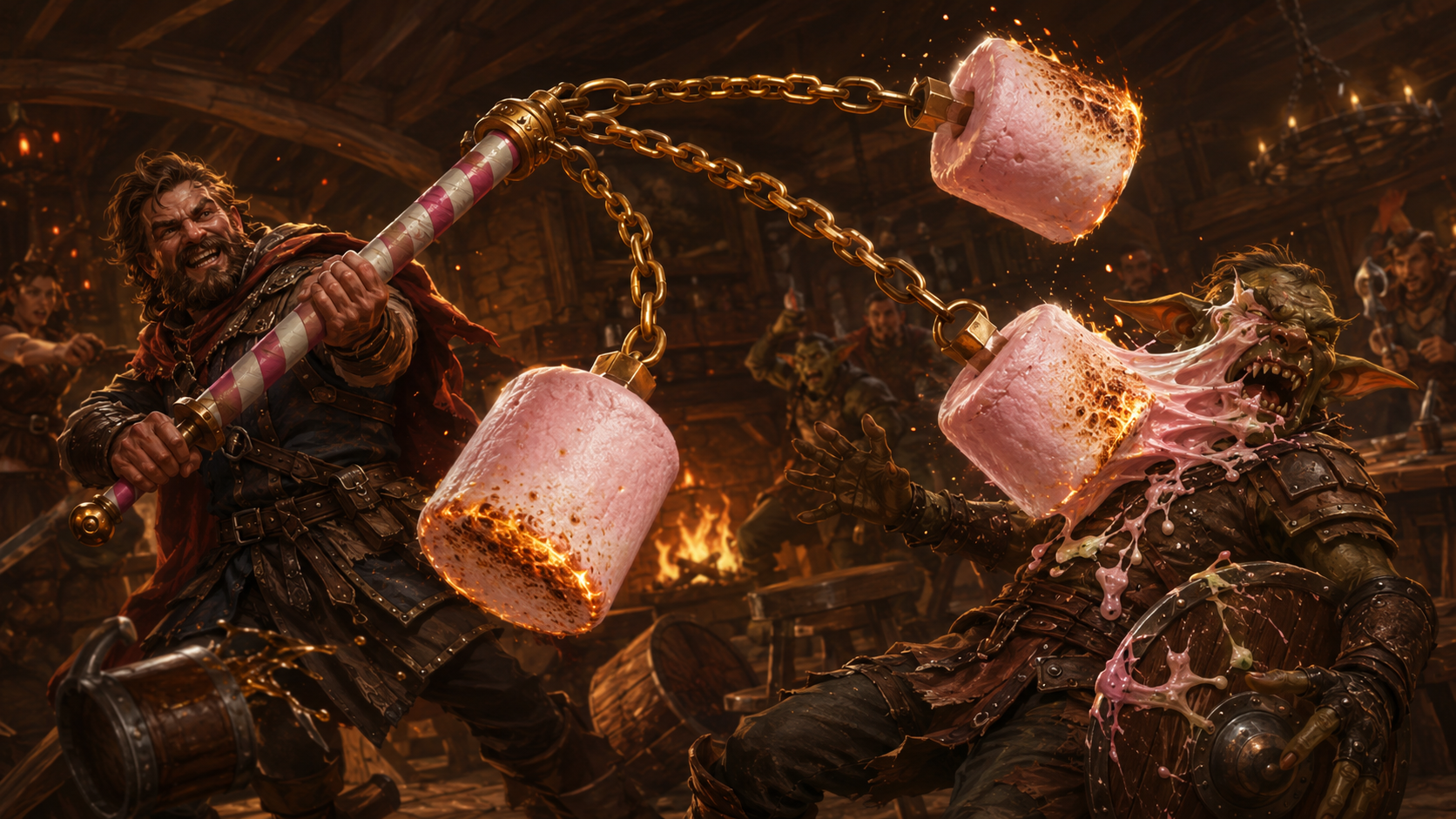
The Marshmallow Flail of Gooey Bonks has a polished candy-striped handle and three short golden chains. At the end of each chain hangs an enormous pink marshmallow, soft enough to wobble in the breeze and hot enough to toast itself as it swings. The first bonk feels ridiculous. The second leaves a goblin stuck to his own shield.
Do not mistake softness for mercy. This is an original Mike's Tavern D&D 5e magic weapon built around steady fire damage and a peculiar form of control. It does not stun enemies or steal entire turns outright. It makes nimble targets less nimble, encourages the party to attack their Dexterity, and presents the victim with a gloriously undignified decision.
Magic Weapon Statistics
Marshmallow Flail of Gooey Bonks
Marshmallow Flail of Gooey Bonks
Weapon (flail), rare (requires attunement)
You gain a +1 bonus to attack and damage rolls made with this magic flail. On a hit, the target takes an extra 1d4 fire damage as the marshmallow head toasts against it.
Gooey Bonk. Once per turn when you hit a creature with this weapon, enchanted marshmallow coats it. The creature's Dexterity score is reduced by 2, to a minimum score of 1. This reduction does not stack with itself, including residue from another Marshmallow Flail of Gooey Bonks.
The residue remains until the affected creature or another creature within reach uses an action to clean it away. Cleaning requires water, alcohol, a suitable cleaning substance, or a free hand and a successful DC 15 Strength (Athletics) or Dexterity (Sleight of Hand) check. On a failed check, the residue remains. A creature fully immersed in water removes the residue at the end of its turn.
A creature with no physical body cannot be coated. Fire resistance or immunity applies to the extra fire damage normally but does not prevent the residue. The Dexterity reduction can affect Armor Class, Dexterity checks, and Dexterity saving throws as determined by the creature's recalculated modifier. It does not retroactively alter initiative already rolled.
Soft Head, Serious Control
Why the Gooey Bonk Works
The weapon has two dependable layers. The +1 bonus and extra fire damage make every ordinary hit useful. The residue then creates a party-wide opening that can matter more than the wielder's own damage.
A reduction of 2 Dexterity usually lowers a creature's Dexterity modifier by 1. Against lightly armoured enemies, that can mean 1 less Armor Class. It can also weaken Dexterity saving throws against spells and effects such as burning areas, blasts, slippery ground, and traps. The flail does not need to deliver the finishing blow. It prepares the target for everyone else.
The cleaning rule is the cruel little centre of the design. An enemy may spend its action removing the marshmallow, or keep fighting with poorer Dexterity. Either outcome has value. This follows the same principle explored in when doing less damage wins more fights: control and action pressure can outperform one larger damage die.
Who Gets the First Bonk?
Best Wielders
Fighters
A Fighter has the attacks and accuracy to apply the goo early, then keep delivering the flail's fire damage. Battle Masters are especially useful because they can combine the Dexterity reduction with manoeuvres that control position or create openings. Just remember that the residue activates only once per turn, no matter how many attacks ye make.
Paladins
Paladins appreciate a one-handed magic weapon that leaves the other hand free for a shield. The +1 bonus improves the chance of landing an important hit, while the fire rider gives the Paladin something useful even when conserving spell slots. Smite when the moment matters. Bonk responsibly the rest of the time.
Martial Clerics
A Strength-based Cleric can coat a target before allies force Dexterity saves. The weapon is especially satisfying in a party filled with casters who favour fiery bursts, sacred zones, and other effects that punish clumsy enemies. The Cleric does not need to be the star of the damage chart to become the backbone of the attack.
Strength-Based Rangers
A melee Ranger can use the flail while maintaining the mobility and target selection that the class already enjoys. Mark the dangerous skirmisher, make it easier for the party to catch, and avoid wasting the goo on a lumbering brute whose Dexterity was already dreadful.
Build Around the Bonk
Character Guidance
Strength remains the primary ability for attacking with the flail. Constitution keeps ye standing in melee. After those two, build according to class rather than chasing Dexterity simply because the weapon attacks it.
The Dueling Fighting Style is the cleanest choice when using the flail with a shield. Defence is dependable if yer party needs a sturdier front line. A build that can reliably gain advantage also benefits, because the weapon cannot apply its control until it actually connects.
Coordinate with allies before choosing spells and features. The goo becomes far more valuable when the party has multiple Dexterity-saving effects ready. This is where teamwork tricks that build party trust matter more than squeezing another point from a personal damage calculation.
Combat Tactics
Bonk the Right Target at the Right Time
Strike Before the Casters Act
If initiative allows, hit the priority target before an ally forces a Dexterity saving throw. A lower Dexterity modifier may be only a one-point swing, but combat often turns on one point. Tell the party which enemy is coated so nobody misses the opening.
Choose Agile Enemies
Skirmishers, archers, lightly armoured duelists, and fast monsters usually lose more from the residue than heavily armoured brutes. If a target's Armor Class depends on Dexterity, the goo may improve every attack made against it. If its Dexterity is already extremely low, spend yer bonk elsewhere.
Pressure the Action Economy
An intelligent enemy may clean itself if the party clearly intends to bombard it with Dexterity saves. That still costs an action. Do not call the weapon useless because the residue disappeared. Making a dangerous creature spend its action wiping enchanted sugar from its trousers is a victory.
Know When Plain Damage Is Enough
Fire immunity shuts down the bonus damage, and incorporeal creatures cannot be coated. Against those foes, ye still hold a +1 magic flail. Do not overcommit to forcing a trick that the encounter does not support. Good target choice matters more than weapon statistics, as this guide to position, timing, and target choice explains.
Shield, Hand, and Cleaning Rules
What the Wielder Should Carry
The flail is a one-handed weapon, so a shield is the natural companion. This makes the item attractive to a defensive frontliner who wants control without abandoning Armor Class. Keep the other hand occupied unless a class feature, spell component, or item interaction requires it.
Carry water anyway. The wielder is not normally coated by swinging the weapon, but enchanted confectionery has a habit of finding sleeves, backpacks, and expensive maps once combat ends. More importantly, the cleaning materials in the rules give the GM a concrete way to adjudicate the effect. A waterskin works. Strong spirits work. A bare hand requires the listed check. Prestidigitation can clean a small soiled object, but whether it can remove all the magical residue from a creature is the GM's decision.
Listen, laddie. Do not start measuring the marshmallow in square feet. The rule exists to create a tactical decision, not a confectionery engineering profession.
Behind the Screen
GM Guidance for the Marshmallow Flail
This weapon suits characters around levels 5 to 10. Its rare rarity comes from combining a +1 bonus, repeatable extra fire damage, and a reliable but modest control effect. The Dexterity reduction is meaningful, yet it neither stacks nor removes a turn automatically.
Introduce it somewhere the contrast can breathe. Place it in the locked pantry of a fire giant pastry chef. Award it after the party defeats a confectioner's animated kitchen. Let a grim knight carry it with absolute seriousness and refuse to explain where it came from. The object is funny, but the world does not need to stop and applaud the joke.
Track the target's adjusted Dexterity modifier openly. If the score changes from an even number to the next lower even number, the modifier drops by 1. If it changes from an odd number to the next lower odd number, the modifier also drops by 1. Recalculate Dexterity-based Armor Class when appropriate, but never change initiative after it has been rolled.
Before adding the item, confirm that the table enjoys whimsical equipment. A good campaign makes players care about its world, and tone is part of that trust. A tragic horror campaign may need a burnt, unsettling version of the weapon. A heroic comedy can embrace the pink wobble in full.
The Adventure Needs a Table
Find a Place Where Ridiculous Weapons Become Legends
The finest magic items are remembered because a group witnessed the moment they mattered. The Tavern Network helps adventurers discover places and communities where campaigns can grow. If yer group is choosing between hushed storytelling and a room loud enough for every bonk to earn a cheer, use this guide to choosing a quiet tavern or loud game hall.
Common Mistakes
Five Ways to Fumble the Fluff
Stacking the Dexterity Reduction
The penalty is always 2. Additional hits refresh nothing because the residue remains until cleaned, and they never deepen the reduction.
Applying Goo on Every Attack
Gooey Bonk triggers once per turn. Extra attacks still gain the +1 weapon bonus and extra 1d4 fire damage, but they do not apply additional residue.
Forgetting Fire Resistance
Resistance and immunity affect the extra fire damage normally. They do not remove or prevent the sticky residue.
Changing Initiative Mid-Fight
The reduced Dexterity affects future rolls and relevant statistics, not an initiative order already established.
Bonking the Slowest Creature in the Room
The residue is most useful against enemies that depend on Dexterity. Pick targets with purpose instead of coating the nearest sack of hit points.
The Tavernkeeper's Verdict
A Silly Weapon With a Proper Tactical Job
The Marshmallow Flail of Gooey Bonks succeeds because its joke and its mechanics are the same thing. The soft heads toast for reliable fire damage. The melted sugar clings to enemies and makes them easier for the party to punish. Nothing is bolted on merely to make the item louder.
Give it to a Strength-based frontliner who enjoys setting up allies. Aim for agile targets. Announce the goo. Let the party exploit it. If the enemy spends an action cleaning itself, raise yer mug and count that as a bonk well delivered.
Frequently Asked Questions
Questions About the Marshmallow Flail of Gooey Bonks
Need broader help with the Tavern? Visit the main Mike's Tavern FAQ.
It is a +1 magic flail that deals an extra 1d4 fire damage on every hit. Once per turn, a hit also coats a physical creature in magical marshmallow, reducing its Dexterity score by 2 until the residue is cleaned away.
No. The reduction remains fixed at 2 and never stacks with itself, even if several such flails hit the same target.
No. The attack roll determines whether the residue lands. Once coated, a creature can spend an action and use suitable cleaning material to remove it automatically, or attempt the listed DC 15 ability check with a free hand.
No. Fire immunity prevents the extra fire damage, but the residue is a separate magical effect. A creature without a physical body cannot be coated.
Fighters and Paladins are the simplest fits because both can use a one-handed Strength weapon effectively while carrying a shield. Martial Clerics and Strength-based Rangers also benefit when their allies can exploit weakened Dexterity saves.
It combines three dependable benefits: a +1 bonus, repeatable extra fire damage, and automatic soft control on a hit once per turn. Attunement keeps that package appropriate for a rare item.
It is best introduced around levels 5 to 10. A GM can adjust the timing according to party magic items, encounter difficulty, and how often fire resistance appears in the campaign.
They taste wonderful for half a second, then immediately regrow and toast the inside of the thief's mouth. Mechanically, the weapon produces no food and offers no nourishment. By Grabgar's apron, stop licking the treasure.
