
The Rubber Duck Rapier of Aquatic Quacking
Tavern Armory
What Ye Need to Know
The weapon: Rubber Duck Rapier of Aquatic Quacking
Weapon type: Magic rapier
Rarity: Rare
Attunement: Required
Best users: Rogues, Bards, Dexterity Fighters, and melee Rangers
Combat role: Finesse damage and short-range attack disruption
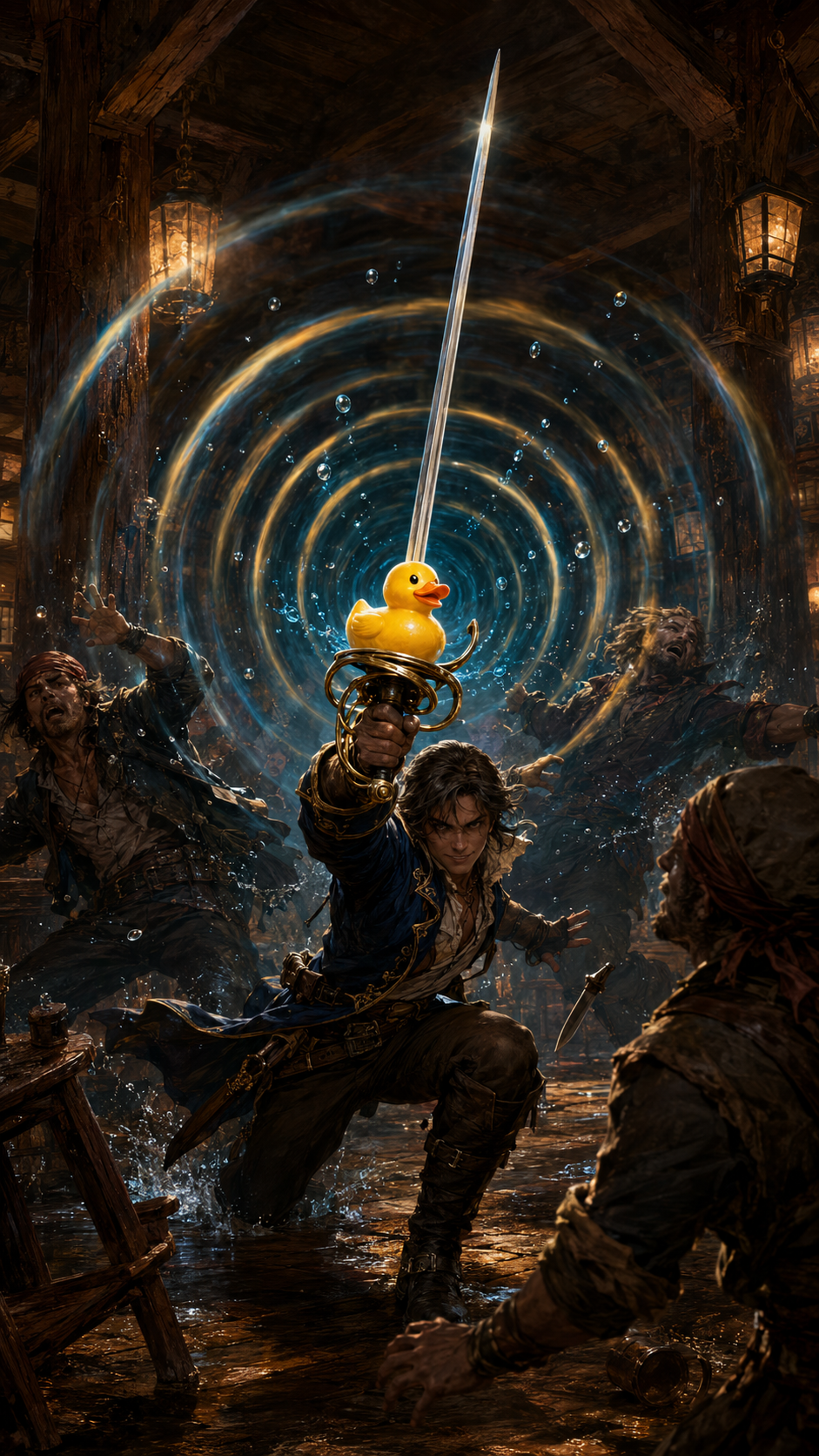
The Rubber Duck Rapier of Aquatic Quacking is a +1 rapier crowned by a bright yellow duck that squeaks whenever the blade hits. Once per turn after a successful attack, the wielder can unleash a magical quack. Chosen hostile creatures within 10 feet of the target that can hear it must succeed on a DC 15 Wisdom saving throw or suffer disadvantage on their next attack roll made before the start of the wielder's next turn. It is best used by a mobile duelist who can stab the centre of an enemy cluster, spoil several attacks, and retreat before anyone decides to strangle the duck.
There are weapons made to inspire terror. There are weapons made to command respect. Then there is a slender silver rapier with a yellow rubber duck mounted above the guard.
The duck does not glow. It does not breathe fire. It simply watches the battle with the vacant confidence of a creature that has never paid taxes, failed a death save, or questioned its place in the universe.
Then the rapier strikes.
QUACK.
The sound crashes through the melee with impossible force. Bandits glance sideways. Cultists lose their place in the chant. A charging ogre briefly wonders whether somebody has prepared a bath. That moment of confusion is the opening the party needs.
The Rubber Duck Rapier of Aquatic Quacking is an original Mike's Tavern D&D 5e magic weapon. Its humour is immediate, but its tactical purpose is serious: strike accurately, disrupt nearby attackers, and use finesse mobility to place the quack where it will protect the most allies.
Magic Weapon Statistics
Rubber Duck Rapier of Aquatic Quacking
Rubber Duck Rapier of Aquatic Quacking
Weapon (rapier), rare (requires attunement)
You gain a +1 bonus to attack and damage rolls made with this magic rapier. The rubber duck fixed above its guard emits an ordinary squeak whenever the weapon hits a creature or object.
Aquatic Quacking. Once per turn, immediately after you hit a creature with this weapon, you can cause the duck to release a magically amplified quack. Choose any number of hostile creatures within 10 feet of the target. Each chosen creature that can hear the quack must make a DC 15 Wisdom saving throw.
On a failed save, a creature has disadvantage on the next attack roll it makes before the start of your next turn. On a successful save, it is unaffected. The effect ends immediately after the affected creature makes that attack roll, whether the attack hits or misses. It also ends at the start of your next turn if unused.
A deafened creature or a creature otherwise unable to hear the quack is unaffected and makes no saving throw. Immunity to the charmed or frightened condition does not grant immunity because Aquatic Quacking imposes neither condition. Once Aquatic Quacking activates, moving away or becoming unable to hear does not remove the distraction already suffered.
One Squeak, Several Problems
Why Aquatic Quacking Works
The rapier does not add a large damage die. It protects the party by making enemy attacks less reliable. Because the effect can reach several creatures clustered around the target, one successful thrust may spoil a sword swing, a claw attack, and an incoming arrow before the wielder's next turn.
Disadvantage is valuable without becoming full turn denial. A failed enemy can still move, cast a spell, help an ally, or choose an action that does not involve an attack roll. The weapon creates pressure rather than paralysis. That makes it useful to the party without forcing the GM to watch monsters repeatedly lose entire turns.
The target-centred radius rewards intelligent placement. The wielder does not merely attack the easiest enemy. The wielder asks which successful hit would put the most dangerous attackers inside the quack. This is the same tactical principle discussed in why position, timing, and target choice matter more than weapon statistics.
Who Holds the Duck?
Best Wielders
Rogues
A Rogue needs accuracy, mobility, and a finesse weapon. This rapier provides all three parts of the plan. The +1 bonus helps land Sneak Attack, while Cunning Action helps the Rogue reach a valuable quacking position or escape after the sound goes off. Swashbucklers are particularly natural wielders because they already enjoy moving through close combat with theatrical confidence.
Bards
A martial Bard can turn the rapier into part of a broader disruption kit. Bardic Inspiration strengthens allies, spells reshape the field, and Aquatic Quacking weakens the next attacks coming back. The absurd visual also suits a performer who understands that humiliation is sometimes a legitimate school of warfare.
Dexterity Fighters
A Dexterity Fighter has the attacks to make the rapier dependable. Aquatic Quacking activates only once per turn, but every additional strike still benefits from the +1 bonus. Battle Masters can combine the quack with manoeuvres that alter position, improve accuracy, or protect allies.
Melee Rangers
A melee Ranger can use speed and positioning to strike an enemy inside a cluster, distract the group, and then control the approach to the party. The weapon works best when the Ranger treats the battlefield as a hunting ground rather than standing still and trading blows.
Build the Quacking Duelist
Character Guidance
Dexterity should be the wielder's primary ability. It improves attacks, damage, Armor Class in light armour, initiative, and many of the checks a mobile duelist needs. Constitution comes next for anyone planning to stand near enough to enemy groups to quack at them.
The Dueling Fighting Style is the simplest way to raise damage while leaving the other hand available. A shield is excellent when proficiency permits it. A Rogue may prefer an empty hand for climbing, manipulating objects, or looking dramatically offended when somebody criticises the duck.
Features that improve movement or allow safe withdrawal are more valuable than chasing raw damage. The ideal turn is not always the turn with the largest number. Sometimes the ideal turn puts disadvantage on three enemies and leaves the wielder somewhere they cannot easily punish. If ye are unsure how to make those decisions quickly, these habits for players who are not sure what to do on their turn will keep the game moving.
Combat Tactics
Where and When to Quack
Attack the Centre of the Cluster
Aquatic Quacking radiates from the creature struck, not from the wielder. Attack the enemy that places the greatest number of dangerous attackers within 10 feet. The easiest target and the best target may be different creatures.
Quack Before the Enemy Acts
The distraction expires at the start of yer next turn. Use it on enemies that still have attacks coming in the current round. Quacking at creatures that have already acted may still protect against reactions, but it risks wasting the effect when the duration ends.
Choose Every Relevant Enemy
There is no friendly fire unless the wielder wants there to be, because the feature targets chosen hostile creatures. Do not forget an archer standing beside the stabbed guard merely because that archer is not in melee. If it is within 10 feet of the target and can hear, it can save against the quack.
Protect the Vulnerable Ally
Disadvantage matters most when it protects an ally who cannot afford another hit. The wielder may deal less damage than another party member, yet become the reason that party member remains standing. That is the sort of contribution explored in ways to become the backbone of the party.
Do Not Chase the Quack Into Disaster
A cluster of enemies is also a dangerous place to stand. If reaching the ideal target exposes the wielder to six attacks, accept a smaller quack or attack from a safer angle. Overcommitting for a clever trick is still overcommitting.
Finesse, Free Hands, and Silence
Weapon-Specific Considerations
The rapier's finesse property allows Strength or Dexterity for its attack and damage rolls. Most wielders should choose Dexterity because the same score supports initiative, defence, and mobility. A Strength character can use the weapon, but gains less from its natural role.
The rapier is not light. Two-weapon fighting therefore requires a feature or feat that permits the chosen combination. Do not assume the rubber duck makes it weigh less. The duck has contributed nothing to the weapon's engineering and feels no remorse.
Silence creates an important limitation. Creatures inside an area where sound cannot exist cannot hear the magical quack, so they make no saving throw. The ordinary squeak on a hit is also inaudible there. Outside such effects, the quack is loud enough to reach every creature in its stated radius, but not so loud that it alerts an entire dungeon unless the GM decides the surrounding acoustics naturally carry it.
Because the distraction is neither charmed nor frightened, immunity to those conditions offers no defence. This keeps the rapier relevant against disciplined and supernatural enemies while giving deafness and silence clear counterplay.
Behind the Screen
GM Guidance for the Rubber Duck Rapier
This weapon is suitable for characters around levels 5 to 10. Its rare rarity reflects the combination of a +1 bonus and repeatable short-range disruption that may affect several enemies. Attunement prevents the party from passing it between characters merely to spread more quacks through every encounter.
Place it somewhere its absurdity can become part of the story. A stern duelling master may present it as the final test of concentration. A sea hag may keep it as the only object she genuinely treasures. A flooded vault may hold it upright in a marble bath, surrounded by far more ominous weapons that proved less useful.
Roll the Wisdom saves together when several creatures are affected. Mark failures with a yellow token or a tiny duck if ye possess one. Remove each marker after that creature makes its next attack, and clear any remaining markers at the start of the wielder's next turn.
Describe distraction according to the enemy. A veteran flinches at the impossible volume. A beast turns toward the sound. A dignified vampire becomes furious that the duck interrupted its monologue. Good description makes the item part of the world instead of a rule that briefly makes noise.
Most importantly, agree on tone. A weapon like this thrives at a table where players can enjoy a ridiculous object without turning every serious moment into a gag. The best campaigns protect the spotlight, and this guide to players who interrupt every big moment can help keep the duck funny without letting it conquer the entire story.
The Adventure Needs a Table
Find a Table That Welcomes the Quack
A ridiculous weapon becomes legendary when the right group witnesses its finest moment. The Tavern Network helps players discover gaming spaces and communities where those stories can grow. If yer campaign needs somewhere lively enough to celebrate every squeak, compare a quiet tavern with a loud game hall before choosing the party's next home.
Common Mistakes
Five Ways to Muddle the Quack
Triggering Aquatic Quacking on Every Hit
The ordinary duck squeaks whenever the rapier hits. The magical distraction can activate only once per turn.
Measuring From the Wielder
The 10-foot radius is measured from the creature struck. That distinction is the heart of the weapon's positioning game.
Applying Disadvantage to Every Attack
A failed creature has disadvantage only on its next attack roll before the duration ends. After that roll, the distraction is gone.
Treating the Effect as Charmed
The quack imposes no condition. Immunity to charmed or frightened does not stop it, but being unable to hear does.
Forcing Every Enemy to Save
The wielder chooses the hostile creatures affected. Allies are safe, and irrelevant enemies need not slow the table with unnecessary rolls.
The Tavernkeeper's Verdict
A Proper Duelist's Weapon Wearing an Improper Hat
The Rubber Duck Rapier of Aquatic Quacking is memorable because the joke performs a real tactical job. The duck does not merely decorate the hilt. Its quack rewards accuracy, positioning, initiative awareness, and protection of the party.
Give it to a mobile finesse wielder. Strike the centre of enemy groups. Quack before they attack. Then move somewhere safe and let them explain why a bath toy ruined their ambush.
Listen, laddie. Any fool can carry a dignified blade. It takes confidence to save the party with a duck.
Frequently Asked Questions
Questions About the Rubber Duck Rapier of Aquatic Quacking
Need broader help with the Tavern? Visit the main Mike's Tavern FAQ.
It is a +1 magic rapier. Once per turn after a hit, it can force chosen hostile creatures within 10 feet of the target to make a DC 15 Wisdom save. A creature that fails has disadvantage on its next attack roll made before the start of the wielder's next turn.
Yes, provided the wielder chooses it, it can hear, and it is hostile. The struck creature is within 10 feet of itself and therefore qualifies.
No. It applies only to the next attack roll the creature makes before the effect expires. The distraction ends immediately after that roll.
No. Aquatic Quacking does not impose the charmed or frightened condition. A creature is protected only if it cannot hear the sound or succeeds on its Wisdom saving throw.
Rogues are an excellent fit because they already value rapiers, accuracy, and mobility. Bards, Dexterity Fighters, and melee Rangers can also position the quack effectively.
Potentially, because the limit is once per turn rather than once per round. A hit made on another creature's turn, such as with a reaction, can activate it again. Each distraction still expires at the start of the wielder's next turn.
It is best suited to levels 5 to 10. The GM should also consider the number of enemy attackers commonly present and the party's existing magic items.
Not while the weapon remains magical. Every attempt causes the duck to reappear above the guard with a disappointed squeak. This has no additional mechanical effect, but the duck remembers.
