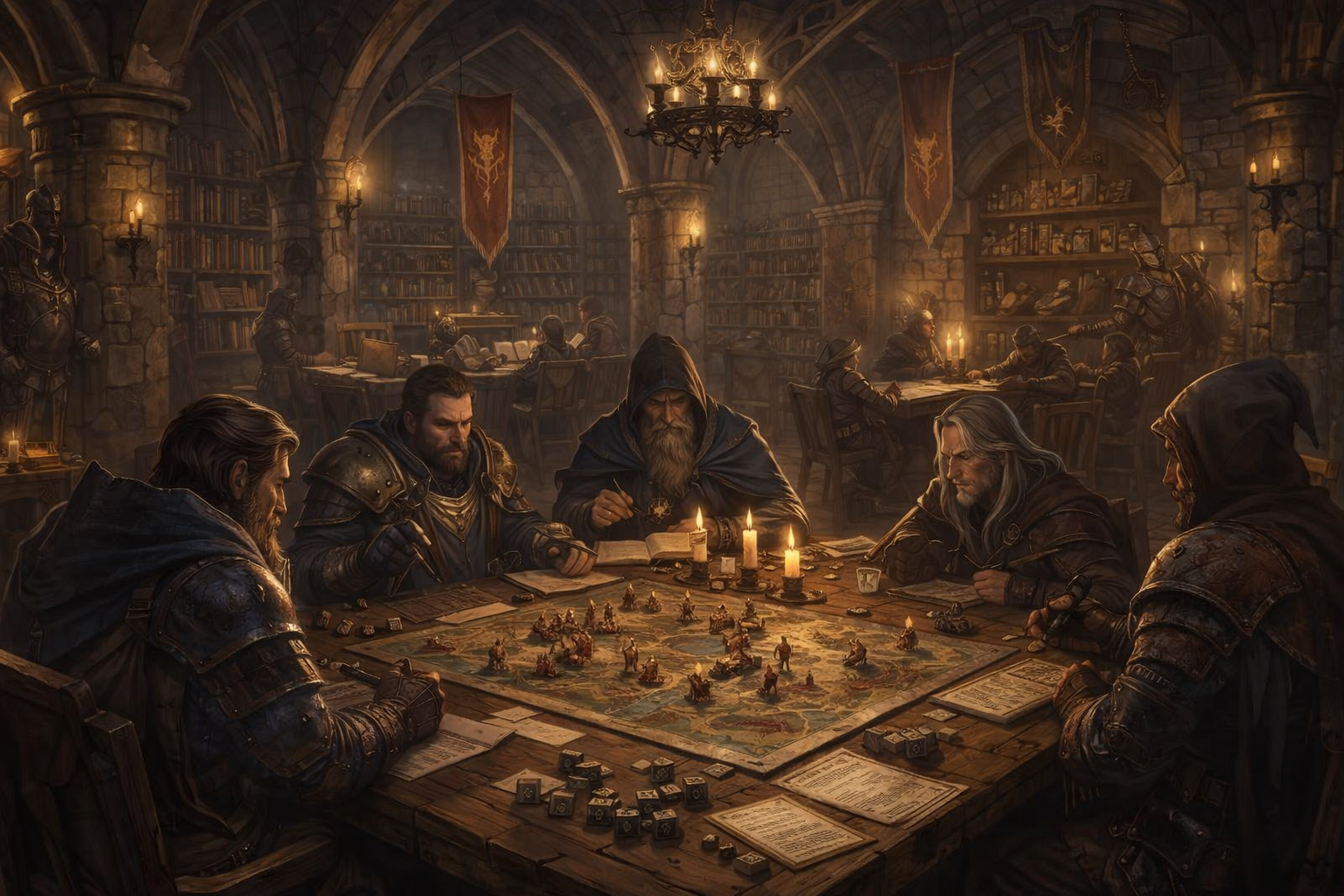
5 Ways to Leave a D&D Group Without Causing Drama

By Grabgar’s hammer, there are few things more awkward than realizing the adventuring party is not the problem, the table is.
Not the goblins. Not the bad dice. Not the wizard who keeps forgetting what spell slots are. The table itself.
Maybe the tone has changed. Maybe one player keeps making everyone uncomfortable. Maybe the GM stopped listening months ago. Maybe every session feels like walking into a room where everyone is pretending the fire is not spreading across the curtains.
And now ya know the truth.
Ya need to leave.
Listen, lad. Leaving a D&D group without causing drama does not mean leaving without anyone feeling anything. That is a fantasy fit for bards, fools, and milk-drinkers who think every hard conversation can be solved with one perfect sentence.
Someone may feel hurt. Someone may feel rejected. Someone may wonder if they were part of the reason. Someone may get defensive even if ya handle it well.
The goal is not to erase every bad feeling.
The goal is to leave cleanly, honestly, and with as little unnecessary damage as possible.
If ya need more table culture guidance after this, the Tavern has plenty of hard-earned lessons in Tavern Etiquette, but for now, here are five ways to leave a D&D group without turning the whole thing into a tavern brawl.
1. Decide Whether You Are Leaving the Game or Leaving the People
Before ya say a word, get honest about what is actually happening.
Are ya leaving because the campaign no longer fits yer schedule? Are ya leaving because the game style is not fun anymore? Are ya leaving because one person has made the table miserable? Are ya leaving because the group has slowly become unhealthy and nobody wants to admit it?
Those are not the same problem.
If ya pretend it is “just scheduling” when the truth is “I no longer feel respected here,” ya may avoid one uncomfortable conversation today, but ya create confusion later. The group may keep trying to reschedule around ya. The GM may think a different campaign would bring ya back. The non-problem players may feel blindsided when they realize there was a deeper issue.
This does not mean ya need to give everyone a full emotional autopsy.
It means ya should know the truth before ya choose yer words.
A clean exit begins with a clean diagnosis.
If this is mainly about table health, ya may want to read Good Tables, Bad Tables Part 4: Leaving a Table Without Burning Bridges, because leaving well is often less about the final message and more about understanding what kind of table ya are walking away from.
Ask yourself this before ya act: “Am I leaving because I am busy, bored, uncomfortable, exhausted, or done?”
Each answer requires a different exit.
2. Tell the Right People Before You Disappear
Here is where many players make a mess.
They get uncomfortable, so they vanish slowly. They skip one session. Then another. Then they reply late. Then they stop replying at all. Eventually, everyone knows they are gone, but nobody knows what actually happened.
That kind of exit feels quiet to the person leaving, but it feels disrespectful to the people left behind.
Do not slink away like a goblin thief with a stolen ham.
If there are non-problem players at the table, and especially if there are friends there, tell them what ya are doing before ya fade out. Not in a dramatic “gather round, I must announce my suffering” way. Just a simple, honest message.
Something like:
“I wanted to let you know before I step away from the campaign. I do not want this to feel sudden or disrespectful. The game has not been working for me for a while, and I think it is better for me to leave cleanly rather than keep showing up half-heartedly.”
That does two things.
First, it reduces confusion. Second, it prevents unnecessary resentment from people who might otherwise think ya abandoned them without a word.
Now, if someone at the table is genuinely unsafe, cruel, manipulative, or likely to retaliate, then ya do not owe that person a private emotional explanation. But good players who treated ya well deserve clarity if ya can safely give it.
That is the difference between disappearing and departing.
One creates rumors. The other creates closure.
3. Keep the Explanation Honest, But Not Overloaded
When ya leave a D&D group, the temptation is to explain everything.
Every bad session. Every ignored boundary. Every passive-aggressive remark. Every time someone made the same problem worse and everyone laughed it off. Every tiny frustration that built into a mountain.
By Margann’s crusty beard, resist that urge.
A leaving message is not the place to litigate the entire campaign.
If ya unload everything at once, the group will stop hearing the truth and start defending themselves. The GM may argue. The problem player may twist yer words. The quieter players may feel trapped in the middle. What could have been a clean exit becomes a courtroom with dice bags.
Keep it short, true, and calm.
Try this:
“I have realized this campaign is no longer a good fit for me. I appreciate the time we spent playing, but I think it is better for me to step away rather than continue while I am not enjoying the table dynamic.”
That is enough.
If the issue is more specific, say it without turning it into an attack:
“I have been uncomfortable with the way conflict is handled at the table, and I do not think I am the right fit for the group anymore.”
Notice what that does. It names the issue without demanding a trial. It gives the group information without trying to force them to agree.
That matters because leaving well is not about winning the final argument. It is about exiting without throwing oil on the fire.
For deeper table communication issues, When No One Ever Says What’s Actually Bothering Them is worth keeping close, because many D&D groups do not collapse from one big fight. They collapse from months of silence.
A Clean Exit Is Still an Exit
If this article is hitting a little close to the ribs, do not ignore that. Mike’s Tavern is built for players and GMs trying to understand why good games sour, why groups break down, and how to leave or repair the table with some dignity still intact. Start with About Mike’s Tavern if ya want the wider map of what the Tavern is here to do.

Looking for a New Table, Lad?
Finding the right tabletop group can feel harder than surviving a goblin ambush armed with a big stick and a bucket for a helmet. The Tavern Network might give you the helping hand you need!
4. Accept That Some Resentment Is Inevitable
This is the part polite advice often avoids.
Leaving a D&D group may cause resentment.
Even if ya are kind. Even if ya are honest. Even if ya give notice. Even if ya say all the right things.
Someone may still take it personally.
The GM may feel rejected. A friend may feel abandoned. A problem player may get angry because yer exit quietly confirms what others have been avoiding. Someone may decide ya are “making drama” simply because ya stopped tolerating something.
That does not mean ya failed.
Too many players think a graceful exit means everyone smiles, waves, and says, “We completely understand.” Sometimes that happens. Lovely when it does. But sometimes the healthiest exit still leaves bruises.
The question is not, “Can I leave without anyone feeling bad?”
The question is, “Can I leave without adding unnecessary harm?”
That means no public humiliation. No vague social media posts. No secret campaign against the GM. No dragging neutral players into private alliances. No dramatic final session where ya sabotage the game just to prove a point.
Yer job is not to control every reaction.
Yer job is to act in a way ya can respect later.
If someone resents ya because ya left respectfully, that resentment belongs to them. If they resent ya because ya were cruel, careless, or cowardly, that part belongs to ya.
A mature exit knows the difference.
5. Leave the Door Clear, Not Necessarily Open
Some groups deserve a warm goodbye.
Some deserve a clean goodbye.
Not every exit needs an invitation to reconnect. Not every table needs a “maybe someday.” If ya know ya do not want to return, do not offer false hope just to soften the moment.
Instead, leave the door clear.
That means everyone understands what is happening.
A clear ending might sound like this:
“I am going to step away from the campaign permanently. I wish the group well, but I do not want to leave this uncertain or keep everyone waiting on me.”
That is kind. That is firm. That is clean.
If ya are open to future games with some people, separate that from the group exit:
“I would still be happy to play with some of you again in a different setup, but I need to step away from this campaign.”
This matters because D&D groups are social webs. Leaving the campaign does not always mean leaving every friendship. But if ya blur the lines, people start guessing. Guessing creates resentment. Resentment creates stories. Stories create drama.
Say what is ending.
Say what is not ending, if anything.
Then stop pulling on the thread.
If ya are leaving because the table itself has become unhealthy, Why Some Adventurers Can Fight Dragons But Not Feelings pairs well with this, because plenty of players can handle tactical danger while falling apart the moment real emotions enter the room.
The Slow-Motion Breakdown Nobody Wants to Name
Picture the table.
One player is already checked out. The GM keeps pretending everything is fine. Another player keeps saying, “No worries,” but their face says otherwise. Sessions still happen, but the soul has leaked out of them.
Then one person finally leaves.
If they vanish, everyone fills the silence with guesses.
If they explode, everyone remembers the explosion more than the problem.
If they explain too much, everyone starts choosing sides.
But if they leave clearly, calmly, and with respect for the people who deserve it, the group still may hurt, but it has less poison to swallow.
That is the real goal.
Not a perfect exit.
A cleaner wound.
Final Thought From the Tavern
Leaving a D&D group without drama is not about being so gentle that nobody feels the cut.
Sometimes the cut is real.
Sometimes ya are removing yerself from a table that has been draining ya for months. Sometimes ya are disappointing good people because staying would be dishonest. Sometimes ya are making the first honest move anyone has made in the whole blasted campaign.
So do it properly.
Know why ya are leaving. Tell the right people. Keep the explanation honest but contained. Accept that some resentment may happen. Leave the door clear.
And do not mistake discomfort for failure.
By Durven’s last tankard, a clean goodbye is still a goodbye.
Before Ya Walk Out the Tavern Door
If yer table problems go beyond one campaign, keep reading through Mike’s Tavern before ya make the same mistake at the next table. Start with The Strongest Character at the Table Is the One Who Listens, then check the FAQ or contact the Tavern if ya need to point a question toward the bar.
Reflection Questions
Are ya leaving because of one bad session, or because the same problem keeps repeating?
Who at the table deserves to hear from ya before ya step away?
Are ya trying to avoid drama, or are ya trying to avoid all discomfort?
What is the shortest honest explanation ya can give without lying?
If someone resents yer exit, will it be because ya handled it badly, or because they did not like the truth?
More Tavern Goodness for you