
5 Ways to Fix a D&D Game Before It Collapses
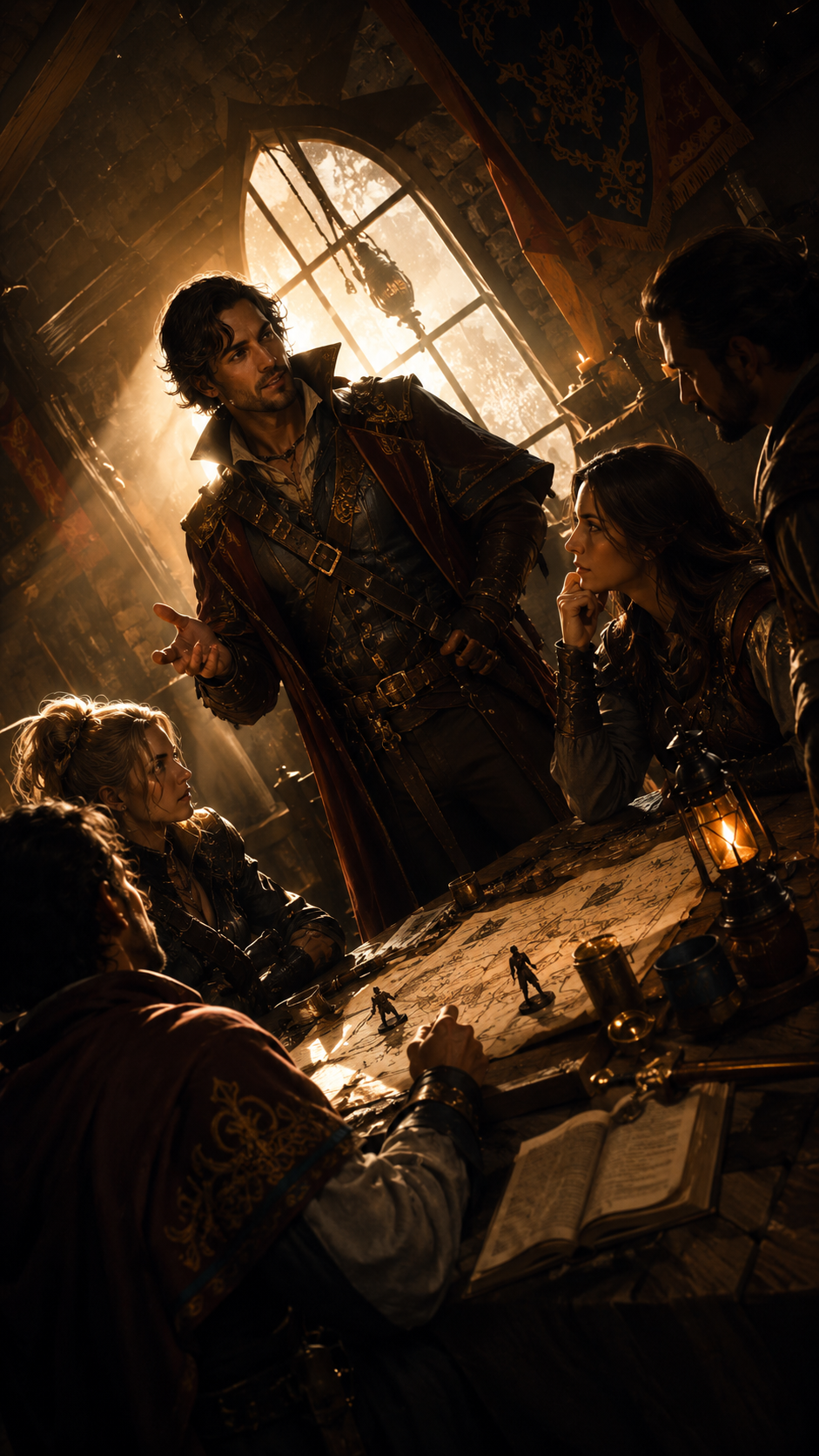
By Grabgar’s hammer, a D&D game rarely collapses all at once.
It does not usually end with one grand explosion, one shouted insult, one dramatic walkout, and one bard weeping into a soup bowl.
No, lad. Most campaigns die quieter than that.
First, someone starts replying late. Then one player misses a session. Then the GM stops preparing as much. Then the jokes feel thinner. Then the group chat goes silent unless someone is asking, “Are we still playing this week?”
And everyone knows something is wrong.
Nobody says it.
That is how a campaign collapses.
Not because the dragon was too strong. Not because the dungeon was too long. Not because the cleric forgot Healing Word again, though by me beard, that does not help.
A D&D game collapses when the table keeps pretending small problems are not becoming big ones.
So if yer campaign is wobbling, do not wait for the final crash. Here are five ways to fix a D&D game before it collapses.
1. Name the Problem Before the Table Starts Guessing
The first step is not fixing everything.
The first step is saying what everyone already feels.
When a campaign starts going wrong, the group often drifts into silent interpretation. One player thinks the GM is bored. Another thinks the players are lazy. The GM thinks everyone has lost interest. Someone else thinks one specific player is the problem, but nobody wants to say it.
That silence becomes a monster of its own.
A good GM does not need to deliver a speech. A simple message can work:
“I feel like the campaign has been losing energy lately. Before we keep pushing forward, I want to check what is working, what is not working, and whether we need to adjust anything.”
That sentence does something powerful. It turns private tension into a shared table issue.
It also avoids blame.
Do not begin with, “Nobody seems invested anymore.” That sounds like an accusation. Do not begin with, “I work hard and nobody appreciates it.” That may be true, but it puts the table on trial before the conversation even begins.
Start with the pattern.
“The campaign feels like it is losing energy.”
That is clear. That is calm. That is fixable.
If you need help understanding quiet table signals before they become obvious problems, read Running Your First Game: Reading the Table Without Anyone Saying a Word. Many collapsing campaigns show their wounds long before anyone admits pain.
2. Separate Burnout From Bad Table Behavior
Not every struggling campaign is toxic.
Sometimes people are tired. Sometimes work got heavier. Sometimes the GM is overwhelmed. Sometimes the players still love the campaign, but the session length, pacing, or emotional weight has become too much.
That is burnout.
Bad table behavior is different.
Bad table behavior looks like repeated disrespect, ignored boundaries, one player dominating everyone, jokes that make people uncomfortable, rules arguments every session, or a GM who punishes honest feedback.
If you confuse burnout with bad behavior, you will prescribe the wrong cure.
Burnout needs rest, simplification, shorter sessions, lighter prep, or a temporary pause.
Bad behavior needs boundaries, accountability, and sometimes removal.
A tired GM does not need a lecture about leadership. They may need a shorter arc, fewer NPCs, simpler combat, and permission to stop building a whole kingdom every week.
A disruptive player does not need “more engagement.” They need to stop making the table worse.
So before you fix the campaign, ask this:
“Are we tired, or are we hurting each other?”
That answer changes everything.
For GMs who are trying to hold the table together without overcorrecting, Running Your First Game: Saying No Without Killing Creativity is a useful companion. Often, collapse begins when the GM avoids necessary limits for too long.
3. Shrink the Campaign Until It Can Breathe Again
One of the fastest ways to save a collapsing D&D game is to make it smaller.
Not worse. Not weaker. Smaller.
When campaigns begin to fall apart, many GMs make the mistake of adding more. Bigger villains. Larger mysteries. More factions. A dramatic war. A prophecy. A betrayal. A second moon turning red over the cursed capital.
By Koldron’s flaming apron, stop piling furniture into a burning room.
If the table is already strained, complexity becomes weight.
Instead, shrink the campaign into something the group can actually handle.
Move from world-ending stakes to one clear local problem. Move from six open questlines to one obvious next step. Move from long political scenes to a clean mission with a beginning, middle, and end. Move from sprawling combat to focused encounters with clear stakes.
The campaign may not need a grand reinvention.
It may need one simple session where the party knows what they are doing and why it matters.
Try this:
“For the next two sessions, I am going to tighten the focus. One town, one problem, one clear goal. After that, we can decide whether to expand again.”
That gives the group relief.
Players who were overwhelmed suddenly have direction. The GM gets a manageable prep load. The campaign gets a chance to rebuild momentum instead of drowning in its own ambition.
A collapsing campaign often does not need more lore.
It needs oxygen.
The Table Repair Checkpoint
If yer campaign still has life in it, do not wait until everyone is already bitter. Mike’s Tavern exists for exactly these moments, when the table is not dead yet, but the bones are starting to creak. For the broader purpose behind the Tavern, start with About Mike’s Tavern, then come back before the next session with one repair step ready.
Looking for a New Table, Lad?
Finding the right tabletop group can feel harder than surviving a goblin ambush armed with a big stick and a bucket for a helmet. The Tavern Network might give you the helping hand you need!
4. Ask for Specific Feedback, Not General Feelings
A common GM mistake is asking:
“Is everyone still having fun?”
That question is too vague.
Most players will say yes because they do not want to hurt anyone. Some will say “yeah, all good” even while mentally checking out of the campaign. Others may not know how to explain what feels wrong.
Better questions get better answers.
Ask things like:
“What part of the campaign feels slow right now?”
“Are there any scenes you wish we had less of?”
“Do you feel like your character has a clear reason to stay with the party?”
“Are the sessions too long, too heavy, too combat-focused, or too scattered?”
“What is one thing that would make next session easier to enjoy?”
These questions are useful because they give players handles.
A player may not know how to say, “I feel emotionally disconnected from the campaign’s central premise.” But they can probably say, “I do not really know why my character cares about the noble family anymore.”
That is actionable.
The GM can work with that.
If the table has frozen into politeness and nobody wants to be the first to speak, Running Your First Game: Keeping the Game Moving When Players Freeze can help. Silence at the table is not always agreement. Sometimes it is fear, confusion, or fatigue.
5. Make One Visible Change Immediately
After the conversation, do not vanish into “I will think about it.”
Make one visible change at the next session.
Just one.
If players said combat is dragging, make the next fight shorter and sharper. If they said roleplay feels directionless, open with a clear decision point. If they said one player talks over everyone, set a turn-taking structure in social scenes. If they said scheduling is draining them, shorten the session.
The change does not need to fix everything.
It needs to prove that the conversation mattered.
That proof is what rebuilds trust.
Many campaigns collapse because players eventually learn that feedback changes nothing. They speak once, nothing happens. They speak twice, nothing happens. Then they stop speaking. After that, they stop caring.
So when the table gives you a signal, respond with action.
Say this at the start of the next game:
“Last time, a few of you mentioned that pacing has felt slow. Tonight I am going to keep the session tighter, with one clear objective and fewer side scenes. Afterward, we can see if that helped.”
That is leadership.
Not perfection. Not control. Leadership.
It shows the table that the campaign is not drifting anymore.
If your wider problem is that everyone keeps adapting around issues instead of addressing them, When Everyone Adapts to Issues Instead of Addressing Them fits this exact pattern. A table can look peaceful while quietly training everyone to tolerate the wrong things.
The Slow Collapse in Motion
Picture a campaign three months into trouble.
The GM still preps, but with less heart. The players still arrive, but with less urgency. One person scrolls more often. Another keeps joking about how confusing the plot is. Someone misses a session and nobody really asks what their character was doing.
The game is still alive.
But it is no longer being fed.
Now imagine the GM says, calmly:
“I think we are losing the thread. I want to tighten the next few sessions and check what everyone still wants from this campaign.”
That one moment can change the room.
Not because it magically solves everything. It does not.
But it tells the table that the drift has been seen.
And sometimes being seen is enough to stop the fall.
Final Thought From the Tavern
A D&D campaign is not saved by pretending everything is fine.
It is saved by noticing the crack before the wall comes down.
Name the problem. Separate burnout from bad behavior. Shrink the campaign until it can breathe. Ask questions people can actually answer. Make one visible change immediately.
That is how you stop a campaign from collapsing.
Not with panic.
Not with blame.
Not with a desperate twelve-page lore document nobody asked for.
With clarity, humility, and one firm hand on the table before the whole blasted thing tips over.
By Durven’s last tankard, if the game can still be saved, save it while the chairs are still warm.
More Help Before the Next Session
If yer D&D table is already creaking, do not wait for the final session to learn what went wrong. Read The Strongest Character at the Table Is the One Who Listens, check the Mike’s Tavern FAQ, or contact the Tavern if ya need to point a question toward the bar before the next game night.
Reflection Questions
What is the first sign that your campaign is losing energy?
Are your players tired, or is someone’s behavior making the table worse?
What part of the campaign could be made smaller immediately?
What specific question would help your players answer honestly?
What visible change can you make next session so the table knows the conversation mattered?
