
The Definitive Greatsword Guide, Part 5: Campaigns Where the Greatsword Dominates
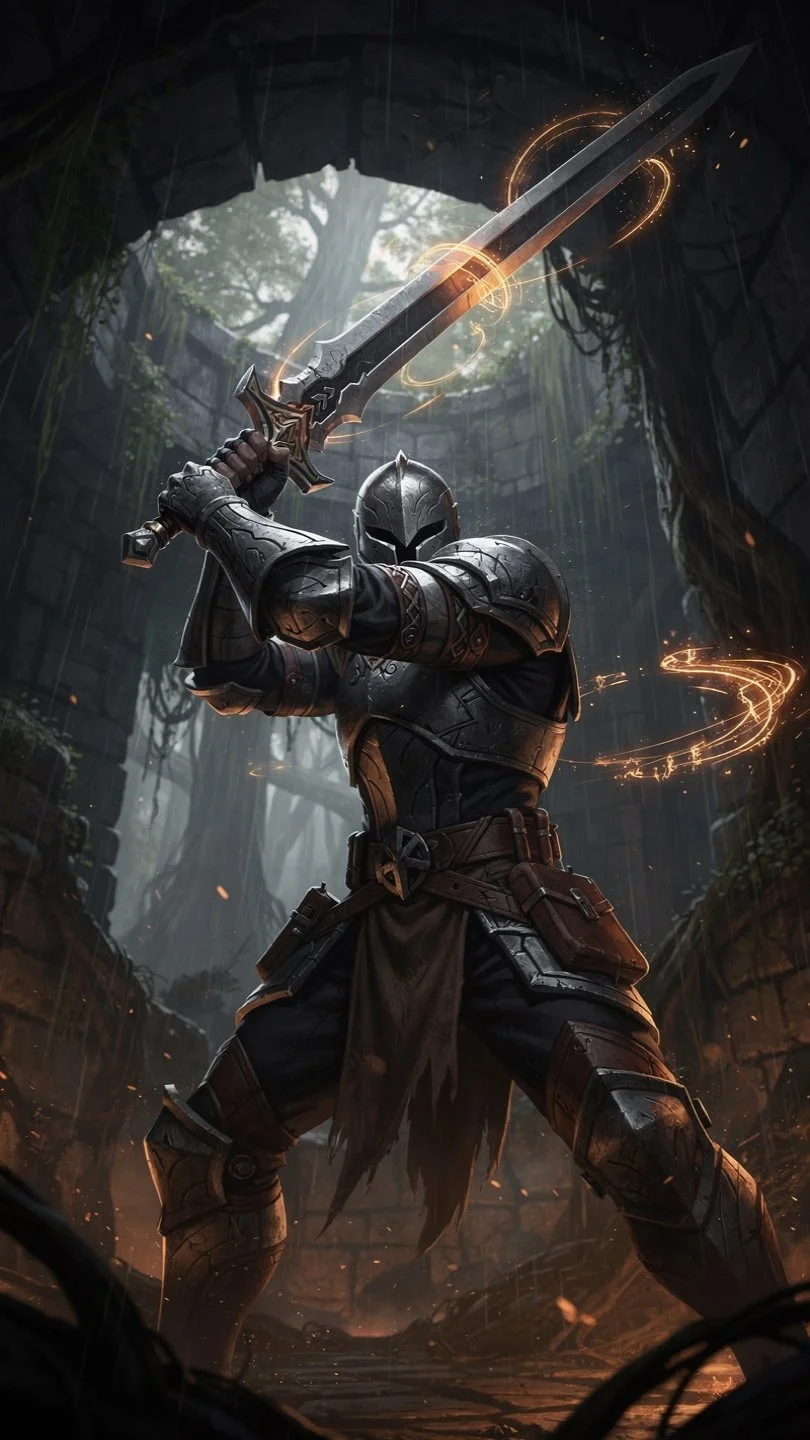
By Grabgar’s hammer, a greatsword does not shine everywhere.
Put a greatsword warrior in an open field against flying archers, teleporting spellcasters, and smug little cowards hiding behind magical nonsense, and ya may watch that poor lad spend half the fight jogging angrily across the map.
But put that same warrior in a dungeon corridor?
Put him at the mouth of a cave?
Put him on a bridge, in a tomb, inside a fortress, or face-to-face with some hulking brute that thinks muscle is enough?
Now wer’ talkin’, lad!
The greatsword is not just a weapon. It is a campaign-shape weapon. It gets better or worse depending on the kind of adventures the Game Master runs. Some campaigns give greatsword users constant chances to stand in the right place, hit the right target, and make enemies regret walking forward. Other campaigns punish them with distance, flying enemies, social intrigue, magical trickery, and battlefields too open for a melee bruiser to control.
So before ya build a greatsword character, ask this:
“What kind of campaign am I actually walking into?”
Because in the right campaign, the greatsword does not merely work.
It dominates.
Dungeon Crawls Love Greatswords
The greatsword is at home in a dungeon.
Dungeons create walls, doors, corners, narrow paths, and ugly little rooms where enemies cannot always spread out. That is good news for a greatsword user because melee pressure becomes much easier to apply when the battlefield has limits.
In a wide-open field, enemies can scatter.
In a dungeon hallway, they must come through someone.
That someone can be ya.
A greatsword fighter holding a corridor can make the whole party safer. A barbarian standing in a doorway can force monsters to fight one at a time. A paladin with a greatsword can become the line between the undead and the frightened wizard trying to keep concentration.
That is where the weapon feels powerful. Not because it magically solves every problem, but because the environment gives it a job.
Hold the line.
Break the front.
Finish wounded enemies.
Punish anything that pushes too close.
Dungeon campaigns also tend to create repeated combat pressure. Players do not only need one impressive hit. They need a weapon that can stay relevant room after room. This is where a reliable greatsword build starts to feel excellent, especially when paired with smart positioning and good party support.
For more on why positioning matters more than weapon worship, read Why Position, Timing, and Target Choice Matter More Than Weapon Stats.
Fortress Assaults and Siege Adventures
Greatswords also shine in fortress campaigns.
Castles, keeps, barracks, temple strongholds, ruined towers, military outposts, and enemy lairs often create structured combat. Gates, stairs, bridges, walls, courtyards, and chambers all give the greatsword user chances to become a serious threat.
A greatsword character thrives when enemies must occupy space to fight.
That is common in siege-style adventures. Guards hold lines. Brutes block gates. Armored officers command from behind troops. Monsters defend important doors. The battlefield has objectives and physical pressure.
This is where heavy melee characters feel meaningful.
A greatsword can help break a defensive line. It can punish shield-bearing enemies. It can stand beside another martial character and create a brutal point of contact. It can force weaker enemies to rethink rushing the party.
In D&D, this kind of campaign rewards Fighters, Barbarians, and Paladins who can keep pressure on important targets. In Pathfinder 2e, it rewards Fighters especially because accuracy and tactical positioning matter so much. A greatsword user who understands movement and timing can control the pace of a room.
The important thing is not only damage.
It is presence.
In a fortress fight, the greatsword character should ask, “Where does the enemy line break if I stand there?”
That is the good stuff.
Monster-Hunting Campaigns
Greatswords feel wonderful in monster-hunting campaigns.
These are campaigns where the party tracks dangerous creatures, studies weaknesses, prepares traps, and finally confronts something big enough to make everyone nervous.
A werewolf in a ruined chapel.
A troll under a bridge.
A fiend in an abandoned shrine.
A dragon’s servant in a burned village.
A mutated beast in the swamp.
This kind of campaign gives the greatsword its favorite emotional stage: the direct confrontation.
Monster-hunting adventures often build toward a moment where someone must stand close to the threat. Someone must hold its attention. Someone must strike when the creature is exposed. Someone must stop the monster from reaching the fragile party members.
That is greatsword work.
The weapon feels especially satisfying when the enemy is large, physical, and dangerous. A greatsword does not feel wasted against a hulking monster. It feels appropriate. The fantasy and mechanics shake hands.
But do not become stupid, lad.
Monster-hunting campaigns also punish careless melee play. Big monsters may grab, knock prone, swallow, poison, frighten, fly, burrow, or smash multiple targets at once. A greatsword user still needs patience. Wait for openings. Coordinate with the party. Let casters and ranged allies weaken or control the monster when needed.
The greatsword dominates these campaigns when it becomes the finishing pressure, not when the wielder charges ahead like a drunk bull in plate armor.
Undead and Fiend Campaigns
A greatsword can feel especially dramatic in undead and fiend-heavy campaigns.
Part of this is mechanical. These campaigns often involve tough enemies, dangerous melee threats, and enemies that must be stopped before they overwhelm the party. A strong frontliner with a heavy blade can be extremely useful.
But part of it is pure story.
A paladin raising a greatsword against undead?
Beautiful.
A fighter cutting through skeletal guards in a crypt?
Classic.
A barbarian holding a tunnel against ghouls while the cleric turns the tide?
That is tavern-story material.
Greatswords carry moral weight well. They look like weapons of judgment, defiance, and last stands. In horror-leaning campaigns, that matters. The weapon gives players a sense of courage when the adventure is trying to make everyone feel small.
The best greatsword characters in these campaigns are not merely damage dealers. They are morale anchors. They stand where everyone else is afraid to stand.
That does not mean they should ignore fear, curses, conditions, or supernatural tricks. Undead and fiends often attack more than hit points. They drain, frighten, charm, corrupt, restrain, and punish poor saves.
So build wisely. Support the party. Do not assume the big sword solves spiritual horror by itself.
Still, when the campaign is full of tombs, demons, graveyards, cursed knights, and things crawling out of black stone doors, the greatsword feels right.
By Margann’s crusty beard, sometimes style matters because style helps the table believe.
The Campaign Fit Test
Before ya commit to a greatsword character, ask the Game Master what kind of campaign they are running.
Not for spoilers. For fit.
Ask whether the campaign has dungeons, wilderness travel, city intrigue, open battlefields, undead, monsters, boss fights, or lots of flying enemies. A greatsword character can survive many campaign types, but it dominates when the adventure gives melee pressure a place to matter.
If ya want more help understanding what makes a weapon useful beyond raw stats, read The Overlooked Ways to Make Every Weapon Hit Harder in Combat.
Low-Magic and Gritty Campaigns
Greatswords can be excellent in low-magic campaigns.
When magic is rare, martial presence becomes more important. A strong weapon, good armor, smart positioning, and reliable physical threat can carry more weight when every problem is not solved by teleportation, flight, scrying, or battlefield-altering spells.
In gritty campaigns, the greatsword feels grounded. It is steel, strength, training, and nerve. That fits stories about mercenary companies, border wars, monster-infested roads, ruined kingdoms, and desperate survival.
These campaigns often reward practical fighters.
Can ya hold the road?
Can ya protect the supplies?
Can ya survive the ambush?
Can ya stand in front when the wolves come out of the trees?
A greatsword user can become the party’s visible shield even without using an actual shield. The threat of the weapon changes how enemies approach. Bandits, beasts, guards, and raiders cannot simply ignore the warrior with the huge blade.
However, low-magic campaigns may also make healing and recovery harder. That means greatsword characters must avoid reckless damage trading. Without easy magical recovery, every wound matters more.
So the greatsword dominates when the player combines courage with discipline.
Not when they treat their hit points like tavern coins.
Campaigns With Strong Front Lines
The greatsword is better when the party supports it.
This is one of the most overlooked truths in both D&D and Pathfinder.
A greatsword character shines in campaigns where the party has a real front line, battlefield support, or teamwork habits. If the rogue flanks, the cleric buffs, the wizard controls, and the archer removes threats at range, the greatsword user gets better.
This is especially true in Pathfinder 2e, where teamwork, conditions, and positioning are central to combat performance. A greatsword Fighter or Barbarian becomes much more dangerous when allies help create off-guard targets, frightened enemies, and favorable positioning.
In D&D, the same idea applies through advantage, control spells, buffs, forced movement, and smart party tactics.
A greatsword is not a solo solution.
It is a pressure point.
The party creates the opening. The greatsword punishes it.
This is why greatsword characters work best at tables where players pay attention to each other. If everyone runs in separate directions chasing personal glory, the greatsword user may still deal damage, but the party will feel messy and fragile.
Mike has barked about this kind of table problem before in Why Power Builds Fail When the Party Falls Apart. A powerful character is much stronger when the party is still a party.
Boss-Fight Heavy Campaigns
Greatswords feel good in campaigns with memorable boss fights.
A boss fight gives the weapon what it loves: a meaningful target.
Not every greatsword build wants to waste its biggest moments on weak enemies. Heavy weapon characters often feel best when the campaign includes dangerous opponents who deserve the big swing.
The vampire lord.
The armored warlord.
The cursed champion.
The giant.
The demon knight.
The beast that has been stalking the party for six sessions.
These enemies create dramatic focus. The greatsword user has a job: reach the threat, survive the answer, and make every hit count.
In D&D, this is where Paladins with greatswords can feel especially satisfying because they can turn key hits into dramatic burst moments. Fighters bring steady pressure. Barbarians bring terrifying momentum.
In Pathfinder 2e, Fighters benefit from accuracy, Barbarians from impact, Champions from protective presence, and Magus characters from carefully timed magical strikes.
But boss-heavy campaigns require discipline. Not every boss should be rushed immediately. Some bosses have minions, terrain, phases, hazards, and tricks. The greatsword user must help solve the whole fight, not just tunnel-vision the biggest enemy.
The best question is not, “Can I hit the boss?”
The best question is, “What must happen before my hit matters most?”
That is how ya turn a big weapon into a decisive weapon.
Military Campaigns and War Stories
Greatswords fit naturally into war campaigns.
Battlefields, patrols, enemy officers, supply raids, shield walls, war camps, fortifications, and desperate charges all create places where a heavy melee character can feel important.
In these campaigns, the greatsword is not just a personal weapon. It becomes part of the character’s identity as a soldier, champion, bodyguard, mercenary, knight, exile, or veteran.
The weapon also works well in stories where reputation matters. A warrior known for carrying a massive blade becomes recognizable. Enemies remember them. Allies rally near them. Commanders assign them dangerous work.
That kind of campaign makes the greatsword feel larger than its damage dice.
It becomes a symbol.
However, war campaigns may also include archers, cavalry, siege weapons, scouts, ambushes, and open-field problems. That means greatsword users need allies and backup options. A heavy blade dominates when the fight closes. It does not solve every distant threat.
This is where practical play matters. Carry javelins, backup weapons, or whatever yer system supports. Work with ranged allies. Use cover. Do not sprint across open ground unless ya enjoy becoming a training target.
A greatsword in war is terrifying once it reaches the line.
Getting there is part of the job.
Campaigns With Clear Moral Stakes
This one sounds less mechanical, but it matters.
Greatswords dominate emotionally in campaigns with clear moral stakes.
Protect the village.
Stop the necromancer.
Defend the bridge.
Break the tyrant’s champion.
Stand between the innocent and the monster.
The weapon carries those moments well. It gives the character physical presence when the story asks for conviction. A dagger can be heroic. A bow can be heroic. A spell can be heroic. But a greatsword has a certain public drama to it. It looks like someone choosing to stand openly against danger.
That makes it powerful in heroic fantasy campaigns.
The greatsword player gets to embody defiance.
And when the mechanics support that image, the character can become unforgettable. This connects strongly with the lesson in Characters Who Aren’t Optimized But Are Unforgettable. Sometimes the weapon matters because it tells the table who the character is before they speak.
A greatsword says, “I will meet this directly.”
In the right story, that is priceless.
Campaigns Where Greatswords Feel Less Dominant
To understand where greatswords dominate, ya must also understand where they do not.
Heavy intrigue campaigns may leave the greatsword sitting politely at the character’s back while social skills, stealth, investigation, and restraint do most of the work.
Ocean campaigns can create awkward spaces, shipboard movement problems, swimming issues, and ranged threats.
Flying-enemy campaigns can frustrate melee characters unless the party has tools to ground enemies or close distance.
Open desert, plains, or mounted warfare campaigns can punish short-range melee if enemies control distance.
High-magic campaigns full of teleportation, flight, walls, illusions, and control effects can make the greatsword user work harder for every meaningful hit.
This does not mean greatsword characters cannot function there. They can. But they may need backup plans, better mobility, ranged options, party coordination, or a more patient player.
A greatsword dominates when the campaign lets melee pressure matter often.
If the campaign rarely does that, the character must adapt.
The Final Verdict on Greatsword-Friendly Campaigns
The greatsword dominates in campaigns where space, danger, and direct confrontation matter.
Dungeon crawls.
Fortress assaults.
Monster hunts.
Undead and fiend campaigns.
Low-magic grit.
Boss-heavy adventures.
War stories.
Heroic fantasy with clear moral stakes.
These campaigns give the greatsword a battlefield purpose and a story purpose. They let the wielder stand in meaningful places, hit meaningful targets, and protect meaningful people.
That is when the weapon feels best.
Not because it is always mathematically superior.
Because the campaign gives its strengths room to breathe.
The greatsword is a weapon for campaigns where someone must step forward.
If that kind of moment happens often, the big blade will earn its keep.
Pull Up a Chair Before Yer Next Campaign
Before ya build a greatsword character, talk to the Game Master about the campaign shape.
Ask about dungeons, enemy types, battlefield style, magic level, and whether melee frontliners will have chances to matter. A greatsword character does not need every fight to favor them, but they do need enough real opportunities to stand close, apply pressure, and change the fight.
If ya are new to the tavern, start with About Mike’s Tavern, check the FAQ, or send a message through the Contact page if ya need help finding the right shelf, guide, or weapon rack.
