
The Definitive Greatsword Guide, Part 3: Feats, Fighting Styles, and Damage
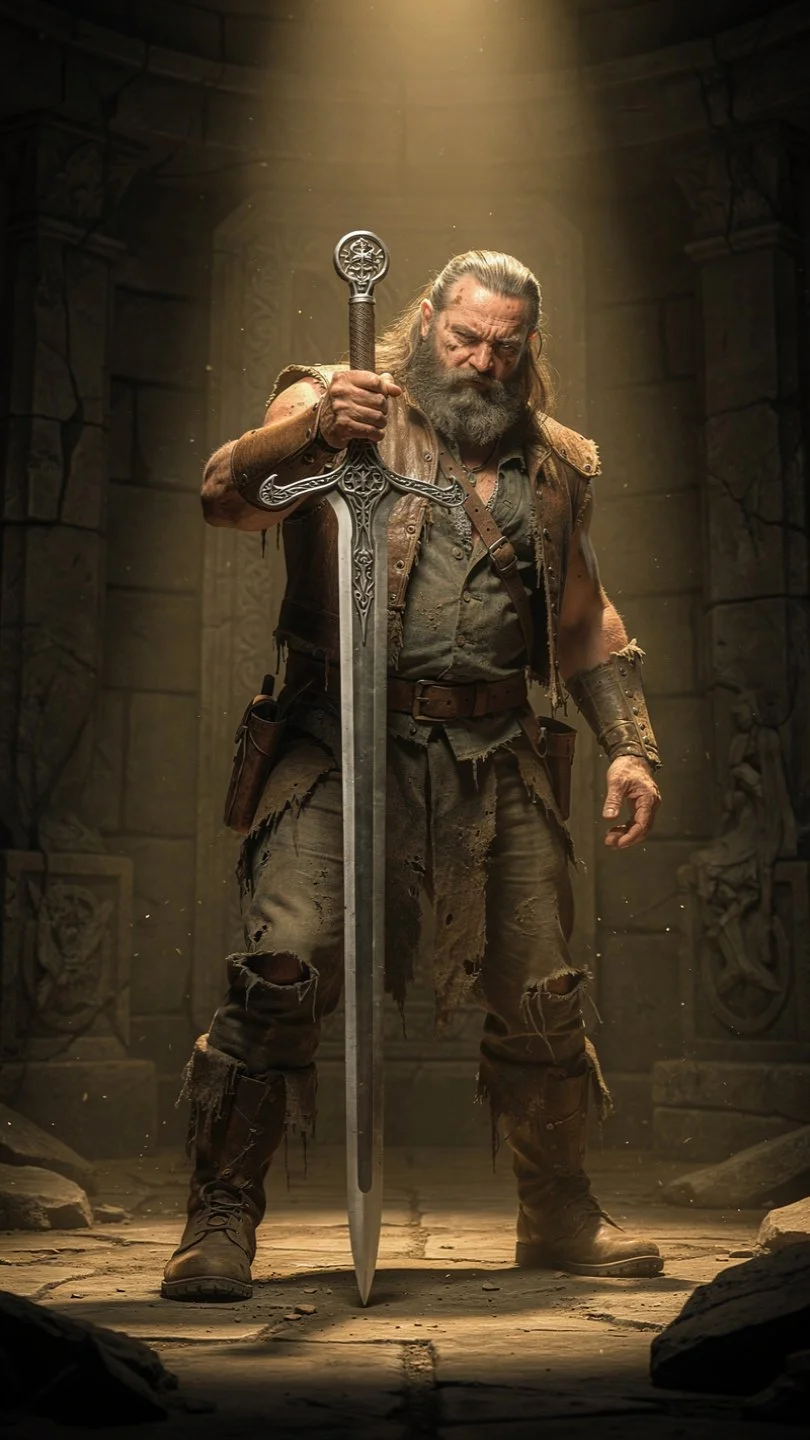
By Grabgar’s hammer, this is where the milk-drinkers start licking the ink off their character sheets.
“Mike,” they say, “how do I make the greatsword hit harder?”
And I say, “Good question, lad.”
Then they ask, “How do I make it hit harder every single turn while never missing, never getting surrounded, never losing concentration, never needing help, and never suffering consequences?”
That is when Mike reaches for the emergency ale.
Because greatsword damage is not just about stacking every shiny bonus ya can find. A proper greatsword build needs accuracy, timing, positioning, and enough common sense to know when the big swing is worth taking.
The greatsword is already a strong weapon. In D&D, it gives ya reliable two-handed damage with a satisfying 2d6 profile. In Pathfinder 2e, it gives ya a heavy martial weapon that rewards accuracy, setup, and well-timed strikes. But the weapon does not become great because ya stapled every damage option onto it like a goblin decorating a wagon.
It becomes great when the whole build supports the swing.
So let us talk about feats, fighting styles, and damage without losing our brains in the numbers.
The First Rule of Greatsword Damage
The first rule is simple.
Damage that misses is not damage.
I know. Shocking. A revelation. Somewhere, a reckless barbarian has dropped his breakfast.
A greatsword player must care about accuracy before damage bonuses. This matters in both D&D and Pathfinder, but Pathfinder makes the lesson especially sharp because critical hits are tied to how much ya beat the target’s Armor Class. Better accuracy does not just mean more hits. It can mean more critical hits.
That is why the best greatsword players do not only ask, “What adds damage?”
They ask better questions.
Can I get advantage?
Can I attack an off-guard enemy?
Can I benefit from Bless, Heroism, flanking, frightened, prone, restrained, or another condition?
Can I strike the right target instead of the biggest target?
Can I wait until an ally creates a better opening?
That kind of thinking matters more than one extra point of damage written in the margin.
Mike’s Tavern has already hammered this lesson into the wall with The Difference Between Being Deadly and Being Reliable. A deadly build looks impressive when everything goes right. A reliable build keeps working when the fight gets ugly.
And fights always get ugly.
D&D Fighting Style: Great Weapon Fighting
For D&D greatsword users, Great Weapon Fighting is the obvious fighting style to consider.
It helps smooth out poor damage rolls when using a two-handed melee weapon. That matters because the greatsword rolls multiple damage dice, and multiple dice give the style more chances to improve the result.
Is it the most exciting option in the world?
No.
Does it make yer character feel like a living thunderstorm every round?
Also no.
But it does improve consistency. That is valuable.
The greatsword already has a better damage curve than a weapon that rolls one large die. A 2d6 weapon is less likely to give ya the emotional misery of rolling one sad little number and staring at it like it insulted yer ancestors. Great Weapon Fighting supports that same idea. It makes the floor better.
That is the quiet secret of good greatsword damage.
Players often chase ceiling.
Veterans respect floor.
The ceiling is what happens when ya crit, smite, rage, buff, and land the perfect hit at the perfect time.
The floor is what happens on a normal turn when the dice are not being generous.
A strong greatsword character needs both. But if the floor is terrible, the build will feel frustrating long before the heroic moments arrive.
D&D Feat: Great Weapon Master
Great Weapon Master is the famous one, and for good reason.
It supports the fantasy of heavy weapons hitting harder and rewarding decisive melee combat. For a greatsword character, it often feels like the feat that “belongs” on the build.
But here is where ya need discipline.
Great Weapon Master is strongest when yer character can actually land hits. That means it works better on classes and builds that can support accuracy, create advantage, or attack often enough to make the feat pay off over time.
A Fighter usually enjoys it because Fighters get repeated attacks and strong weapon support.
A Barbarian often enjoys it because Reckless Attack can help solve accuracy problems, though it also invites enemies to punish ya.
A Paladin may enjoy it, but Paladins must think carefully about when they are trying to land a normal hit and when they are setting up a burst moment.
The mistake is treating Great Weapon Master like a personality.
It is not.
It is a tool.
If ya build around it wisely, it can be excellent. If ya chase it blindly, ya may become the table’s loudest source of missed attacks.
Big damage options need accuracy support. This is why Mike’s Tavern keeps returning to practical combat habits in articles like The Overlooked Ways to Make Every Weapon Hit Harder in Combat. Most players do not need a stranger build. They need to use the build they already have with better timing.
D&D Feat: Savage Attacker
Savage Attacker is less flashy than Great Weapon Master, but it fits the greatsword fantasy in a different way.
It gives ya a chance to improve weapon damage after rolling, which can feel satisfying on a heavy weapon character. The appeal is emotional as much as mechanical. Nobody likes rolling poorly when their whole character image is built around landing heavy, meaningful hits.
Savage Attacker helps reduce that sting.
Is it always the best feat?
No.
Is it always better than ability score improvement, Great Weapon Master, defensive options, or other class-specific choices?
Also no.
But it belongs in the conversation because greatsword players care about impact. If yer table plays in a style where combat moments are described, remembered, and emotionally felt, a feat that helps a big hit feel bigger can be enjoyable.
Just do not mistake comfort for optimization.
Savage Attacker is not usually the foundation of the strongest greatsword build. It is more like seasoning. Good seasoning, maybe, but still seasoning. The meat of the build is accuracy, class support, positioning, and action economy.
By Koldron’s flaming apron, do not build a whole feast out of seasoning.
D&D Weapon Mastery: Graze
In D&D 2024, the greatsword’s Graze mastery is one of the most important reasons the weapon feels reliable.
Graze helps soften the emotional pain of missing by letting the attacker still apply a small amount of damage when an attack roll misses, provided the mastery is being used properly. This does not replace hitting. It does not make misses good. But it does mean the greatsword can keep pressure on the enemy even when the dice refuse to cooperate.
That fits the weapon beautifully.
The greatsword should feel like heavy force. Even when the enemy avoids the full blow, they still feel the threat. The blade scrapes armor. The swing forces them back. The attack does not fully land, but it still matters.
Mechanically, this supports reliability.
Narratively, it supports the fantasy.
That is the sweet spot.
Graze is not there to make ya reckless. It is there to make a committed melee character feel less helpless when a heavy swing fails. A good player still wants better accuracy. A good player still wants advantage, smart target choice, and party support. Graze simply makes the bad turns less empty.
And empty turns are what make many melee players stop enjoying combat.
Pathfinder 2e: The Damage Lesson Is Different
Pathfinder 2e handles greatsword damage differently from D&D, and ya need to respect that.
In Pathfinder, the three-action economy and Multiple Attack Penalty mean ya should not think of greatsword damage as “stand still and swing until the table gets bored.”
That is how ya turn a good weapon into a bad habit.
A greatsword character in Pathfinder often wants fewer, better attacks rather than repeated desperate ones. This is especially true when using high-impact actions or feats that concentrate power into a stronger strike.
Accuracy matters. Setup matters. Teamwork matters. Conditions matter.
A Fighter with a greatsword benefits enormously from accuracy because Fighter proficiency helps attacks and critical hits land more often. A Barbarian benefits from strong damage support but must avoid wasting actions on poor attacks. A Champion can use the greatsword as a weapon of presence and punishment. A Magus can make one charged strike feel spectacular, but only if the player respects setup and timing.
The greatsword in Pathfinder rewards players who think before they swing.
That may sound less dramatic.
It is not.
It is far more dramatic when the big swing lands because ya earned the opening.
Pathfinder 2e Feat: Vicious Swing
Vicious Swing is one of the classic greatsword-friendly options in Pathfinder 2e.
The idea is simple: spend more effort on one heavier attack instead of making several weaker attempts. For a two-handed weapon character, this fits beautifully.
But do not use it blindly.
Vicious Swing is strongest when the attack has a good chance to hit. If ya spend extra action investment and miss, that hurts. This is why setup matters. Flanking, off-guard enemies, frightened enemies, buffs, and strong positioning can make the difference between a glorious heavy hit and a sad little breeze.
A greatsword Fighter can use this style especially well because higher accuracy makes the investment safer. A Barbarian can also enjoy the impact, though the player must manage positioning and action economy carefully.
The deeper lesson is this:
Pathfinder greatsword damage is often about making one attack worth more.
Not always more attacks.
A player who understands that will enjoy the system much more.
Pathfinder 2e Feat: Swipe
Swipe is another useful Pathfinder option for certain greatsword builds because it lets ya attack more than one enemy under the right circumstances.
This matters because one weakness of big single-target weapons is that they can feel inefficient against multiple enemies. If small enemies surround the party, a greatsword player who can only overkill one target at a time may feel awkward.
Swipe helps answer that problem.
It rewards positioning. It asks ya to care where enemies are standing. It gives the greatsword wielder a way to feel dangerous when the battlefield gets crowded.
That is good design because it makes the player think spatially.
Where do I stand?
Which enemies are adjacent?
Can I pressure both?
Can I force them to regret clustering?
This is where greatsword play becomes more than “I attack.” It becomes battlefield reading.
And battlefield reading is what turns a heavy weapon character from a damage machine into a real combat presence.
The Sharpened Edge
Before ya choose a damage feat, ask what problem yer character actually has.
If ya miss too often, ya need accuracy.
If ya hit often but roll poorly, ya may want damage consistency.
If ya waste turns reaching enemies, ya need movement or positioning help.
If ya hit hard but fall too quickly, ya need defense.
If ya dominate weak enemies but struggle against bosses, ya need better setup.
A greatsword build gets stronger when ya fix the actual weakness, not when ya blindly add more damage. For more on this kind of practical combat improvement, read How to Get More Damage from the Same Weapon Without Changing Your Build.
Damage Boosts That Matter More Than Players Think
Many greatsword players obsess over feats and forget the quieter boosts that make feats work.
Advantage in D&D is enormous. If yer build wants big melee hits, advantage makes the whole engine smoother. Reckless Attack, prone enemies, restrained enemies, invisibility, certain spells, and party support can all shift a greatsword attack from hopeful to dangerous.
Bless is another quiet monster. A small bonus to attack rolls can do more for real damage than a flashy bonus that only works after ya hit.
In Pathfinder, off-guard is huge. So are frightened, status bonuses, circumstance bonuses, flanking, Aid, and teamwork-based setup. These do not always look exciting on paper, but they are often the difference between a miss, a hit, and a critical hit.
This is why greatsword damage belongs to the whole party more than players admit.
The cleric who buffs ya helped land the hit.
The rogue who flanked helped land the hit.
The wizard who controlled the enemy helped land the hit.
The fighter who forced position helped land the hit.
If ya are the one holding the greatsword, do not become arrogant just because yer damage number is bigger. Half the time, yer party built the bridge ya are walking across.
Mike’s Tavern has gone deeper into this kind of hidden combat value in Hidden Damage Boosts Most Players Forget to Use in Every Fight. Read it before ya start bragging over one big swing, ya daft harpy.
The Trap of Pure Damage Chasing
The greatsword attracts damage chasers.
That is not always bad. Damage is part of the weapon’s job. A greatsword should hurt. If it does not, something has gone wrong.
But pure damage chasing turns the weapon into a prison.
A player starts thinking every turn must be maximum output. Every missed attack feels personal. Every defensive move feels like wasted potential. Every tactical retreat feels like weakness. Every support action feels beneath them.
That is how ya become predictable.
And predictable melee characters are easy for good Game Masters to punish.
Enemies can kite ya. Surround ya. Frighten ya. Knock ya prone. Fly above ya. Block paths. Attack yer allies. Force saving throws. Exploit terrain. Punish overextension. Make yer beautiful damage build spend three turns trying to reach the actual problem.
A greatsword player who only understands damage is dangerous for one narrow kind of fight.
A greatsword player who understands pressure is dangerous in many fights.
That is the difference.
Damage asks, “How hard do I hit?”
Pressure asks, “What does the enemy have to do because I am here?”
That second question wins more battles.
The Best Damage Is the Damage That Changes the Fight
A greatsword hit should do something.
Sometimes it kills a wounded enemy before that enemy acts again.
Sometimes it breaks concentration.
Sometimes it forces a boss to respect the front line.
Sometimes it punishes a creature for pushing past ya.
Sometimes it buys time for the healer.
Sometimes it makes the enemy waste movement.
Sometimes it turns a narrow doorway into a slaughterhouse.
This is why damage cannot be judged only by size. A smaller hit at the right time can matter more than a bigger hit into the wrong target.
A greatsword character should be asking:
Who acts next?
Who is threatening the weakest ally?
Which enemy is already injured?
Which enemy is concentrating?
Which enemy controls the battlefield?
Can I remove a turn from the enemy side?
That is real damage thinking.
Not just dice worship.
The Best D&D Greatsword Damage Package
For D&D, a strong greatsword damage package usually begins with Strength, extra attacks, Great Weapon Fighting, Great Weapon Master, and reliable ways to improve hit chance.
Fighter does this cleanly.
Barbarian does this brutally.
Paladin does this dramatically.
But the strongest package is not identical for every class. A Fighter wants consistency across multiple attacks. A Barbarian wants advantage and durability while accepting risk. A Paladin wants to land the hit that deserves extra resources.
Do not copy a build without understanding why it works.
That is how ya end up wearing someone else’s armor and wondering why it pinches.
The Best Pathfinder 2e Greatsword Damage Package
For Pathfinder 2e, a strong greatsword damage package usually begins with a class that has strong martial support, then adds feats that reward heavy two-handed strikes.
Fighter is the cleanest because accuracy is king.
Barbarian is excellent for impact.
Champion works when the greatsword supports a protective role.
Magus works when the player can manage setup and action economy.
Feats like Vicious Swing and Swipe can support the style, while archetypes like Mauler can deepen the two-handed weapon identity.
But again, do not build blindly.
Pathfinder rewards tactics too much for that.
A good greatsword character knows when to Strike, when to move, when to set up, when to accept one strong attack, and when a third attack is just feeding the dice goblins.
Bring Yer Blade Back to the Tavern
The greatsword hits hardest when ya stop treating damage like a single number and start treating it like a battlefield result.
Build for accuracy.
Support the swing.
Choose feats that solve real problems.
Respect action economy.
Work with the party.
Then, when the opening comes, put both hands on the grip and make the hit count.
If ya are new to the tavern, start with About Mike’s Tavern, check the FAQ, or send a message through the Contact page if ya need help finding the right shelf, guide, or weapon rack.
