
The Definitive Greatsword Guide, Part 2: Best Classes and Builds
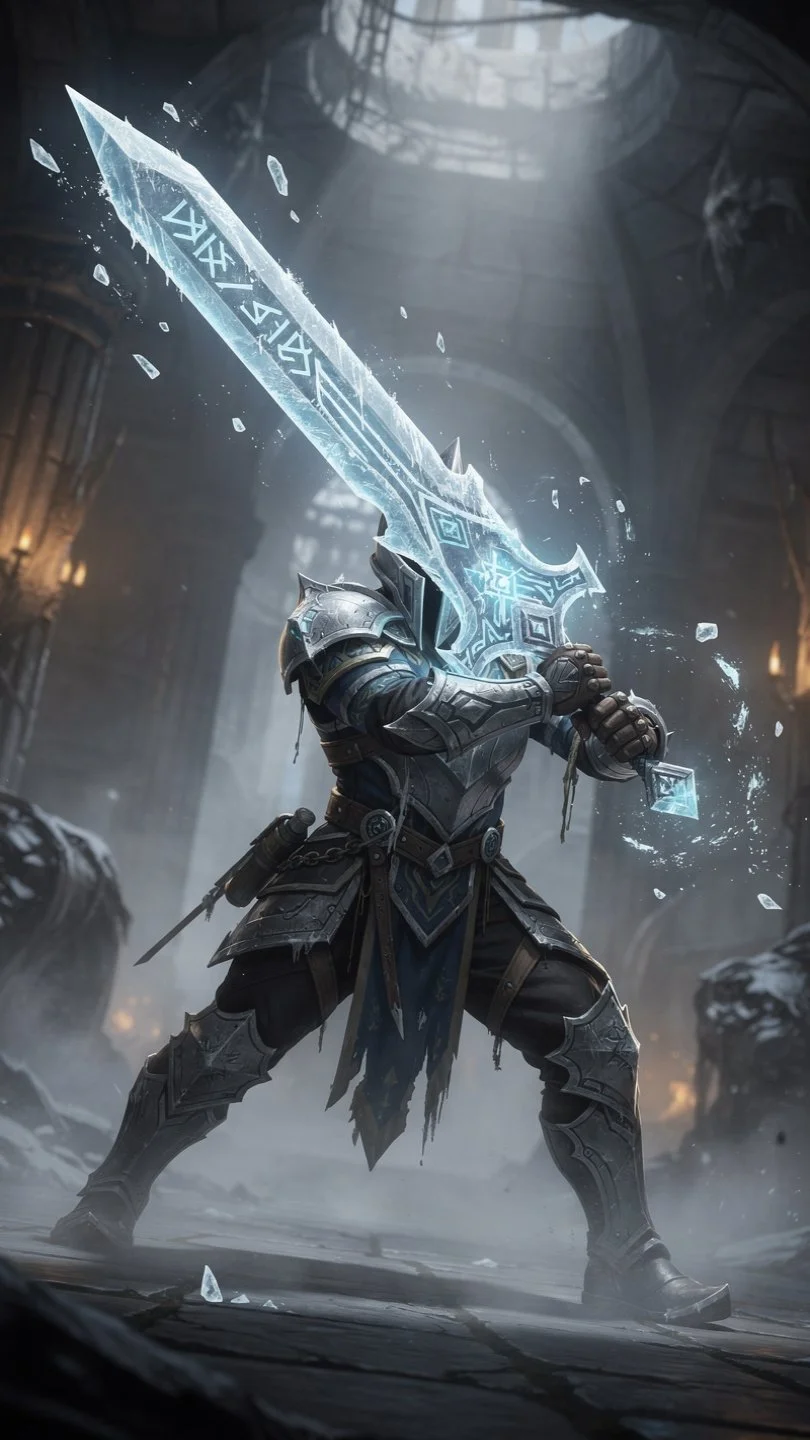
By Grabgar’s hammer, every tavern gets this lad eventually.
He kicks open the door, slams a greatsword on the table, and says, “I want to build the strongest warrior alive.”
Then ya ask him what class he is playin’, and he says, “I dunno. Which one hits hardest?”
That is when Mike puts down the tankard, squints across the bar, and prepares for pain.
Because the best greatsword build is not always the one with the biggest number on one lucky turn. The best greatsword build is the one that can keep pressure on the enemy, survive being close to danger, and make the big blade matter across the whole fight.
That is the real secret.
Big blade. Bigger responsibility.
A greatsword is not a decoration. It is a promise that yer character is going to stand close enough to danger that the danger can hit back. That means class choice matters. The right class turns the greatsword into a reliable weapon. The wrong class turns it into a fantasy poster that spends half the campaign missing, falling over, or chasing enemies it cannot reach.
So let us sort the strong choices from the shiny nonsense.
What Makes a Great Greatsword Class?
A proper greatsword class needs four things.
First, it needs accuracy. A big weapon does not matter if it keeps missing. In D&D, this means Strength, advantage, buffs, extra attacks, and features that help yer attack rolls matter. In Pathfinder, this matters even more because accuracy also affects critical hits, and a greatsword loves a critical hit like a dwarf loves a suspiciously full tankard.
Second, it needs durability. A greatsword usually puts ya near the enemy. That means claws, teeth, axes, poison, spells, grapples, and whatever nightmare the Game Master has been smiling about for the last forty minutes. If ya cannot survive the front line, yer greatsword becomes a very dramatic floor ornament.
Third, it needs action economy. This is where many players trip over their own boots. The question is not only, “How much damage can I deal?” It is also, “What am I doing with my whole turn?” Movement, bonus actions, reactions, positioning, setup, and party support all matter.
Fourth, it needs purpose. Are ya a steady striker? A reckless bruiser? A holy executioner? A tactical controller? A magical burst fighter? The greatsword can support all of these identities, but ya need to know which one yer building.
That is why the best greatsword character is not just deadly. It is reliable. Mike’s Tavern has already chewed on that lesson in The Difference Between Being Deadly and Being Reliable, and it applies perfectly here.
A greatsword build that only works when everything goes right is not a strong build.
It is a campfire story waiting to become a cautionary tale.
Best D&D Greatsword Class: Fighter
If ya want the cleanest, strongest, most reliable greatsword class in D&D, start with Fighter.
Not the strangest answer. Not the fanciest answer. The answer that keeps working.
The Fighter is excellent with a greatsword because it gets what the weapon wants most: repeated attacks, fighting style support, feat access, durability, and flexibility. A Fighter does not need to beg the greatsword to function. The class chassis already fits the weapon.
A greatsword wants multiple chances to hit because every extra swing gives the weapon another opportunity to matter. In D&D 2024, the greatsword’s Graze weapon mastery also helps soften the pain of a missed attack for characters who can use it. That makes the Fighter feel steady rather than helpless when the dice turn sour.
Fighter also works well with Great Weapon Fighting and Great Weapon Master style choices. The greatsword’s 2d6 damage profile enjoys damage-floor improvement, and heavy-weapon support rewards a character who can land hits consistently.
The important word is consistently.
A Fighter is not great because it produces one dramatic hit. A Fighter is great because it keeps showing up. Round after round, the Fighter pressures enemies, controls key spaces, punishes exposed targets, and gives the rest of the party something solid to work around.
That makes Fighter the best beginner recommendation for greatsword users. It is simple enough to understand quickly, but still deep enough for veterans who care about positioning, target choice, subclass timing, and battlefield control.
The warning is simple.
Do not play a Fighter like a wooden training dummy with boots.
Move. Block. Pressure. Finish wounded enemies. Protect squishier allies. Use the greatsword like a battlefield tool, not like a club yer character found in a ditch.
A smart Fighter makes the greatsword feel inevitable.
Best D&D Greatsword Bruiser: Barbarian
If Fighter is discipline, Barbarian is momentum.
The Barbarian makes the greatsword feel wild, physical, and terrifying. Rage supports the fantasy perfectly. Yer character is already built to stand in danger, absorb punishment, and answer violence with more violence.
This is one of the most natural greatsword pairings in D&D.
A Barbarian with a greatsword does not require much explanation. The image is clear. The role is clear. The table understands the threat immediately. When the Barbarian steps forward, something is about to get broken.
The strength of the Barbarian greatsword build is emotional and mechanical. Rage improves survivability. Reckless Attack can help solve accuracy problems. Big weapon damage fits the class fantasy. The whole thing feels direct, brutal, and satisfying.
But listen here, ya milk-drinker, because this is where the trap opens.
Reckless does not mean brainless.
A Barbarian who uses a greatsword well understands when to commit. If ya charge ahead every time, enemies will surround ya, isolate ya, and turn yer glorious warrior into a bleeding lesson in overconfidence. A greatsword Barbarian should feel dangerous, not suicidal.
The best Barbarian greatsword players think in terms of pressure. They ask, “Who must be stopped right now?” They ask, “Can the party follow me if I advance?” They ask, “Am I forcing the enemy into a bad choice, or am I just giving them a free target?”
That difference matters.
A Barbarian with a greatsword can be one of the most memorable characters at the table. But if the player only chases the biggest hit, the build can become exhausting. Mike has grumbled about this before in Why Chasing DPR Is the Fastest Way to Burn Out. Big damage is fun. Big damage as yer entire personality becomes stale faster than week-old tavern bread.
Use the rage.
Use the blade.
But keep yer head attached.
Best D&D Greatsword Burst Build: Paladin
The Paladin gives the greatsword a different kind of power.
Where the Fighter feels steady and the Barbarian feels explosive, the Paladin feels decisive. A greatsword Paladin is not just swinging steel. They are delivering judgment, oath, duty, and consequence.
That makes the weapon feel ceremonial in the best possible way.
Mechanically, Paladins love strong melee hits because their burst features reward landing attacks at the right time. A greatsword gives the Paladin a strong base weapon for that style. When the moment comes, the Paladin can turn a successful hit into something the table remembers.
The key phrase is “when the moment comes.”
A greatsword Paladin should not waste resources just because the attack landed. The best Paladin players know when to hold back and when to spend. They understand that not every goblin deserves the full wrath of heaven and steel.
The Paladin’s strength is controlled violence.
That means the class works especially well for players who enjoy timing. Ya are not just asking, “Can I hit?” Ya are asking, “Is this the hit that matters?” Against a major enemy, undead horror, fiendish brute, or campaign villain, the greatsword Paladin can create some of the most satisfying burst moments in D&D.
The weakness is that Paladins can become resource hungry. If ya burn everything too early, ya may look impressive for one round and ordinary for the rest of the fight. That is not failure, but it does require discipline.
The greatsword Paladin is best for players who want heroic presence, strong melee identity, and powerful turning-point moments.
Not constant fireworks.
Turning points.
The Weapon Rack Test
Before ya choose a class, ask one question:
“What problem does my greatsword solve for the party?”
If the answer is “I deal damage,” dig deeper.
Do ya hold the line? Break enemy focus? Punish bosses? Protect casters? Force enemies away from weaker allies? Create fear? Finish wounded monsters before they act again?
A better greatsword build begins when ya stop asking only how hard the blade hits and start asking what the blade does for the table.
For more combat thinking, sharpen yer instincts with The Overlooked Ways to Make Every Weapon Hit Harder in Combat.
Best Pathfinder 2e Greatsword Class: Fighter
In Pathfinder 2e, Fighter is also one of the best greatsword users, and for one huge reason:
Accuracy.
Pathfinder 2e rewards accuracy brutally. Hitting matters. Critting matters. Missing wastes actions. Since Fighter begins ahead of most classes in weapon proficiency, it makes excellent use of hard-hitting martial weapons like the greatsword.
A Fighter with a greatsword in Pathfinder 2e is not just trying to land big numbers. The class is built to turn martial consistency into battlefield pressure. Because Pathfinder’s three-action economy asks players to make meaningful choices every turn, a greatsword Fighter must think beyond “Strike three times.”
That is where the good players separate themselves from the button mashers.
Sometimes ya Strike once and reposition. Sometimes ya use a feat that compresses power into fewer attacks. Sometimes ya pressure a dangerous target so allies can act safely. Sometimes ya force an enemy to respect the space around ya.
Pathfinder 2e’s Multiple Attack Penalty means swinging blindly is often a poor plan. A greatsword Fighter should avoid becoming addicted to repeated low-accuracy attacks. The class is strong because it can make the right attacks count, not because it flails like a goblin stuck in a laundry sack.
The Fighter is ideal for players who want mastery. It rewards system knowledge, positioning, smart feat choices, and target discipline.
If ya want a Pathfinder greatsword build that feels dependable from early levels and continues to scale well, Fighter is the safest first answer.
Best Pathfinder 2e Greatsword Bruiser: Barbarian
The Pathfinder 2e Barbarian is another excellent greatsword user, especially for players who want impact.
Barbarian damage support makes the greatsword feel heavy and dangerous. The class fantasy is immediate: rage, strength, forward pressure, and punishment. If ya want the table to feel every hit, Barbarian delivers.
But Pathfinder 2e is not kind to careless melee characters.
Positioning matters. Action economy matters. Enemy reactions matter. Flanking matters. Conditions matter. Getting surrounded is dangerous. Getting baited into bad actions is worse. A Barbarian with a greatsword has tremendous force, but that force must be guided.
The best Pathfinder Barbarian greatsword player knows that one strong attack can be better than three desperate ones. They look for flat-footed enemies. They coordinate with allies. They value movement. They understand that a powerful character still needs the party.
This is especially important because Pathfinder 2e tends to reward team tactics more openly than many D&D tables do. A greatsword Barbarian becomes far more effective when the party helps create openings.
If ya want a character who feels fierce and dangerous without pretending to be delicate, Barbarian is a strong choice.
Just do not confuse courage with bad positioning.
By Margann’s crusty beard, the graveyards are full of brave fools who thought armor and anger were a strategy.
Strong Pathfinder 2e Option: Champion
Champion is not always the first class people think of when they imagine greatsword dominance, but it can work beautifully when the player understands the role.
A Champion with a greatsword is less about raw aggression and more about presence. The weapon becomes a symbol of duty and protection. Ya are not merely trying to hit hard. Ya are trying to stand where yer principles demand.
This makes Champion a good choice for players who want a defensive or protective martial character without giving up the visual power of a two-handed blade.
The trade-off is obvious. Without a shield, ya may lose some of the classic defensive feel many Champions enjoy. That means ya need to build carefully and understand what yer version of protection looks like. Are ya punishing enemies? Standing near allies? Drawing pressure? Using reactions well? Threatening key spaces?
The greatsword Champion works best when the player does not try to imitate the Fighter or Barbarian. It has its own identity.
Less “I kill everything first.”
More “You do not pass through me freely.”
That is a strong fantasy, especially for players who enjoy moral weight and battlefield responsibility.
Strong Pathfinder 2e Option: Magus
The Magus can make the greatsword feel spectacular.
A magically charged strike through a massive blade is one of the most dramatic weapon fantasies in Pathfinder 2e. The image works immediately. Steel and spell, body and arcane force, one dangerous hit carrying more than normal weapon damage.
But the Magus requires more care than Fighter or Barbarian.
This is not the easiest beginner greatsword build. Action economy can be tight. Setup matters. Positioning matters. Missing can feel painful. Ya must understand when to commit and when to prepare. If ya are careless, the build feels clumsy.
When played well, though, a greatsword Magus can create unforgettable impact moments.
The trick is patience. A Magus should not behave like a standard martial with a spell glued on. The class is about timing the charged strike, choosing targets wisely, and respecting the limits of the action system.
This build is best for players who enjoy risk, planning, and dramatic payoff.
It is not the tavern’s first recommendation for a brand-new player, but in the hands of someone who enjoys system texture, it can be glorious.
Best Archetype Support: Mauler
In Pathfinder 2e, the Mauler archetype is worth special attention for greatsword characters.
It supports the two-handed weapon fantasy directly. If yer character identity is built around heavy weapons, battlefield force, and making big swings matter, Mauler can reinforce that style beautifully.
The appeal is simple. It helps a greatsword character feel like a true two-handed weapon specialist rather than just someone carrying a large sword because it looks impressive.
That said, do not take an archetype just because the name sounds right. Ask whether it improves what yer build already wants to do. Does it support yer action economy? Does it strengthen yer combat plan? Does it help yer character solve real problems at the table?
A good archetype sharpens the build.
A bad one adds decoration.
And decoration does not survive long once the ogre starts swinging.
Builds That Look Good But Need Care
Not every greatsword idea is bad, but some need more caution.
A greatsword Rogue, for example, usually fights the system fantasy. Rogues tend to care about finesse, precision, mobility, and Sneak Attack requirements. If the rules do not support the weapon cleanly, ya may spend more time forcing the image than enjoying the character.
A greatsword spellcaster can look dramatic, but it often struggles unless the class has proper support for weapon combat. Holding a big sword does not make a fragile caster into a frontliner. It makes them a tempting target with poor survival instincts.
A greatsword Ranger or similar hybrid martial can work in certain builds, but the player needs to understand what they are giving up. If the class wants ranged pressure, dual wielding, companion action, spells, or mobility tricks, a greatsword may not be the smoothest fit.
This does not mean ya cannot build unusual greatsword characters.
Ya can.
But unusual builds need honesty. Ask whether the class supports the weapon, or whether ya are dragging the weapon behind the class like a stubborn mule.
A build can be flavorful and functional.
It should not be flavorful and miserable.
The Best Greatsword Build for Beginners
For D&D beginners, choose Fighter first.
It teaches the weapon cleanly. Ya learn attack timing, positioning, durability, feat choices, and front-line responsibility without too many extra systems pulling yer attention away.
For Pathfinder 2e beginners, choose Fighter first as well.
The accuracy advantage helps the greatsword feel good, and the class teaches Pathfinder’s tactical structure better than most. Ya will learn quickly that movement, flanking, action choice, and attack timing matter.
For players who want a little more emotion and risk, Barbarian is the second-best beginner choice in both games.
It is direct, satisfying, and easy to understand. Just remember that easy to understand does not mean impossible to misplay.
The Best Greatsword Build for Story
If ya care most about story, choose the class that explains why the character carries the weapon.
Fighter: “I trained for this.”
Barbarian: “I survive through force.”
Paladin or Champion: “I carry judgment and duty.”
Magus: “I bind magic to steel.”
These identities matter because a greatsword is too visible to feel random. It shapes how other characters see ya. It shapes how ya enter rooms. It shapes how ya threaten enemies and protect allies.
This is where mechanical choices and roleplay choices should shake hands.
The best greatsword builds do not separate combat from character. They let the weapon explain something about the person holding it.
That is why even an imperfect build can become beloved if the identity is strong and the player uses it well. Mike’s Tavern talks about this kind of character value in Characters Who Aren’t Optimized But Are Unforgettable, and the greatsword is one of the easiest weapons for that lesson.
A greatsword character does not need to be mathematically perfect to be remembered.
But it should still work.
The Final Verdict on Greatsword Classes
The best greatsword classes are the ones that respect what the weapon demands.
D&D Fighter is the best all-round choice.
D&D Barbarian is the best bruiser choice.
D&D Paladin is the best burst-and-drama choice.
Pathfinder 2e Fighter is the best accuracy-and-mastery choice.
Pathfinder 2e Barbarian is the best impact choice.
Pathfinder 2e Champion is the best protective identity choice.
Pathfinder 2e Magus is the best magical burst choice for players who can handle the complexity.
The deeper lesson is simple.
A greatsword does not make a character strong by itself. It magnifies what the class already does. Give it to a class with accuracy, durability, action support, and purpose, and it becomes terrifying. Give it to a class that cannot support it, and ya get a big shiny problem with a handle.
So choose the class that makes the blade honest.
Not just big.
Honest.
Pull Up a Chair Before Ya Build
If ya are building a greatsword character, do not start by chasing the loudest damage trick. Start by choosing the job.
Do ya want discipline? Choose Fighter.
Do ya want fury? Choose Barbarian.
Do ya want judgment? Choose Paladin or Champion.
Do ya want spell-charged drama? Choose Magus.
Then build around that promise. Make the weapon serve the character, the party, and the fight.
If ya are new around here, take a look at About Mike’s Tavern, wander through the FAQ, or send a message through the Contact page if ya need help finding the right shelf in the tavern.
