
The Exploding Piñata Mace of Candy Carnage
Tavern Armory
What Ye Need to Know
The weapon: Exploding Piñata Mace of Candy Carnage
Weapon type: +1 magic mace
Rarity: Rare
Attunement: Required
Best users: Clerics, paladins, fighters, and support-minded martials
Combat role: Reliable melee damage with critical-hit healing or control
This bright papier-mâché mace functions as a +1 weapon. Once per turn when ye score a critical hit, it erupts in enchanted sweets. Choose a sugar blessing that restores 1d4 hit points to one conscious ally within 10 feet, or candy carnage that forces one enemy within 10 feet to make a DC 15 Wisdom save. On a failure, that enemy must use its action on its next turn to grab and devour the candy. Creatures that cannot eat or are immune to charm automatically succeed.
A Strange Addition to the Rack
When the Treasure Hoard Fights Back
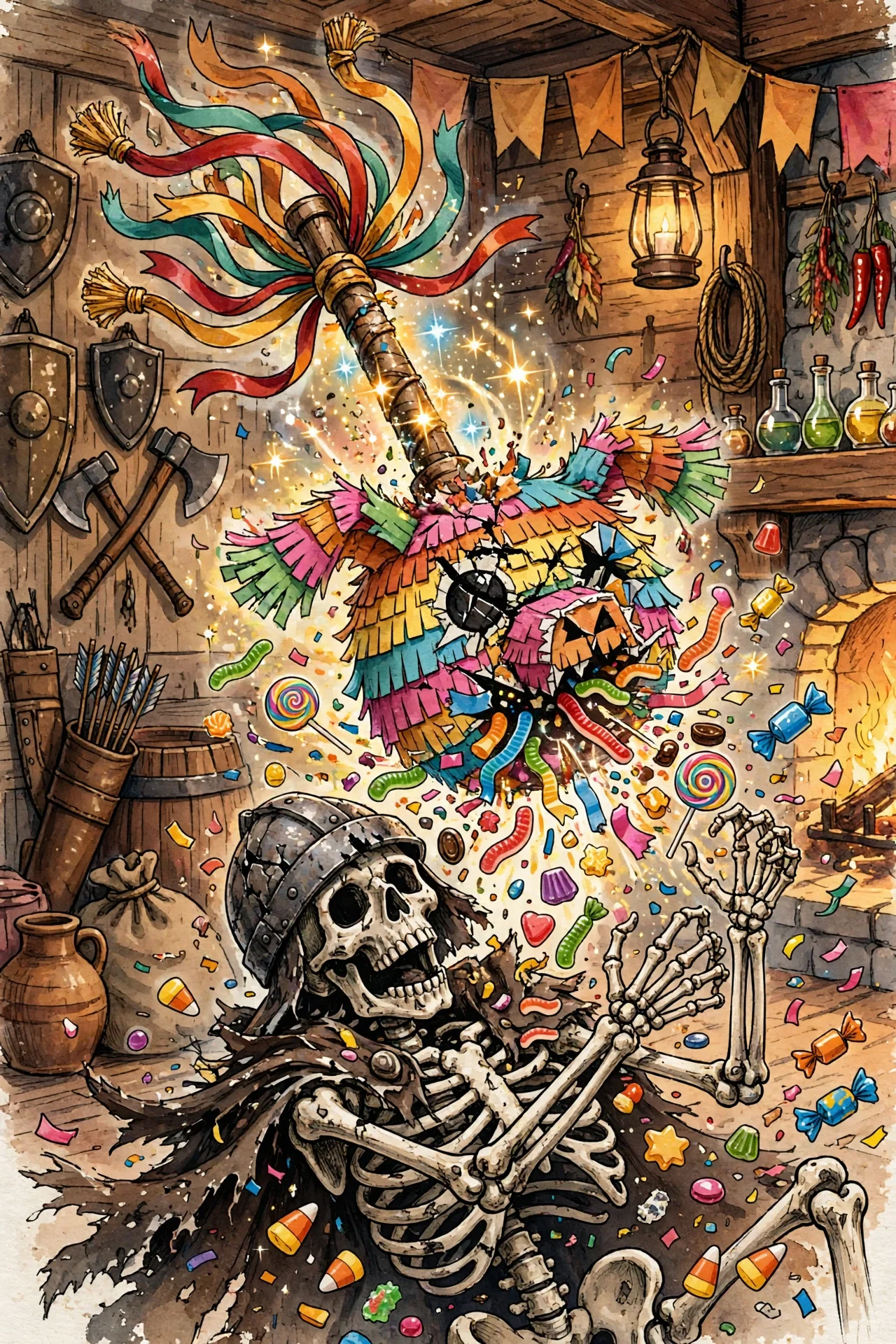
At first glance, this weapon looks like a festival decoration that wandered into the wrong dungeon. Its head is a brightly painted papier-mâché beast, its handle is wrapped in ribbons, and something rattles inside whenever the wielder moves.
Then it caves in a skeleton's breastplate and explodes into sweets.
The Exploding Piñata Mace of Candy Carnage is an original Mike's Tavern D&D 5e weapon built around a rare but memorable critical-hit decision. Its wielder can reward an ally with a morsel of healing or tempt an enemy into wasting an action. The healing is intentionally tiny. The distraction is much stronger, but it allows a save, affects only one creature, and depends on a critical hit.
Magic Weapon Statistics
Exploding Piñata Mace of Candy Carnage
Formal D&D 5e Item Rules
Weapon (mace), rare (requires attunement)
You gain a +1 bonus to attack and damage rolls made with this magic mace.
Candy Carnage. Once per turn, when you score a critical hit with the mace, its head bursts and scatters magical sweets around you. Choose one of the following effects:
Sugar Blessing. One conscious creature of your choice within 10 feet of you regains 1d4 hit points. A creature can regain hit points from this property only once per round.
Irresistible Scramble. One enemy of your choice within 10 feet of you that can see the sweets must make a DC 15 Wisdom saving throw. On a failed save, it must use its action at the start of its next turn to grab and eat the magical candy, if able. After doing so, it can move and use any bonus action or reaction available to it normally. On a successful save, it is unaffected. A creature that does not need to eat, cannot eat, or is immune to the charmed condition automatically succeeds.
The scattered sweets vanish at the end of your next turn. The destroyed mace head magically reforms immediately after the burst, although it continues to shed harmless paper confetti until the end of the current turn.
A Critical Choice, Not Free Power
Why the Candy Burst Works
The mace is dependable before the special effect appears. Its +1 bonus helps a martial character land attacks, overcome resistance to nonmagical weapon damage, and contribute in encounters where no critical hit arrives.
Sugar Blessing is emergency support, not a replacement for healing magic. It cannot raise an unconscious ally because the chosen creature must be conscious. Its best use is preserving someone who is still standing or repairing a small amount of damage without spending an action.
Irresistible Scramble is the dangerous option. Taking an enemy's action can change an encounter, which is why the effect requires a critical hit, a saving throw, attunement, and a target capable of wanting the candy. The choice creates tension: heal a friend now, or gamble on denying a foe's next action?
This is a fine example of how doing less damage can win more fights. The mace does not add another pile of critical damage. It turns good fortune into a party decision.
Best Wielders
Who Should Carry It
Clerics
A Strength-based cleric can carry the mace without changing its normal equipment plan. The healing option complements a support role, while the control option preserves spell slots when a lucky critical hit creates an opening.
Paladins
Paladins already value critical hits because Divine Smite can make them explosive. The mace adds a second decision: spend resources for damage, then choose whether the candy protects an ally or disrupts another enemy.
Fighters
More attacks mean more chances to score a critical hit, but Candy Carnage still activates only once per turn. Fighters are excellent at placing themselves where the 10-foot burst can reach both allies and priority enemies.
Build Around the Gimmick
Character-Building Guidance
Prioritize Strength unless a class feature provides another attack ability. Constitution keeps the wielder standing near allies, where the healing choice remains available. A shield works naturally with the mace and supports the weapon's steady, protective identity.
Do not chase critical-hit expansion at the expense of the whole character unless that is already the build's plan. The burst is memorable because it is occasional. Accuracy, defence, and movement remain more dependable investments.
Coordinate target choices before the dice land. The party member watching everyone's health can quickly name the best healing recipient, while another ally identifies the enemy whose action matters most. That habit reflects the Tavern's advice on becoming the party member everyone trusts.
Choose the Sweet That Wins the Round
Candy Carnage Tactics
Stand Where Both Options Are Live
The burst has a 10-foot reach. Position beside a wounded ally while engaging an important enemy, and a critical hit becomes a real choice rather than a predetermined effect.
Distract the Right Creature
Do not spend the control effect on a nearly defeated minion. Choose a spellcaster maintaining pressure, a brute preparing a dangerous multiattack, or a commander whose next action can change the field.
Protect the Healing Choice
Sugar Blessing cannot revive an unconscious creature. Use it before a vulnerable ally falls. Small proactive healing is valuable when it keeps a full turn in the party's hands.
If the wielder is badly exposed, remember that survival may matter more than squeezing out another swing. The Dodge gambit remains relevant even when the mace is begging to be cracked open.
Shield, Spacing, and Sugar
Equipment Considerations
A mace deals its damage one-handed, so the wielder can carry a shield without sacrificing damage. This is ideal for a character who wants to remain in the centre of the party and keep several potential candy recipients nearby.
Carry a nonmagical ranged option. The mace's best features depend on melee positioning, but not every battle rewards a charge across open ground. A javelin or cantrip can preserve a sensible formation.
The candy is magical and temporary. It cannot be collected as rations, sold to a confectioner, planted as permanent difficult terrain, or stockpiled between battles. By Grabgar's apron, adventurers have tried.
Advice for the Game Master
How to Run It at the Table
Place the mace at the centre of a ruined festival, in the hands of a joyless champion, or inside a treasure chest that releases one final shower of confetti. Its former owner might have regarded every battle as a celebration nobody else understood.
Describe each critical burst quickly. Name the colour, the impossible flavour, and the enemy's moment of temptation, then resolve the choice. The joke should punctuate combat rather than stop it.
The control effect removes an action only after a failed save. Do not allow the target to substitute another action, but do allow normal movement, bonus actions, and reactions after the candy is eaten. Creatures without mouths, appetite, or susceptibility to charm are poor targets.
Discuss food-centred humour and forced behaviour during Session 0. The magic is silly, but action denial is mechanically serious. Both tone and adjudication should remain consistent.
The Adventure Needs a Table
Give the Nonsense Room to Breathe
Unusual weapons become recurring stories when a group has a dependable place to play. The Tavern's guide to finding a D&D venue that supports long campaigns can help ye judge the room, noise, access, and community. Explore the wider Tavern Network when the campaign needs a proper home.
Common Mistakes
Five Ways to Spill the Sweets
Healing an unconscious ally. Sugar Blessing requires a conscious target.
Distracting every nearby enemy. Irresistible Scramble targets only one enemy.
Triggering multiple bursts on one turn. Candy Carnage activates once per turn.
Ignoring immunity. Creatures that cannot eat or are immune to charm automatically succeed.
Saving every burst for healing. Denying the right enemy action can prevent far more damage than 1d4 healing restores.
The Tavernkeeper's Verdict
A Party Weapon in Every Sense
This mace suits a front-line character who enjoys helping allies and making decisions under pressure. It is colourful without being mechanically careless, and its rare control burst will be remembered long after another damage die is forgotten.
Keep friends close, identify the enemy whose action matters, and let the critical hit decide when the sweets hit the floor.
Frequently Asked Questions
Questions About the Piñata Mace
Need broader help with the Tavern? Visit the main Mike's Tavern FAQ.
Once per turn, choose either 1d4 healing for one conscious ally within 10 feet or force one enemy within 10 feet to save against spending its next action grabbing and eating candy.
No. Sugar Blessing can target only a conscious creature.
No. It must use its action to grab and eat the candy, but it can still move and use available bonus actions or reactions.
Only if they can see the sweets, can eat, and are not immune to charm. Many constructs and undead will automatically succeed.
Yes. Its +1 bonus and occasional action-denial effect make attunement appropriate for a rare weapon.
It works well around levels 5 to 10, when rare items and stronger enemy actions become common.
No. They vanish at the end of the wielder’s next turn.
No. It is an original Mike’s Tavern weapon for D&D 5e.
