
The Knight Who Never Misses Twice
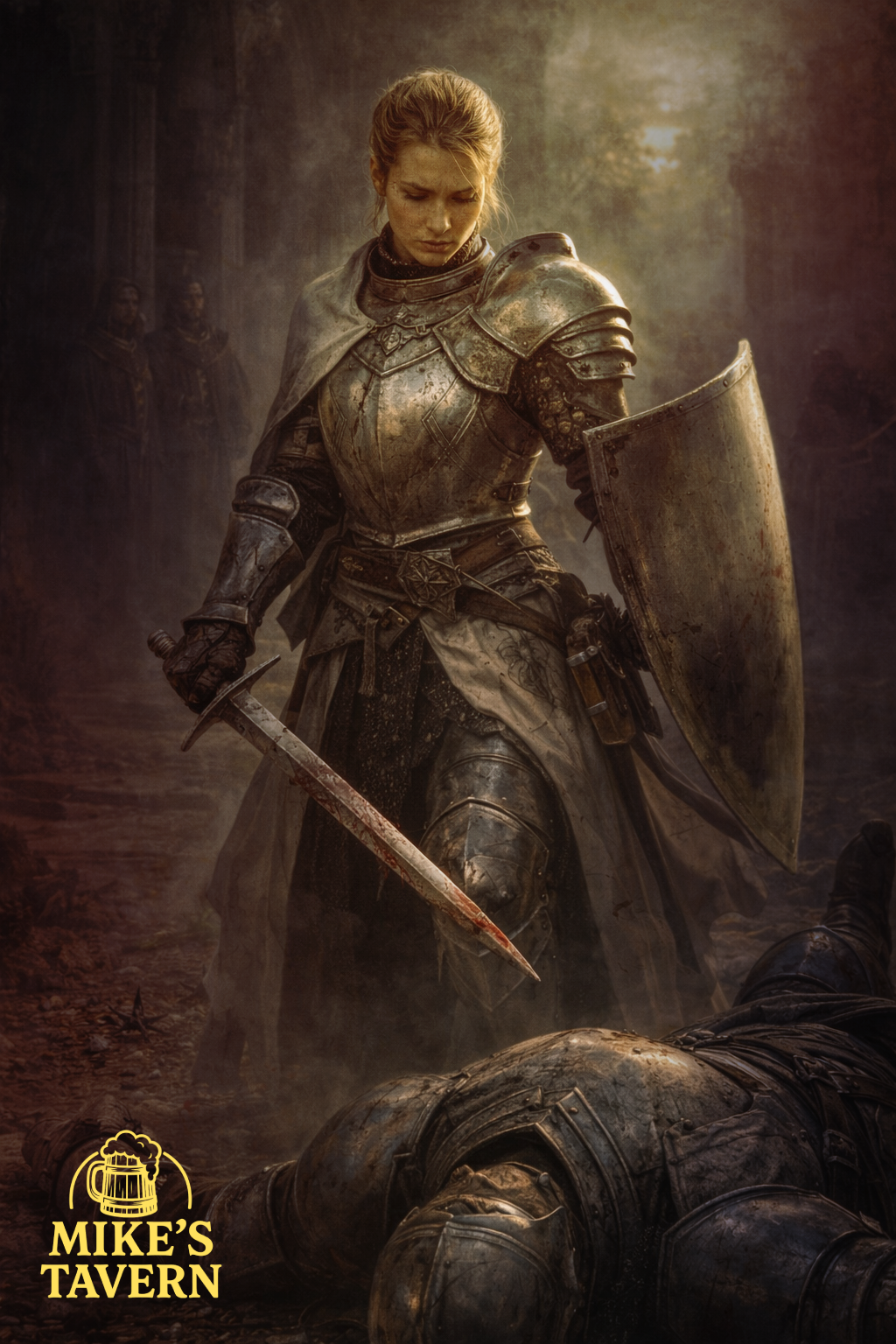
A GM NPC who punishes sloppy play, repeated mistakes, and careless positioning
What This NPC Is (and Why They Matter)
This knight is not flashy.
Not loud.
Not dramatic.
They are precise.
The Knight Who Never Misses Twice exists to teach a simple truth:
the second mistake is the dangerous one.
This NPC does not overwhelm with damage or magic. Instead, they:
Observe the first exchange
Identify patterns
Adjust instantly
End fights efficiently once they understand you
They are the embodiment of discipline, memory, and control.
If your table treats combat like a button-mashing exercise, this knight exists to slow everything down.
If you’re new to how Mike’s Tavern treats NPCs as tools for teaching play, start here:
About Mike’s Tavern
And if you ever need to reset tone or expectations mid-campaign, the
FAQ
is there for you.
When to Introduce the Knight
This NPC works best when:
The party is level 5 to 10
Players rely heavily on one or two core tactics
Combat has become predictable
You want tension without cruelty
Ideal placements:
Knightly orders or martial academies
Trial by combat
Elite guards protecting something important
A rival champion hired to stop the party cleanly
They do not belong in:
Chaotic slapstick campaigns
Monster-only dungeon crawls
Tables that expect enemies to fight stupidly
If your combats feel more like accounting than danger, this reframes things:
When every battle feels like a board meeting with dice
Core Personality: Calm, Observant, Unimpressed
This knight:
Speaks little
Watches everything
Rarely reacts emotionally
Never mocks opponents
They do not taunt.
They do not threaten.
They acknowledge skill when they see it.
They are respectful even while dismantling someone.
That contrast unsettles players far more than insults ever could.
Combat Role: Adaptive Duelist and Control Fighter
This NPC is not designed to rush or brawl.
They are designed to:
Test defenses early
Identify weaknesses
Lock down repeat behaviours
Finish fights decisively once patterns emerge
They excel at:
Single-target pressure
Punishing reckless positioning
Forcing players to change tactics mid-fight
If players rely on one “go-to move,” this knight will allow it once.
Then they will correct it.
For guidance on running NPCs like thinking opponents instead of stat walls, this pairs well:
Why your party keeps falling apart and how to stop being the reason
Stat Philosophy: Consistency Over Burst
Do not build this NPC as a damage monster.
Recommended approach:
Solid Armor Class
Moderate hit points
Strong attack accuracy
Reliable reactions
They should feel inevitable, not explosive.
Give them:
One reaction that triggers after being attacked
One limited-use counter or reposition
One ability that rewards reading the opponent
That’s enough to sell the fantasy.
Signature Trait: “Never Misses Twice”
This is the heart of the NPC.
Mechanically and narratively:
The first failed attack is data
The second attack adjusts for stance, timing, or rhythm
Repeated tactics get punished
Describe it clearly:
“They adjust their grip.”
“They shift their footing.”
“They stop watching your blade and start watching your shoulders.”
Players should feel the adaptation before they see the numbers change.
If your table ever struggles with fairness versus challenge, this helps frame it:
Let the quiet player speak before I cast silence on ya
Equipment That Reflects Discipline
This knight’s gear is immaculate, not extravagant.
Typical loadout:
A well-balanced longsword or similar disciplined weapon
Shield or parrying offhand depending on style
Armor maintained to perfection
Minimal backup weapons
No gimmicks
If players loot this NPC, they don’t find surprises.
They find craftsmanship.
If your players think equipment is just flavor text, this often corrects that:
When you’re afraid you’re draggin the party down
How the Knight Fights (Table Feel)
Early rounds:
Test range and timing
Absorb information
Avoid committing fully
Mid-fight:
Shut down repeated tactics
Force repositioning
Apply steady pressure
Late fight:
End it quickly
Disarm, disable, or drop opponents cleanly
Do not overextend
They do not chase fleeing enemies unless duty demands it.
Outside Combat: Reputation and Presence
This NPC works beautifully as:
A known duelist with an undefeated reputation
A training figure the party must overcome
A gatekeeper to higher-tier content
A living benchmark for martial skill
NPCs speak of them with respect, not fear.
Players should feel like defeating this knight means something.
If your table starts forming emotional reactions to disciplined NPCs, this explains why:
Every party has that one player who brings snacks and trauma
Mike Weighs In
I’ve watched fighters like this end bouts without raisin their voice. First swing’s a question. Second swing’s the answer. If yer players learn to change their tune mid-fight, they’ll walk away smarter. If they don’t, they’ll walk away lighter… if they walk at all.
Scaling the Knight
To scale this NPC:
Improve reactions, not damage
Increase tactical options, not hit points
Add allies who complement discipline, not chaos
A higher-tier knight is faster to adapt, not harder to hit.
If you want defensive mastery to feel threatening instead of passive, this complements it well:
The shield that bites back: how to turn defense into punishment
When to Let the Party Win
If the party:
Varies tactics
Uses teamwork
Breaks patterns
Applies pressure creatively
Let them win.
Make it clear they earned it by learning, not by rolling high.
Last Call for GMs
The Knight Who Never Misses Twice exists to elevate combat.
They don’t humiliate.
They don’t cheat.
They don’t explain themselves.
They respond.
And when your players start asking, “What do we do differently this time?”
That’s when the lesson has already landed.
If you want more GM-ready NPCs built like this, or want one tailored to your party’s habits, region, or theme, you know where to find me:
Contact
