
A Monster That Teaches the Party to Fight Smarter
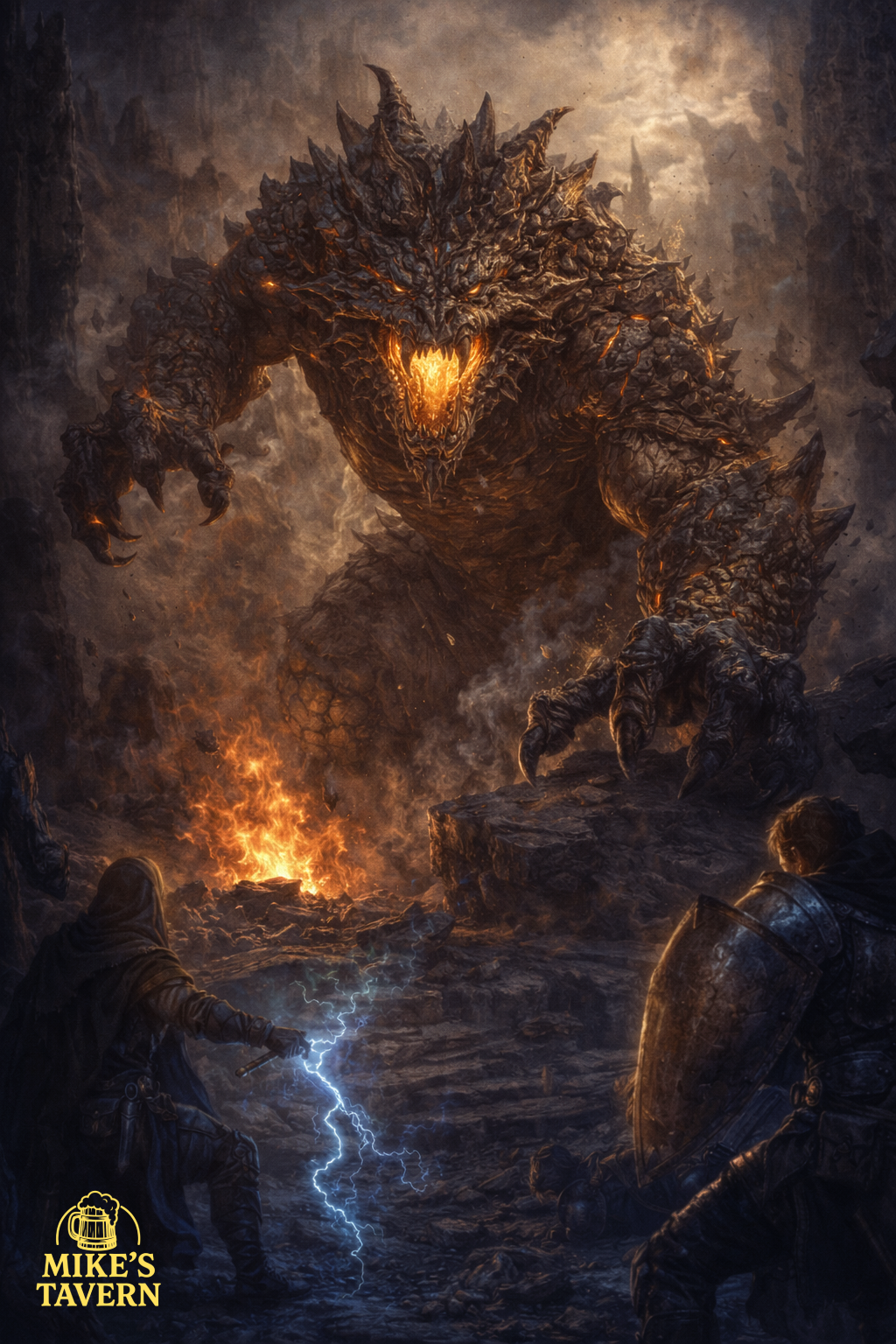
A GM monster designed to punish bad habits, reward adaptation, and turn combat into learning
What This Monster Is (and Why You Want It)
This is not a damage race.
This is not a sack of hit points.
This is a behavioral filter.
The Monster That Teaches the Party to Fight Smarter exists to expose how the party fights, not how hard they hit. It survives long enough to show players their own patterns back to them, then forces them to change.
This monster:
Punishes repetition
Exploits poor positioning
Rewards teamwork
Becomes safer the smarter the party gets
It doesn’t need to kill anyone to succeed.
It only needs to make bad habits hurt just enough.
If you’re unfamiliar with how Mike’s Tavern treats monsters as tools instead of stat checks, start here:
About Mike’s Tavern
And if you ever need help calibrating challenge without cruelty, the
FAQ
has your back.
When to Introduce This Monster
This monster works best when:
The party is level 4 to 8
Combat has become repetitive
Players default to “rush + focus fire”
Tactical conversation at the table has dropped to zero
Ideal placements:
Ruins with environmental features
Natural lairs with verticality or hazards
Transitional arcs where stakes are rising
As a “random encounter” that turns memorable
They do not belong in:
One-room brawls
Gimmick fights
Campaigns that avoid tactical depth entirely
If every encounter feels like it exists only to burn resources, this reframes the issue cleanly:
When every battle feels like a board meeting with dice
Core Design Principle: Adaptation Over Power
This monster does not start strong.
It starts curious.
It:
Observes attacks
Responds to repeated tactics
Adjusts positioning
Changes targets based on party behavior
Players should feel like the monster is learning, not cheating.
The moment a player says, “Wait… it’s reacting to what we do,” the monster has already done its job.
Combat Role: Reactive Controller
This monster is not an alpha striker.
It is designed to:
Control space
Break formations
Force movement
Punish tunnel vision
It prefers:
Mixed terrain
Partial cover
Areas where movement matters
Environments that reward coordination
If players assume “initiative means go loud,” this monster gently but firmly corrects them.
For guidance on running enemies like thinking opponents instead of math problems, this pairs well:
Why your party keeps falling apart and how to stop being the reason
Stat Philosophy: Escalation Through Behavior
Do not overstat this monster.
Recommended structure:
Moderate Armor Class
Moderate hit points
Low burst damage
Strong reactions or triggered abilities
What makes it dangerous:
Pattern recognition
Conditional defenses
Reactive positioning
Give it:
One reaction that triggers after being hit
One ability that responds to repeated damage types
One movement option that disrupts clumps
That’s all you need.
Signature Trait: “The Third Time Hurts”
This monster tolerates repetition once.
Punishes it twice.
And corrects it the third time.
Examples:
First fire spell lands normally
Second fire spell meets resistance
Third fire spell triggers retaliation or reposition
Describe the adaptation clearly:
“Its hide darkens where the flame struck before.”
“It stops flinching and starts advancing.”
“It angles its body differently this time.”
Players should see the lesson forming.
If your table ever struggles with fairness versus challenge, this helps frame expectations:
Let the quiet player speak before I cast silence on ya
Environmental Synergy (This Is Important)
This monster should never fight in a blank room.
Pair it with:
Pillars, ledges, or elevation
Difficult terrain
Breakable cover
Hazards that punish clustering
The environment should invite smarter play without forcing it.
If players ignore the environment, they feel pressure.
If they use it, the fight eases.
How the Monster Fights (Table Feel)
Early rounds:
Takes hits
Watches patterns
Moves defensively
Mid-fight:
Shuts down repetition
Forces repositioning
Splits the party’s attention
Late fight:
Becomes predictable again if the party adapts
Loses effectiveness when countered properly
Feels beatable through coordination
This monster teaches that smart play shortens fights.
Outside Combat: Reputation and Aftermath
This monster works well as:
A known regional hazard
A rite of passage
A creature adventurers warn each other about
Proof that not all monsters are solved by damage
NPCs might say:
“It learns.”
“Don’t fight it the same way twice.”
“The clever ones walk away.”
If players start planning before initiative, the monster succeeded. This explains why that shift matters:
Every party has that one player who brings snacks and trauma
Mike Weighs In
I’ve seen beasts like this turn loud heroes into quiet thinkers. First swing’s free. Second swing’s costly. Third swing’s a mistake. If yer table learns to talk, move, and think together, that monster’s done its duty. If not… well. Pain’s a patient tutor.
Scaling the Monster
To scale this monster:
Increase adaptability, not damage
Improve reactions, not hit points
Add environmental complexity, not stats
A stronger version learns faster.
A weaker version forgives more mistakes.
When to Let the Party Win
If the party:
Communicates
Varies tactics
Uses terrain
Protects each other
Let them win.
Make it clear the victory came from thinking, not rolling better.
Last Call for GMs
This monster exists to improve your table.
It doesn’t lecture.
It doesn’t cheat.
It doesn’t dominate.
It responds.
And when your players start asking, “Okay… what’s the smart way to do this?”
That’s when the monster has already won.
If you want more GM-ready monsters like this, or one tuned to your party’s exact bad habits, campaign tone, or ruleset, you know where the door is:
Contact
