
A Bandit Leader Who Punishes Reckless Heroes
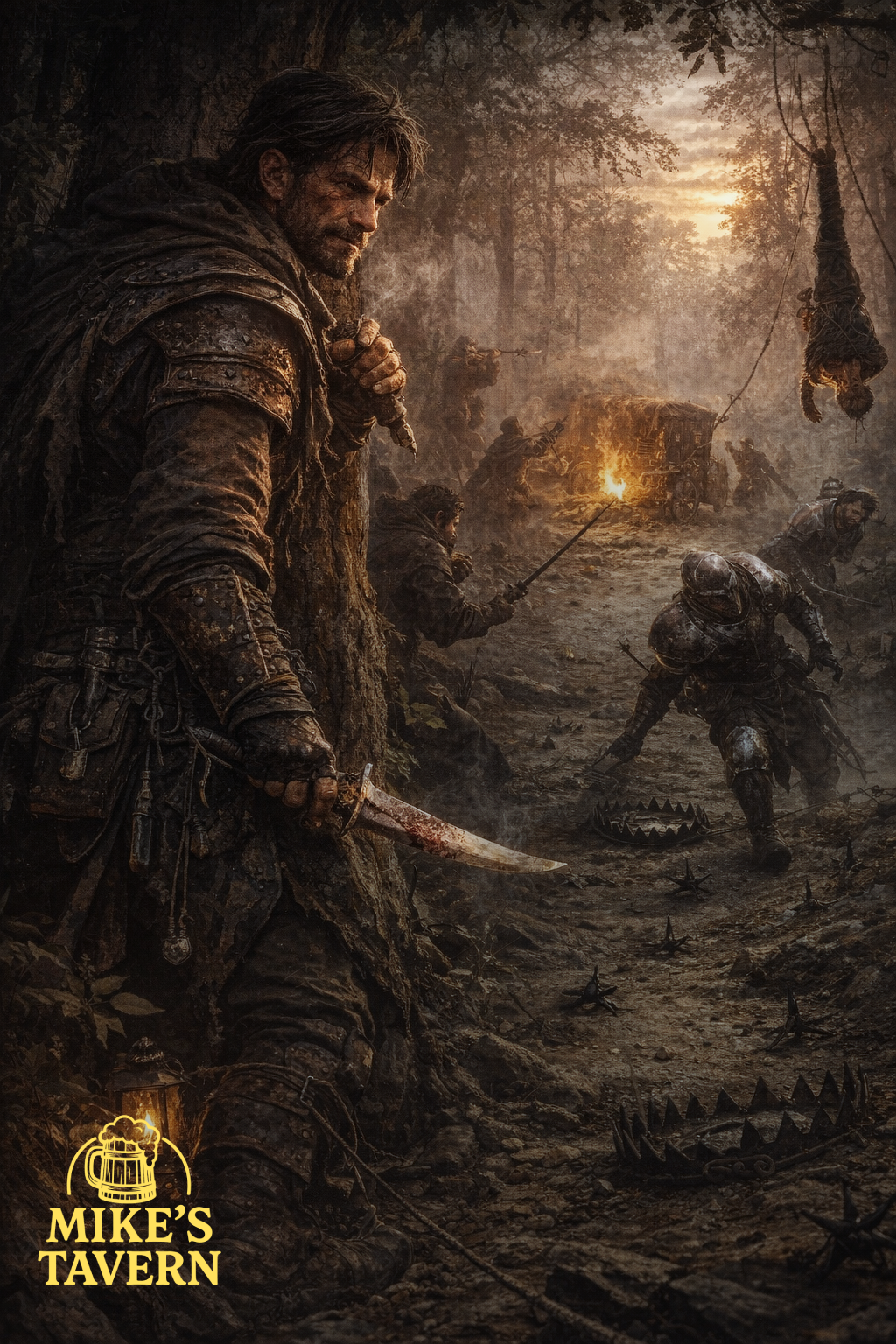
A GM NPC designed to make impulsive parties slow down, plan better, and respect danger
What This NPC Is (and Why They Matter)
This is not a brute with a bigger axe.
This is a thinking predator who has survived by watching heroes make the same stupid mistakes over and over again.
The Bandit Leader Who Punishes Reckless Heroes exists to:
Exploit impatience
Capitalize on overconfidence
Weaponize the party’s bad habits
Survive long enough to do it again
They are not cruel for cruelty’s sake.
They are efficient.
And efficiency is terrifying.
If you’ve ever felt like your players sprint headfirst into danger because “the GM wouldn’t do that,” this NPC exists to gently, firmly prove that the world absolutely would.
If you’re unfamiliar with how Mike’s Tavern frames NPCs as tools instead of stat walls, start here:
About Mike’s Tavern
For table rulings and tone calibration, the
FAQ
is your quiet ally.
When to Introduce This Bandit Leader
This NPC works best when:
The party is level 4 to 9
Players routinely charge, split, or ignore scouting
Combat has started to feel consequence-free
You want to teach caution without a total party kill
Ideal placements:
Repeated road encounters
A bandit network controlling a region
A bounty or “local problem” that keeps escalating
A rival who learns from the party’s tactics
They do not belong in:
Lighthearted beer-and-pretzels games
Pure dungeon crawls with no retreat paths
Tables that explicitly reject consequence-based play
If every fight feels like it exists only to burn hit points, this perspective helps:
When every battle feels like a board meeting with dice
Core Personality: Patient, Observant, Unemotional
This Bandit Leader:
Watches before acting
Lets heroes make the first mistake
Rarely raises their voice
Never fights “fair” unless forced
They are not theatrical.
They don’t monologue.
They don’t posture.
They notice:
Who rushes ahead
Who lags behind
Who casts first
Who never checks corners
And next time, they plan around it.
Combat Role: Ambush Controller, Not a Frontliner
This NPC is not designed to duel the party.
They are designed to:
Isolate targets
Punish overextension
Control engagement distance
End fights early once advantage is gained
They rely on:
Prepared terrain
Hidden allies
Timing
Escape routes
If your players think initiative means “everyone rushes the biggest threat,” this NPC will disabuse them of that notion quickly.
For help running enemies like people instead of stat blocks, this pairs well:
Why your party keeps falling apart and how to stop being the reason
Stat Philosophy: Threat Through Structure, Not Numbers
Do not overbuild this NPC.
Recommended approach:
Armor Class slightly above party average
Hit points below a true boss
Good Dexterity and Wisdom saves
Moderate damage output
What makes them dangerous is:
Initiative control
Readied actions
Target prioritization
Disengagement discipline
Give them:
One reaction that interrupts reckless movement
One limited ambush advantage
One command ability to reposition allies
That’s enough.
Signature Punishments for Reckless Play
Use these only when players invite them.
Examples:
Overextended frontliner gets netted or surrounded
Lone scout gets cut off instead of instantly killed
Spellcaster who opens loudly draws focused pressure
Chasing enemies triggers a second ambush
Always telegraph danger through description.
Players should feel responsible, not tricked.
If your table struggles with fairness perception, this helps frame expectations:
Let the quiet player speak before I cast silence on ya
Equipment That Reinforces the Lesson
This Bandit Leader’s gear tells a story of preparation.
Typical equipment:
Practical melee weapon with reach or control
Light armor optimized for mobility
Nets, caltrops, trip lines, or signal whistles
Smoke or obscurants for disengage
Maps, notes, and contingency plans
Looting them should reward information, not gold.
If your players believe gear choices are cosmetic, this article tends to change minds:
When you’re afraid you’re draggin the party down
How This NPC Fights (Round by Round Feel)
Early rounds:
Test reactions
Draw the party forward
Force movement mistakes
Mid-fight:
Collapse on isolated targets
Withdraw before being locked down
Use allies to delay pursuit
If momentum shifts:
Disengage immediately
Signal retreat
Break line of sight
They do not fight to the death unless trapped.
Outside Combat: The Bandit Who Remembers
This NPC is excellent as:
A recurring regional threat
Someone who adapts to party tactics
A name whispered by merchants and guards
Proof that enemies learn
They remember:
Who panicked
Who hesitated
Who chased blindly
Who showed restraint
Players should feel seen.
If players start developing emotional reactions to this NPC, that’s a sign things are working:
Every party has that one player who brings snacks and trauma
Mike Weighs In
I’ve seen bands like this gut “heroes” without ever crossin blades proper. Let ‘em run. Let ‘em chase. Let ‘em think they’re clever. Then close the door behind ‘em. If yer players learn to breathe before actin, this bandit’s done their job. If they don’t, well… the road’s full of shallow graves.
Scaling the Bandit Leader
To scale this NPC:
Increase preparation, not hit points
Improve coordination, not damage
Add lieutenants, not raw stats
A stronger version is smarter, not tougher.
If you want defensive play to feel threatening instead of passive, this is a solid companion read:
The shield that bites back: how to turn defense into punishment
When to Let the Party Win
This NPC should not be immortal.
If the party:
Scouts properly
Baits cautiously
Controls terrain
Cuts off escape routes
Let them win.
Make it clear they earned it by changing their behaviour.
Last Call for GMs
This Bandit Leader exists to teach through play.
They don’t lecture.
They don’t cheat.
They don’t gloat.
They respond.
And when your players start asking, “Wait… why didn’t we rush this time?”
That’s the moment this NPC has already succeeded.
If you want to keep building GM-ready NPCs like this, or want one tailored to a specific party’s bad habits, campaign tone, or region, you know the door:
Contact
