
The 3 Most Common Types of Troublemakers at the Table (And How to Handle Each Without Starting a Bar Fight)
Mike’s Personal Thoughts
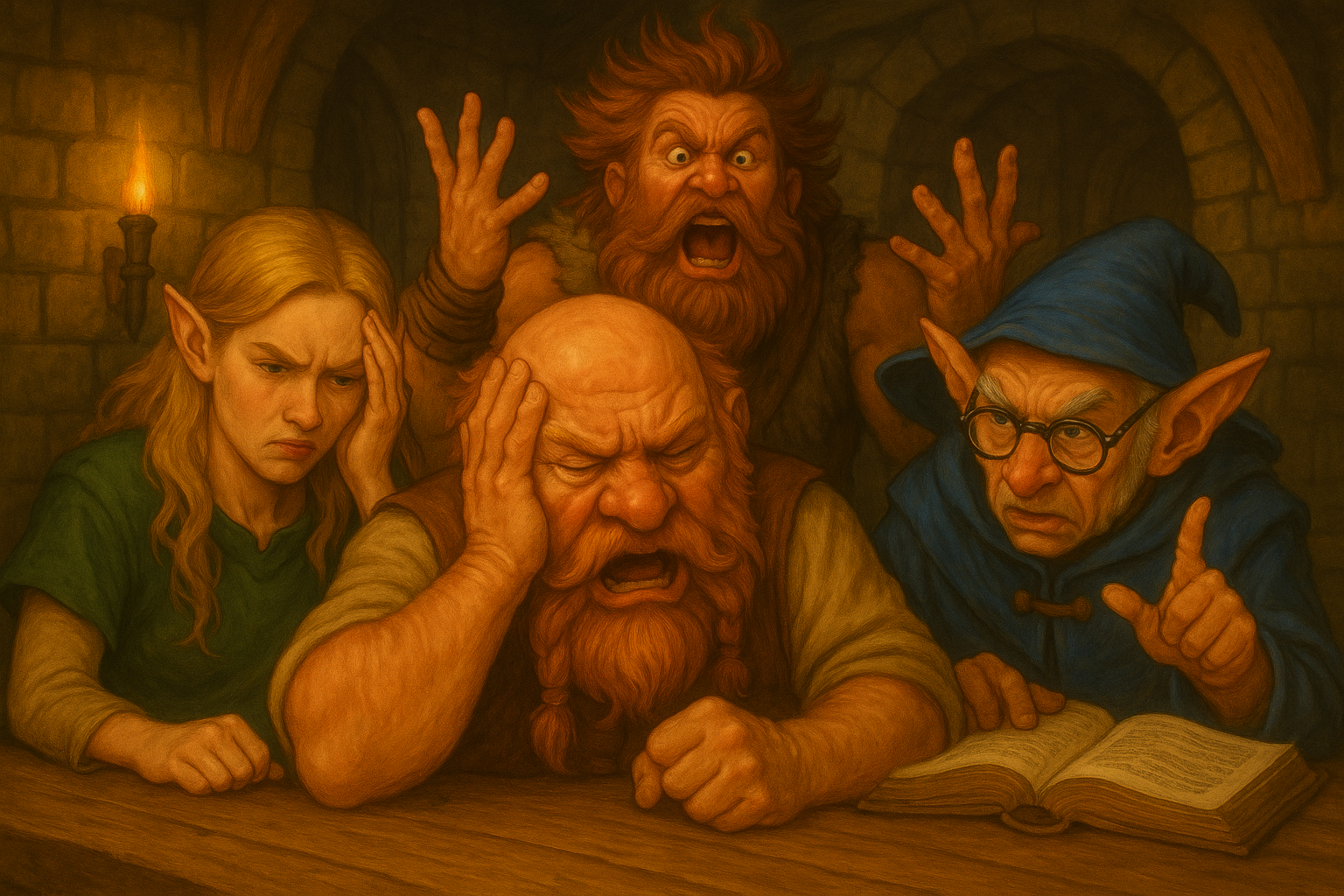
By Tharn’s itchy chainmail, lad, if there’s one thing every table’s guaranteed to attract, it’s trouble. Not the good kind—the “dragon in the basement,” “cursed coin purse,” “Hullbreaker ogre knocking at the door” kind. No. I’m talkin’ about the players who stir the pot without even tryin’.
Now listen—most so-called troublemakers aren’t villains. They’re not gremlins birthed from the Shadowfell. They’re just folk who don’t see how their habits grind the whole table like stale stonebread. And if you don’t learn how to handle ’em early, ya end up with a table as broken as my old adventuring knees.
I’ve seen all manner of mischief, from the lad who thought every NPC was an enemy spy to the lass who refused to act unless a prophecy told her to, and the blasted loudmouth who tried to roleplay over a collapsing cavern. I once had three types of trouble in one group—till they nearly caused a bar brawl with a ghost. A ghost, lad.
If your own table’s startin’ to wobble, you’re not alone. Even I keep scrolls about this mess. Take a peek at this warning about when players pull in three directions at once or this guide about games fallin’ apart. Yer problem ain’t new—and it sure ain’t unsolvable.
“If ya don’t deal with trouble kindly, lad, it grows teeth—and then it starts bitin’ the whole table.”
👉 Come sharpen your tools in the GM Wisdom hall—your future sessions will thank ya.
The Three Troublemaker Types
Nearly every misbehaving player falls into at least one of these:
The Spotlight Hog – Means well, takes everything.
The Chaos Gremlin – Means well, breaks everything.
The Silent Stone – Means well, avoids everything.
Each one needs a different hand—steady, firm, and kind enough not to snap the table in half.
Here’s a clean comparison so ya can spot ’em faster than a kobold smells unattended rations.
THE TAVERN NETWORK
Sometimes, lad. All ya need is a change of scenery. Head on to the Tavern Network. See if we can’t find ya a new table.
Handling Each Troublemaker With Kindness (And Efficiency)
1. The Spotlight Hog
They’re not evil—they’re anxious. They believe if they don’t act first, nothing will happen.
How to fix:
Use turn-based conversational rounds
Give them “your turn will always come” reassurance
Redirect gently:
“Hold a moment, lad—let’s hear the others first.”
If you want deeper etiquette guidance, take a look at this scroll about spotlight thieves or the lesson on why listening is the strongest skill at the table.
2. The Chaos Gremlin
They don’t want to ruin the story—they want to see what happens. They think unpredictable equals fun.
How to fix:
Provide controlled chaos: magical mishaps, goblin markets, risky shortcuts
Make consequences funny instead of campaign-destroying
Set gentle expectations:
“If ya poke the wrong demon, lad, the whole room pays for it.”
If chaos is tearing your table in three directions, read this guidance for fractured groups.
3. The Silent Stone
They’re not uninterested—they’re scared. They want to contribute, but they fear ruining something.
How to fix:
Give them predictable openings
Ask gentle, specific questions
Praise ideas publicly so they feel safe
There’s a fine line between shy and disengaged, and if the table starts feeling empty around them, you’ll want guidance like the one in this scroll about empty-feeling tables.
“By me beard, lad—deal with trouble early, kindly, and firmly, or it grows roots deeper than a dwarven vault.”
👉 If ya need steadier hands or stronger tools, read about the Tavern’s origins at About Mike’s Tavern or send a message through the contact board.
⚠️ Troublemakers ain’t enemies—they’re just players who need a bit of guidance before the whole session goes sideways.
FAQ
Q: Should I confront a troublemaker after the session?
A: Only if needed. Start by fixing the flow at the table. If that fails, have a kind, private chat. No shaming. No fireballs.
Q: What if I have ALL THREE types in one group?
A: Then congratulations lad—you’re running a typical game. Structure, kindness, and clear stakes can fix more than you think.
Q: Should I punish chaos players with harsh consequences?
A: Nay. Punishment makes ’em worse. Guide ’em toward mischief that fits the tone instead of tearing it apart.
